 Anacortes Exterior
 Exterior Contracting for Skyline Homes
Skyline sits close enough to the water that the air itself becomes part of the maintenance conversation for every homeowner up here. Between the salt-laden breeze coming off the surrounding waterways, the long stretches of driving rain that define a Skagit County winter, and the shaded, moisture-holding conditions that let moss and algae take hold on north- and west-facing exteriors, homes in this part of Anacortes work harder than homes twenty miles inland. We do exterior work across Skyline because we understand what that combination does to siding, roofing, trim, and decking over time — and because a crew that only shows up once can't build the kind of judgment that comes from seeing the same weather patterns hit the same style of homes year after year.
This page covers how we approach siding, roofing, windows, and decks for Skyline properties specifically, along with the honest trade-offs homeowners here should understand before choosing materials.
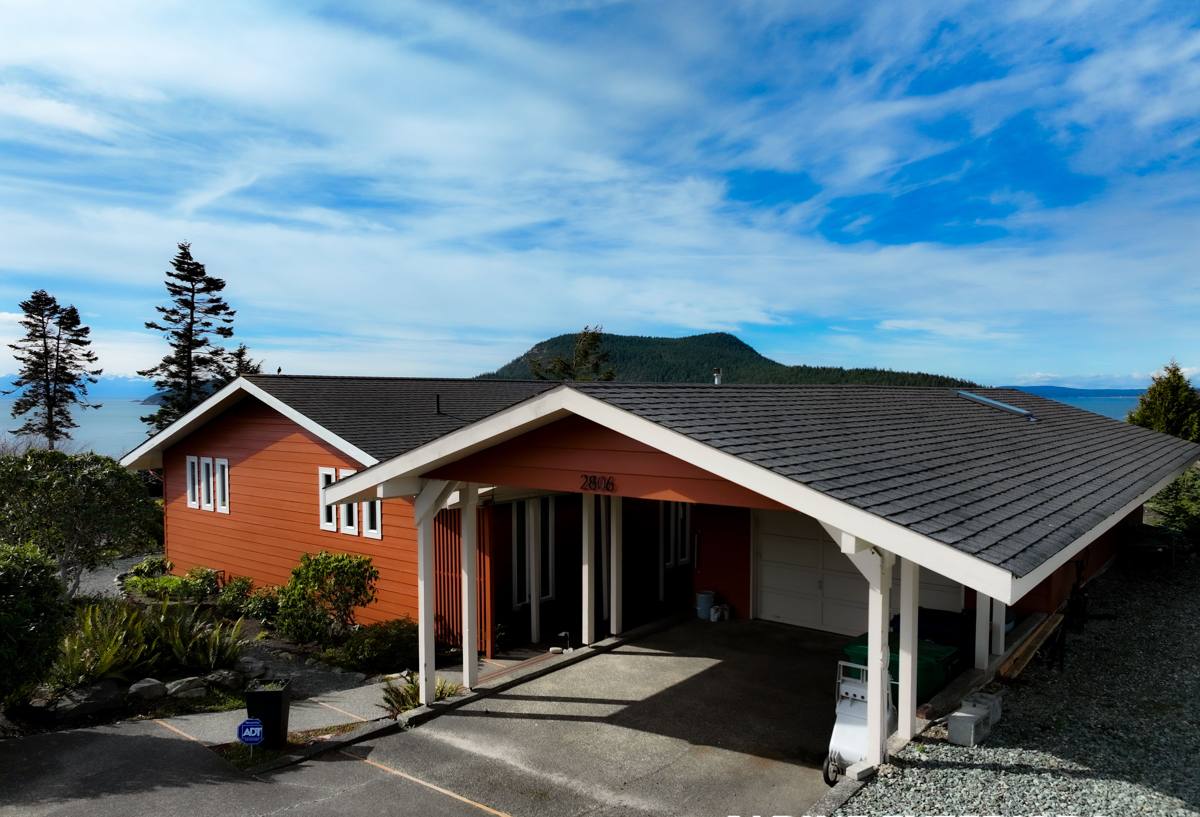
What Skyline's Climate Does to a Home's Exterior
Salt Air and Corrosion
Proximity to Puget Sound and the surrounding straits means airborne salt settles on exterior surfaces more consistently than it would further inland. Over years, that accelerates corrosion on exposed fasteners, metal flashing, and lower-grade trim, and it can degrade certain paint and coating systems faster than the manufacturer's stated lifespan would suggest. It's not dramatic — nobody's siding falls off in a season — but it's a slow, cumulative tax that shows up as premature fading, chalking, or fastener staining on homes that weren't built or finished with that exposure in mind.
Driving Rain
Anacortes gets plenty of rain that falls straight down, and plenty that doesn't — wind-driven rain that hits siding and window assemblies at an angle and finds its way into any gap that wasn't properly flashed or sealed. Skyline's elevation and exposure to weather coming off the water make this a real factor, not a hypothetical one. Water intrusion at window and door openings, at siding laps, and at roof-to-wall transitions is the single most common source of long-term rot and hidden damage we find when we open up an older exterior in this area.
Moss and Algae Season
Shaded lots, tree cover, and persistent moisture add up to a moss and algae season that runs long here — often most of the year on north-facing walls and roof slopes that don't get much direct sun. Moss holds moisture against a surface far longer than open air would, which is exactly the condition that rots wood trim, degrades lower-quality siding products, and shortens the life of asphalt roofing. Materials and installation details that shed water quickly and don't give moss anything to grip onto matter more here than they would on a dry, open lot.
Siding: Why We Only Install James Hardie
We install James Hardie fiber cement siding exclusively. We don't install vinyl, LP SmartSide, Cemplank, Allura, primed spruce, or cedar, and in a climate like Skyline's, that's not a marketing position — it's a practical one built on what actually holds up.
What We Ruled Out, and Why
- Vinyl siding can perform reasonably in dry climates, but it expands and contracts with temperature swings, its seams and J-channels give wind-driven rain an easier path behind the cladding, and it doesn't offer the impact or fire resistance that fiber cement does.
- LP SmartSide is an engineered wood product. Engineered wood, by definition, is more moisture-sensitive at cut edges and fastener penetrations than fiber cement — a real concern in an area with Skyline's rainfall and humidity pattern, where any lapse in sealing at a seam becomes an entry point for water.
- Cemplank and Allura are also fiber cement products, and we don't say they're poor materials — but we've standardized on one manufacturer's system so our crews install to a single, deeply familiar spec, and so every warranty claim runs through one manufacturer we know how to work with.
- Primed spruce and cedar are natural wood. Wood is a beautiful, traditional siding choice, but it demands ongoing refinishing, and in a moss-prone, salt-air, high-rainfall pocket like Skyline, that maintenance burden shows up faster and more often than most homeowners expect when they first choose it.
Why Hardie Fits Skyline Specifically
James Hardie fiber cement is non-combustible, doesn't swell or rot the way wood-based products can, and holds its factory-applied ColorPlus finish far longer than field-applied paint on wood or engineered products — which matters directly here, since salt air and UV exposure are two of the fastest ways to degrade a painted finish. Hardie's HZ5 product line is engineered for regions with significant moisture exposure, and correct installation — proper clearances, flashing, and joint treatment — is what actually determines how a fiber cement exterior performs against driving rain over a 20- or 30-year span. The material backs a strong transferable warranty, which matters to Skyline homeowners thinking about resale in a market where buyers increasingly ask what the siding is and when it was done.
Roofing for Moss and Water Management
A Skyline roof has two main jobs: shed driving rain efficiently at every transition, and resist the moss growth that shaded, moisture-retaining roof slopes invite. We pay particular attention to underlayment quality, proper flashing at valleys and penetrations, and ventilation, since a roof that traps moisture underneath is just as vulnerable as one that lets water in from above. Where a roof is due for replacement, we'll talk through material options honestly, including which perform better against sustained moss pressure and which require more frequent treatment or cleaning to hold their lifespan.
Windows: Sealing Out Wind-Driven Rain
Window replacement in a home like the ones common in Skyline is as much about the flashing and sealing details as it is about the window unit itself. A high-quality window installed without correct flashing integration into the surrounding wall assembly will leak in wind-driven rain conditions eventually — it's a matter of when, not if. We integrate window flashing with the siding water management plane so the whole exterior sheds water as one system, rather than treating windows as an isolated component.
Decks: Built for Wet, Shaded Conditions
Decks in Skyline's tree-covered, moisture-heavy lots face accelerated wear on fasteners, ledger connections, and any wood-to-wood contact point where water and debris can collect. We build and repair decks with attention to proper drainage, ledger flashing, and material choices that hold up under repeated wet-dry cycling and shaded conditions that slow drying time after every rain.
Comparing Siding Options for a Skyline Home
| Material | Moisture Resistance | Maintenance | Fire Resistance | Typical Lifespan |
|---|---|---|---|---|
| James Hardie fiber cement | High | Low — factory finish, occasional wash | Non-combustible | 30+ years |
| Vinyl | Moderate — seam-dependent | Low, but fades/warps over time | Combustible | 20-30 years |
| LP SmartSide (engineered wood) | Moderate — edge-sensitive | Moderate — repaint/reseal cycles | Combustible | 20-30 years |
| Cedar / primed spruce | Lower without diligent upkeep | High — regular refinishing | Combustible | 15-25 years with upkeep |
These are general performance patterns, not guarantees — actual results depend heavily on installation quality, exposure, and upkeep on any material.
What to Look For When Hiring an Exterior Contractor Here
- Washington state contractor licensing and current insurance, verifiable before work starts
- Manufacturer training or certification on the specific siding, roofing, or window products being installed
- A written scope that specifies flashing, sealing, and clearance details — not just "install siding"
- Familiarity with local permitting through Anacortes and Skagit County
- Willingness to explain why a product or method is being recommended, not just what it costs
- Local references or a local track record, since a crew unfamiliar with this specific microclimate is more likely to miss the details that matter here
Why a Local Crew Matters in Skyline
Exterior work here isn't generic. A crew that mostly works dry, inland neighborhoods can install a technically correct siding job that still underperforms in Skyline's salt air and driving rain, simply because the finer details — flashing laps, sealant selection, clearance from grade and roof lines — weren't calibrated for this exposure. We work throughout Anacortes and Skagit County regularly enough to know which details earn their keep on a lot like this, and which corners genuinely cannot be cut.
Get a Free Estimate
If you're weighing siding, roofing, window, or deck work for a home in Skyline, we're happy to take a look and walk through what your specific exposure and condition call for — no pressure, no obligation. Reach out through the form below to schedule a free estimate.