 Anacortes Exterior
 Exterior Work Built for Oak Harbor's Coastline
Oak Harbor sits on Whidbey Island, a short run across the water from our Anacortes shop, and it gets its own version of the weather that defines this whole stretch of the Salish Sea. Homes here take salt-laden wind off the water, long stretches of driving rain through fall and winter, and a moss and mildew season that can run most of the year on north-facing walls and rooflines. We've built our business around exterior materials and installation practices that hold up to exactly that combination, and we bring that same standard to every Oak Harbor project, whether it's a full siding replacement, a roof, new windows, or a deck rebuild.
Working across the water doesn't change how we operate. We show up with the same crew, the same materials, and the same attention to flashing and water management that we'd use on a job three blocks from our own office. A lot of exterior failures on this island trace back to work done by crews who treated it like any other job site and didn't account for the extra moisture load or the salt exposure. We don't do that.
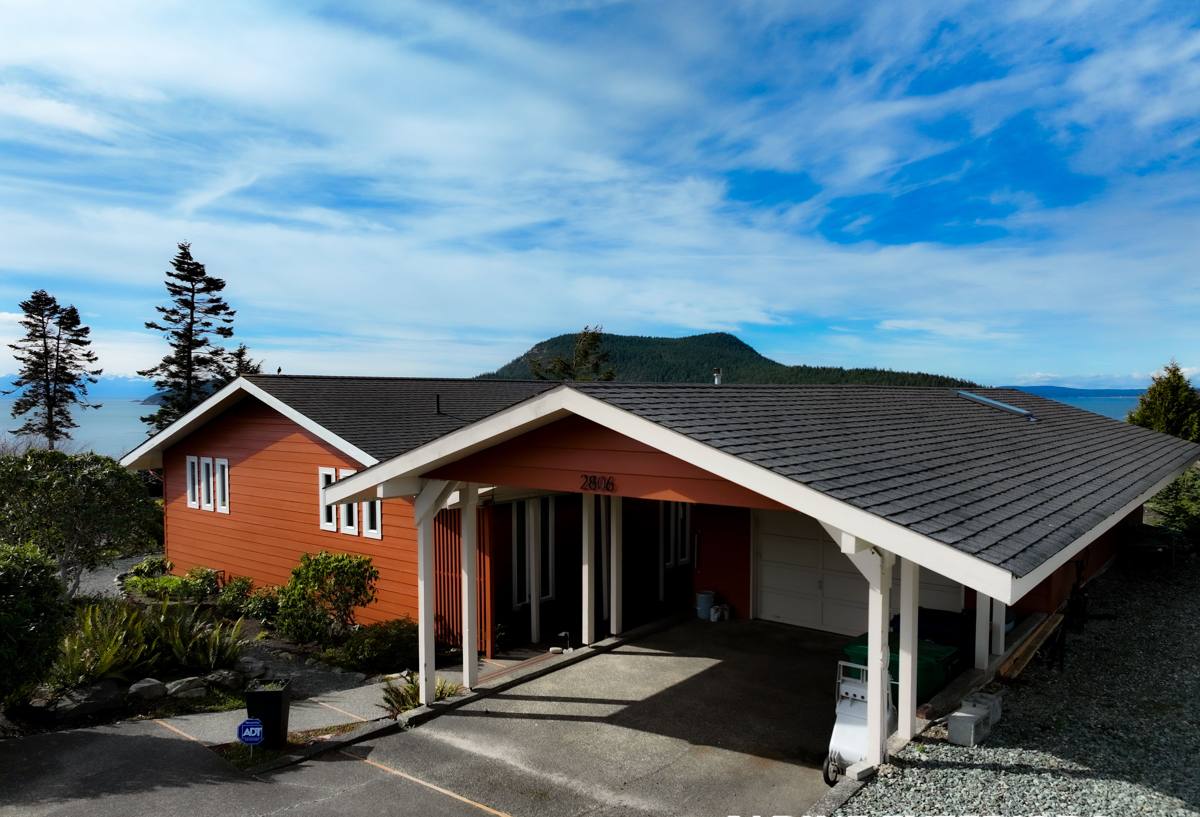
What the Climate Actually Does to a House Here
It helps to be specific about what Oak Harbor homeowners are up against, because "wet climate" undersells it. The issues we see most often break down into a few categories:
- Salt air corrosion — fasteners, flashing, and hardware that aren't rated for coastal exposure corrode faster here than they would even twenty miles inland, and corroded fasteners are one of the leading causes of siding and trim failure we find on older homes.
- Wind-driven rain intrusion — storms off the strait don't just fall straight down, they push rain sideways into siding laps, window flanges, and butt joints that were only built to shed water falling vertically.
- Moss and algae growth — shaded roof slopes and north walls stay damp long enough for moss and mildew to establish, and once moss takes hold on a roof it holds moisture against the shingles and shortens their life.
- Wood rot at penetrations — window and door openings, deck ledger boards, and roof-to-wall transitions are where poor flashing detail shows up years later as soft, rotted framing.
None of this is unique to Oak Harbor — it's the reality for most of the Anacortes and Skagit-area coastline — but Oak Harbor's more open exposure to the water tends to push these issues along a little faster than in more sheltered inland neighborhoods.
Siding: Why We Only Install James Hardie
Siding is the single biggest exterior surface fighting this climate, and it's also the material choice we're most particular about. We install James Hardie fiber cement siding exclusively. We don't install vinyl, LP SmartSide, Cemplank, Allura, primed spruce, or cedar, and that's a deliberate standard, not an oversight.
Each of those alternatives has a real place in the market and can be a reasonable product elsewhere. But in a coastal, high-moisture climate like Whidbey Island's, the trade-offs stack up in ways that matter:
- Vinyl siding can warp or crack under wide temperature swings and doesn't hold up as well to the physical impact and UV exposure of a coastal, sun-and-storm environment over decades.
- Wood-based composites like LP SmartSide use engineered wood strand cores that are more moisture-sensitive at cut edges and fastener points than fiber cement — a real concern where wind-driven rain is routine.
- Natural cedar looks great new but demands an ongoing maintenance schedule (staining, sealing, monitoring for rot) that most homeowners underestimate, especially in a climate that barely gives siding time to dry out between rain events.
- Other fiber cement brands like Cemplank and Allura are chemically similar to Hardie, but we've standardized on one manufacturer so our crews, our install details, and our warranty conversations stay consistent — and Hardie's climate-specific HZ5 formulation and factory ColorPlus finish are engineered for exactly this kind of weather.
James Hardie fiber cement is non-combustible, dimensionally stable in wet climates, and factory-finished with ColorPlus Technology, which resists the fading and moisture intrusion that plagues field-painted siding. It carries a strong transferable warranty when installed to Hardie's specifications, which is exactly how our crews install it — correct flange gaps, proper flashing at every penetration, and fastener patterns that account for coastal wind exposure.
Hardie Product Lines We Work With
| Product | Best Use | Why It Fits This Climate |
|---|---|---|
| HardiePlank lap siding | Most homes, traditional lap look | HZ5 formulation engineered for wet, coastal Pacific Northwest conditions |
| HardiePanel vertical siding | Modern facades, accent walls | Fewer horizontal laps means fewer water entry points |
| HardieTrim boards | Corners, window and door trim | Resists the rot that plagues wood trim at penetrations |
| HardieShingle siding | Accent gables, dormers | Cedar shingle look without the moisture upkeep |
Roofing That Handles Rain and Resists Moss
A roof in Oak Harbor has two jobs: shed a lot of water, and resist the moss and algae growth that comes with shaded, damp roof planes near mature evergreens. We install roofing systems with attention to underlayment quality, proper ice-and-water shield at eaves and valleys, and ventilation that lets the roof deck dry out rather than staying saturated. Ventilation matters more here than homeowners often realize — a roof deck that can't breathe stays damp longer after every storm, which accelerates moss growth and shortens shingle life regardless of the shingle brand.
We also pay close attention to flashing at chimneys, skylights, and roof-to-wall transitions, since those are the points where a rain-heavy climate finds its way into a house. A roof that looks fine from the ground can still be failing quietly at a poorly flashed valley.
Windows: Sealing Out Wind-Driven Rain
Window replacement in a coastal climate is as much about the installation as it is about the window unit itself. Wind-driven rain off the water will find any gap in flashing tape, sill pans, or flange sealing, and once water gets behind a window it can sit in the wall cavity for months before it shows up as a stain or soft spot. We install with proper flashing sequencing — sill pan first, then side flanges, then head flashing lapped over the top — so water is always directed out and down, never trapped.
Beyond moisture control, newer windows also cut down on heat loss and drafts, which matters through a Pacific Northwest winter, and reduce the condensation issues that older single-pane or failed-seal double-pane windows tend to develop in a humid climate.
Decks Built to Survive Wet Winters
Decks take a beating from standing water, freeze-thaw cycles, and the same moss and algae growth affecting roofs and shaded siding. The details that matter most on a coastal Oak Harbor deck are proper ledger board flashing where the deck meets the house (a common rot point if it's not done right), adequate gaps between boards for drainage and airflow, and hardware rated for coastal, high-moisture exposure so it doesn't corrode and weaken over time. Whether you're looking at a wood deck or a low-maintenance composite, the framing and flashing underneath matter more to long-term performance than the surface material on top.
Why a Local Crew Matters for Whidbey Island Homes
Working regularly in Oak Harbor and across Whidbey Island means we've seen how this specific stretch of coastline behaves — which sides of a house take the worst weather, which roof slopes hold moss longest, and where older homes in the area tend to have outdated flashing details that need to be corrected during a siding or roofing project, not just covered over. A crew that only occasionally crosses the water doesn't build up that pattern recognition, and on an exterior project, the details you don't see are usually the ones that matter most ten years down the road.
Before we start any project, we walk the exterior and flag anything beyond the original scope — soft trim, failing flashing, ventilation problems — so there are no surprises mid-project.
What to Expect From an Oak Harbor Exterior Project
- An on-site walkthrough and honest assessment of your siding, roof, windows, or deck condition
- A written estimate with clear scope, not a vague number
- James Hardie fiber cement for any siding work — no vinyl, LP, or cedar alternatives offered
- Flashing and water-management details built for coastal wind and rain exposure
- A crew that shows up, communicates timelines, and cleans up the job site daily
Getting Started
If you're dealing with rot, moss buildup, drafty windows, or siding that's past its useful life in Oak Harbor, it's worth getting a straightforward, no-pressure assessment before problems get more expensive to fix. We'll walk your exterior, tell you honestly what we find, and put together an estimate for the work that actually needs doing. Reach out using the form below to schedule a free estimate.