 Anacortes Exterior
 Oak Harbor's Climate Is Hard on Siding
Oak Harbor sits on Whidbey Island, surrounded by the marine waters of Puget Sound and reached from our Anacortes shop by way of Highway 20 and the Deception Pass bridge. It's a short drive, but the two areas share the same weather system that makes exterior siding wear out faster than it would inland: salt-laden air off the water, long stretches of driving rain, and a moss and algae season that can run most of the year in shaded, north-facing spots. We work Oak Harbor regularly, and the siding failures we see there follow a pattern shaped almost entirely by this climate.
Salt air is the piece homeowners underestimate most. It doesn't just sit on the surface — over years it works into fastener heads, seams, and any spot where a coating has thinned, accelerating corrosion and finish breakdown in ways that inland Skagit County homes don't experience nearly as much. Combine that with wind-driven rain that hits walls at an angle instead of falling straight down, and siding on this island has to shed water sideways, not just downward, to hold up.
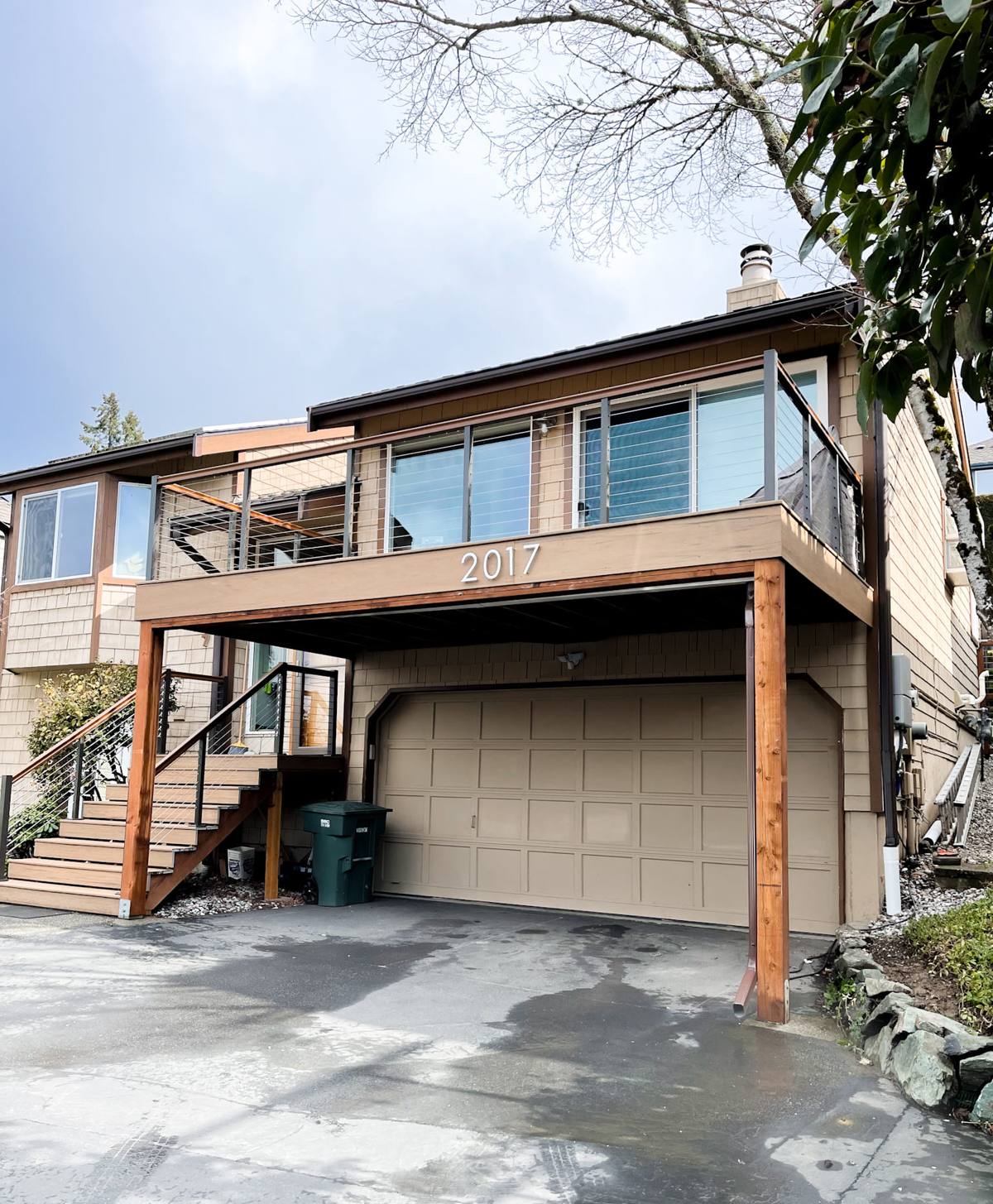
Signs Your Oak Harbor Home's Siding Has Reached the End of the Road
Most siding doesn't fail all at once — it gives you warning signs for a season or two before it becomes a real problem. In this climate, watch for:
- Soft or spongy spots when you press on the siding, especially near the bottom courses and around window trim
- Paint that's peeling, bubbling, or chalking faster than it should, particularly on walls facing the water or prevailing wind
- Persistent moss or dark streaking that comes back within weeks of cleaning, a sign moisture is being held against the surface rather than shedding off
- Visible gaps, cupping, or warping at seams and panel joints
- Rising heating bills or drafts near exterior walls, which often trace back to a compromised weather barrier behind failing siding
Any one of these can be a localized repair. Several at once, especially combined with soft sheathing underneath, usually means full replacement is the more honest answer than another round of patching.
Why We Don't Install Vinyl, Wood, or LP SmartSide in This Climate
We get asked to quote against other siding products often enough that we want to be upfront about why we don't install them, rather than just quietly steering every conversation toward what we sell.
Vinyl is inexpensive and low-maintenance in mild, dry climates, but it's a thin plastic product that expands and contracts significantly with temperature swings. In a marine climate with constant moisture cycling, seams and fastening slots take more movement stress over time, and vinyl doesn't stop water on its own — it relies entirely on the drainage plane behind it doing the real work. If that layer is ever compromised, vinyl gives you no early warning; problems stay hidden until they're serious.
Primed wood and cedar can look excellent, but they're the highest-maintenance option in exactly the kind of damp, low-sun conditions Oak Harbor's shaded and north-facing walls see for much of the year. Wood needs a maintenance cycle of inspection, caulking, and repainting that most homeowners underestimate, and any lapse in that schedule opens the door to rot faster here than it would in a drier region.
LP SmartSide is an engineered wood-strand product, and it's a legitimate improvement over plain wood in a lot of markets. But it's still wood-based, which means its long-term performance depends heavily on caulking, cut-edge sealing, and flashing detail being done exactly right, every time, with no shortcuts. In a climate that rarely gives a wall a long dry stretch to fully recover from a small installation miss, we'd rather not build our reputation on a product where a single missed detail can cause hidden moisture damage years down the line.
None of this means those products are junk everywhere — they're just not what we're willing to warranty our workmanship behind in a Salish Sea marine climate. That's why we standardized on James Hardie fiber cement and don't install anything else.
What a Correct Siding Replacement Actually Involves
The siding itself is only part of the job. Most of the failures we get called out to inspect trace back to something wrong behind the siding, not the siding material itself. A replacement done to spec includes:
Tear-off and inspection
Old siding comes off in sections so we can inspect the sheathing underneath as we go. Any soft, delaminated, or water-damaged sheathing gets identified and repaired before anything new goes on — covering damaged sheathing with new siding just hides a problem that gets worse.
Weather-resistive barrier and flashing
A correctly lapped weather-resistive barrier, paired with proper flashing at every window, door, and roof-to-wall intersection, is what actually keeps water out of the wall assembly. This is the step that separates a siding job that lasts decades from one that fails from the inside in five years, and it's the step that's easiest to rush.
Installation to manufacturer spec
James Hardie panels and lap siding have specific requirements for fastener spacing and type, joint gaps, caulking, and clearance from grade, roofing, and decks — typically a minimum of six inches from soil and two inches from roofing. Cutting corners on any of these voids the warranty and shortens the product's real-world life, so we follow the spec as written, not as a suggestion.
Finish work
Cut edges get sealed, trim and corners get detailed properly, and the site gets cleaned of debris and old material before we call the job done.
James Hardie Products Built for This Climate
James Hardie engineers its siding by climate zone, and the Pacific Northwest's damp, moderate-temperature marine environment is one of the conditions its HZ product lines are built around. That matters more here than in drier parts of the country, because the product's moisture resistance and dimensional stability are doing real work every wet month of the year, not just during the occasional storm.
A few specifics worth knowing:
| Feature | What it means for an Oak Harbor home |
|---|---|
| Fiber cement composition | Non-combustible, doesn't rot, and doesn't provide the organic material moss and algae feed on the way wood-based sidings can |
| ColorPlus factory finish | Baked-on finish resists fading and chipping from salt air and UV better than field-applied paint, and doesn't need repainting on the same cycle wood does |
| Dimensional stability | Minimal expansion and contraction keeps seams and caulk joints intact through temperature and humidity swings |
| Lap, panel, and shingle profiles | Lets us match traditional Northwest home styles common on the island without changing material performance |
| Transferable limited warranty | Coverage that follows the home if it sells, which matters in a market with steady turnover |
Our Process, Start to Finish
We keep the process straightforward and try not to leave a homeowner guessing what happens next:
- On-site inspection and estimate — we look at the current siding, check for sheathing damage where we can access it, and walk the exposures that take the worst weather
- Written scope and pricing — what's included, what products and colors, and a realistic timeline before any work starts
- Material order — Hardie products are ordered to the specific job; because Oak Harbor is a short ferry-adjacent drive from our Anacortes base, we schedule delivery and crew days together to avoid gaps in the work
- Tear-off, repair, and install — old siding removed, sheathing addressed, weather barrier and flashing installed, new siding installed to spec
- Daily site cleanup — debris and materials cleared at the end of each work day, not left to accumulate
- Final walkthrough — we go over the finished work with you before we consider the job complete
What Drives the Cost of a Siding Replacement
Every home is different, so we don't quote firm numbers without seeing the house, but these are the factors that move the price up or down on most Oak Harbor jobs:
| Cost factor | Why it matters |
|---|---|
| Home size and number of stories | More surface area and taller walls mean more material and more labor, including access equipment |
| Condition of existing sheathing | Hidden rot found during tear-off adds repair work that can't be quoted until the old siding is off |
| Siding profile chosen | Lap, panel, and shingle-style Hardie products carry different material and labor costs |
| Trim and detail complexity | Homes with more corners, dormers, and window trim take more time to finish correctly |
| Site access | Tight lots, slopes, or limited staging space can add time for material handling |
What to Ask Before You Hire
Whoever you hire for this job, these are worth confirming before you sign anything:
- Do they inspect and repair sheathing as part of the scope, or only replace the visible siding?
- Is flashing and weather-resistive barrier work included and specified in writing?
- Do they follow the manufacturer's fastener, gap, and clearance requirements, and will that keep the product warranty intact?
- What's their plan for daily cleanup and site protection during the project?
- Have they worked on Whidbey Island or other marine-exposed sites before, and can they speak to how that changes the install?
Why Local Experience in Oak Harbor Matters
A crew that only occasionally works this side of the water tends to install the same way they would anywhere else. A crew that works Oak Harbor and the surrounding Anacortes area regularly knows to pay closer attention to fastener corrosion resistance on salt-exposed walls, to expect heavier moss growth on shaded north and east faces, and to plan installation timing around the area's wetter stretches rather than fighting them. None of that shows up as a line item on an estimate, but it shows up in how the siding performs ten and twenty years out.
If your Oak Harbor home's siding is showing its age, we're happy to take a look and give you a straightforward, no-pressure estimate — no obligation, just an honest read on what your home actually needs. Use the form below to get started.