 Anacortes Exterior
 Exterior Work Built for Similk Beach's Salt Air and Rain
Similk Beach sits close enough to the water that salt air is part of daily life for the homes there, not just an occasional coastal breeze. That's a different environment than a house a few miles inland, and it changes how exteriors age. Salt-laden moisture gets into seams, fasteners, and any spot where paint or coating has started to thin. Combine that with Skagit County's long stretch of driving rain and the moss and algae growth that comes with damp, shaded conditions much of the year, and you've got an exterior that's under more or less constant low-grade pressure. None of this means a home near Similk Beach is destined for problems — it means the materials and installation details matter more than they would somewhere drier and further from the water.
We work throughout the Anacortes area, and Similk Beach is a part of that service area where we pay close attention to material choice specifically because of the coastal exposure. Siding, roofing, windows, and decks all take the same beating from the same conditions, just in different ways. Below is an honest look at what each of those systems faces here and how we approach them.
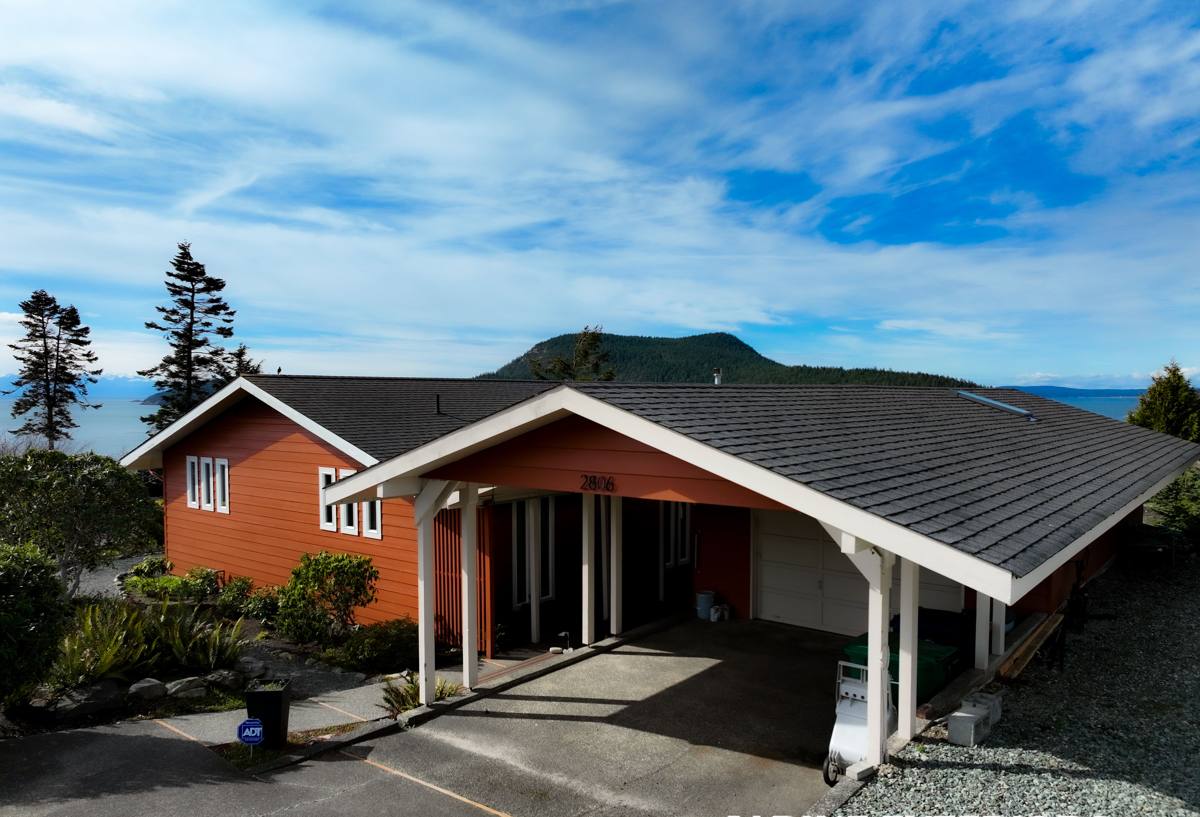
Siding: Why Material Choice Matters More Near the Water
Wood-based and wood-composite siding products are more vulnerable in salt air environments than most homeowners realize going in. Salt moisture accelerates the breakdown of wood fiber, and once moisture works its way past a compromised paint film or a poorly sealed edge, swelling and soft spots tend to follow — often at butt joints, corners, and anywhere caulking has started to fail. Vinyl siding holds up better against moisture intrusion since it doesn't absorb water the way wood-based products do, but it has its own weak point in this climate: it's a petroleum-based material that can become brittle over time and is prone to warping or buckling when it's exposed to sustained temperature swings and direct sun, which shows up as visible waviness that never looks quite right again.
This is why we install James Hardie fiber cement siding exclusively. It's a cement-based product, not wood or vinyl, so it doesn't feed mold or rot the way wood fiber can, and it doesn't warp or go brittle the way vinyl can. Hardie's ColorPlus factory-applied finish is baked on under controlled conditions, which gives it better adhesion and color retention than field-applied paint — a real advantage in an area where paint film is fighting salt air and rain nine months out of the year. Hardie also engineers specific product lines (HZ5) for climates like the Pacific Northwest, accounting for moisture exposure in how the product is formulated.
What We Won't Install, and Why
We don't install LP SmartSide, Cemplank, Allura, primed spruce, or cedar siding. That's not because these are bad products in every application — it's because, given what we see in coastal Skagit County conditions, we don't think they're the best long-term investment for homeowners here. Primed spruce and cedar require the most ongoing maintenance of anything on this list: regular repainting or restaining, careful caulk maintenance, and vigilance about moss and algae staying off the surface, since organic growth holds moisture against the wood. LP SmartSide is an engineered wood product with a factory finish that performs reasonably well, but it's still wood-based at its core, meaning cut edges and any breach in the coating are vulnerable points in a way fiber cement simply isn't. Cemplank and Allura are both fiber cement competitors to Hardie, and while the category is sound, we've standardized on one manufacturer, one installation system, and one warranty structure so we can install to spec every time and stand behind the work with confidence.
| Siding Material | Moisture Behavior in Salt Air | Maintenance Load |
|---|---|---|
| James Hardie Fiber Cement | Doesn't absorb moisture or feed rot; factory finish resists salt exposure | Low — occasional wash, no repainting for years |
| Cedar / Primed Spruce | Absorbs moisture; prone to swelling, soft spots at joints | High — repainting, caulk checks, moss control |
| Vinyl | Sheds water well but can warp/buckle with heat and sun cycling | Low, but limited repair options once warped |
| LP SmartSide | Engineered wood core; vulnerable at cut edges and coating breaches | Moderate — coating maintenance over time |
Roofing: Standing Up to Moss and Rain
Roofs near Similk Beach deal with two compounding problems: near-constant moisture and shaded, tree-lined lots that slow drying time after every rain. That combination is exactly what moss needs to establish itself, and once moss gets a foothold on a roof it holds water against the surface and works its way under shingle tabs and around flashing over time. Salt air adds another layer, accelerating corrosion on exposed metal flashing, fasteners, and vents if they aren't properly rated or protected.
Good roofing work here comes down to details that are easy to skip and expensive to fix later: proper underlayment, flashing detail at every penetration and valley, adequate ventilation so moisture doesn't get trapped in the attic space, and material choices that resist moss growth rather than just being cleaned after the fact. We install roofing systems suited to this climate and can talk through moss-resistant options and ventilation improvements as part of any roofing estimate.
Windows: Sealing Out Driving Rain
Driving rain — rain pushed sideways by wind rather than falling straight down — is a real test of window installation quality, and it's common in this part of Skagit County during fall and winter storms. A window unit itself might be well-built, but if the flashing and sealant details around it aren't done correctly, wind-driven rain will find the gap. That shows up as water staining on interior sills, soft spots in the wall framing below the window, or fogging between panes if a seal has failed.
When we replace windows, we treat the installation detail — flashing, house wrap integration, sealant, and sill pan work — as being just as important as the window unit itself. A quality window installed poorly will leak. A modest window installed correctly usually won't. We also talk with homeowners about energy performance, since well-sealed, properly rated windows make a noticeable difference in comfort during the Pacific Northwest's long stretches of cool, damp weather.
Decks: Built for Wet Wood Exposure
Decks near the water face a slower but steady set of problems: fasteners that corrode faster in salt air, wood or composite decking that stays damp longer because of shade and humidity, and ledger board connections that need to be flashed correctly to keep water from getting behind the house's exterior. A deck that looks fine on the surface can have a compromised ledger connection underneath if it wasn't built or maintained with this climate in mind.
We build and repair decks with corrosion-resistant fasteners and hardware rated for coastal exposure, proper ledger flashing to keep water from tracking back into the house structure, and decking material choices discussed honestly with the homeowner — including the maintenance trade-offs between wood and composite options given the moisture and shade typical of this area.
Why a Local Crew Matters Here
Exterior contractors who work across a wide range of climates sometimes default to generic specs that work fine in a dry inland area but underperform near the water. A crew that regularly works in Anacortes and the surrounding Skagit County coastline knows which details actually matter here: which fastener grades hold up, where flashing tends to fail first, and which materials are worth the investment given what salt air and driving rain do to a home over years, not just the first season. That local pattern-matching is hard to substitute for.
What to Look for When Hiring for Coastal Exterior Work
- A written scope that specifies fastener and flashing materials, not just the visible siding, roofing, or decking product
- Manufacturer certification for the specific siding or roofing system being installed
- A clear explanation of how the crew handles moisture management — house wrap, flashing sequencing, ventilation — not just the finished appearance
- Willingness to talk honestly about maintenance requirements for different material options, including the ones they don't recommend
- References or completed work in the same general area, where the climate exposure is comparable
- A transferable warranty on materials, and a clear labor warranty from the contractor
Getting Started
Whether you're dealing with siding that's starting to show its age, a roof that needs moss addressed before it becomes a bigger problem, windows that leak in a storm, or a deck that needs a closer look at its structural connections, we're glad to come take a look and talk through what we're seeing in plain terms. If you're near Similk Beach or elsewhere around Anacortes, reach out for a free, no-pressure estimate — there's a form below to get started.