 Anacortes Exterior
 Exterior Work Built for La Conner's Waterfront Climate
La Conner sits right on the Swinomish Channel, and that waterfront location shapes everything about how a home ages here. Salt-laden air moves off the water and settles on siding, trim, and roofing day after day. Add Skagit County's long wet season, frequent driving rain off Puget Sound weather systems, and a moss-friendly climate that barely lets surfaces dry out from October through May, and you've got a set of conditions that punishes cheap materials and sloppy installation fast. We've worked on homes throughout this corner of Skagit County long enough to know which products and techniques actually hold up here, and which ones just look good on the day they're installed.
Whether you're in the historic core near downtown La Conner, out toward the flats, or on one of the properties with a water view, the exterior of your home is doing constant, quiet battle with moisture and salt. That's the lens we bring to every siding, roofing, window, and deck project in this area.
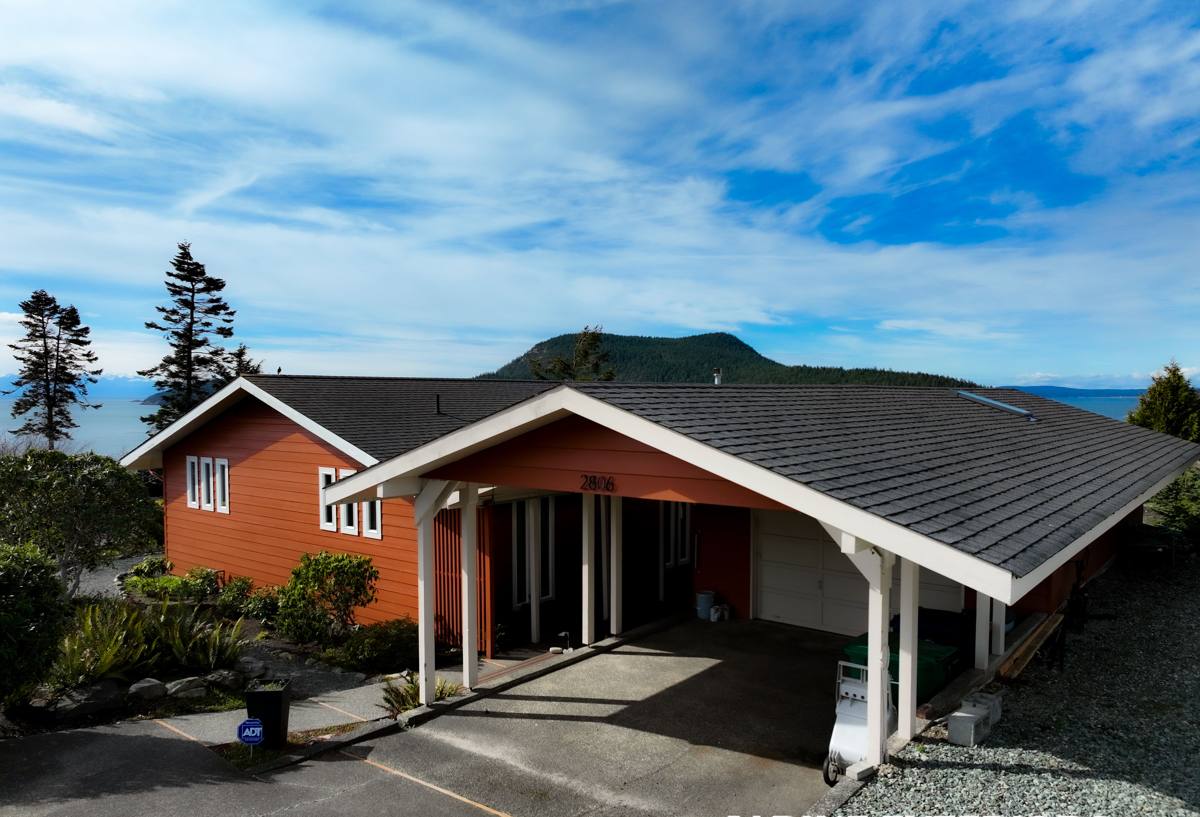
What Salt Air and Moss Season Actually Do to a Home
Salt Air's Slow Corrosion
Salt air isn't just uncomfortable to work in — it accelerates corrosion on fasteners, flashing, and metal roofing components, and it can degrade certain paints and coatings faster than they'd wear inland. Homes closer to the channel see this more acutely, but even properties set back from the water get a steady dose of it carried on the wind.
The Moss and Moisture Cycle
Western Skagit County doesn't get brutal winters, but it gets long stretches of damp, mild weather that are ideal for moss and algae growth on roofs and north-facing siding. Once moss gets a foothold on a roof, it holds moisture against the shingles or panels, works its way under laps and edges, and shortens the life of the roofing system. On siding, sustained dampness is the enemy of wood-based products in particular — it's the single biggest reason we see rot, swelling, and paint failure on homes that weren't built with the right materials.
Driving Rain and Wind-Driven Water
Storms coming off the Sound don't always fall straight down — wind pushes rain sideways into wall assemblies, window edges, and deck ledger connections. That means flashing details and water-shedding laps matter more here than they would in a drier, calmer climate. A siding or window installation that's technically "up" but not detailed correctly for wind-driven rain will eventually show it, usually in the form of interior staining or soft spots nobody notices until they're already a problem.
Siding: Why We Only Install James Hardie
Siding is the first line of defense against everything described above, and it's also the exterior component most homeowners underestimate. We install James Hardie fiber cement siding exclusively — we don't install vinyl, LP SmartSide, Cemplank, Allura, primed spruce, or cedar. That's a deliberate standard, not a lack of options.
Wood-based and engineered-wood siding products depend on their factory coatings and field-applied paint or sealant staying intact to keep moisture out. In a climate like La Conner's, where surfaces rarely get a long uninterrupted dry stretch, any gap in that coating — a nail pop, a hairline crack, a poorly sealed cut edge — becomes an entry point for water, and wood-based substrates swell, delaminate, or rot from the inside once moisture gets in. Vinyl siding sheds water well enough on its face, but it flexes with temperature swings, can crack in wind events, and its seams and panel joints are only as good as the installation behind them; it also doesn't hold paint if a homeowner ever wants to change the color down the road.
James Hardie fiber cement is a cement-and-cellulose-fiber product, not a wood product, so it doesn't swell, rot, or feed the kind of moisture damage that wood substrates are prone to. It's also non-combustible, which matters increasingly to homeowners and insurers in this region. Hardie's ColorPlus factory-applied finish is baked on under controlled conditions, giving it more consistent, longer-lasting color than field-applied paint, and Hardie's HZ5 product line is engineered specifically for climates with cold, wet weather patterns like the Pacific Northwest's. Backed by a strong transferable warranty and installed to Hardie's specifications — correct fastening, proper clearances, sealed joints — it's the product we're comfortable standing behind on a La Conner home for decades, not just for the first few years.
Siding Comparison Snapshot
| Factor | James Hardie Fiber Cement | Vinyl | Wood-Based / Engineered Wood |
|---|---|---|---|
| Moisture behavior | Doesn't swell or rot; cement-based | Sheds water but seams are failure points | Depends on coating staying intact |
| Combustibility | Non-combustible | Combustible | Combustible |
| Finish longevity | Factory ColorPlus, long service life | Can fade, chalk, or become brittle | Depends on paint maintenance cycle |
| Salt air resistance | Strong when installed to spec | Moderate | Weaker; coating wear speeds decay |
| Repaint flexibility | Can be repainted if desired | Cannot be repainted reliably | Requires ongoing repainting |
Roofing for a High-Moisture, Moss-Prone Area
A roof in this part of Skagit County has to manage two things at once: shed a lot of water efficiently and resist moss and organic growth between rains. That starts with proper underlayment and flashing at every valley, penetration, and edge — details that matter more here than in drier regions because there's simply more water hitting the roof over the course of a year. Ventilation matters too; a roof deck that can't breathe traps moisture underneath the roofing material, which shortens its life regardless of the surface product.
We also talk with homeowners honestly about moss. No roofing product is fully moss-proof in this climate, but material choice, proper ventilation, and reasonable maintenance intervals make a real difference in how much moss becomes a problem and how fast it takes hold.
Windows: Sealing Out Wind-Driven Rain
Window failures in this climate are rarely about the glass — they're about the flashing and sealant details around the frame. Wind-driven rain off the channel finds any gap in that system, and once water gets behind a window frame, it can travel and cause damage well beyond the window itself before anyone notices. When we replace windows on a La Conner home, we pay close attention to flashing integration with the surrounding siding, proper sill pans, and sealant details rated for this kind of exposure — not just the window unit itself, but everything around it that keeps water where it belongs.
Newer window units also bring real efficiency gains over older single-pane or early dual-pane windows, which matters for comfort in a home that sits exposed to steady wind and damp air much of the year.
Decks: Built to Handle Standing Moisture
Decks in this area face a specific challenge: they're horizontal surfaces exposed directly to rain, and they rarely get long dry stretches to fully shed moisture between storms. That makes ledger flashing, joist protection, and drainage beneath the deck boards critical — far more than the visible decking material itself. A deck that looks fine on the surface can be quietly rotting at the ledger connection or the framing underneath if those details were rushed.
We build and repair decks with an eye toward long-term moisture management: proper flashing where the deck meets the house, adequate spacing and slope for drainage, and hardware rated for damp, salt-influenced air. Material choice matters, but installation detail is what actually determines whether a deck lasts.
Why a Local Crew Matters in La Conner
La Conner is a small town with a distinct character — a historic waterfront district, a lot of tourism traffic, and homes ranging from older properties near downtown to newer construction further out toward the flats. A contractor who works across Skagit County regularly knows how differently a home two blocks from the channel behaves compared to one set back further inland, and adjusts material choices and installation details accordingly. That local knowledge is the difference between an exterior that's built for this specific climate and one that was built for a climate somewhere else.
Being based in Anacortes and working throughout this part of Skagit County also means faster response for warranty questions, follow-up work, or storm damage assessment — you're not waiting on a crew that has to drive in from Seattle or Everett.
What to Check When Hiring an Exterior Contractor Here
- Do they carry current Washington state contractor licensing and adequate liability insurance?
- Can they explain flashing and moisture-management details specific to marine and high-rain climates, not just generic installation steps?
- Do they have manufacturer certification for the siding or roofing products they install?
- Will they provide a written scope of work, including underlayment, flashing, and fastening specifications?
- Are warranty terms — both manufacturer and workmanship — spelled out clearly before work starts?
- Do they have experience specific to waterfront or near-waterfront properties, not just general residential siding?
Getting Started
If you're weighing a siding replacement, a roof that's showing its age, windows that let in drafts or moisture, or a deck that needs attention, we're happy to take a look and give you an honest read on what your home actually needs — no pressure, no inflated scope. Reach out for a free estimate and we'll walk the property with you and talk through what makes sense for a La Conner home facing this particular stretch of Skagit County weather.