 Anacortes Exterior
 Exterior Work in Burlington, Washington
Burlington sits at the crossroads of Skagit County, close enough to the water and the valley floor that its homes take on a mix of weather that surprises a lot of homeowners who move here from drier parts of the state. You get the marine push off Padilla Bay and the Salish Sea, the valley's own fog and standing moisture, and long stretches of the year where the sun barely clears the tree line. That combination is hard on exteriors. Siding, roofing, windows, and decks all age differently here than they would forty miles inland, and a repair or replacement plan that ignores that is a plan that fails early.
We work throughout the Anacortes and Skagit County area, and Burlington is a regular stop for us. We know what the north end of the county does to painted wood siding, what a poorly flashed roof valley looks like after five wet winters, and why window seals fail faster here than the manufacturer's brochure suggests. This page walks through what we see on Burlington homes and how we approach siding, roofing, windows, and decks for this specific stretch of climate.
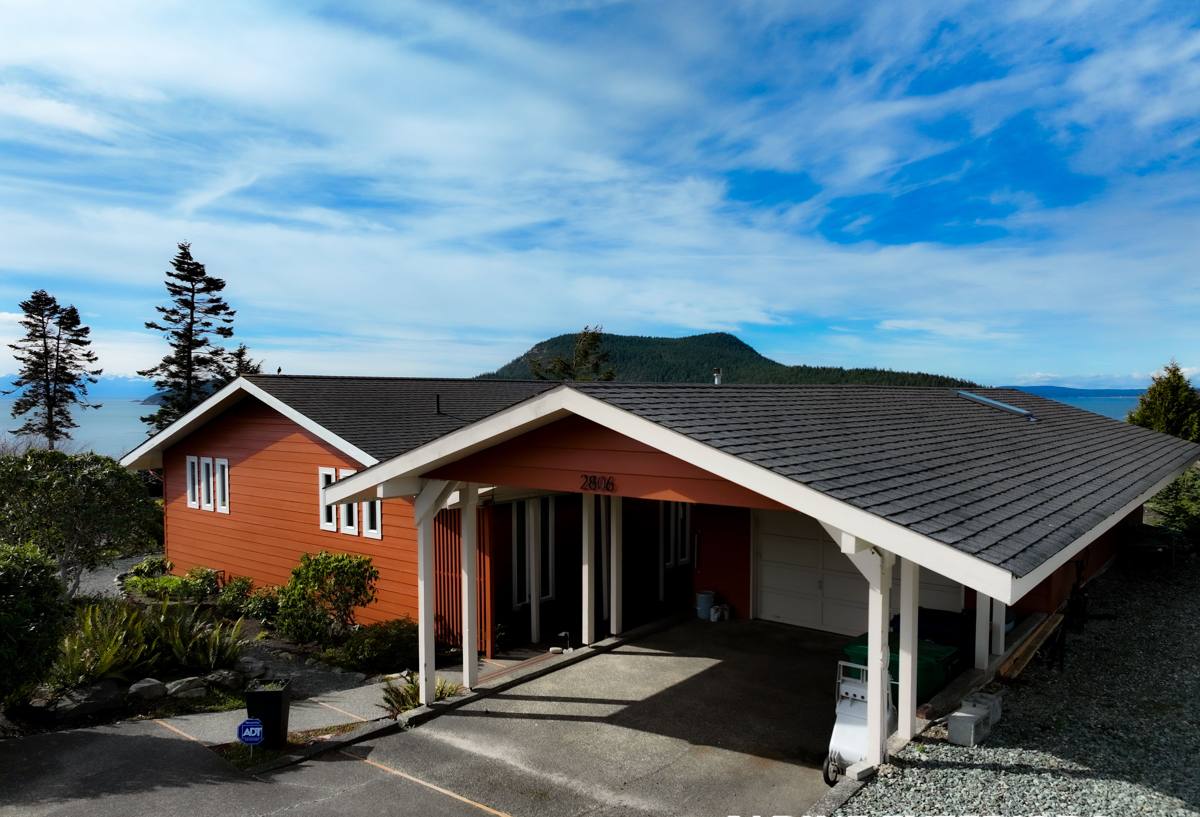
What Burlington's Climate Does to a House
Salt Air and Moisture
Burlington isn't oceanfront, but it's close enough to Puget Sound and Padilla Bay that salt-laden air reaches inland with the prevailing wind. Salt air accelerates corrosion on fasteners, flashing, and any metal component on the exterior of a house. It also holds moisture longer than dry inland air, which means painted surfaces, caulked joints, and wood trim stay damp longer after a storm passes. Over years, that slower drying cycle is what drives rot, paint failure, and swelling in materials that aren't built to handle it.
Driving Rain
Skagit County gets rain that comes in sideways more often than people expect, pushed by wind off the water and funneled through the valley. Driving rain finds every gap in a building envelope — a lifted shingle, a hairline crack in old caulk, a window flange that wasn't sealed correctly. Vertical rain is forgiving of minor imperfections. Driving rain is not. This is one of the biggest reasons flashing detail and installation quality matter more here than in a lot of the country.
Moss Season
Between the shade cover, the moisture, and the mild temperatures, Skagit County effectively has a moss season that runs much of the year. Moss on a roof isn't just cosmetic — it holds water against shingles, works into seams, and can lift roofing material over time, especially on north-facing slopes and areas shaded by mature trees. Moss on siding does something similar: it holds dampness against the surface long after the rest of the house has dried out, which is exactly the kind of prolonged wet exposure that breaks down lesser siding materials.
Siding for Burlington Homes
We install James Hardie fiber cement siding exclusively. That's not a marketing position — it's a decision we made after years of servicing homes in this climate and seeing which materials hold up and which ones create repeat problems.
Why We Don't Install Everything
Vinyl siding is inexpensive and widely available, but it's a petroleum-based product that expands and contracts with temperature swings, can crack in cold snaps, and doesn't hold paint if a homeowner ever wants to change the color. It also doesn't offer much resistance to impact or wind-driven debris. LP SmartSide and similar engineered wood products perform reasonably when installed and maintained perfectly, but they're wood-based, and wood-based siding depends on caulking, painting, and edge-sealing staying intact year after year. In a climate with this much sustained moisture, that's a maintenance burden we're not willing to put a homeowner's house behind. Primed spruce and cedar are honest, traditional materials, but raw wood siding in a high-moisture coastal climate means an ongoing cycle of painting, caulking, and watching for rot at the joints — real upkeep, not occasional touch-up.
We're upfront about this with every homeowner: these products aren't scams, and plenty of them are installed correctly and perform fine elsewhere. But for the specific combination of salt air, driving rain, and moss season that Burlington deals with, we don't think they're the right long-term bet, and we don't put our name on installations we don't believe in.
Why James Hardie
James Hardie fiber cement is non-combustible, doesn't rot, and doesn't feed moss or mildew the way wood-based products can. It's engineered specifically for wet climates through Hardie's HZ10 product line, which is built for the Pacific Northwest's moisture profile. The ColorPlus factory finish is baked on under controlled conditions rather than field-painted, which means better fade resistance and none of the touch-up cycle that wood siding demands. It carries a strong transferable warranty, which matters if a Burlington homeowner ever sells — the coverage follows the house, not just the original owner.
None of this means Hardie siding is maintenance-free. It still needs to be installed to spec — correct fastener placement, proper flashing at every penetration, and caulking only where Hardie's install guide calls for it. Installed wrong, any siding product will fail early. Installed right, Hardie is what we're confident standing behind on a Burlington home for decades.
Roofing in a Wet, Mossy Climate
Roofing in Burlington has to account for moss growth, sustained rain exposure, and the wind that comes through the valley. We look closely at valley flashing, ridge venting, and roof-to-wall transitions — these are the spots where driving rain and pooling moisture cause the most damage over time, and they're often where older roofs were cut corners on originally. Moss treatment and prevention are part of a realistic maintenance plan here, not an afterthought; a roof with good ventilation and the right underlayment sheds moss growth far more slowly than one without.
We also pay attention to how a roof interacts with the siding and window flashing below it — water that isn't properly directed off a roof edge doesn't just damage the roof, it runs down the wall assembly and creates problems for the siding and trim underneath. Treating the roof and the walls as one connected system, rather than separate trades, is part of how we avoid that.
Windows That Hold Up to Driving Rain
Window failure in this climate is rarely about the glass — it's almost always about the seal and the flashing around the frame. A window that's air- and water-tight when installed on a dry day in a controlled shop can still fail on the wall if the flashing isn't lapped correctly to shed water downward and outward. We install windows with attention to how water moves around the opening during a real Skagit County storm, not just how the unit performs on paper.
For homeowners weighing a window replacement alongside siding work, doing both at the same time is usually the more efficient and better-sealed approach, since the flashing for windows and the water-resistive barrier behind the siding are meant to integrate as one system.
Decks in a Moss-and-Moisture Environment
Decks take a different kind of punishment here — standing moisture on horizontal surfaces, algae and moss growth on boards that don't get much sun, and ledger board connections that are constantly exposed to runoff from the roof above. A deck built or repaired without proper flashing at the ledger, adequate spacing for drainage, and the right fastener hardware for a damp coastal climate will show problems years before it should. We build and repair decks with those specifics in mind rather than treating deck work as generic carpentry.
Comparing Common Siding Options for This Climate
| Material | Moisture Behavior | Maintenance | Longevity in Skagit County |
|---|---|---|---|
| Vinyl | Doesn't rot, but can crack/warp with temperature swings | Low, but non-repairable if damaged | Moderate |
| LP SmartSide / engineered wood | Depends heavily on sealed edges and paint film | High — regular caulk/paint upkeep | Shorter if maintenance lapses |
| Primed spruce / cedar | Absorbs moisture; prone to rot at joints | High — ongoing painting and caulking | Shortest without diligent upkeep |
| James Hardie fiber cement | Engineered for wet climates (HZ10), does not rot | Low — factory-cured ColorPlus finish | Strong, with transferable warranty |
What to Ask Before Hiring an Exterior Contractor
- Do they carry current Washington state contractor licensing and liability insurance?
- Will they explain their flashing and water-management details specifically, not just the visible material?
- Do they have experience with this specific climate — salt air, driving rain, moss — rather than a generic install approach?
- Is their siding installer certified for the manufacturer's install requirements, where applicable?
- Do they provide a written scope covering siding, flashing, trim, and any roof or window tie-in work?
- Is the warranty in writing, and does it cover labor as well as material?
Why a Local Crew Matters
A contractor who works Skagit County regularly has already seen how a given roof valley, wall assembly, or window flashing detail performs after a few wet winters — not just how it looks the day it's installed. That matters more here than in a mild, dry climate, where installation mistakes take longer to show up. We're not guessing at what Burlington's weather does to a house; we're accounting for it in the flashing details, the material choice, and the sequencing of the job.
If you're weighing a siding, roofing, window, or deck project on a Burlington home, we're happy to take a look and talk through what we're seeing and why. Reach out for a free, no-pressure estimate using the form below.