 Anacortes Exterior
 Exteriors on Fidalgo Island Face a Different Set of Problems
Fidalgo Island sits right where the Salish Sea meets the western edge of Skagit County, and that location shapes everything about how a house ages here. Homes close to the water pick up salt-laden air that settles on siding, trim, fasteners, and roofing metal day after day. Add in the driving rain that comes through on winter storms — often blown sideways by wind off the water rather than falling straight down — and you get moisture pushed into joints, laps, and fastener holes that a calmer climate would never test. Then there's the shade. Mature tree cover and marine humidity keep many exteriors damp long after a storm passes, which is exactly the environment moss, algae, and mildew need to take hold and spread.
None of this means a house on Fidalgo Island is destined for problems. It means the materials and installation details matter more here than they do in a drier, calmer part of the state. We've built our whole approach around that reality.
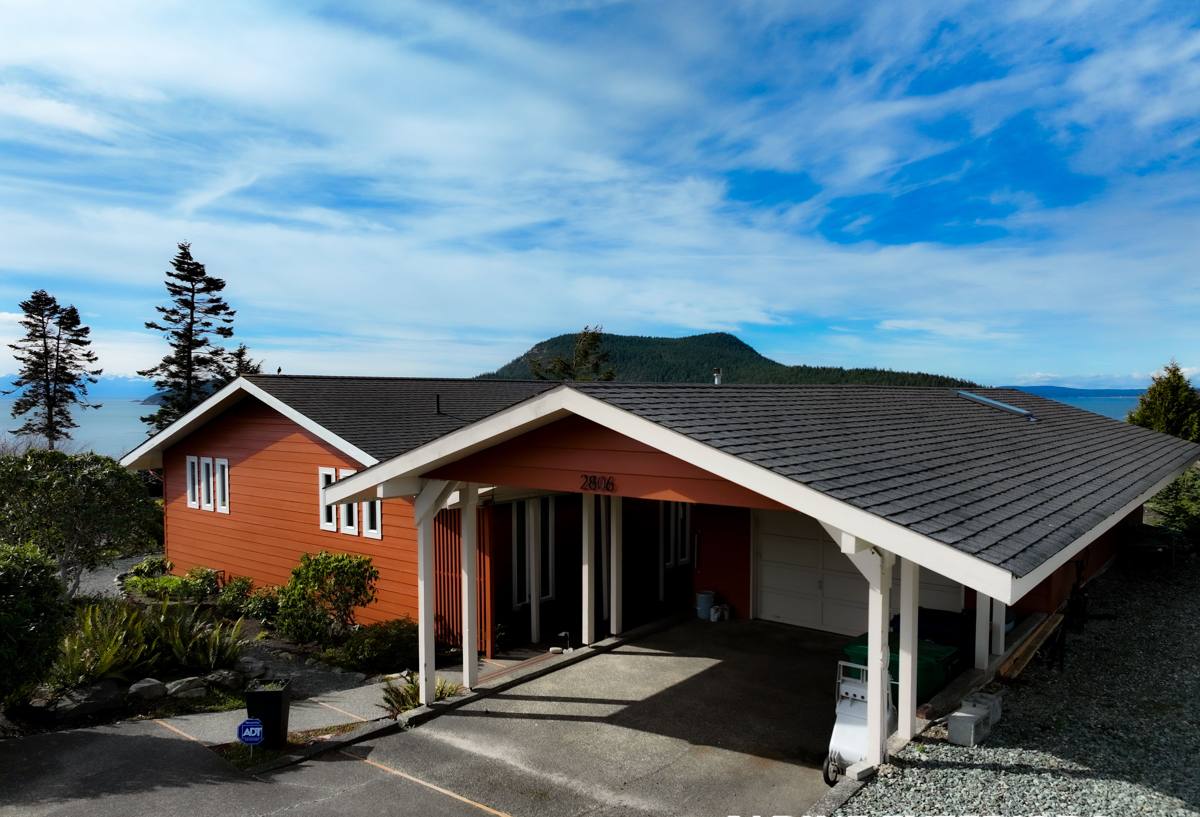
Salt Air: Slow, Steady, and Easy to Underestimate
Salt air damage rarely announces itself. It's not a single storm event — it's years of fine salt particles landing on surfaces, holding moisture against them, and accelerating corrosion in anything metal: nail heads, flashing, gutter hangers, screws. On siding, the bigger risk is what salt-laden moisture does to materials that weren't engineered to shed it. Paint film breaks down faster. Wood-based products absorb and hold moisture longer between dry spells. Caulked joints that would last a decade inland can fail years sooner this close to the water.
This is one of the reasons we don't install primed spruce or cedar siding on Fidalgo Island jobs. Both can be attractive materials in the right setting, but they depend on an unbroken paint or finish film to keep moisture out, and that film is under constant attack from salt air, UV, and driving rain here. Once it's compromised anywhere — a hairline crack, a fastener pop, a corner joint — moisture gets behind the material and the clock starts on rot.
Why We Install James Hardie Fiber Cement — and Only That
We standardized on James Hardie fiber cement siding for every siding job we take on, and Fidalgo Island's climate is a big part of why. Fiber cement is non-combustible and dimensionally stable, meaning it doesn't swell, warp, or absorb moisture the way wood-based sidings can. Hardie's ColorPlus factory-finish system bakes the color onto the board under controlled conditions before it ever reaches the jobsite, which gives it a more consistent, durable finish than field-applied paint — an important edge in an environment that's hard on painted surfaces.
Hardie also builds region-specific product lines engineered for different climate zones. In the Pacific Northwest, that means HZ5 formulations designed with wet, moderate-temperature climates in mind. It's not a marketing label — it's a real difference in how the board is engineered to perform where rain, humidity, and moss pressure are a daily fact of life rather than an occasional event.
What We Don't Install, and Why
We don't install vinyl siding, LP SmartSide, Cemplank, or Allura. Each of those products has legitimate use cases elsewhere, but on Fidalgo Island specifically:
- Vinyl can warp or become brittle with temperature swings and offers little resistance to wind-driven rain finding its way behind loose panels near the coast.
- LP SmartSide is an engineered wood product — it performs reasonably well in many climates but depends heavily on caulking and paint maintenance staying ahead of moisture, which is a harder standard to hold to in a wet marine environment.
- Cemplank and Allura are also fiber cement, so the base material shares some of Hardie's strengths, but we've standardized our crews, warranty backing, and finish system around one product line so we can guarantee consistent installation quality and stand fully behind the result.
Choosing one system lets us install it correctly every time, know its failure points cold, and back it with a warranty that means something.
Roofing: Moss Is the Real Adversary
Moss season is basically year-round pressure on Fidalgo Island roofs, not a seasonal nuisance. Shade, humidity, and organic debris from surrounding trees give moss and algae everything they need to establish themselves on roofing material, and once they take hold, they hold moisture against the roof surface far longer than bare shingle would. That accelerates granule loss on asphalt roofing and can work its way under improperly sealed laps over time.
Good roofing work here isn't just about the shingle or membrane — it's about ventilation, flashing detail at valleys and penetrations, and gutter systems that actually clear water instead of backing it up under the roof edge. We pay close attention to those details because they matter more in a wet, shaded climate than almost anywhere else in the state.
Roofing Maintenance Realities for This Area
Homeowners on Fidalgo Island should expect to think about roof moss and debris management more actively than someone in a drier inland location. That doesn't mean constant intervention, but it does mean periodic gutter clearing and keeping an eye out for moss buildup before it spreads across large sections of the roof.
Windows: Where Driving Rain Finds the Weak Points
Wind-driven rain is a tough test for window installations because it pushes water against and around openings instead of letting it run off passively. A window that's perfectly fine in a calm rain event can leak in a sideways storm if the flashing and sealant details around it aren't done right. On Fidalgo Island, we treat window replacement as much about the flashing and integration with the siding system as it is about the window unit itself. Good glass and frames matter for energy performance and condensation control, but the water-management details around the opening are what actually keep a home dry through a real coastal storm.
Decks: Built for Wet, Not Just for Looks
Decks on Fidalgo Island deal with the same moisture and shade pressures as siding and roofing — plus the added factor of standing water on horizontal surfaces and ground-level dampness that keeps structural framing wet longer between dry stretches. Material choice, proper spacing for drainage and airflow, and ledger/flashing details where the deck meets the house are all more important here than they'd be in a dry climate. We build and repair decks with those realities in mind rather than treating deck work as purely cosmetic.
Why a Local Crew Matters Here
A contractor who mostly works in a different part of the state — or even a different part of Skagit County — doesn't necessarily have a feel for what Fidalgo Island's combination of salt exposure, wind direction, and shade cover does to an exterior over time. Knowing which corners of a house catch the worst of the driving rain, which north-facing sections stay damp longest, and how quickly moss re-establishes itself after a cleaning isn't something you get from a spec sheet. It comes from working on homes in this specific area, season after season, and seeing what actually holds up.
Local knowledge also matters for permitting and code details specific to Anacortes and Skagit County jurisdictions, and for knowing realistic timelines around weather windows — there are stretches of the year when siding and roofing work simply goes better because of a break in the rain, and a local crew plans around that instead of against it.
Material Comparison for Coastal Exposure
| Material | Moisture/Salt Air Performance | Maintenance | Typical Longevity |
|---|---|---|---|
| James Hardie Fiber Cement | Engineered for wet climates; dimensionally stable; factory finish resists coastal wear | Low — occasional wash, no repainting on ColorPlus finish | Multi-decade with strong transferable warranty |
| Vinyl Siding | Can warp with temperature swings; joints vulnerable to wind-driven rain | Low, but panel replacement common after damage | Variable, shorter in harsh coastal exposure |
| LP SmartSide | Wood-based; depends on paint/caulk integrity to resist moisture | Moderate to high — paint and joint upkeep needed | Shorter than fiber cement if maintenance lapses |
| Cedar / Primed Spruce | Absorbs moisture readily; salt air accelerates finish breakdown | High — regular refinishing required | Shortest without diligent upkeep |
Signs Your Fidalgo Island Home May Need Exterior Attention
- Moss or dark algae streaking spreading across roof slopes or shaded siding sections
- Soft or spongy spots when pressing on siding, especially near ground level or window trim
- Peeling, bubbling, or chalky paint film on wood-based siding or trim
- Rust staining below fasteners, gutters, or flashing
- Water stains or drafts around windows during wind-driven storms
- Visible gaps, cupping, or discoloration on deck boards near the house connection
What Working With Us Looks Like
We start with an honest look at the specific exposure your home has — how close to the water it sits, how much shade cover it gets, which sides take the worst of the weather — and walk through what that means for siding, roofing, window, and deck decisions. Where James Hardie fiber cement is the right fit for siding, we'll explain the product lines and finish options that make sense for the look you want. Where roofing, window, or deck work is the priority, we scope it around the same moisture-management principles that guide our siding work.
If you're weighing options for a home on Fidalgo Island, we're happy to take a look and put together a free, no-pressure estimate — no obligation, just a straight assessment of what your exterior actually needs.