 Anacortes Exterior
 Exterior Contracting for Mount Vernon Homes
Mount Vernon sits inland from the saltwater of Fidalgo and Padilla Bay, but the weather pattern that defines this part of Skagit County doesn't stop at the water's edge. Homes here still deal with long stretches of driving rain off the Sound, damp air that lingers through fall and winter, and a moss and algae season that can run eight months or more depending on how much shade a roof or wall gets. We work throughout the Anacortes and Skagit County area, and Mount Vernon's mix of older farmhouse-style homes, mid-century ranches, and newer developments gives us a good cross-section of the exterior problems this climate causes.
This page covers how we approach siding, roofing, windows, and decks for homes in and around Mount Vernon, and why a crew that actually works this region regularly — instead of driving in from out of the area for a one-off job — tends to catch problems that get missed otherwise.
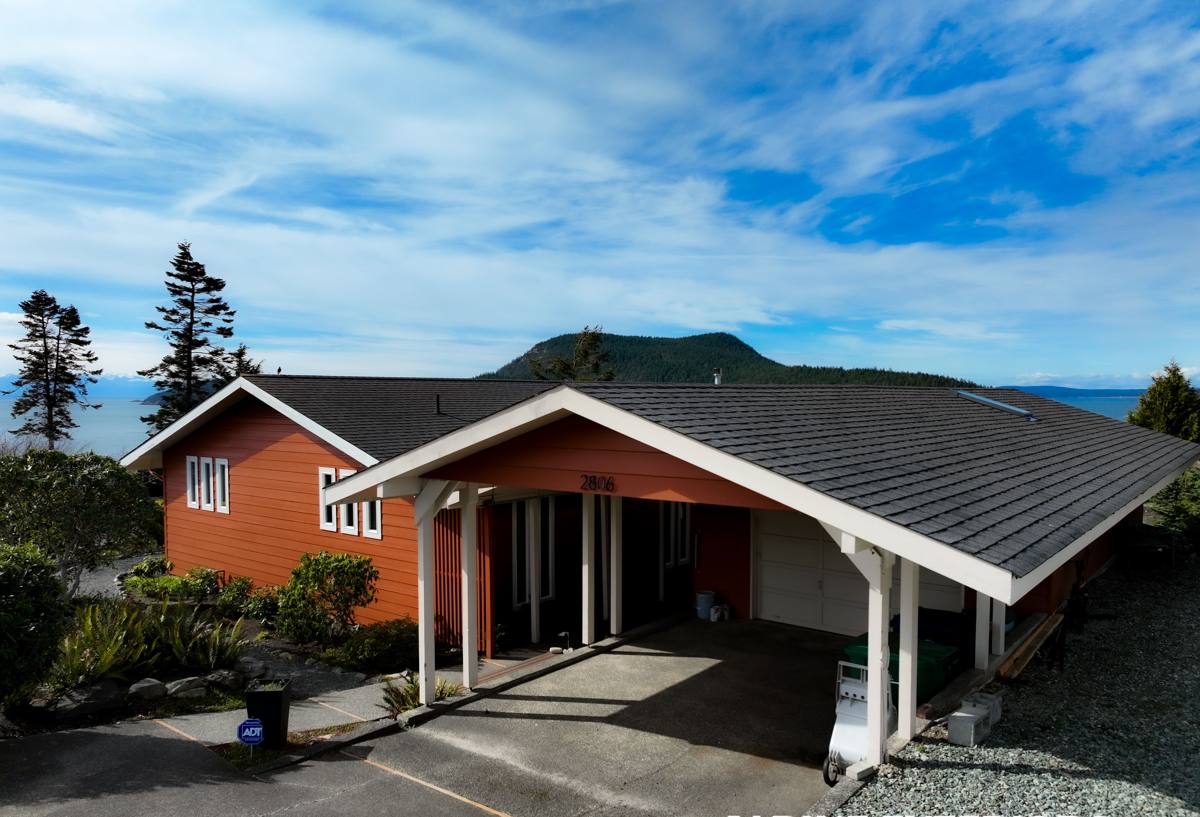
What the Skagit Valley Climate Does to a House
Mount Vernon's exposure isn't identical to oceanfront Anacortes, but it shares the core issue: sustained moisture. The Skagit Valley sits low and often holds fog and dampness longer than higher ground nearby. Combine that with wind-driven rain events common to Western Washington winters, and you get a few predictable failure points on older homes:
- Wood and composite siding that stays damp at butt joints and corners, leading to swelling, paint failure, or rot over time
- North- and shade-facing roof slopes that collect moss and hold moisture against shingles longer than sun-exposed slopes
- Window frames and sills where failed caulking lets water track behind trim and into wall framing
- Deck ledger boards and joists that stay wet through the rainy season, especially on decks without good drainage or ventilation underneath
None of this is unique to any one street or subdivision in Mount Vernon — it's a function of the regional climate acting on whatever exterior materials and workmanship are already in place. Homes with poor original flashing or aging paint-grade siding show it first.
Why Moss Season Matters More Here Than People Expect
Roof moss gets treated as a cosmetic nuisance, but in a climate like this it's a moisture management issue. Moss holds water against the roofing material, which shortens the life of asphalt shingles and can work its way under shake or older composite roofing. On siding, algae and moss growth in shaded, moisture-prone areas signal that a wall isn't drying out between rain events — which is exactly the condition that leads to rot in wood-based products.
Siding: Why We Only Install James Hardie
We install James Hardie fiber cement siding exclusively. We don't install vinyl, LP SmartSide, Cemplank, Allura, or primed wood products like spruce or cedar lap siding, and we're upfront about why: those products all carry real trade-offs in a climate like Skagit County's that we're not willing to install and then walk away from.
Vinyl siding is inexpensive and low-maintenance in the sense that it doesn't need painting, but it's a thin plastic product that can warp in temperature swings, crack on impact in colder weather, and it doesn't hold up structurally the way fiber cement does — it's cladding, not a durable wall system. Wood-based composite siding like LP SmartSide performs reasonably well when installed and maintained precisely to spec, but any breach in the factory coating or caulking lets moisture into the engineered wood substrate, and once that happens, deterioration can move fast. Primed cedar or spruce siding requires ongoing paint maintenance that most homeowners underestimate — repainting every 5-8 years in a climate this wet, plus caulk maintenance at every joint, or the wood starts absorbing water at the end grain and seams.
James Hardie fiber cement is non-combustible, doesn't rot, and its ColorPlus factory finish is baked on and warrantied against fading and peeling — which matters when you're not repainting every few years just to keep water out. Hardie also makes climate-engineered HZ5 product lines built specifically for wetter, colder regions like the Pacific Northwest, which is what we install here. It carries a strong transferable warranty, which matters if you ever sell the home.
Siding Comparison
| Material | Moisture Resistance | Maintenance | Typical Lifespan |
|---|---|---|---|
| James Hardie Fiber Cement | Excellent — non-combustible, dimensionally stable | Occasional wash, no repainting needed | 30+ years |
| Vinyl | Fair — can warp, seams allow water tracking | Low, but limited repair options | 15-25 years |
| LP SmartSide / Engineered Wood | Good if intact; poor once coating fails | Caulk and coating checks required | 15-25 years, install-dependent |
| Primed Cedar/Spruce | Fair — absorbs moisture at end grain and joints | Repainting every 5-8 years | Highly maintenance-dependent |
Roofing for Mount Vernon's Wet, Shaded Lots
A lot of Mount Vernon properties have mature tree cover, which is great for shade and privacy but means more roof debris, more shaded moss growth, and gutters that need more attention than a wide-open, sun-exposed roof would. We look at a few things when we assess a roof here:
- Flashing condition at valleys, chimneys, and roof-to-wall transitions — these are the most common leak points, not the field of the roof itself
- Moss and algae growth patterns, which tell us which slopes are staying wet longest
- Gutter and downspout capacity relative to the roof's drainage load during heavy rain events
- Underlayment and decking condition on older roofs, where trapped moisture may have already caused damage that isn't visible from the ground
We install roofing systems suited to sustained wet-climate exposure, and we pay particular attention to proper ventilation, since a roof that can't breathe traps moisture underneath the shingles regardless of how good the shingles themselves are.
Windows: Where Small Gaps Cause Big Problems
Window failures in this climate are rarely about the glass — they're about the seal around it. Failed caulking, degraded flashing tape, or trim that was never properly sealed lets water track behind the window frame and into the wall cavity, where it can sit unnoticed for a long time before showing up as interior staining, soft trim, or drywall damage. When we replace windows, we treat the flashing and integration with the surrounding siding as equally important as the window unit itself — a great window installed with poor flashing will leak eventually, especially in a climate that gets this much sustained rain.
Decks: Built for Standing Water and Freeze-Thaw
Decks in Mount Vernon take a beating from the same driving rain and prolonged dampness that affects siding and roofing, plus they deal with standing water on horizontal surfaces and occasional freeze-thaw cycles in winter. The most common deck problems we see are:
- Ledger board attachment points that were never properly flashed, allowing water to wick into the house rim joist
- Joists and beams without adequate airflow underneath, staying damp long after rain has stopped
- Deck boards that trap water in fastener holes or between boards with too-tight spacing
We build and repair decks with drainage, flashing, and ventilation as the starting point — the decking material matters, but a well-built structure underneath is what actually determines how long a deck lasts in this climate.
Why a Local Crew Matters
Skagit County's climate isn't identical to Seattle's, and it isn't identical to the Olympic Peninsula's either — it has its own rain patterns, its own moss pressure, and its own mix of older and newer housing stock. A crew that works this area regularly knows which roof orientations collect moss fastest, which older siding products are showing their age around Mount Vernon, and how to sequence exterior work around the wetter months instead of fighting them. That local familiarity translates into fewer surprises once a project is underway and fewer callbacks after it's done.
Planning an Exterior Project in Mount Vernon
Whether you're dealing with siding that's showing rot at the corners, a roof that's collecting more moss every year, windows that are letting water in around the frame, or a deck that's starting to feel soft underfoot, the right time to address it is before the damage spreads into the framing behind it. A few things worth checking before you call anyone:
- Are there soft spots, discoloration, or bubbling paint anywhere on the siding, especially near corners and window trim?
- Is moss or algae buildup concentrated on shaded roof slopes or north-facing walls?
- Do windows show staining or softness in the interior trim or sill during heavy rain?
- Does the deck have any soft boards, rust streaks from fasteners, or visible gaps at the ledger board?
If we're on-site for one of these issues, we'll walk the rest of the exterior with you and point out anything else worth keeping an eye on — no pressure, no upsell, just an honest look at where the house stands.
If you're in Mount Vernon or elsewhere in Skagit County and want an honest look at your siding, roofing, windows, or deck, we're happy to come take a look and give you a straightforward, no-pressure estimate.