 Anacortes Exterior
 What Primed Wood Siding Actually Is
Primed spruce (and similar primed wood lap siding) is solid-sawn lumber, milled into siding profiles and coated with a factory primer before it ships. The primer is meant to give the wood a head start against moisture before painting. It's been a staple of Pacific Northwest construction for generations, and there's a reason for that: it's real wood, it looks like real wood because it is real wood, and a lot of homeowners in Anacortes grew up with it on the house next door.
We get asked about it often, usually by homeowners who want that traditional lap-siding look, or who are trying to match an older home. This page is about why, after years of doing exterior work on homes across Skagit County, we made the call to stop installing it — and what we install instead.
What Primed Wood Gets Right
To be fair to the product: primed spruce is easy to work with, it's relatively inexpensive up front, it takes paint well when it's properly sealed on all six sides, and a lot of it is still standing on well-maintained homes decades later. None of that is in dispute. The issue isn't that wood siding is a bad material in some abstract sense — it's that it's a high-maintenance material in a specific climate, and Anacortes' climate is not a forgiving one for it.
The Anacortes Climate Problem
Salt Air
Anacortes sits surrounded by saltwater — Rosario Strait, Guemes Channel, the Swinomish Channel. Salt-laden air moves through the area constantly, and it settles on every exterior surface, wood siding included. Salt is hygroscopic, meaning it actively pulls moisture out of the air and holds it against whatever it's sitting on. On primed wood, that means the primer and paint film are under constant chemical stress from salt deposits, not just physical stress from rain.
Driving Rain
Skagit County gets its share of wind-driven rain off the water, and driving rain doesn't just wet the face of a board — it forces moisture up under laps, into end-grain, and into any gap where caulking has shrunk or a fastener has backed out slightly. Wood siding's greatest vulnerability is always end-grain and cut edges, and driving rain finds those spots.
Moss Season
Anacortes has a long, wet moss season that runs a good chunk of the year. Moss and algae hold moisture against the siding surface for extended periods, shade the wood from the sun and airflow that would otherwise help it dry, and slowly work their way into any surface checking in the wood. On primed wood siding, a season or two of unchecked moss growth on a north-facing wall can undo a paint job that was otherwise sound.
None of these three conditions are exotic or rare here — they're just what a normal year looks like in this part of Washington. That's the entire reason this page exists.
Where Primed Wood Siding Actually Fails
In our experience, primed wood siding rarely fails as a sheet-wide problem. It fails in specific, predictable spots:
- Butt joints and end cuts where the factory primer was never meant to be the final protection — that's the installer's job to seal, and it's easy to skip in the field
- Bottom edges near grade, decks, and roof-to-wall transitions where splashback and standing moisture concentrate
- Nail heads that back out slightly over time, cracking the paint film and opening a path for water
- North- and west-facing walls that stay shaded and damp longest through moss season
- Any spot where the paint film has been neglected past the 3-5 year repaint window
Once moisture gets behind the paint film on wood siding, the wood swells, the paint bond fails, and you get the classic symptoms: peeling, cupping boards, soft spots, and eventually rot that has to be cut out and replaced board by board.
The Maintenance Reality
The core issue with primed wood siding isn't a single failure mode — it's the maintenance schedule it demands to avoid failure. Primer is not a finish coat; it's a base layer that has to be top-coated and then repainted on a recurring cycle to keep water out. In a marine climate like Anacortes, that cycle tends to run shorter than it would inland, because salt air and moss both accelerate paint film breakdown.
| Task | Typical Interval in a Marine Climate | What Happens If Skipped |
|---|---|---|
| Full repaint / recoat | 3-5 years | Paint film chalks and cracks, moisture reaches bare wood |
| Caulk joint inspection | 1-2 years | Shrunk or failed caulk lets water behind laps |
| Moss/algae removal | Annually, more on shaded walls | Trapped moisture accelerates paint and wood breakdown |
| Spot repair of nail pops, dings | As needed, ideally same season | Small openings become entry points for water over a winter |
That's not a maintenance plan most homeowners sign up for when they choose a siding material — it's a maintenance plan that gets discovered a few years in, usually right around the time the paint starts looking rough.
Why We Standardized on James Hardie
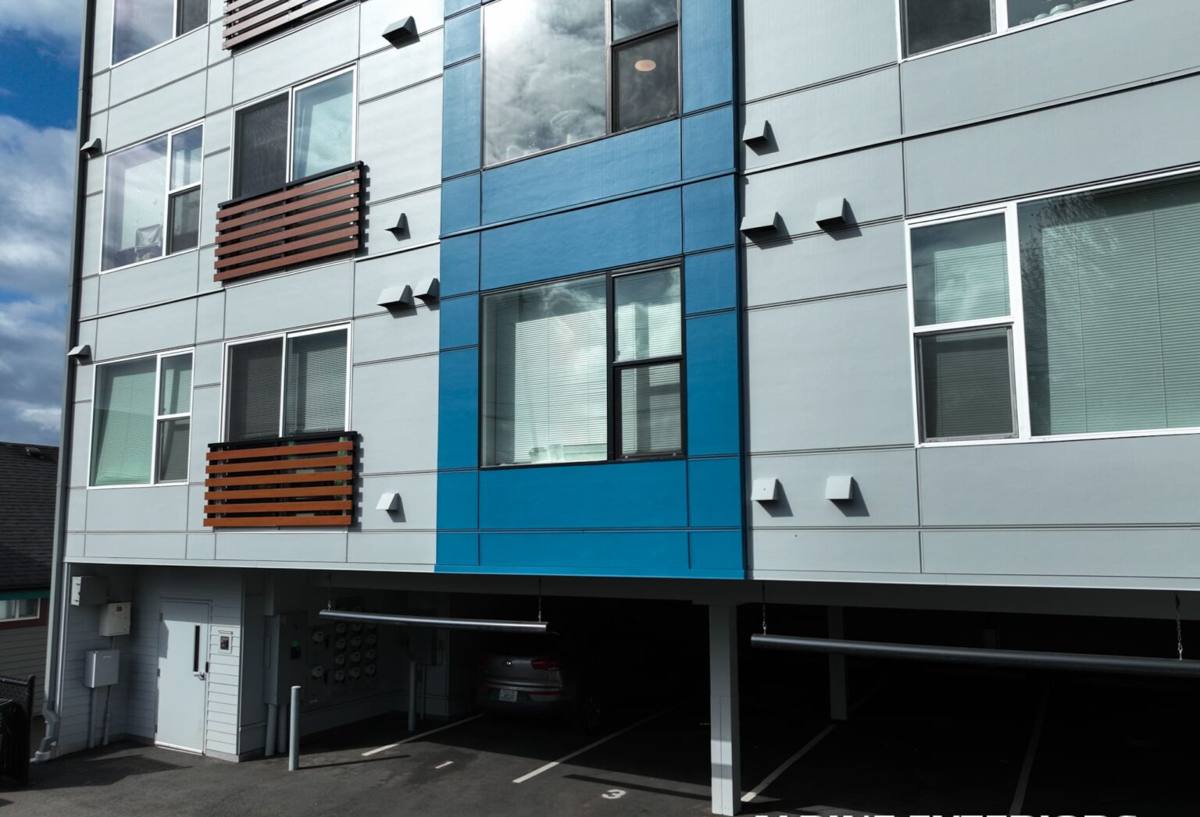
We made the decision to install James Hardie fiber cement siding exclusively, and this climate is a big part of why. Hardie's HZ5 product line is engineered specifically for climates with prolonged moisture exposure, including marine environments like ours. Fiber cement doesn't have wood's grain structure, so it doesn't absorb and swell with moisture the way solid lumber does, and it isn't a food source for moss and algae the way wood fiber can be.
The other piece is the finish. Hardie's ColorPlus factory-applied finish is baked on under controlled conditions before the boards ever reach the jobsite, rather than relying on a field-applied paint job to be the sole moisture barrier over years of salt air and rain. It carries its own finish warranty separate from the product warranty, and it's designed to hold color and resist fading and chipping far longer than a field-primed-and-painted wood board typically will in this climate.
We're not installing Hardie because it's trendy — we're installing it because after years of pulling failed primed wood siding off homes in this county, it's the product that actually matches what this climate demands.
What This Means If You're Comparing Options
If you're weighing primed wood against fiber cement for a project in Anacortes or anywhere in Skagit County, the honest comparison isn't purely about upfront cost — it's about total cost and effort over the life of the siding.
| Factor | Primed Wood Siding | James Hardie Fiber Cement |
|---|---|---|
| Upfront material cost | Lower | Moderate to higher |
| Repaint cycle | Every 3-5 years | ColorPlus finish holds far longer; field paint (if chosen) lasts longer than on wood |
| Moisture/rot risk | Higher, especially at joints and cut ends | Non-combustible, engineered to resist moisture damage |
| Moss/algae resistance | Low — wood fiber holds moisture | Higher — not an organic growth medium |
| Warranty structure | Typically limited to the primer manufacturer, not the full system | Strong transferable product and finish warranties |
Questions Worth Asking Any Contractor
Whatever siding material you land on, a few questions separate a careful installer from a fast one:
- Are all six sides of the material sealed or factory-finished, including cut ends made on site?
- What's the manufacturer's flashing and clearance spec at grade, decks, and roof lines, and will the crew follow it exactly?
- Who backs the warranty — the material manufacturer, the installer, or both — and what voids it?
- Is the crew certified or trained on this specific product's installation requirements?
- What does routine maintenance actually look like over the first 10 years?
If a contractor can't answer those clearly for the product they're proposing, that's worth noticing before you sign anything.
Our Bottom Line
Primed wood siding isn't a scam or a bad product in every setting — it's a material that needs a maintenance commitment this climate makes expensive and easy to fall behind on. Between the salt air off the surrounding water, the driving rain, and a moss season that doesn't let up for long, we've seen too many primed wood jobs turn into rot repair within a decade to keep installing it in good conscience. James Hardie fiber cement is what we put on homes instead, because it's built for exactly the conditions Anacortes throws at a house.
If you're planning a siding project and want a straight answer about what will actually hold up on your home, we're happy to take a look and put together a free, no-pressure estimate.