 Anacortes Exterior
 Guemes Island: A Beautiful Place to Live, A Tough Place to Own a House
Guemes Island sits just across the channel from Anacortes, reachable only by the Guemes Island ferry, and that separation shapes everything about how homes there age. It's a quieter, more rural stretch of Skagit County than the mainland, with more waterfront and wooded exposure per household and less shelter from the weather systems that move through the San Juan Islands and the Salish Sea. Salt-laden air off the water, driving rain that comes in sideways during winter storms, and a moss season that can stretch from fall through spring all put real, cumulative stress on siding, roofing, windows, and decks. None of this is unique to Guemes Island, but it's more concentrated here than in a lot of in-town Anacortes neighborhoods, and it changes what "good enough" exterior work actually means.
We work on Guemes Island as an extension of our Anacortes service area, not as an afterthought. That matters more on an island than it does almost anywhere else we work, and we'll get into why later in this page. First, let's talk about what the climate actually does to a house out here.
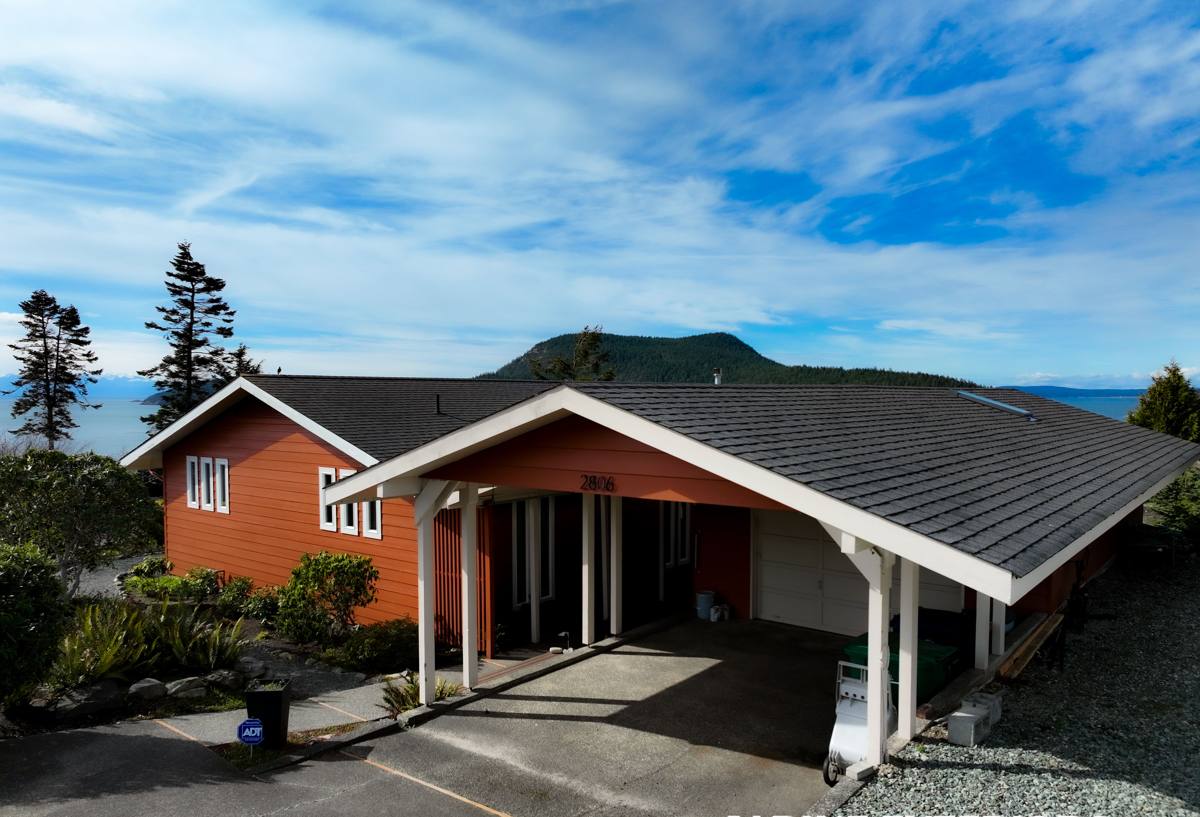
What Salt Air and Driving Rain Do to a Home's Exterior
Salt Air and Corrosion
Homes closer to the water on Guemes Island are exposed to airborne salt that settles on every exterior surface — siding, trim, fasteners, window hardware, and metal roofing or flashing. Over years, that salt exposure accelerates corrosion of untreated or poorly-rated metal components and can degrade the surface finish of some siding materials faster than the same product would wear in a drier, more inland setting. It doesn't mean a house near the water is doomed — it means material choice and fastener selection matter more here than they do a few miles inland.
Driving, Wind-Driven Rain
Western Washington gets a lot of rain in general, but wind-driven rain is a different problem than rain falling straight down. On an exposed island lot, storms can push moisture sideways into wall assemblies, under poorly lapped siding, around window flanges, and into any gap in flashing or trim. This is why proper installation detailing — house wrap, flashing, kick-out flashing at roof-wall intersections, correctly lapped siding courses — matters as much as the material itself. A great product installed with sloppy water management will still leak.
Moss and the Long Wet Season
Guemes Island's tree cover and marine humidity create ideal conditions for moss growth on roofs, north-facing siding, and shaded decking. Moss holds moisture against the surface it's growing on, which speeds up rot in wood substrates, degrades roofing material over time, and can trap water against siding in ways that shorten its service life if it's never cleaned off. A long moss season isn't just a cosmetic issue — it's a maintenance and moisture-management issue.
Siding: Why We Install Only James Hardie Fiber Cement
Siding is the first line of defense against everything described above, and it's also the exterior material most homeowners judge purely on upfront cost or color options rather than how it will hold up over 20 to 30 years in a marine environment. We made a deliberate decision to install only James Hardie fiber cement siding — not vinyl, not LP SmartSide, not Cemplank or Allura, not primed spruce or cedar — and Guemes Island's conditions are a good example of why.
Why Not Vinyl
Vinyl siding is affordable and low-maintenance in mild conditions, but it's a thin plastic product that can warp or become brittle with temperature swings and UV exposure over time, and its seams and panels are more vulnerable to wind-driven rain intrusion at the laps than a properly installed fiber cement system. In an exposed island setting, that's a real trade-off, not a hypothetical one.
Why Not Wood-Based Products (LP SmartSide, Primed Spruce, Cedar)
Engineered wood siding and traditional wood siding both perform well when maintained diligently, but they're wood-based, and wood-based products are more sensitive to sustained moisture exposure, edge swelling, and the kind of fungal growth that a long, moss-friendly wet season encourages. Cedar can look beautiful, but it demands a maintenance commitment — refinishing, caulking, inspection — that many homeowners underestimate, especially on a property that isn't visited daily.
Why Not Other Fiber Cement Brands
Cemplank and Allura are also fiber cement, and fiber cement as a category is the right general direction for this climate. Our standard came down to consistency of manufacturing, the factory-applied ColorPlus finish (which resists fading and chipping better than field-applied paint), climate-specific HZ product engineering, and a warranty structure we're comfortable standing behind on every job. James Hardie's HZ5 product line in particular is engineered for the kind of moisture-heavy, moderate-freeze Pacific Northwest climate Guemes Island sits in.
What Hardie Gets Right Here
Fiber cement doesn't rot, doesn't attract wood-boring insects, and is non-combustible — a genuine benefit anywhere, including on a semi-rural island with longer emergency response times than an in-town address. Its factory finish holds color and resists moisture-driven failure better over the long haul than field-finished alternatives, which matters when a house sits through decade after decade of Skagit County winters.
Roofing on an Exposed Island Lot
Roofs on Guemes Island take a combination of wind, moss, and driving rain that makes both material choice and installation detail important. Wind-driven rain finds its way in at valleys, penetrations, and roof-to-wall transitions long before it ever fails a field of shingles, so flashing detail is where most roof leaks in this climate actually originate. Moss control matters too — a roof that's allowed to hold moss for years will shed granules and shorten its service life faster than one that's kept reasonably clear. We look at ventilation as part of any roofing job here as well; poor attic ventilation combined with constant moisture load is a recipe for premature sheathing rot, whether the roof surface itself looks fine or not.
Windows: Managing Condensation and Wind-Driven Rain
Windows on marine-exposed, wooded lots face two related problems: wind-driven rain intrusion around the frame if flashing isn't done correctly, and higher interior condensation loads from the persistent humidity of a Pacific Northwest wet season. Correct flashing and integration with the siding water-management plane matters more here than the window brand itself — a high-end window installed without proper flashing will leak, and a mid-range window installed correctly usually won't. We also talk with homeowners about realistic energy performance expectations given the climate, rather than overselling numbers that don't reflect actual Skagit County conditions.
Decks: Built for a Marine, Shaded Environment
Decks on Guemes Island often sit under tree cover, near the water, or both — which means more moss and algae growth, more sustained dampness in decking boards, and faster corrosion of standard fasteners exposed to salt air. Fastener and hardware selection (stainless or coated, rated for coastal exposure) matters as much as decking material choice. Whether a deck is wood or composite, gaps for drainage, proper ledger flashing where the deck meets the house, and periodic cleaning to keep moss from taking hold are what actually determine how long it lasts.
Why a Local, Ferry-Aware Crew Matters
Guemes Island isn't accessed the same way as an in-town Anacortes address — getting a crew, materials, and equipment on and off the island means working around ferry schedules and capacity, which most mainland contractors simply don't plan for well. A crew unfamiliar with that logistics reality tends to under-schedule island jobs, show up short a material delivery, or stretch a project out over more site visits than it should take. We factor ferry timing into scheduling and material staging up front, which keeps island jobs running on a realistic timeline instead of getting quietly deprioritized in favor of easier-to-reach addresses.
Comparing Siding Options for a Marine, Wet-Climate Property
| Material | Moisture/Salt-Air Performance | Maintenance Burden | Typical Longevity Here |
|---|---|---|---|
| James Hardie Fiber Cement | Non-combustible, engineered HZ lines for wet climates, factory ColorPlus finish | Low — occasional wash, no refinishing | Decades with correct install |
| Vinyl | Can warp/become brittle with UV and temperature swings; seam vulnerability | Low, but limited repair options if damaged | Variable; shorter in exposed sites |
| LP SmartSide / Engineered Wood | Wood-based; sensitive to sustained moisture and edge swelling | Moderate — inspection and sealant upkeep | Shorter if moisture management lapses |
| Cedar / Primed Spruce | Natural wood; needs consistent refinishing to resist rot and moss | High — regular refinishing and caulking | Depends heavily on upkeep discipline |
A Practical Seasonal Checklist for Guemes Island Homes
- Check north-facing and shaded siding and roof areas for moss buildup at least twice a year
- Inspect flashing at roof valleys, chimneys, and roof-to-wall transitions before the wet season ramps up
- Look at deck fasteners and hardware for early corrosion, especially near the waterline or under tree cover
- Clear gutters and downspouts before fall storms — clogged gutters push wind-driven rain back into fascia and siding
- Check window flashing and caulking annually, since this is where most wind-driven rain intrusion starts
- Wash siding periodically to remove salt residue and organic growth before it takes hold
Getting Exterior Work Done Right on Guemes Island
Whether you're dealing with aging siding, a roof that's due, tired windows, or a deck that's seen one too many wet winters, the fixes that actually hold up out here come down to material choices suited to a marine, moss-prone climate and installation detail that respects how wind-driven rain actually moves through a wall or roof assembly. That's the standard we hold every job to, on the island or in town.
If you'd like an honest look at what your Guemes Island home's siding, roof, windows, or deck actually need, we're happy to provide a free, no-pressure estimate — just fill out the form below.