 Anacortes Exterior
 What LP SmartSide Actually Is
LP SmartSide is an engineered wood siding product made from wood strands bonded with resins and waxes, then treated with a zinc borate solution for insect and fungal resistance, and finished with a factory or field-applied coating. It comes in lap, panel, and trim configurations, and it's a legitimate step up from the OSB-based hardboard sidings that gave engineered wood a bad name in the 1990s. LP has spent real engineering effort on this product, and in dry, moderate climates it performs reasonably well when installed and maintained correctly.
We're not writing this page to tell homeowners in Anacortes that LP SmartSide is a scam or that every installation fails. It isn't, and it doesn't. We're writing it because we get asked why a company that used to install a range of siding products now installs only James Hardie fiber cement, and LP SmartSide is one of the products people ask about most. The honest answer involves how this specific material performs against the specific weather Fidalgo Island and the rest of Skagit County throw at a house.
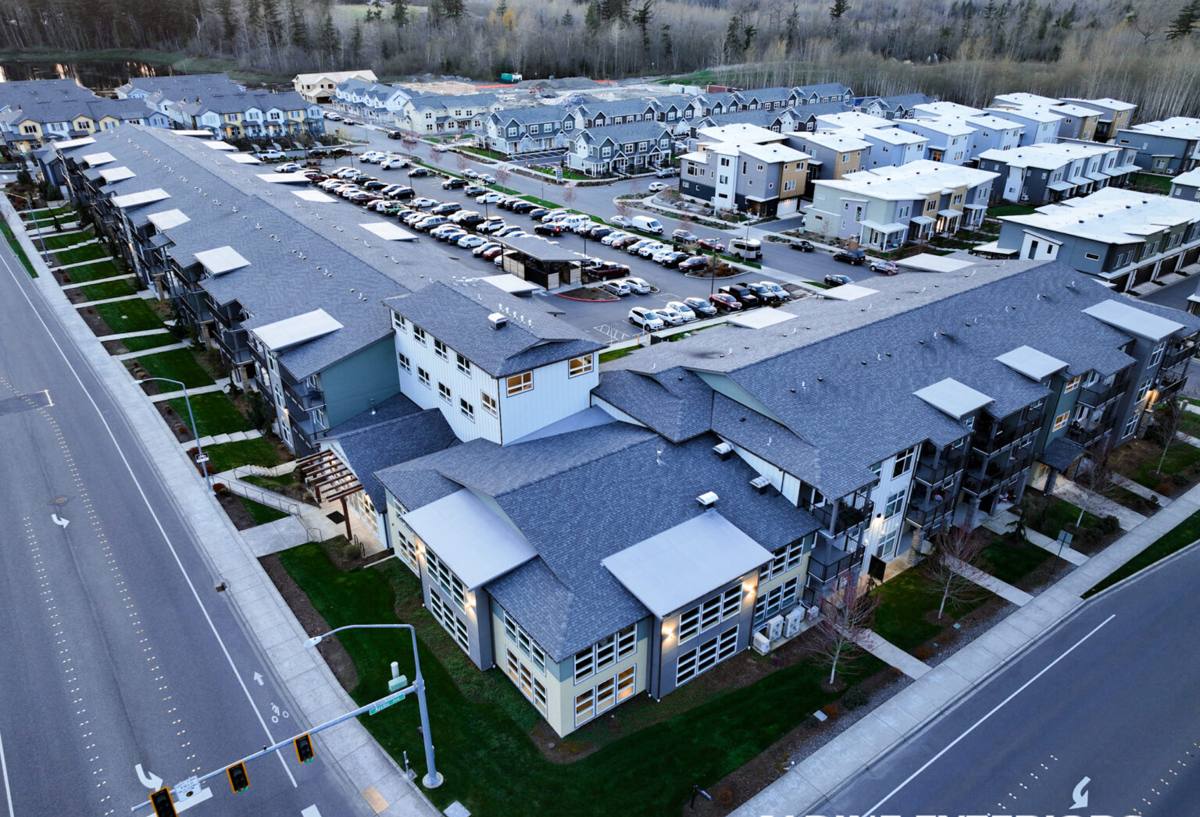
The Core Issue: It's Still Wood
Underneath the resin binders and the borate treatment, LP SmartSide is a wood-strand composite. Wood, in any engineered form, has one fundamental vulnerability that fiber cement does not: it swells, checks, and eventually decays when it stays wet for extended periods. The zinc borate treatment slows fungal growth and deters insects, and the factory coating (on SmartSide's ArmorGuard and similar prefinished lines) sheds water reasonably well while it's intact. But every seam, cut edge, nail penetration, and field-cut corner is a place where that protection has to be re-established by the installer, every time, correctly.
Fiber cement doesn't have that problem because there's no organic wood fiber for moisture to feed on. That single difference in raw material is the reason we standardized on Hardie rather than LP, and it's worth walking through what it means in practice for a house in this part of Washington.
Why Skagit County's Climate Makes This a Bigger Deal
Anacortes sits on Fidalgo Island, surrounded by salt water on three sides, and that geography shapes the maintenance math for any wood-based siding. A few things stack up here that don't stack up the same way in a drier inland market:
- Salt air: Marine air carries fine salt that settles on exterior surfaces and accelerates the breakdown of coatings and sealants faster than it would inland.
- Driving rain: Storms coming off the Strait of Juan de Fuca and Rosario Strait often arrive with wind-driven rain that pushes moisture into laps, joints, and butt seams rather than letting it simply run off a flat wall.
- A long moss and algae season: The Pacific Northwest's extended wet, mild stretch from fall through spring is exactly the kind of environment moss, lichen, and algae thrive in, and organic growth on a wood-based product holds moisture against the surface for days at a time.
- Slow drying windows: Even after rain stops, overcast, humid stretches mean siding here doesn't get the rapid dry-out that helps wood-based products shed absorbed moisture in sunnier climates.
None of that is a problem unique to this one product — it's a problem for any wood-based cladding. But it's precisely why the margin for installation error on LP SmartSide is smaller here than it would be in, say, eastern Washington, and why the long-term maintenance burden on the homeowner is higher.
Where Installation Quality Makes or Breaks the Product
Field Cuts and Exposed Edges
LP SmartSide's factory-applied coating protects the face and, on prefinished lines, the primed edges. But every time a piece gets cut on site — around a window, at a corner, at a butt joint — that cut edge is raw, uncoated wood strand until the installer field-treats it with the manufacturer's specified sealer or primer. Skip that step, rush it, or use the wrong product, and you've created a wick point for moisture right where two panels meet.
Clearances and Flashing Details
LP publishes specific minimum clearances between the bottom of the siding and roof lines, decks, patios, and grade, plus flashing requirements at every horizontal transition. These aren't suggestions — they're the difference between water shedding away from the wall and water wicking up into the panel from below. On a house exposed to driving rain off the water, getting these details wrong shows up as swelling and staining years before it would on a drier site.
Caulking and Joint Maintenance
LP SmartSide relies on sealed joints and butt seams to keep water out of the panel ends. Caulk is a maintenance item, not a permanent seal — it shrinks, cracks, and separates from UV exposure and temperature cycling over time. That means the homeowner is signing up for a recurring inspection-and-recaulk cycle for the life of the siding, and a missed cycle in a wet climate compounds faster than it would somewhere drier.
What This Looks Like Over Time
When LP SmartSide is installed to spec on a well-detailed house and the homeowner keeps up with caulk and coating maintenance, it can perform well for many years. The failure pattern we've seen — and the reason we stopped installing it — isn't dramatic collapse. It's slow: edge swelling at panel ends where field treatment was thin, telegraphing of moss and algae growth on north-facing and shaded walls, coating chalking and fading faster in salt air than the warranty literature assumes, and soft spots developing at ground-level clearance violations that often trace back to a deck or landscaping change made years after the original install, not the installer's original mistake.
That last point matters. A siding product that depends on ongoing homeowner vigilance — regrading soil away from the wall, keeping gutters clear, recaulking joints, repainting on schedule — puts a maintenance obligation on the homeowner that a lot of people don't fully understand when they choose the product based on upfront cost.
How It Compares to James Hardie Fiber Cement
| Factor | LP SmartSide | James Hardie Fiber Cement |
|---|---|---|
| Base material | Engineered wood strand with resin binder | Cement, sand, and cellulose fiber — non-organic |
| Moisture vulnerability | Swells and can decay at unsealed edges/cuts | Does not swell or rot; moisture doesn't feed decay |
| Fire behavior | Combustible, treated wood product | Non-combustible |
| Finish | Factory or field coating; recoat/caulk cycle needed | ColorPlus factory finish backed by its own warranty |
| Climate-specific engineering | General product line | HZ5 product line engineered for Pacific Northwest moisture exposure |
| Typical maintenance | Periodic recaulking, edge inspection, repainting | Occasional washing; no recoat cycle with ColorPlus |
| Warranty structure | Manufacturer warranty, often prorated | Long-term transferable warranty on substrate and finish |
We're not claiming LP SmartSide is unsellable or that every home with it is in trouble. We're pointing out that the risk profile — how much depends on perfect installation and ongoing maintenance in a wet, salt-air climate — is meaningfully different from fiber cement, and that difference is the whole reason we made a company-wide call to install Hardie exclusively rather than offer both.
Why We Standardized on Hardie Instead
James Hardie fiber cement removes the core variable that worries us about wood-based siding in this climate: there's no organic fiber for the driving rain, salt air, and moss season to work against. The HZ5 product line is specifically formulated for climate zones like ours, the ColorPlus factory finish is baked on rather than field-applied and carries its own performance warranty, and the material is non-combustible, which matters more every wildfire season even on the wet side of the state. When we install it to Hardie's published specifications — proper clearances, correct fastening, factory-finished cut edges treated as required — we're handing homeowners a siding system where the manufacturer's engineering and our installation practices are pointed the same direction, rather than one that depends on years of homeowner follow-through to stay ahead of moisture.
That's the standard we chose to build the business around, and it's why we don't quote LP SmartSide, vinyl, or the other wood-adjacent products anymore even when a homeowner asks for them by name.
Questions Worth Asking Before You Choose Any Siding
- What is the base material, and how does it behave when it stays wet for days at a time?
- What ongoing maintenance does the manufacturer require to keep the warranty valid?
- How forgiving is the product of a field-cut edge or a slightly-off clearance detail?
- Is the finish factory-applied and warrantied, or does it depend on field painting?
- Does the manufacturer publish a product line engineered for this specific climate zone?
- What does the warranty actually cover — full replacement, prorated value, or finish only?
Our Recommendation for Anacortes Homes
If you're planning a re-side on Fidalgo Island or anywhere else in Skagit County, the salt exposure, driving rain, and long wet season are worth weighing as heavily as upfront cost. A product that performs beautifully in a dry climate isn't automatically the right call here, and a lower material price today can turn into a higher maintenance bill over the next fifteen years. We install James Hardie fiber cement because it's the product we're comfortable standing behind in this specific climate, not because it's the only siding that exists.
If you'd like to talk through what's on your house now, what condition it's in, and what a Hardie re-side would actually involve for your specific home, we're happy to take a look and put together a free, no-pressure estimate.