 Anacortes Exterior
 When a Repair Makes Sense — and When It Doesn't
Every siding call we get in Anacortes starts with some version of the same question: can this be patched, or does the whole wall need to come off? It's a fair question, and the honest answer is "it depends" — on the material, the extent of the damage, the age of the siding, and what's happening behind it that you can't see from the ground. This guide walks through how we make that call, and what homeowners in Skagit County should know before they decide.
A repair is the right move when damage is isolated, the underlying wall assembly is dry and sound, and the siding material itself still has useful life left. Replacement becomes the right move when damage is widespread, when moisture has gotten behind the siding and started working on the sheathing or framing, or when the material has simply reached the end of what it can reasonably be expected to do in our climate.
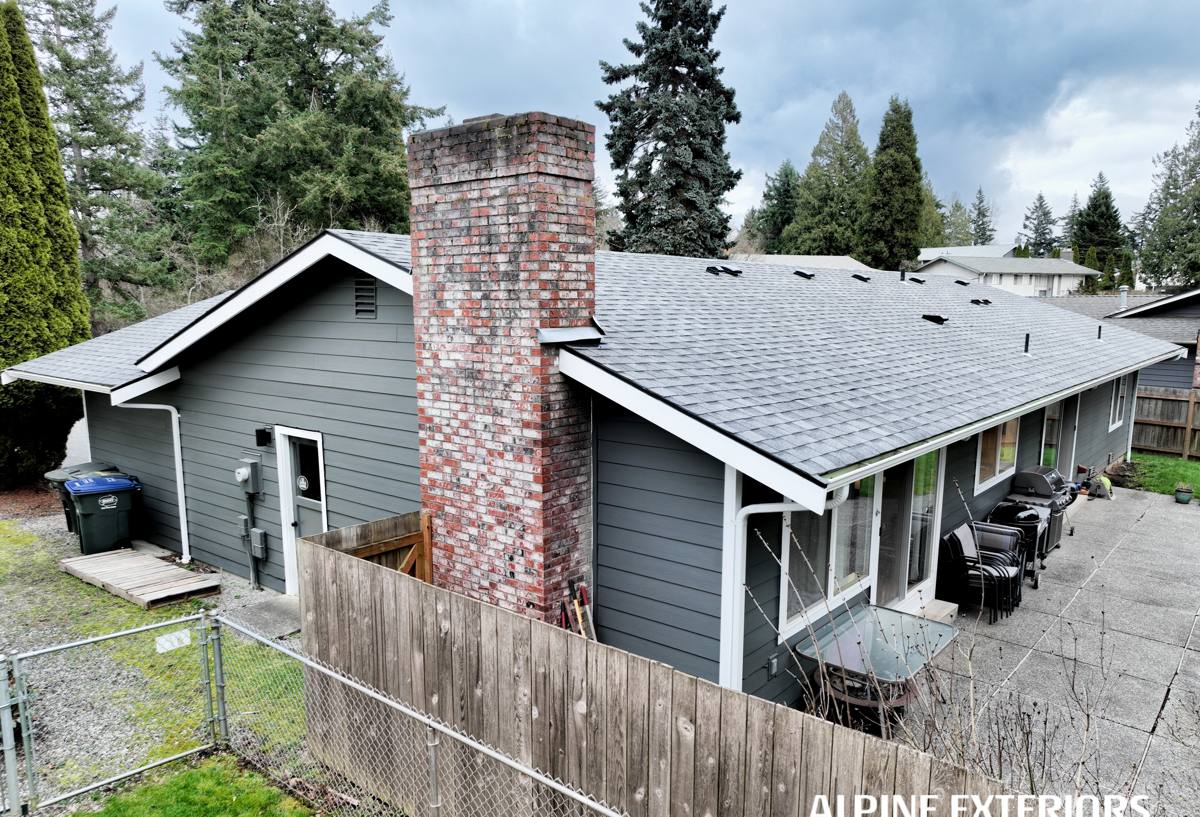
What Anacortes' Climate Does to Siding Over Time
Anacortes sits right on the water, and that shapes every siding decision on the peninsula. Salt air, driving rain off the Sound, and a moss season that can stretch from October through May all put a different kind of stress on exterior walls than you'd see in a drier inland climate.
Moss and Organic Growth
Skagit County's damp, mild winters are ideal for moss, algae, and mildew. On siding materials that hold moisture — untreated wood, some engineered wood products — organic growth isn't just cosmetic. It holds water against the surface, which accelerates rot and paint failure underneath.
Salt Air and Coastal Corrosion
Salt-laden air off Fidalgo Bay and the surrounding waterways is hard on fasteners, flashing, and any exposed metal trim. It also accelerates the breakdown of lower-quality paint films, which is why chalking and fading show up faster here than manufacturers' national averages suggest.
Driving Rain and Water Intrusion
Wind-driven rain off the water pushes water into laps, seams, and butt joints that would stay dry in a calmer climate. Once water finds a way behind the siding — through a cracked caulk joint, a missing piece of flashing, or a warped panel — it doesn't take long to start doing real damage to the wall behind it.
Common Siding Problems: Repairable or Not?
Not every problem on a wall means the whole side of the house needs to come off. Here's how we typically evaluate the most common issues we see on Anacortes homes.
| Problem | Usually Repairable | Why |
|---|---|---|
| A few cracked or damaged boards | Yes | Isolated damage on sound sheathing can often be cut out and replaced piece by piece |
| Loose or missing caulk at joints and trim | Yes | Simple maintenance item if caught before water gets behind the wall |
| Surface mildew or moss on an otherwise sound board | Yes | Cleaning and re-sealing solves it if the board itself hasn't started to break down |
| Widespread warping, buckling, or delamination | No | Usually signals the material itself is failing across the wall, not just in spots |
| Soft or spongy sheathing behind the siding | No | Indicates moisture has already compromised the wall assembly, not just the surface |
| Siding original to a 25-30+ year old home | Depends | Even sound-looking siding at this age is near or past its expected service life |
The Age and Material Factor
What the siding is made of changes the math significantly. A problem on a ten-year-old wall can mean something very different than the same-looking problem on another material.
Vinyl Siding
Vinyl is inexpensive to patch, but replacement pieces fade at a different rate than the original panels, so repairs are rarely invisible after a few years of UV exposure. Vinyl also becomes brittle with age and coastal wind exposure, and older profiles are frequently discontinued, making a color and profile match difficult to find years later.
Wood and Cedar Siding
Wood siding can often be spot-repaired early in its life, but in a climate with Anacortes' moss season and rainfall, wood needs consistent recoating and caulking to hold up. Once rot sets in at butt joints or bottom courses — which is common on wood siding here — it tends to spread faster than homeowners expect, and full or large-section replacement becomes the more sensible option.
Fiber Cement Siding
Fiber cement, installed and finished correctly, is dimensionally stable and doesn't absorb water the way wood does, which means isolated impact damage — a ladder strike, a stray baseball — can usually be repaired by replacing the individual board without disturbing the rest of the wall. It's also the one material on this list we stand behind installing ourselves, for reasons covered below.
Hidden Damage: Why a Small Repair Can Turn Into a Bigger Job
The trickiest part of any repair-versus-replace decision is that the siding itself is only the visible layer. Behind it sits a weather-resistive barrier, flashing, and the sheathing that ties into your home's structure. When water gets past the siding — through age, poor original installation, or storm damage — it can travel behind the wall for months before it ever shows up as a visible problem.
This is why we don't quote repairs sight unseen. What looks like a single cracked board on the surface can turn out to be the only visible sign of a wall section that's been wet behind the siding for years. In those cases, patching the visible board without addressing what's underneath just hides the problem — it doesn't fix it.
Cost Considerations: Repair vs. Full Replacement
Cost is rarely the only factor, but it's always part of the decision. Broadly, here's how the two options compare:
| Factor | Repair | Full Replacement |
|---|---|---|
| Upfront cost | Lower | Higher |
| Addresses hidden moisture issues | Only if uncovered during the work | Yes — sheathing and barrier are exposed and assessed |
| Color and material match | Can be imperfect, especially on older siding | Uniform across the whole home |
| Warranty coverage | Typically limited to the repaired section | Full manufacturer and installation warranty on the whole job |
| Best used when | Damage is isolated and the wall behind it is dry | Damage is widespread, siding is aging out, or moisture has reached the sheathing |
A repair that keeps getting redone every year or two often ends up costing more over time than one properly planned replacement — and it delays dealing with whatever is causing the recurring problem in the first place.
Why We Standardized on James Hardie for Full Replacements
When a home needs full or substantial siding replacement, we install James Hardie fiber cement and nothing else. That's a deliberate standard, not a default. Hardie's fiber cement is non-combustible, holds paint and factory-applied ColorPlus finishes far longer than wood or many engineered wood products, and Hardie engineers specific product lines, including its HZ5 climate-rated formulation, for wet, moderate coastal climates like ours rather than a one-size-fits-all national spec.
In a coastal, moss-prone climate like Anacortes and the rest of Skagit County, that matters. Fiber cement doesn't feed mold or moss growth the way wood fiber can, it resists the swelling and warping that damp conditions cause in some engineered wood products, and it carries a strong transferable warranty that backs the product for the long haul. We don't install LP SmartSide, vinyl, or cedar for full replacements — not because those products don't have their place somewhere, but because after years of doing this work on the water, Hardie is what we're comfortable putting our name behind.
A Practical Checklist: What to Look For Before You Decide
Before calling a contractor, a quick walk around your home can help you understand which category your siding falls into:
- Press gently on siding near the bottom courses and around windows — sponginess means moisture has likely reached the sheathing
- Look for boards that are cracked, split, or visibly separating from the wall
- Check caulk joints at trim, corners, and window edges for cracking or gaps
- Note how much moss or algae has built up, and whether it returns quickly after cleaning
- Look for paint that's peeling, bubbling, or chalking heavily in one area versus the rest of the house
- Consider the age of the siding — anything original to a home built before the late 1990s deserves a closer look
- Check for soft spots, discoloration, or bowing on interior walls that back up to exterior siding
What to Expect From a Professional Assessment
When we come out to look at a siding problem, we're not just looking at the boards you called about. We check moisture levels where we can access them, look at flashing details around windows and doors, and assess the overall condition of the siding across the whole home — not just the section that prompted the call. That's the only way to give you an honest recommendation instead of a guess.
Sometimes that assessment confirms a simple repair is all you need. Other times it turns up enough age, moisture, or material failure that a full replacement is the more responsible recommendation, even if it wasn't what you called about. Either way, you'll get a straight answer about what we found and why.
If you're weighing a siding repair against a full replacement on your Anacortes home, we're happy to take a look and give you a free, no-pressure estimate — no obligation, just an honest read on what your siding actually needs.