 Anacortes Exterior
 Exterior Contracting for Bow, Washington
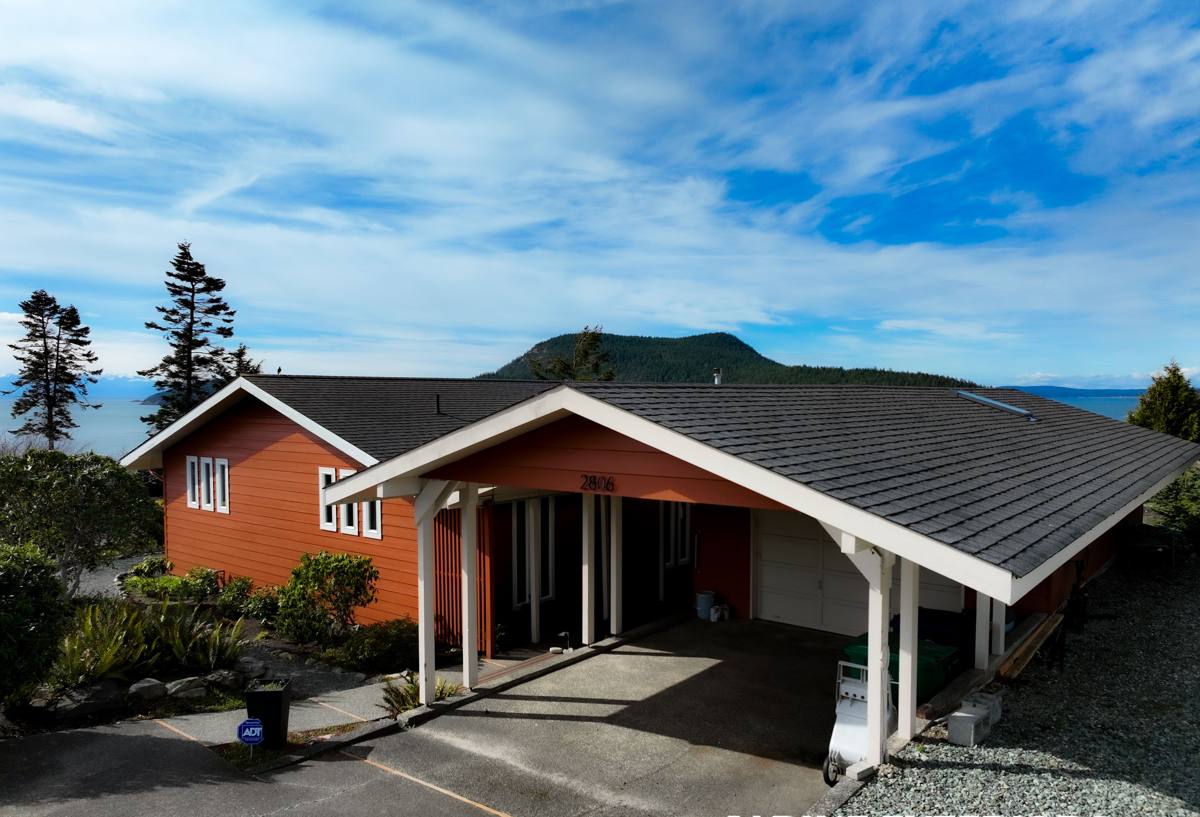
Bow sits in a stretch of Skagit County where farmland, wooded hillsides, and Samish Bay waterfront all meet within a few miles of each other. That mix means no two homes here face quite the same exterior conditions. A house tucked into trees off a rural road deals with heavy shade, dripping branches, and slow-drying siding. A place closer to the water deals with salt-laden wind and driving rain coming straight off the bay. Either way, the exterior of a Bow home works harder than it would almost anywhere inland, and it shows in ways homeowners here already recognize: green-black streaking on north walls, soft trim boards, roof edges that never seem to fully dry out.
We're an exterior contractor based in Anacortes, and Bow falls within the area we know well and work in regularly. We handle siding, roofing, windows, and decks, and we install exactly one siding product: James Hardie fiber cement. That's not a marketing angle — it's a standard we hold because of what this climate does to exteriors over ten, twenty, thirty years, not just what a product looks like on install day.
What the Climate Does to Homes in Bow
Skagit County's marine climate is mild compared to most of the country, but "mild" doesn't mean easy on a house. The combination that matters most in Bow is persistent moisture plus salt exposure plus limited direct sun on shaded lots. Each of those stresses a building envelope differently, and together they compound.
Salt Air Near Samish Bay
Properties nearer the water pick up airborne salt that settles on siding, trim, fasteners, and roofing metal. Salt is hygroscopic — it pulls moisture out of the air and holds it against whatever surface it lands on. On wood-based siding, that means the surface stays damp longer than rainfall alone would explain, which accelerates rot and paint failure. On fasteners and flashing, it accelerates corrosion. It's a slow process, but it's constant, and it never really stops even on dry days.
Driving Rain and Wind-Driven Moisture
Bow gets weather off the Sound and off the bay, and storms here often come with wind that pushes rain sideways into wall assemblies rather than letting it run straight down. That's harder on a building than the same amount of rainfall falling vertically, because it tests every seam, joint, and piece of flashing on the exterior. Homes with a lot of wall area facing the prevailing weather direction see this most.
Moss, Shade, and Slow-Drying Surfaces
A lot of Bow is wooded or has mature trees close to structures, which is part of what makes the area attractive to live in — and part of what makes exteriors harder to keep up. Shaded roof sections and north- or west-facing walls can stay damp for days after a storm. That's exactly the environment moss and algae need to establish, and once moss gets a foothold on a roof, it holds water against shingles and works into seams, shortening roof life well before the shingles themselves would otherwise wear out.
Siding: Why We Only Install James Hardie
We get asked why we don't offer vinyl, LP SmartSide, cedar, primed spruce, or other fiber cement brands. The honest answer is that we've made a professional judgment about what holds up in this specific climate over the long haul, and we'd rather stand behind one product we trust completely than offer several and let a homeowner gamble on the wrong one for their site.
James Hardie fiber cement is non-combustible, dimensionally stable in wet-dry cycling, and doesn't feed mold or rot the way wood-based products can when they stay damp. Hardie's ColorPlus factory finish is baked on under controlled conditions rather than field-painted, which matters in an area where a fresh paint job needs real drying weather that a wet spring in Skagit County doesn't always provide. Hardie also builds region-specific HZ5 formulations engineered for climates like ours — freeze-thaw cycling combined with sustained moisture — rather than a one-size-fits-all product.
None of that means other products are junk. Vinyl is inexpensive and low-maintenance in the sense that it doesn't need painting, but it can warp in temperature swings and doesn't offer the same fire performance or resale perception. LP SmartSide and cedar look warm and are genuinely good products when detailed correctly, but wood-based substrates are more sensitive to the sustained moisture and salt exposure common near the bay — they demand more caulking, more repainting, and more vigilance to keep water out of end grain and cut edges. In a climate that gives siding fewer good drying days per year, that maintenance burden adds up fast, and it's the kind of thing that's easy to underestimate when you're comparing products on a showroom sample rather than on a Skagit County wall.
| Factor | James Hardie Fiber Cement | Wood-Based / Vinyl Alternatives |
|---|---|---|
| Moisture behavior | Dimensionally stable, doesn't rot | Wood can swell/rot; vinyl can warp |
| Finish durability | Factory-baked ColorPlus finish | Field-painted or molded color, fades/chalks |
| Fire performance | Non-combustible | Wood is combustible; vinyl can melt/deform |
| Maintenance | Periodic cleaning, minimal repainting | Regular repainting, caulk upkeep on wood |
| Warranty | Strong transferable manufacturer warranty | Varies widely by product and installer |
Roofing in a Moss-Prone Area
Roofing decisions in Bow are shaped almost entirely by moisture retention and shade. We look at more than just the shingle product — proper ventilation, ice-and-water shield at vulnerable areas, and drip edge and flashing detail all matter as much as the roofing material itself. A roof that breathes properly and sheds water cleanly at every transition will simply outlast one that doesn't, regardless of shingle brand. On heavily shaded lots we also talk with homeowners about ongoing moss management, since even the best-installed roof will collect moss faster under a tree canopy than it would in the open.
Windows: Sealing Out Salt Air and Wind-Driven Rain
Older windows in this area often show their age through fogged double-pane glass, soft sills, and drafts around the frame — usually a sign that seals and flashing have given up under years of moisture cycling. When we replace windows, the flashing and sealing detail around the rough opening matters as much as the window unit itself. A high-quality window installed with poor flashing will leak; a modest window installed correctly will perform well for decades. In a wind-driven rain environment like Bow's, that installation discipline is non-negotiable.
Decks: Built for Wet-Dry Cycling
Decks in Bow take a beating from the same moisture and shade issues as siding and roofing, plus direct foot traffic and standing water if drainage isn't right. We pay close attention to board spacing, ledger flashing, and joist protection, since a deck that traps water against structural framing will develop hidden rot long before the surface boards show obvious wear. For homes near the water, we also factor in the added corrosion exposure on fasteners and hardware.
Why a Local Crew Matters for Bow Properties
A crew that works across Skagit County regularly knows the difference between a job on open, wind-exposed ground near the bay and a job on a shaded, tree-lined lot a few miles inland — and details the work differently for each. We're not guessing at what this climate does over time; we see the results of good and bad installation work on homes throughout this area every season. That local track record is also why we can speak plainly about product trade-offs instead of reciting a sales pitch: we've watched what holds up here and what doesn't.
What to Expect When You Call Us for a Bow Project
- An on-site walkthrough that looks at sun exposure, tree cover, and prevailing weather direction for your specific lot
- A straight answer about whether siding, roofing, windows, or decking is the priority based on visible wear and moisture risk
- An honest conversation about material options, including why we recommend James Hardie for siding work
- A written estimate with no pressure to sign on the spot
- A crew that shows up, communicates on schedule changes, and cleans up the site daily
Signs Your Bow Home May Need Exterior Attention
- Green or black streaking on siding, especially on shaded or north-facing walls
- Moss buildup on roof edges, valleys, or shaded slopes
- Soft, spongy, or discolored trim and window sills
- Paint that's peeling, bubbling, or chalking faster than expected
- Visible corrosion on exterior fasteners, hinges, or hardware
- Deck boards that stay damp long after rain has stopped, or that feel soft underfoot
Getting Started
If you're noticing any of the wear signs above, or you're just planning ahead for a home in Bow, we're happy to take a look and give you a clear, honest picture of what your exterior needs and what it doesn't. There's no cost and no pressure to a walkthrough — fill out the form below and we'll set up a time to come take a look at your home.