 Anacortes Exterior
 Exterior Work in Ship Harbor
Ship Harbor sits close to the water on Anacortes' western side, near the ferry terminal and the marine traffic that comes with it. Homes here live with a version of Skagit County weather that's more intense than what you'll find a few miles inland — steady wind off the water, salt-laden air, and rain that doesn't just fall, it blows sideways into siding, trim, and window frames. If you own a home in this part of Anacortes, your exterior is doing more work than the average house in the county, whether it looks like it or not.
We're a local exterior contractor, and Ship Harbor is one of the areas where we see the clearest evidence of what marine exposure does to a building over time. This page covers what that exposure actually means for siding, roofing, windows, and decks, and how we approach exterior work for homes in this stretch of Anacortes.
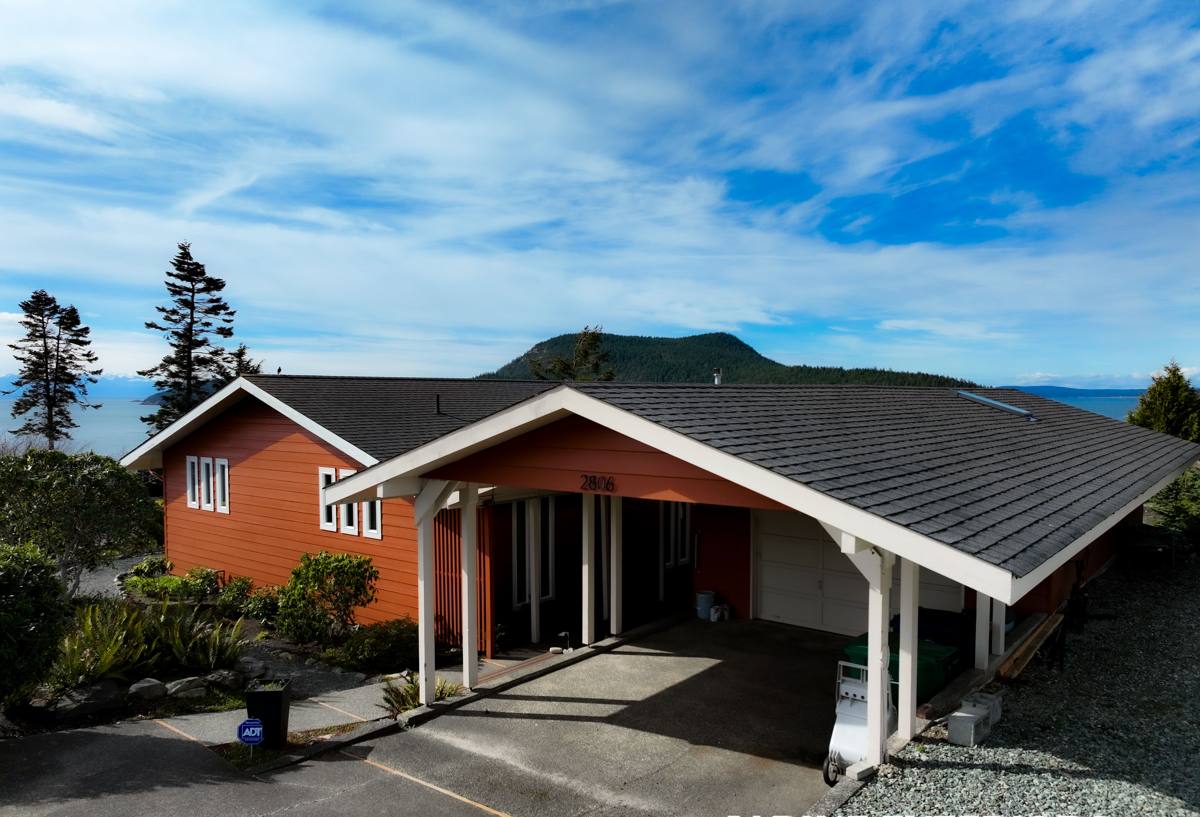
What the Ship Harbor Climate Does to a House
Salt Air and Corrosion
Proximity to Rosario Strait and the ferry landing means airborne salt is a constant, low-level presence on exposed surfaces. Salt air accelerates corrosion on fasteners, flashing, and any metal component on the building envelope. It also has a way of finding weak points in paint and caulking faster than it would inland, which is why exterior coatings and joint sealants tend to show wear sooner on waterfront-adjacent homes than on a comparable house a few miles east.
Driving Rain
Wind off the water turns ordinary rain into driving rain — water pushed horizontally into wall assemblies rather than just running down them. This matters enormously for siding performance. A product or installation detail that sheds water fine in a calm rain can still let moisture in when it's coming in at an angle, which is exactly the condition Ship Harbor gets on a regular basis through fall and winter.
Moss and Shade
Between tree cover and the long stretches of overcast, damp weather typical of this part of Washington, moss and algae growth is a near-constant maintenance issue on roofs, north-facing siding, and shaded decking. Left unaddressed, moss holds moisture against the surface it's growing on, which shortens the life of roofing material and can contribute to rot in wood components.
Quick Reference: Ship Harbor Exposure Factors
| Condition | What It Stresses | What It Means for Your Home |
|---|---|---|
| Salt air | Fasteners, flashing, paint, caulk | Faster corrosion and coating breakdown near the water |
| Driving rain | Siding laps, window flashing, trim joints | Water intrusion at points that would be fine in calm rain |
| Shade and moisture | Roofing, north walls, decking | Persistent moss and algae, slower drying |
| Wind exposure | Loose or aging siding, deck fasteners | Accelerated wear on anything not solidly installed |
Siding for Ship Harbor Homes
Siding is the single biggest factor in how well a Ship Harbor home holds up to this environment, because it's the material taking the brunt of the salt air and driving rain day after day. We install James Hardie fiber cement siding exclusively, and this is one of the areas of Anacortes where that decision matters the most.
Why We Don't Install Everything on the Market
We get asked why we don't offer vinyl, LP SmartSide, or some of the other fiber cement alternatives like Cemplank or Allura. The honest answer is that in a marine-exposed environment like Ship Harbor, the trade-offs of those products show up faster and cost homeowners more over the life of the siding.
- Vinyl siding can warp and become brittle with sustained wind and temperature swings, and its seams and panel joints give driving rain more opportunities to get behind the cladding.
- LP SmartSide is an engineered wood product, and wood-based siding is more sensitive to sustained moisture exposure than fiber cement — a real consideration where damp, shaded conditions are the norm rather than the exception.
- Primed wood or cedar looks great initially but demands a repainting and maintenance cycle that gets more aggressive near salt air, and any gap in that maintenance opens the door to moisture damage.
James Hardie fiber cement is non-combustible, dimensionally stable, and holds up to sustained damp conditions in a way that wood-based products structurally can't match. The ColorPlus factory finish is baked on and warrantied against fading — which matters here, because salt air and UV exposure are hard on field-applied paint. For a house facing this kind of exposure, we want the material working with the climate, not fighting it.
Hardie Product Lines We Use
James Hardie makes climate-engineered HZ5 product for the Pacific Northwest's wet, moderate climate, and it comes in a range of profiles — lap siding, shingle-style panels, board-and-batten, and trim — so we're not limiting a homeowner's design options by standardizing on one manufacturer. What we're standardizing on is the installation quality and moisture management behind the product, which is where most siding failures actually originate, regardless of brand.
Roofing for the Ship Harbor Area
A roof in this part of Anacortes is dealing with moss pressure, wind-driven rain finding its way under shingles or shakes at the edges, and salt air working on any exposed metal flashing or fasteners. Good roofing here isn't just about the shingle — it's about flashing details at valleys, chimneys, and roof-to-wall transitions, plus ventilation that lets the attic and roof deck dry out between storms instead of staying damp.
Moss management is a recurring conversation with Ship Harbor homeowners. Preventive measures — zinc or copper strips, periodic gentle cleaning — go a long way, but they only work if the underlying roofing system is sound. We look at both when we're on a roof here: what's growing on it now, and what condition it's actually in underneath.
Windows in a Marine-Exposed Environment
Window performance in Ship Harbor comes down to two things: the flashing and sealant detail around the frame, and the frame material's ability to handle sustained moisture and salt exposure without degrading. A window can be a good product and still leak if it's not integrated correctly into the wall assembly — and with driving rain being a regular event here, that integration work is not optional.
When we replace windows, we're paying close attention to how the new unit ties into the surrounding siding and weather barrier, because that's the point where most window-related water intrusion actually starts. This is also a natural moment to address any siding or trim damage around the opening before it's covered back up.
Decks Near the Water
Decks in Ship Harbor take a beating from the same conditions as the rest of the exterior — driving rain, salt air, and often more shade than the average Anacortes lot, which slows drying and encourages moss and mildew on decking surfaces. Fastener corrosion is a real issue this close to the water; hardware that would last for years inland can start showing rust and weakening well before its expected lifespan in a salt-air environment.
For deck work here, we pay attention to:
- Corrosion-resistant fastener and hardware choices appropriate for marine exposure
- Proper spacing and drainage so decking can actually dry out between rain events
- Ledger and structural connection points, where hidden moisture damage tends to start
- Railing and post materials that won't need constant refinishing to stay sound
How We Approach an Exterior Project in Ship Harbor
Every Ship Harbor project starts with an honest look at what the current exterior is actually dealing with — not just what it looks like from the street, but what's happening at the joints, flashing, and any areas that get direct wind and rain exposure off the water. From there we walk through material and scope options with the homeowner, with no pressure to do more than the house actually needs.
What to Expect from a Local Crew
- An assessment that accounts for this property's specific exposure — waterfront-adjacent homes aren't all identical, and orientation matters
- A written estimate that's clear about scope, materials, and timeline
- Installation detail that treats flashing, sealing, and moisture management as seriously as the finish material itself
- Straight answers about why we recommend what we recommend, including why we stick to James Hardie for siding rather than offering a menu of lower-cost alternatives
A crew that works across Skagit County regularly, rather than one that's unfamiliar with marine exposure, is going to catch details in a Ship Harbor home that get missed by an out-of-area contractor treating this like any other job. The wind loads, the salt exposure, the moss pressure — these aren't things you guess at from a general playbook.
Get an Estimate
If you're dealing with aging siding, a moss-covered roof, leaking windows, or a deck that's showing its age in Ship Harbor, we're happy to take a look and give you a straightforward read on what's going on and what it would take to fix it right. Reach out for a free, no-pressure estimate using the form below.