 Anacortes Exterior
 Flounder Bay: A Great Place to Live, A Hard Place to Be a House
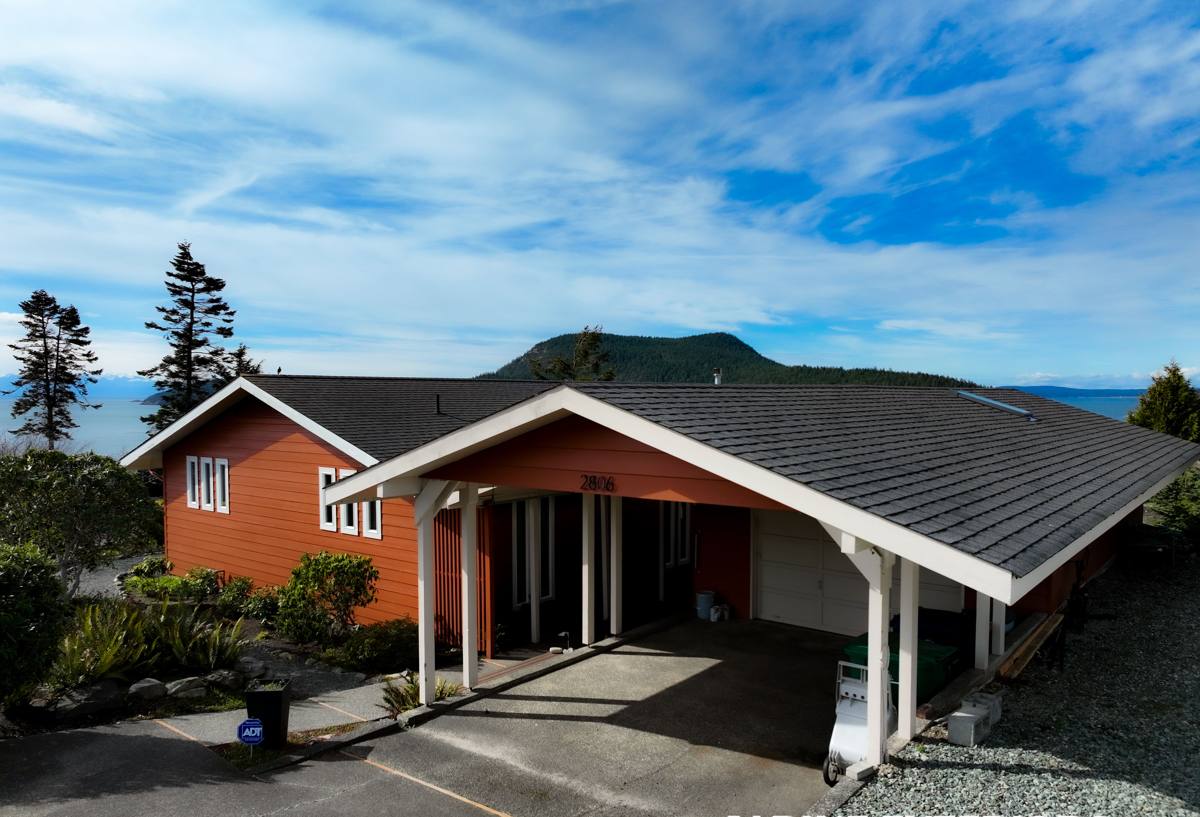
Flounder Bay sits on the water on the west side of Anacortes, and that waterfront setting is exactly why the exterior of a home here takes more punishment than a similar house a few miles inland. Marine air, wind off Rosario Strait and the Guemes Channel area, and the long stretch of gray, wet months that define a Skagit County winter all work on siding, roofing, trim, windows, and decking year after year. None of it is dramatic on any single day. It's the accumulation that gets homeowners — a house that looked fine at year five and needs real work by year twelve.
We're a local Anacortes exterior contractor. We don't work statewide, and we don't rotate through a different region every season. We see the same neighborhoods, the same wind exposures, and the same failure patterns repeat themselves, and that's the perspective we bring to every estimate in Flounder Bay.
What Salt Air and Water Exposure Actually Do to an Exterior
Homes close to the water deal with a specific combination of stresses that inland homes mostly avoid:
- Salt-laden air accelerates corrosion on fasteners, flashing, gutters, and any exposed metal — including hardware that's supposed to be holding your siding and trim in place.
- Wind-driven rain pushes moisture sideways into joints, laps, and penetrations that a straight-down rain would never reach, which is why water intrusion around windows and trim shows up disproportionately in waterfront exposures.
- Constant humidity and shade from mature trees on many Flounder Bay lots keep north- and west-facing walls damp longer after a storm, which is the exact condition moss, algae, and mildew need to take hold.
- Temperature swings between damp mornings and afternoon sun cause repeated expansion and contraction in wood-based siding, opening hairline gaps that let moisture in over time.
None of this means a house near the water is doomed to problems. It means the materials and installation details matter more here than they do on a sheltered lot, and it's why we treat every Flounder Bay estimate as its own case rather than a copy-paste of a job across town.
Where We See the Damage First
On siding, it's usually the bottom courses near grade, the corners that catch the prevailing wind, and anywhere caulk has been asked to do a job that flashing should be doing. On roofs, it's valleys, the north slope that never fully dries out, and moss creeping under shingle edges. On decks, it's ledger boards, joist hangers, and any fastener that isn't rated for the exposure. We look at all of it before we talk about products.
Siding: Why We Only Install James Hardie
We install James Hardie fiber cement siding exclusively. We don't offer LP SmartSide, vinyl, Cemplank, Allura, primed spruce, or cedar, and in a marine environment like Flounder Bay that's not a marketing position — it's a practical one.
Fiber cement doesn't rot, and it isn't a food source for the mold and mildew that thrive in a shaded, humid waterfront lot. It handles wind-driven rain without swelling or delaminating the way some engineered wood products can if a seam or cut edge gets wet and isn't perfectly sealed. And Hardie's ColorPlus factory finish is baked on to resist the fading and chalking that salt air and UV exposure cause faster near the water than they do further inland. Hardie also builds region-specific HZ10 formulations engineered for wetter climates, which is the version we spec for Anacortes work.
We're not going to tell you every other siding product fails on the water — plenty of homes around here have vinyl or engineered wood siding that's held up fine with regular attention. What we will say is that after years of installing and repairing exteriors in this exact climate, fiber cement is the one we're willing to put our name behind without hedging, and it's the only one we install.
Roofing in a Long Moss Season
Anacortes doesn't get the brutal freeze-thaw cycles of the mountains, but it gets something roofs dislike almost as much: months of shade, damp, and mild temperatures that let moss and moisture sit on a roof surface without much drying pressure to fight it. On Flounder Bay lots with tree cover, north-facing slopes can stay damp for days after a storm passes.
Our roofing work here focuses on the details that matter most for this climate rather than any one shingle brand: proper ventilation so the underside of the deck can dry, ice-and-water shield at valleys and eaves where wind-driven rain tends to find its way in, corrosion-resistant flashing and fasteners, and a roof plane that's been checked for the kind of overhanging branches that keep a section perpetually shaded and mossy. Moss removal and gutter maintenance matter more here than in a drier neighborhood, and we're upfront with homeowners about that ongoing reality rather than pretending a new roof means zero maintenance.
Windows: Sealing Out Wind-Driven Rain
Window failures near the water are rarely about the glass — they're almost always about the flashing, the sealant, and how the window was integrated with the siding around it. A good window installed with poor flashing details will leak in a driving rain off the water long before an older window with correct flashing will.
| Factor | Why It Matters in Flounder Bay |
|---|---|
| Flashing integration | Wind-driven rain attacks the top and sides of a window opening, not just the sill — flashing has to shed water at every layer |
| Frame material | Vinyl and fiberglass frames resist corrosion better than bare aluminum near salt air |
| Glazing package | Double or triple pane with a good low-E coating cuts condensation on cool, humid mornings |
| Sealant condition | Caulk and sealant degrade faster under UV and salt exposure and need periodic inspection |
When we replace windows as part of a siding project, we treat the window-to-siding transition as one integrated system rather than two separate trades, which is where a lot of leaks originate on waterfront homes.
Decks: Built for Salt Air and Standing Water
A deck near the water takes abuse from both directions — salt air degrading fasteners and hardware from above, and moisture wicking up through end grain and ledger connections from below. We build and repair decks with corrosion-resistant, exposure-rated hardware, proper flashing at the ledger board, and drainage details that don't let water pool against framing. Decking material choice — wood versus composite — comes down to the homeowner's maintenance appetite and budget, and we'll walk through that trade-off honestly rather than pushing one option.
Simple Deck Checks Worth Doing Twice a Year
- Look for soft or discolored spots around the ledger board where it meets the house
- Check fasteners and joist hangers for rust or corrosion
- Clear debris from between deck boards so water can drain instead of sitting
- Watch for moss or algae buildup on shaded sections, which signals slow drying
What Drives Cost on a Flounder Bay Exterior Project
Every project is different, but a few factors consistently move the estimate up or down on waterfront jobs specifically:
| Cost Factor | Impact |
|---|---|
| Existing moisture or rot damage | Hidden damage behind old siding or trim is more common near the water and adds repair scope once discovered |
| Access and site conditions | Waterfront lots with steep grades, retaining walls, or tight lot lines can slow staging and material handling |
| Corrosion-resistant hardware | Marine-grade fasteners and flashing cost more than standard-grade but are worth it in this exposure |
| Tree cover and shading | Heavier moss/algae growth on shaded walls or roofs can mean extra prep work before installation |
| Scope bundling | Combining siding, trim, and window work in one project usually costs less overall than doing each separately |
Why a Local Crew Matters More Here Than Elsewhere
A contractor who only occasionally works near the water will spec the same details they use everywhere else. A crew that works Flounder Bay, the rest of Anacortes, and the surrounding Skagit County waterfront regularly knows which walls take the worst of the wind, which lots hold shade and moisture longest, and where the moss comes back fastest after a job is done. That knowledge shows up in small decisions — extra flashing at a vulnerable corner, a different fastener spec, a recommendation to address a tree limb before it becomes a roof problem — that a generic install wouldn't catch.
Being local also means we're the ones who'll be back if something needs a look under warranty, not a crew that finished the job and moved three counties away.
Our Process for a Flounder Bay Home
- On-site walkthrough to assess current siding, roofing, windows, and any deck structures, with attention to shaded and water-facing walls
- Honest assessment of what's driving any current problems — moisture, age, installation issues, or a combination
- A written estimate scoped to what your home actually needs, not a one-size-fits-all package
- Installation following manufacturer specifications, with the flashing and fastener details suited to a marine exposure
- A final walkthrough so you know what to watch for and how to maintain the work going forward
If you're dealing with moss buildup, a leak that shows up only in driving rain, aging siding, or you're just planning ahead for a home in Flounder Bay, we're happy to take a look. Reach out for a free, no-pressure estimate — there's a form below to get started.