 Anacortes Exterior
 Exterior Work Built for Sedro-Woolley Homes
Sedro-Woolley sits inland along the Skagit River, in the shadow of the Cascade foothills, and that location gives it a slightly different weather story than the waterfront neighborhoods closer to Anacortes. Homes here see less direct salt air off the Sound, but they take on plenty of their own punishment: valley rain that settles in for days, heavy morning fog, wide seasonal temperature swings between the river bottom and the surrounding hills, and a moss and mildew season that runs longer than most homeowners expect. We work across Skagit County, and Sedro-Woolley is a regular stop for our siding, roofing, window, and deck crews.
This page walks through what the local climate actually does to exterior surfaces here, how our services are built around that reality, and why we standardized on one siding product instead of offering a menu of options.
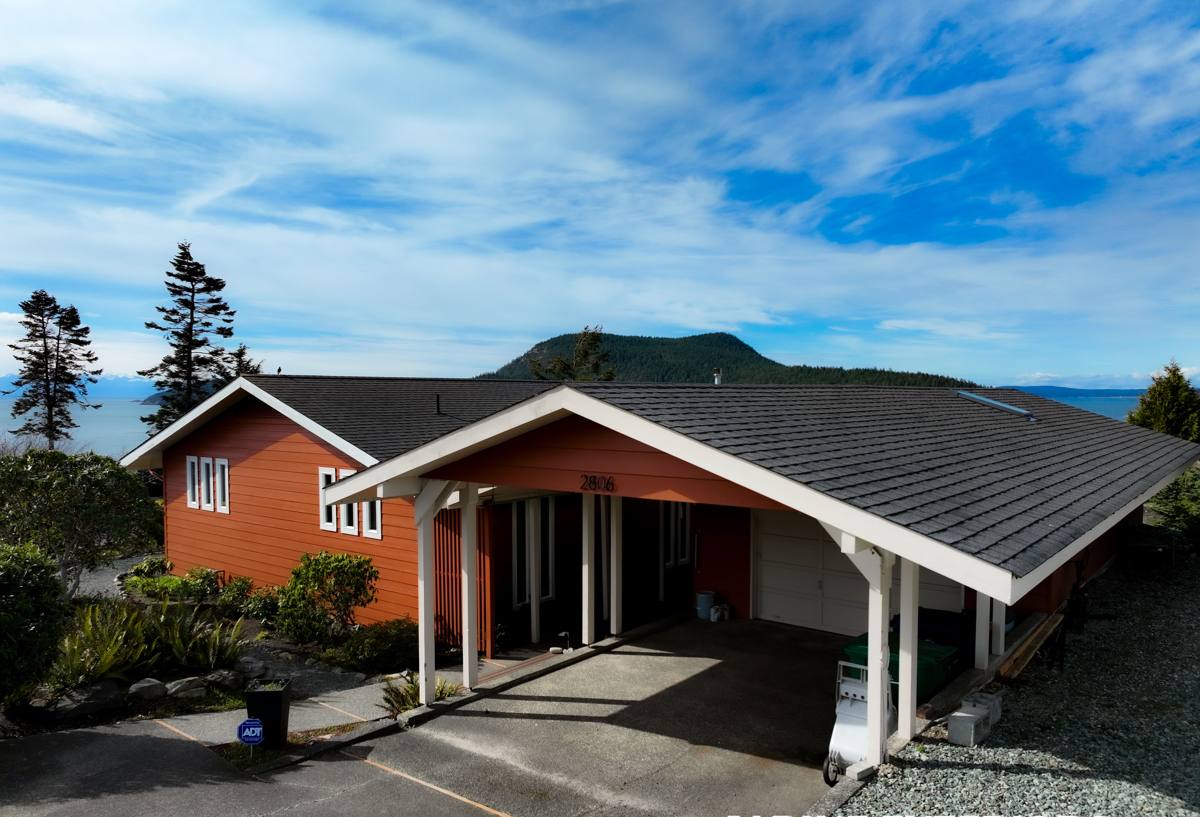
What the Climate Does to a Sedro-Woolley Exterior
Driving rain and prolonged dampness
Skagit County gets a long wet season, and Sedro-Woolley's position in the river valley means fog and dampness can linger even after the coastal fog has burned off closer to the water. Wood siding, trim, and fascia that stay damp for extended stretches are what allow rot to take hold, especially at corners, butt joints, and anywhere caulking has started to fail.
A long moss and mildew season
Shaded lots, tree cover, and the valley's damp air combine to give moss, algae, and mildew a long growing window on north-facing walls, rooflines, and anywhere airflow is limited. Once moss gets a foothold on a roof or siding, it holds moisture against the surface long after the rain has stopped, which accelerates whatever decay process is already underway underneath it.
Temperature swings and freeze-thaw cycling
Being off the immediate coast, Sedro-Woolley tends to see colder overnight lows in winter than waterfront Anacortes, and warmer summer highs too. That wider swing stresses exterior materials more than a mild, marine-moderated climate does — wood swells and shrinks, caulk joints work harder, and anything already compromised by moisture is more likely to crack when a cold snap hits.
Siding: Why We Only Install James Hardie
We install James Hardie fiber cement siding exclusively. We don't offer vinyl, LP SmartSide, Cemplank, Allura, or primed wood species like spruce or cedar, and that's a deliberate standard, not a lack of options. Here's the honest reasoning behind it, specifically for a climate like Sedro-Woolley's.
Moisture is the whole game here
Wood-based siding products, including engineered wood options, rely on an intact factory coating and diligent field caulking to keep water out of the substrate. In a valley climate with long damp stretches and heavy moss growth, any gap in that protection — a nail pop, a hairline crack, a caulk joint that's started to pull away — gives moisture a path in. Once wood-based sheathing starts absorbing water, swelling and eventual rot follow, and by the time it's visible from the ground, the damage is usually well underway underneath.
Vinyl's trade-offs in this climate
Vinyl is affordable and low-maintenance in the sense that it doesn't need repainting, but it's a thin, flexible material that expands and contracts significantly with temperature swings — exactly the kind of swings Sedro-Woolley sees more of than the immediate coastline. Over time that movement stresses seams and fasteners, and vinyl doesn't offer the same fire resistance or the heavier, more substantial look that James Hardie's ColorPlus finishes give a home.
What Hardie gets right for this area
Fiber cement is dimensionally stable — it doesn't swell with humidity or contract hard in a cold snap the way wood and vinyl can. It's non-combustible, which matters in a county that borders wildland areas to the east. And Hardie's ColorPlus factory finish is baked on and warranted separately from the substrate, so a correctly installed Hardie wall isn't relying on a homeowner's repainting schedule to stay protected. For a climate that punishes gaps in a home's moisture defenses, that combination is why we don't install anything else.
Roofing for Skagit County's Wet Season
Roofing in Sedro-Woolley has to handle sustained rain, moss colonization, and the debris load from nearby tree cover. We look at ventilation, flashing detail at valleys and penetrations, and moss-resistant material choices as a package rather than treating the shingles as the whole job. A roof that sheds water well but traps moisture in a poorly ventilated attic will still cause problems, just slower and less visibly than a leak.
Common issues we see on Sedro-Woolley roofs
- Moss buildup on north-facing and shaded slopes that traps moisture against the roofing material
- Undersized or blocked gutters overwhelmed by valley downpours, backing water up under the roof edge
- Flashing around chimneys, skylights, and roof-to-wall transitions that has aged past its seal life
- Attic ventilation that's inadequate for the humidity load, leading to condensation issues from the inside
Windows: Sealing Out Damp and Managing Condensation
Window performance in this climate comes down to two things: how well the unit seals against driving rain, and how well it manages condensation given the humidity swings between a damp outdoors and a heated interior. Older single-pane or poorly sealed windows in Sedro-Woolley homes often show it first as fogging between panes or soft trim at the sill, both signs that moisture has found a way in around the frame. We pay close attention to flashing and sealing at the window opening itself, since a good window installed with a poor moisture detail will fail the same way a bad window would.
Decks: Built to Handle Standing Water and Shade
Decks in a valley climate like Sedro-Woolley's deal with two enemies: standing water on horizontal surfaces and prolonged shade that keeps boards from drying out between rain events. Ledger board attachment, proper drainage slope, and board spacing that allows airflow underneath all matter more here than they would in a drier climate. We build decking systems with those realities in mind rather than treating a deck as just a flat surface to walk on.
Material Comparison for This Climate
| Factor | James Hardie Fiber Cement | Vinyl Siding | Wood / Engineered Wood |
|---|---|---|---|
| Moisture resistance | High — non-organic substrate, factory-sealed edges | Sheds water but seams can allow intrusion | Depends entirely on coating and caulk integrity |
| Behavior in temperature swings | Dimensionally stable | Expands/contracts, can stress seams | Swells and shrinks with moisture and heat |
| Moss/mildew resistance | Resistant; cleans up well | Resistant but can trap moisture behind panels | Vulnerable if coating is compromised |
| Fire resistance | Non-combustible | Melts/deforms under heat | Combustible |
| Maintenance | Occasional wash; factory finish warranted | Low, but limited repair options if damaged | Regular repainting/resealing required |
Signs Your Sedro-Woolley Home Needs Exterior Attention
- Moss or dark streaking building up on siding or roofline that doesn't wash off easily
- Soft or spongy spots on siding, trim, or deck boards when pressed
- Paint that's peeling, bubbling, or repeatedly failing in the same spots
- Window frames that feel damp, fog between panes, or show soft sills
- Gutters overflowing during heavy rain instead of draining clear
- Visible gaps or cracking at siding seams, corners, or caulk lines
Why a Local Crew Matters
Skagit County's exterior contractors deal with this valley's specific rain patterns, moss cycles, and temperature behavior on a regular basis — that's different knowledge than a crew that mostly works drier inland climates or a purely coastal one. Knowing where moisture tends to collect on a Sedro-Woolley lot, how much shade a given roof slope gets through the year, and which details fail first in this kind of weather shapes how we flash a window, vent a roof, or lay out a deck's drainage. That local pattern recognition is part of what a homeowner is paying for when they hire a crew that works this specific area regularly, not just occasionally.
What to Expect When You Work With Us
We start with an honest look at what's actually happening on your home — not just what's visible from the driveway, but what the moisture and wear patterns suggest is happening underneath. From there we walk through what James Hardie siding, a re-roof, replacement windows, or a new deck would look like for your specific house, with a straightforward explanation of the work and materials involved. There's no pressure to sign anything on the spot, and we're glad to explain why we recommend one approach over another for a home in this particular climate.
If you're weighing exterior work on a Sedro-Woolley home, we're happy to take a look and walk you through your options in plain language. Reach out for a free, no-pressure estimate using the form below.