 Anacortes Exterior
 Roof Replacement in Sedro-Woolley: Built for the Skagit Valley
Sedro-Woolley sits inland in the Skagit Valley, tucked between the river and the foothills of the Cascades, and that location gives it a climate personality of its own. You get less of the direct salt-laden wind that pounds roofs along the Anacortes waterfront, but you make up for it with heavier valley moisture, long stretches of overcast humidity, and shaded lots backed up against fir and cedar that keep roof surfaces damp far longer than homes out in the open. Add in Skagit County's driving winter rain and a moss season that can run eight or nine months out of the year, and you have a roofing environment that punishes shortcuts.
We're based in Anacortes and work roofs across Skagit County, including the coastal exposure that comes with salt air and wind off the Sound. That range matters here: a crew that's used to fighting salt corrosion on fasteners and flashing brings the same discipline to a Sedro-Woolley roof, even though the failure points look a little different inland. In the valley, the enemy is usually standing moisture, moss root systems, and shaded north-facing slopes that never fully dry out between storms.
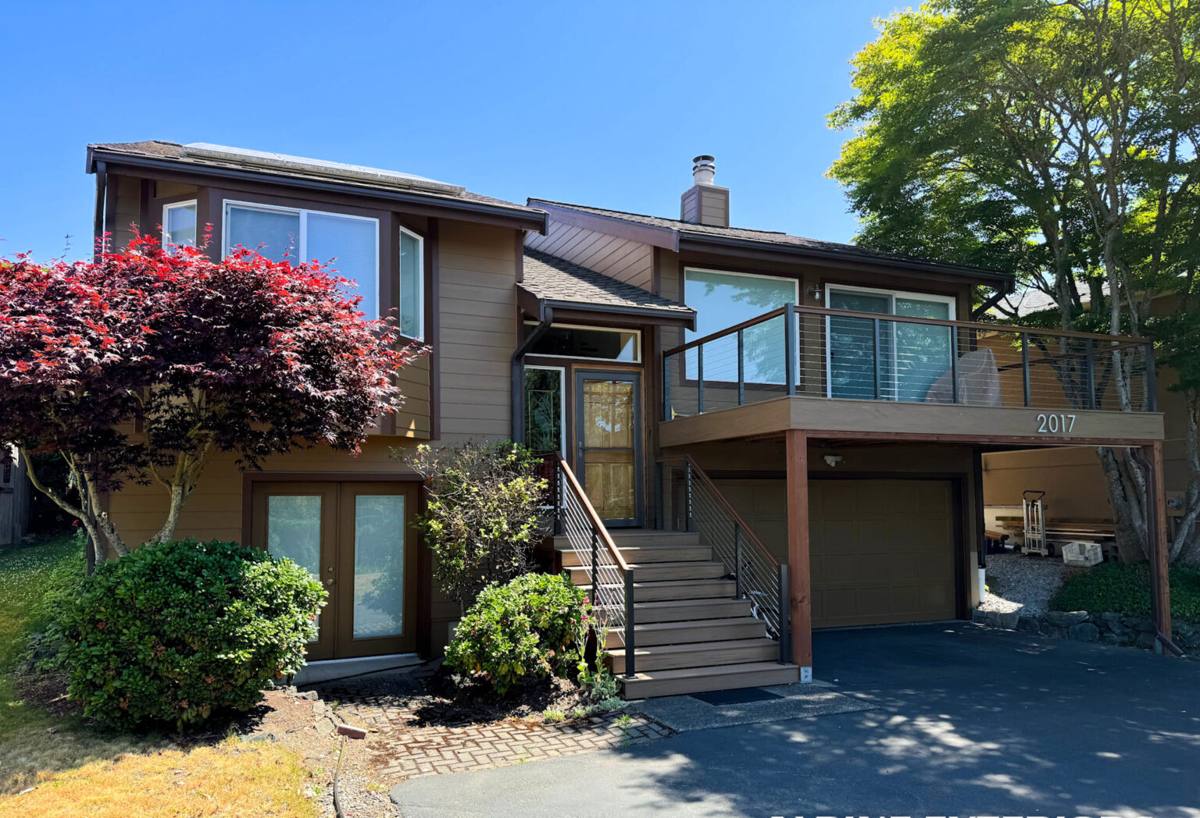
What Sedro-Woolley Roofs Actually Deal With
Moss and Organic Growth
Tree cover is heavier in and around Sedro-Woolley than it is on the more open bluffs near Anacortes, and that shade is exactly what moss needs to establish. Moss doesn't just sit on top of shingles — it works its rhizoids under tabs and granule surfaces, lifting edges and holding water against the roof deck. Left unchecked over several seasons, moss growth accelerates granule loss and shortens the usable life of an asphalt roof well before it would otherwise need replacing.
Driving Rain and Wind-Driven Moisture
Skagit County storms don't always come straight down. Wind off the valley can push rain sideways into eaves, valleys, and wall-roof intersections, which is where poor flashing work shows up as leaks years later. A roof replacement done right accounts for wind-driven rain at every transition, not just the open field of the roof.
Freeze-Thaw Cycling
Sedro-Woolley sees more frost events than the immediate coastline, since it's further from the moderating effect of the water. Repeated freeze-thaw cycling stresses any moisture that's already trapped under moss or worn granules, opening small cracks that widen every winter. This is one of the quieter reasons an aging roof that "looks fine" from the ground can be failing underneath.
Signs a Sedro-Woolley Roof Needs Replacing, Not Patching
- Granules collecting in gutters and downspouts season after season, not just after a new install
- Moss established in patches rather than a light surface film — especially on north- and east-facing slopes
- Curling, cupping, or cracked shingles visible from the ground, particularly on older asphalt roofs
- Daylight visible through the roof deck from inside the attic, or damp insulation near the eaves
- Repeated flashing repairs at the same chimney, skylight, or wall intersection
- A roof approaching or past the manufacturer's rated lifespan, especially if it was never properly ventilated
- Sagging rooflines or soft spots underfoot during inspection — a structural, not cosmetic, concern
Any one of these on its own might mean a repair is enough. Several at once, especially on a roof already past 15-20 years, usually means the cost of chasing leaks year after year exceeds the cost of doing the job once, correctly.
What a Correct Roof Replacement Involves
A roof replacement is more than swapping old shingles for new ones. The parts that don't show from the ground are usually what determine whether the new roof lasts.
Tear-Off and Deck Inspection
We remove the existing roofing down to the deck rather than layering over it. That's the only way to actually see what's underneath — soft or delaminated plywood from long-term moisture intrusion, especially common under areas where moss has been sitting, needs to be replaced before anything new goes down. Roofing over a compromised deck just hides the problem.
Underlayment and Ice/Water Protection
Given how much driving rain and standing moisture this region sees, underlayment choice matters. Self-adhered ice-and-water membrane at eaves, valleys, and around penetrations gives a second line of defense if wind-driven rain ever gets past the outer roofing layer — cheap insurance against the exact failure mode Skagit Valley roofs are most prone to.
Flashing Details
Chimneys, skylights, wall intersections, and valleys are where most leaks originate, not the open field of shingles. Step flashing, counter-flashing, and valley metal need to be installed correctly and sequenced with the underlayment and roofing courses, not caulked as an afterthought. Caulk is a maintenance item, not a flashing strategy.
Ventilation
A roof deck that can't breathe traps moisture from inside the home, which accelerates deck rot from underneath regardless of how good the roofing above it is. Balanced intake and exhaust ventilation matters as much in a shaded Sedro-Woolley lot as it does anywhere else in the county — arguably more, since shade already slows drying on the outside.
Material Selection
Most homes in this area do well with a quality architectural asphalt shingle rated for algae and moss resistance, but the right choice depends on roof pitch, sun exposure, tree cover, and budget. We'll walk through the honest trade-offs for your specific roof rather than pushing one product for every job.
Comparing Roofing Options for This Climate
| Material | How it handles moss/moisture | Typical lifespan | Maintenance |
|---|---|---|---|
| Standard 3-tab asphalt | No algae resistance; moss establishes faster | 15-20 years | Regular moss/debris clearing needed |
| Architectural asphalt (algae-resistant) | Copper/zinc granules slow algae and moss growth | 25-30 years | Periodic cleaning still recommended in shaded areas |
| Metal roofing | Sheds moisture fast; resists moss on most slopes | 40-50+ years | Low; occasional debris clearing |
| Cedar shake | Absorbs moisture; needs active upkeep in wet shade | 20-30 years with maintenance | High — treatment and inspection required |
We don't push cedar shake on heavily shaded Sedro-Woolley lots as a rule — it's a beautiful product, but it holds moisture longest of anything on this list, and a shaded, damp lot is exactly the wrong environment to ask more maintenance of an owner who may not want that ongoing commitment. That's a judgment based on how the material behaves in this climate, not a knock on the product itself.
Cost Factors for a Sedro-Woolley Roof Replacement
- Roof size and number of facets, valleys, and penetrations
- Pitch and accessibility — steeper or harder-to-reach roofs take longer to work safely
- Deck condition — how much plywood needs replacing once tear-off is complete
- Material chosen — standard asphalt, algae-resistant architectural shingle, or metal
- Ventilation and flashing scope — how much of the existing system needs upgrading versus reusing
- Permitting requirements in Skagit County or the City of Sedro-Woolley, depending on your address
We give a firm number after walking the roof and the attic, not a phone estimate. Deck condition in particular can't be known until tear-off, so we build a contingency conversation into every quote up front rather than surprising you mid-job.
Our Process
- On-site inspection — we walk the roof and check the attic for ventilation, moisture, and deck condition
- Written estimate — a clear scope and price, including what happens if deck replacement is needed
- Scheduling around weather — we plan tear-off for dry windows, standard practice for anyone roofing in this part of Washington
- Tear-off and deck repair — full removal, with any compromised plywood replaced before underlayment goes down
- Underlayment, flashing, and roofing installation — installed in the sequence that actually keeps water out
- Final walkthrough — we go over the finished roof and ventilation with you before calling the job done
Why a Crew That Works Sedro-Woolley Already Matters
Roofing crews that only work one type of site tend to develop blind spots. A crew that spends most of its time on wide-open coastal roofs may under-plan for the shade and standing moisture that define a wooded Sedro-Woolley lot. A crew based only inland may not carry the same rigor around fastener corrosion and wind-driven rain that coastal Anacortes work demands. Working across the full range of Skagit County conditions — from salt air near the water to shaded valley lots further inland — means we're not guessing at how a roof will hold up here. We've seen how moss actually establishes on a north-facing valley slope, and we've seen what wind-driven rain does to a poorly flashed valley. That range shows up in how the job gets planned, not just how it gets sold.
If you're weighing a repair against a full replacement, or just want an honest read on how much life is left in your current roof, we're happy to take a look. Reach out for a free, no-pressure estimate — someone will walk the roof, answer your questions straight, and give you a real number before any work begins.