 Anacortes Exterior
 Exterior Work in Conway: A Different Kind of Climate Test
Conway sits low in the Skagit River delta, close enough to Skagit Bay and Puget Sound that homes here deal with a mix of conditions you don't get everywhere in Skagit County. There's the salt-tinged air moving in off the water, the near-constant chance of driving rain during the fall and winter months, and long stretches of gray, damp weather that give moss and algae plenty of time to take hold on anything that stays wet. Add in low-lying, often flat terrain with limited direct sun on north- and east-facing walls, and you've got an exterior environment that punishes cheap materials and sloppy installation faster than most inland areas.
We work throughout the greater Anacortes and Skagit County area, and Conway is part of that territory. The homes out here — whether older farmhouses, newer builds on acreage, or houses tucked closer to the river — all face the same basic reality: whatever you put on the outside of the house needs to handle sustained moisture and salt exposure for decades, not just look good on installation day.
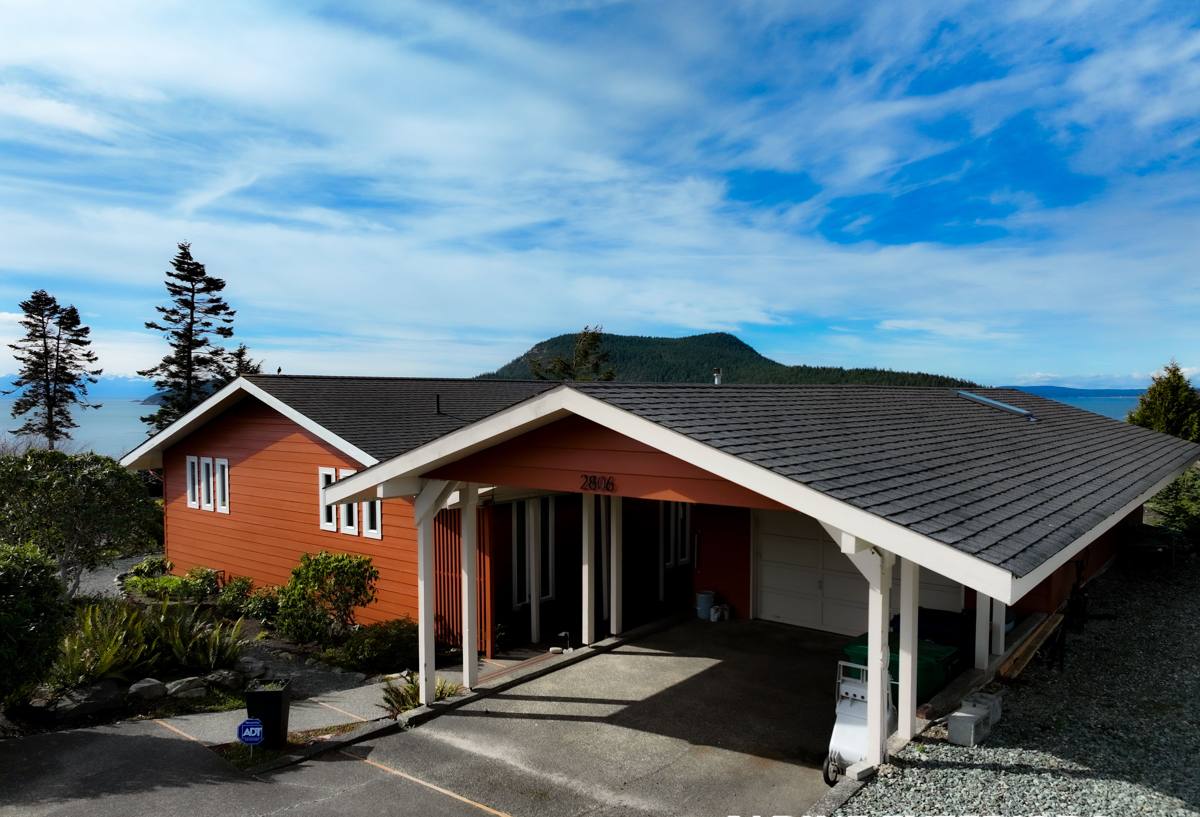
What Salt Air, Rain, and Moss Actually Do to a House
Salt Air
Even a few miles inland from open water, airborne salt settles on siding, trim, roofing, and metal fasteners. Over time it accelerates corrosion on unprotected metal and can degrade certain siding and paint finishes faster than a drier inland climate would. It's a slow, cumulative problem — the kind that doesn't show up as a single failure but as gradual fading, pitting, and finish breakdown across many years.
Driving Rain
Skagit County storms don't always come straight down. Wind-driven rain gets pushed sideways into wall assemblies, especially around window and door openings, siding laps, and anywhere flashing details are marginal. A home that "looks" weathertight can still be taking on moisture behind the surface if the water-resistive barrier, flashing, and siding installation weren't done correctly the first time.
Moss and Algae
Shade, moisture, and mild temperatures are exactly what moss and algae need to thrive, and Conway's low-lying, tree-lined lots often provide all three. Roofs are the most visible casualty, but moss and algae growth on siding and decking is common too, especially on north-facing walls and horizontal deck boards that don't dry out quickly between rain events.
Siding in Conway: Why We Only Install James Hardie
We install James Hardie fiber cement siding exclusively. We don't install vinyl, LP SmartSide, Cemplank, Allura, primed spruce, or cedar. That's a deliberate standard, not a sales pitch, and it's worth explaining honestly.
Vinyl is inexpensive and easy to install, but it's a petroleum-based product that expands and contracts significantly with temperature swings, can crack in cold snaps, and tends to fade and chalk under UV and salt exposure over the years. Wood products like cedar and primed spruce look great new, but they're organic materials in a climate that stays wet for much of the year — that means an ongoing commitment to painting, caulking, and moisture management, plus real vulnerability to rot if maintenance slips even for a season or two. Engineered wood products like LP SmartSide and other fiber-cement alternatives such as Cemplank and Allura each have their own trade-offs in moisture performance, finish durability, or long-term warranty structure that we weighed against what Conway's climate demands.
James Hardie fiber cement is non-combustible, dimensionally stable in wet-dry cycling, and resists the swelling, splitting, and insect damage that plague wood siding. The ColorPlus factory-applied finish is baked on under controlled conditions rather than field-painted, which gives a more consistent, longer-lasting color that holds up better against the fading and chalking that salt air and UV exposure cause over time. Hardie also engineers specific product lines (HZ5, for example) for regions with more moisture and temperature variation, which fits the Skagit County climate better than a one-size-fits-all product. The transferable warranty backing it matters too, especially if you plan to sell the home eventually.
None of this means other products are unusable — plenty of homes around the country are sided in vinyl or wood and hold up fine with the right maintenance. It means that after years of installing and repairing exteriors in this specific climate, we decided we'd rather stand behind one system we trust completely than offer several we have reservations about.
Installation Quality Matters as Much as the Material
Even the best siding product fails early if it's installed wrong. Correct Hardie installation means proper clearances above rooflines, decks, and grade; correctly lapped and sealed house wrap or weather-resistive barrier underneath; flashing integrated at every window, door, and penetration; and fasteners driven to the manufacturer's spec rather than overdriven or underdriven. We follow Hardie's published installation instructions because that's what keeps the warranty valid and what actually keeps water out of the wall assembly — the flashing and water management details matter more in Conway's wind-driven rain than in a drier climate where a minor gap might never get tested.
Roofing: The First Line of Defense Against Moss and Moisture
Roofing takes the brunt of Conway's weather — driving rain, salt air, and shaded, moss-prone sections where trees overhang the roofline. We look at more than just shingle condition when we're up there: flashing around chimneys, vents, and valleys; the condition of underlayment where it's visible; gutter attachment and drainage; and how well the roof is actually shedding water rather than letting it sit and soak into moss growth. A roof that's shedding water properly but has heavy moss buildup is still degrading faster than it should, because moss holds moisture against the shingle surface far longer than bare granules would.
We also pay attention to ventilation. Poor attic ventilation in a damp climate like this traps moisture inside the roof assembly, which can lead to sheathing rot and shortened shingle life from the underside — a problem that's invisible from the ground but shows up as premature aging or interior moisture issues.
Windows: Sealing Out Wind-Driven Rain
Old or poorly flashed windows are one of the most common sources of water intrusion we find in Conway homes. Wind-driven rain finds gaps around window frames that a calmer climate would never expose. When we replace windows, the flashing and sealing details around the rough opening matter as much as the window unit itself — a high-end window installed without proper flashing will leak, and a modest window installed correctly usually won't. We also look at how window replacement interacts with the siding plan, since window trim and flashing need to integrate cleanly with whatever siding system is going on the wall.
Decks: Built for Wet Ground and Slow-Drying Conditions
Conway's flatter, lower-lying lots mean decks often sit closer to grade and get less direct sun and airflow than decks on more exposed or elevated properties. That combination — proximity to damp ground, shade, and salt-influenced air — is a recipe for accelerated wood decay, fastener corrosion, and moss or algae buildup on decking surfaces. When we build or replace a deck, we pay close attention to ledger board flashing (a common source of hidden rot), joist spacing and coverage to reduce sagging over time, and fastener selection that resists corrosion in a salt-air environment. Proper spacing between deck boards also helps water drain and the wood dry out between storms, which cuts down on moss growth and slows decay.
How We Approach a Conway Project
- Walk the property and assess siding, roofing, window, and deck condition together — problems in one area often point to issues in another (a leaking window, for example, can be feeding rot into nearby siding).
- Identify moisture intrusion points, moss/algae pressure areas, and any signs of past water damage before recommending work.
- Provide a clear, honest scope — we'll tell you if a repair makes more sense than a full replacement, or if a smaller area needs attention now to prevent a bigger problem later.
- For siding work, confirm the Hardie product line and profile that fits the home and budget, and plan flashing and water management details before installation begins.
- Schedule around Skagit County's weather patterns where possible, since certain exterior work goes better in drier stretches.
Cost Factors to Understand Before You Budget
Every home and project is different, but these are the factors that most often move the price on exterior work in a climate like Conway's:
| Factor | Why It Matters Here |
|---|---|
| Existing moisture damage | Hidden rot behind siding or under windows, common in wind-driven rain areas, adds repair scope once walls are opened up |
| Siding profile and trim complexity | Lap siding, panel systems, and trim details vary in material and labor cost; more corners and openings mean more flashing work |
| Roof pitch and access | Steeper or harder-to-access rooflines take longer to work safely, especially with moss removal involved |
| Deck ledger and framing condition | Ledger board rot or undersized framing found during a deck rebuild adds structural repair before decking goes down |
| Window count and flashing condition | Replacing flashing correctly around each opening takes more time than swapping the window unit alone |
Checklist: Signs Your Conway Home Needs Exterior Attention
- Moss or algae buildup on the roof, siding, or deck surfaces that keeps returning after cleaning
- Soft or spongy spots on decking, siding, or trim, especially near ground contact or ledger boards
- Paint or finish that's fading, chalking, or peeling faster than expected
- Water stains on interior walls or ceilings near windows or exterior corners
- Gaps, cracking, or warping in siding panels, especially at seams and corners
- Corroded or rust-streaked fasteners, hinges, or metal flashing
- Gutters that overflow or pull away from the fascia during heavy rain
Why a Local Crew Matters in Conway
Exterior work in this part of Skagit County isn't the same job as exterior work in a drier, inland climate, and a crew that mostly works elsewhere can miss the details that matter here — flashing sequencing for wind-driven rain, fastener choices that hold up to salt air, or moss-prevention details on a shaded deck. A crew that works this area regularly knows what tends to fail first on Conway homes and builds accordingly, rather than applying a generic approach and hoping it holds up.
Being local also means we're available for follow-up if something needs attention after the fact, and we're not guessing at what Skagit County's weather does to a house over ten or twenty years — we see it firsthand, on homes near yours, every season.
If you're dealing with an aging exterior, planning a renovation, or just want an honest read on what your siding, roof, windows, or deck actually need, we're glad to take a look. Reach out for a free, no-pressure estimate using the form below.