 Anacortes Exterior
 Exterior Work in West Anacortes: A Climate That Doesn't Forgive Shortcuts
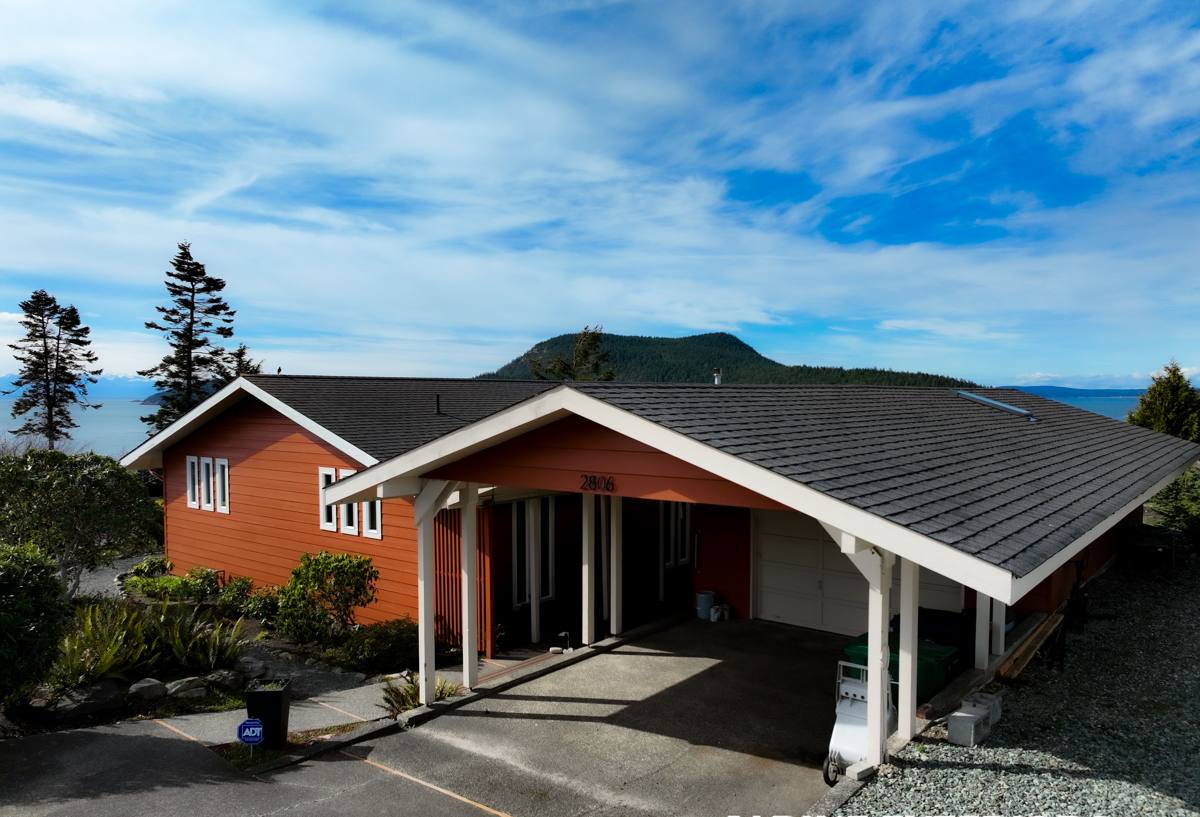
West Anacortes sits close to the water, on the western edge of Fidalgo Island, where marine air off Rosario Strait and Guemes Channel meets a lot of mature tree cover. That combination is beautiful to live with and hard on a house. Homes here deal with salt-laden air, wind-driven rain that hits siding sideways instead of straight down, and a long, damp shoulder season each fall and winter that keeps roofs, siding, and decks wet for weeks at a stretch. None of that is unique to one street or subdivision in the area — it's the baseline condition for exteriors anywhere near this stretch of Skagit County coastline.
What it means practically is that the materials and installation details that work fine on a dry-side Washington home don't always hold up the same way out here. We build our approach in West Anacortes around three things: materials that are engineered for wet, salty, wind-exposed conditions; installation details that account for how water actually moves across a wall or roof in this specific microclimate; and a crew that's local enough to know which sides of a house take the worst weather and why.
Salt Air and What It Does to an Exterior
Proximity to saltwater changes the math on exterior durability. Salt in the air accelerates corrosion on fasteners, flashing, and hardware, and it can leave a residue on painted or coated surfaces that breaks down finishes faster than inland exposure would. Over years, that shows up as:
- Premature fading, chalking, or peeling on painted wood or fiber cement that wasn't factory-finished for the exposure
- Rust streaks from fasteners or flashing that weren't rated for coastal use
- Pitting or corrosion on lower-grade hardware around windows, gutters, and deck connectors
- Faster breakdown of caulking and sealants at joints and trim
This is one of the reasons material choice matters more here than it does thirty miles inland. A siding product with a baked-on factory finish designed to resist fading and moisture intrusion holds its look and its protective function far longer than field-painted materials in a salt-air environment.
Driving Rain and Moisture Management
Rain in West Anacortes doesn't always fall straight down. Wind off the water pushes it sideways into walls, under laps, and around window and door openings. That's a different stress than a calm, vertical rain event, and it's why installation detail — not just the product itself — determines whether an exterior actually stays dry behind the surface.
On siding, that means proper lap spacing, correctly flashed windows and doors, and house wrap and drainage details that give bulk water a way out if it does get behind the cladding. On roofing, it means underlayment and flashing choices that assume wind-driven moisture at valleys, eaves, and penetrations, not just straight rainfall. We install to those standards as a baseline in this area, not as an upgrade.
Why This Matters More on West-Facing and Water-Facing Walls
Whichever elevation of a home faces open water or the prevailing weather takes the brunt of both wind and salt exposure. That's often where we see the earliest wear — failing caulk joints, faster paint breakdown, or moisture staining at trim boards. When we quote a project in this area, we look at orientation specifically, because the correct answer for a sheltered wall and an exposed wall isn't always identical.
Moss, Shade, and the Long Wet Season
Much of West Anacortes has significant tree cover, and shaded, damp conditions are exactly what moss and algae need to take hold. On roofing, moss growth under shingles or shakes holds moisture against the roof deck and shortens the life of the roofing material. On siding, algae staining and constant dampness in shaded areas can accelerate wear on lower-quality substrates, especially anything with exposed wood fiber or untreated edges.
We can't change how much shade a lot gets, but we can specify materials and details that handle a long wet season better — proper roof ventilation, gutter and downspout sizing that actually keeps up with West Anacortes rain volumes, and siding that doesn't absorb and hold moisture the way raw wood products do.
Why We Install Only James Hardie Fiber Cement Siding
We made a deliberate decision to install James Hardie fiber cement exclusively, and we don't install vinyl, LP SmartSide, cedar, primed spruce, or other fiber cement brands. In a climate like this one, that's not a brand preference — it's a response to what actually holds up.
Fiber cement is non-combustible and dimensionally stable, so it doesn't expand, contract, warp, or rot the way wood-based products can when they take on repeated moisture exposure. James Hardie's ColorPlus factory finish is baked on under controlled conditions and is built to resist fading and moisture intrusion better than field-applied paint, which matters directly in a salt-air environment where painted surfaces take a beating. Hardie also builds HZ5 product lines specifically engineered for harsher climate zones, which fits the Pacific Northwest coastal exposure profile better than a generic siding spec.
How Hardie Compares to the Alternatives We Don't Install
| Material | How It Handles Salt Air & Moisture | Long-Term Trade-Off |
|---|---|---|
| James Hardie fiber cement | Non-combustible, dimensionally stable, factory-finished coating engineered for climate exposure | Higher install-labor requirement; needs correct fastening and flashing detail |
| Vinyl siding | Won't rot, but can warp or fade under sun/salt cycling and relies entirely on the wall behind it for drainage | Field seams and trim can loosen over time; limited repair options if damaged |
| LP SmartSide (engineered wood) | Wood-based substrate is more moisture-sensitive at cut edges and panel joints | Requires diligent caulk and paint maintenance to prevent edge swelling |
| Cedar / primed spruce | Absorbs moisture, more prone to rot and insect issues in a wet, shaded coastal climate | Highest ongoing maintenance burden; shortest realistic service life here |
None of these alternatives are poorly made products — they simply carry trade-offs that we think are the wrong bet for a West Anacortes exterior over a 20-30 year horizon. Hardie's transferable warranty and track record in coastal Pacific Northwest conditions is why we standardized on it.
Roofing for a Marine, Shaded Climate
Roofing decisions in this area come down to moisture management as much as the roofing material itself. We pay close attention to:
- Ventilation — a roof deck that can't breathe traps moisture and shortens the life of any roofing material
- Flashing at valleys, chimneys, and skylights, where wind-driven rain finds its way in first
- Underlayment quality, since a long wet season means more cumulative exposure time than a drier climate
- Gutter and downspout capacity sized for real West Anacortes rain volume, not a generic minimum
Where tree cover is heavy, we'll also flag moss risk and talk through maintenance expectations so there aren't surprises two or three winters in.
Windows That Handle Wind-Driven Rain
Near-water exposure puts extra demand on window installation, specifically around flashing and sealant detail at the rough opening. A quality window can still leak if it's not flashed to shed wind-driven rain correctly, and that's a bigger factor in West Anacortes than it would be on a sheltered inland lot. We also talk with homeowners about glass and frame options that hold up better against salt air and temperature swings off the water.
Decks in a Salt-Air Environment
Decks take a double hit here — UV and rain cycling from above, and salt-air corrosion on fasteners and hardware from the surrounding environment. We use fastening and hardware rated for coastal exposure, and we talk through decking material trade-offs (wood versus composite) with the same honesty we apply to siding: what looks good on day one isn't always what performs best after a decade of West Anacortes winters.
Why a Local Crew Matters Here
A crew that works across Anacortes and Skagit County regularly knows which elevations on a West Anacortes home take the worst weather, how tree cover on a given lot affects moss and drying time, and which installation details actually matter for this specific stretch of coastline. That's different from general exterior experience — it's familiarity with this exact microclimate, gained from working in it repeatedly, not from a manual.
Signs Your West Anacortes Exterior Needs a Closer Look
- Green or black staining on the roof or north/shaded siding walls
- Caulk that's cracked, shrunk, or pulled away at trim and window edges
- Paint that's chalking, peeling, or fading faster than expected
- Soft spots, swelling, or visible warping on wood-based siding or trim
- Rust streaking below fasteners, flashing, or hardware
- Persistent moss buildup in shaded roof valleys or along eaves
- Deck boards or hardware showing early wear despite a relatively young install
Get a Straight Answer for Your Home
Every lot in West Anacortes has its own mix of sun, shade, wind exposure, and water proximity, and that mix should drive the recommendation — not a one-size-fits-all pitch. If you're seeing wear on your siding, roof, windows, or deck, or you just want an honest read on where things stand, we're happy to take a look. Reach out for a free, no-pressure estimate using the form below.