 Anacortes Exterior
 Fidalgo Island Puts Siding Through a Different Kind of Test
Fidalgo Island sits right where Skagit County meets the Salish Sea, and that location is exactly why siding here wears differently than siding twenty miles inland. Homes get a steady dose of salt-laden air off the water, wind-driven rain that hits walls sideways instead of falling straight down, and a wet season that stretches long enough for moss and algae to get a real foothold on north- and west-facing walls. None of that is dramatic on its own. It's the accumulation, year after year, that turns a small siding problem into a bigger one if it's not caught and repaired correctly.
Repairing siding on Fidalgo Island isn't just a smaller version of a citywide repair job. It means understanding which walls take the worst weather exposure, which materials in this area tend to fail first, and how to fix a problem so it doesn't just come back with the next wet winter.
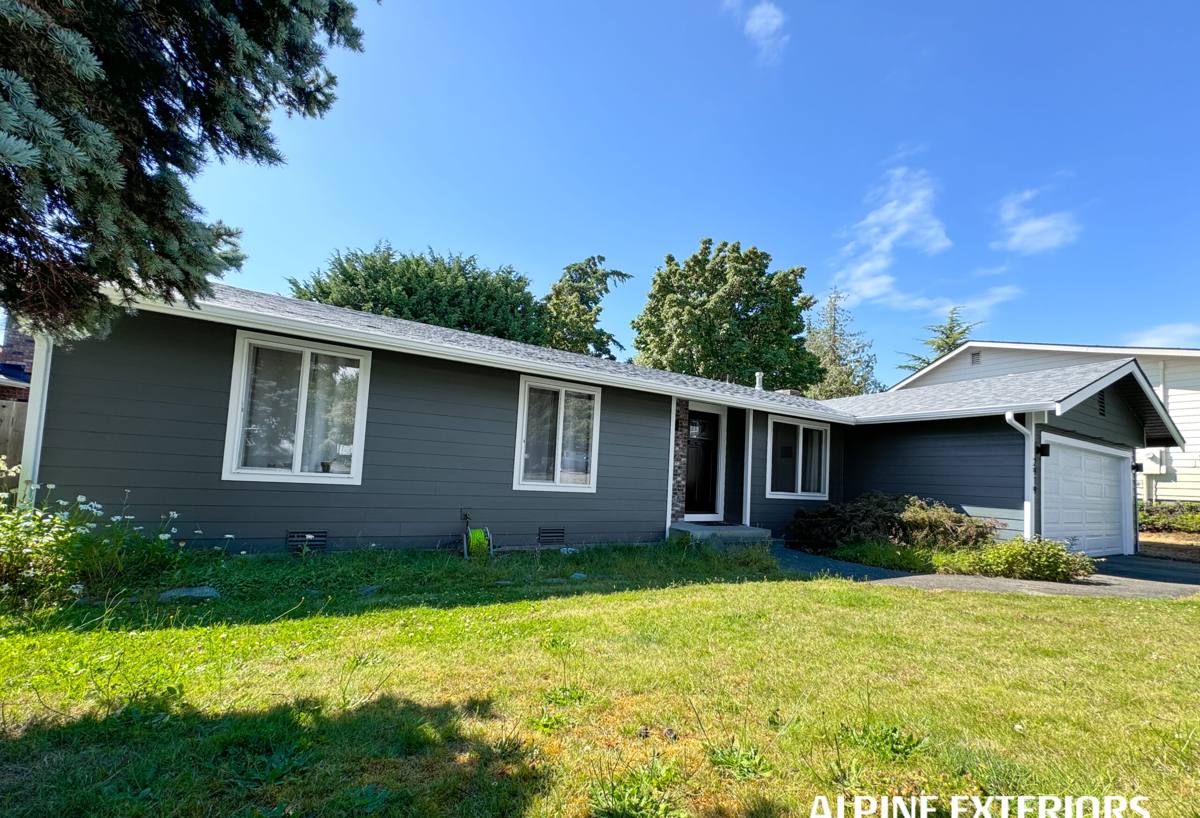
What Salt Air, Rain, and Moss Actually Do to Siding
Salt Air
Airborne salt from the water doesn't just sit on the surface — it accelerates corrosion on exposed fasteners, trim flashing, and any metal components tied into the siding system. Over time, corroding fasteners loosen, and loose fasteners let water behind the siding. On painted wood or older composite products, salt exposure also breaks down paint film faster than a typical inland home would see, leading to more frequent repainting and more chances for moisture to find a gap.
Driving Rain
Anacortes and the surrounding island get plenty of wind off the water, and wind-driven rain behaves differently than a straight-down shower. It gets pushed up and under laps, into seams, and around poorly sealed penetrations — areas that would stay dry in a calmer climate. This is why proper lap spacing, correct caulking at joints and penetrations, and a functioning water-resistive barrier behind the siding matter more here than in a lot of other parts of the state.
Moss and Algae
Shaded, north-facing walls and areas under tree cover stay damp for extended stretches during the region's long wet season. That moisture supports moss and algae growth directly on the siding surface. Beyond the cosmetic green and black staining, moss holds water against the material far longer than open air would, which is a problem for anything that isn't dimensionally stable or properly sealed at the edges.
Signs Your Fidalgo Island Home Needs Siding Repair
Most siding failures don't show up as one dramatic event — they show up as small signs that get overlooked because they don't look urgent. On homes exposed to this island's climate, we watch for:
- Soft or spongy spots when you press on the siding, especially near the bottom courses and around windows and doors
- Visible gaps, cracks, or separation at seams and corners where wind-driven rain can get behind the material
- Persistent moss or algae staining that keeps coming back within a season or two of cleaning
- Bubbling, peeling, or chalky paint film, particularly on wood or older composite siding facing the water
- Rust streaks below fasteners or trim, a sign that hardware is corroding from salt exposure
- Warping, buckling, or boards that no longer sit flat against the wall
- Interior clues — musty smells, discolored drywall, or peeling interior paint on an exterior wall — that point to moisture getting through from outside
Any one of these on its own might be minor. Several together, especially on a wall that faces prevailing wind and rain, usually means water has been getting behind the siding for a while and the damage extends past what's visible from the outside.
Cosmetic Fix or Real Repair? Getting the Diagnosis Right
The single biggest mistake in siding repair isn't the repair itself — it's a bad diagnosis. Caulking over a crack, painting over a stain, or replacing one visibly damaged board without checking what's happening underneath just hides the problem for a season. On a site with this much moisture exposure, that's a short-lived fix.
A correct repair starts with figuring out whether the damage is surface-level or structural:
| Indicator | Likely Surface Issue | Likely Structural Issue |
|---|---|---|
| Moss/algae staining | Cleaning + repaint or sealant | Underlying rot if moss has been present for years |
| Cracked caulking at seams | Re-caulk and inspect | Water intrusion behind the joint, possible sheathing damage |
| Soft/spongy board | Rare — usually structural | Rot in the siding and possibly the sheathing beneath it |
| Rust at fasteners | Fastener replacement | Ongoing corrosion cycle affecting attachment integrity |
| Interior staining on exterior wall | Not applicable | Active moisture intrusion — needs immediate investigation |
We pull boards, check the water-resistive barrier and sheathing behind them, and confirm there's no hidden rot before we ever put a patch or a new board back on the wall. Repairing over a problem we haven't actually looked at isn't a repair — it's a delay.
How We Approach Siding Repair on Fidalgo Island
1. On-Site Inspection
We walk the exterior, focusing first on the walls that take the worst weather — typically those facing the water and prevailing wind. We check fasteners, seams, trim, and any area with visible staining or moss buildup, and we probe suspect boards to check for soft spots.
2. Determine Scope
Some jobs are a handful of boards and some resealing. Others reveal enough hidden moisture damage that a larger section — or the whole wall — needs attention. We tell you honestly which category your home falls into, with photos and plain explanations, not vague estimates.
3. Address What's Behind the Siding
If we find damaged sheathing or a compromised water-resistive barrier, that gets repaired first. Putting new siding over a wet or rotted substrate just resets the clock on the same failure.
4. Repair or Replace the Siding Itself
Damaged boards or panels are removed and replaced. Where we're matching into existing James Hardie fiber cement siding, we use manufacturer-matched HardiePlank or HardieTrim products so the repair blends into the ColorPlus finish rather than standing out as an obvious patch.
5. Seal and Detail Correctly
Given how much wind-driven rain this area sees, we pay close attention to lap spacing, fastener placement, flashing at penetrations, and caulking at trim joints — the details that determine whether the repair holds up through the next several wet seasons or fails again in two years.
Repairing Different Siding Materials — and Where We Draw the Line
We repair siding on homes across Fidalgo Island regardless of what's currently installed — cedar, vinyl, LP SmartSide, older fiber cement, and James Hardie. What changes is what we recommend when the damage is extensive enough that a true "repair" stops making sense.
| Material | Repair Considerations in This Climate |
|---|---|
| Cedar / wood | Repairable, but repeated moisture exposure and moss contact accelerate rot; repaint and recaulk cycles are frequent near the water |
| Vinyl | Cracks and warps in temperature swings and impacts; color-matching older panels is difficult since vinyl fades and discontinues over time |
| LP SmartSide | Engineered wood strand product — edges and cut ends are the most moisture-sensitive points, which matters a lot in a wind-driven rain climate |
| Older fiber cement | Generally durable, but older formulations and factory finishes can be harder to match with current product lines |
| James Hardie fiber cement | Non-combustible, engineered for this climate zone, and repairs blend cleanly using current-line matched boards and ColorPlus finishes |
We're honest with homeowners about this: we only install James Hardie products, so if your existing siding is a different material and the damage is limited to a few boards, we'll repair what's there with a compatible match where possible. If the damage is widespread enough that you're looking at a real replacement decision, we'll walk you through why we standardized on Hardie for this climate — it's engineered for wet, coastal-influenced conditions, it's non-combustible, and it carries a strong factory finish warranty — rather than push a repair that's only going to need doing again in a few years.
Repair vs. Replacement: How to Think About the Decision
Not every siding problem calls for full replacement, and not every problem is worth patching indefinitely either. A few factors tend to decide it:
| Factor | Leans Toward Repair | Leans Toward Replacement |
|---|---|---|
| Extent of damage | Isolated to a few boards or one wall section | Spread across multiple walls or the whole exterior |
| Age of existing siding | Relatively new, otherwise sound | Near or past its expected service life |
| Underlying moisture damage | None found behind the siding | Sheathing or framing damage discovered during inspection |
| Material match availability | Compatible replacement material available | Discontinued color/profile, or original material we don't install |
| Frequency of past repairs | First repair in a long time | Same areas have needed repeated attention |
We'll never push a full replacement when a targeted repair genuinely solves the problem. We'll also never talk you into a patch that's just delaying an inevitable, larger repair — especially on a home taking the kind of weather exposure common on this island.
Why Local Experience on Fidalgo Island Actually Matters
A siding crew that mostly works inland jobs isn't automatically prepared for what this island throws at a house. Knowing which orientation on a given street typically catches the worst wind-driven rain, recognizing moss patterns that signal a chronic moisture problem versus a cosmetic one, and understanding how salt air affects fastener choice and paint longevity — that comes from doing this work here, repeatedly, not from a general siding background applied to an unfamiliar climate.
It also matters for something more practical: a crew that already works this area can typically get to your home, diagnose the issue, and schedule the repair without the delays of a company treating your job as an out-of-territory trip. For a repair where water is actively getting behind your siding, that turnaround time matters.
Protecting Your Siding After a Repair
A correct repair should hold up for years, but a few habits extend that further in this climate:
- Rinse siding periodically, especially shaded or north-facing walls prone to moss and algae buildup
- Trim back vegetation and tree limbs that keep walls shaded and damp longer than necessary
- Walk your exterior after major windstorms and check for loosened trim, new gaps, or displaced boards
- Reseal caulking at trim and penetrations before it visibly cracks, not after
- Address small paint failures or staining promptly rather than waiting for the next full repaint
None of this requires a professional visit every time — it's mostly a matter of catching small issues on your own before the next wet season turns them into a bigger repair.
Get an Honest Look at Your Siding
If you're seeing moss buildup that won't quit, soft spots, cracked seams, or you just want a second opinion on whether a repair or a larger fix makes sense for your Fidalgo Island home, we're glad to take a look. We'll give you a straightforward, no-pressure estimate and tell you honestly what your siding actually needs — nothing more, nothing less. Use the form below to request your free estimate.