 Anacortes Exterior
 New Roof Installation for Sedro-Woolley Homes
Sedro-Woolley sits inland from Anacortes along the Skagit River, but it shares the same wet, marine-influenced climate that defines this part of Skagit County. Roofs here don't fail because of one big storm — they fail slowly, from months of standing damp, shaded moss growth, and freeze-thaw cycles that work their way into small weaknesses until a repair isn't enough anymore. When a roof reaches that point, patching it stops making financial sense and a full replacement becomes the honest recommendation.
We're an Anacortes-based crew that works Sedro-Woolley regularly, not a company passing through on a storm-chasing route. That matters more than most homeowners realize, and we'll explain why further down. First, let's talk about what actually goes into a correct new roof installation in this area, and what local conditions demand from the materials and methods we use.
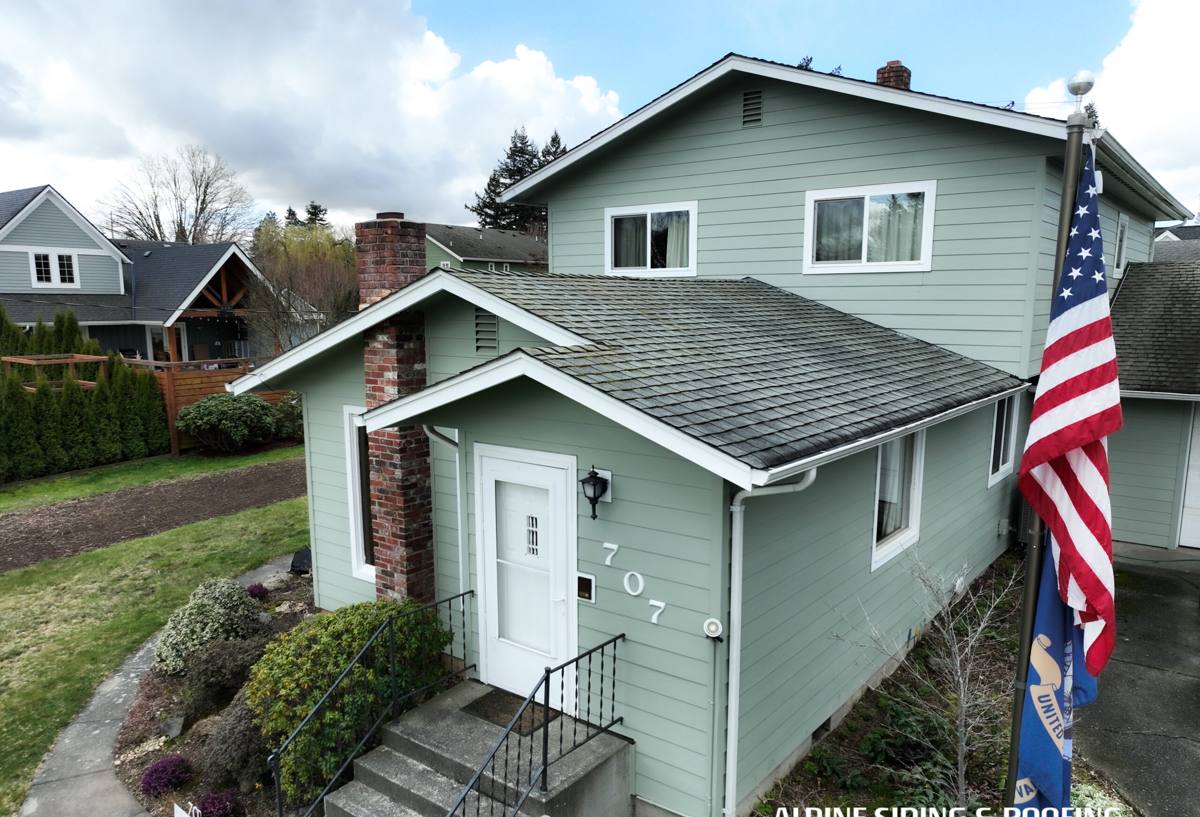
What Skagit County Weather Does to a Roof Over Time
Western Washington roofs age differently than roofs in drier climates. The damage isn't dramatic — it's cumulative. A few things stand out for homes around Sedro-Woolley:
Driving Rain and Wind-Driven Moisture
Rain here doesn't just fall straight down. Storms moving through the region push rain sideways under shingle tabs, around flashing, and into any gap that wasn't sealed correctly the first time. A roof system built for a drier climate — with minimal underlayment or shortcuts at the valleys and penetrations — will leak here years before it would elsewhere.
Long Moss and Algae Season
Shaded roof sections, north-facing slopes, and areas under tree cover stay damp for extended stretches of the year. That's exactly what moss and algae need to establish. Once moss takes hold, it lifts shingle edges, holds moisture against the roof deck, and accelerates granule loss — all of which shortens the life of an otherwise sound roof.
Humidity and Slow-Drying Materials
Even on non-rainy days, the ambient humidity across Skagit County keeps roofing materials from fully drying out between weather events. This is why ventilation and underlayment choices matter more here than they do in arid regions — a roof system needs to manage moisture that never fully disappears, not just moisture from active rain.
None of this means Sedro-Woolley homes need exotic materials. It means the installation details — ventilation, underlayment, flashing, and moss-resistant choices — need to be treated as essential, not optional upgrades.
Signs a Repair Won't Cut It Anymore
Not every roof problem means full replacement. But there's a point where continuing to patch a roof costs more over time than replacing it outright. Common signs include:
- Shingles that are curling, cupping, or losing granules across large sections, not just one spot
- Soft or spongy decking felt underfoot in the attic or from a ladder inspection
- Repeated leaks in different locations after past repairs
- Heavy, persistent moss coverage that keeps returning after cleaning
- Visible daylight through the roof deck from inside the attic
- A roof that's simply reached the end of its expected material lifespan
- Rising energy bills tied to poor attic ventilation or insulation gaps at the roofline
If you're seeing two or more of these, it's worth having someone look at the whole roof system rather than chasing individual leaks one at a time.
What a Correct New Roof Installation Actually Involves
A new roof is more than laying new shingles over what's there. Done correctly, it's a full system rebuild:
Tear-Off and Deck Inspection
We remove the old roofing material down to the decking. This is the only way to actually see what's underneath — soft spots, rot, or old damage that's been hidden under the surface layer. Any damaged decking gets replaced before anything new goes down. Skipping this step is one of the most common shortcuts in the industry, and it's the one that causes problems five or ten years later.
Underlayment and Ice/Water Protection
Given how much wind-driven rain this region sees, underlayment isn't a formality — it's a second line of defense. We pay particular attention to valleys, eaves, and low-slope transitions where water tends to concentrate.
Flashing at Every Penetration
Chimneys, vents, skylights, and wall intersections are where most roof leaks actually originate — not the open field of shingles. New flashing, properly integrated with the underlayment and roofing material, is non-negotiable on a correct installation.
Ventilation
Proper intake and exhaust ventilation keeps the attic space from trapping moisture and heat. In a humid climate like this one, poor ventilation shortens roof life from the inside out, regardless of how good the shingles are.
Material Installation
The final layer — shingles, metal panels, or another material — goes down according to the manufacturer's specifications, not a compressed version of them. Nail placement, exposure, and pattern all affect wind resistance and warranty validity.
Choosing a Roofing Material for This Climate
There isn't a single "best" material for every home — it depends on budget, roof pitch, and how much moss and moisture resistance you want to prioritize. Here's how the common options compare for a Skagit County home:
| Material | Moisture & Moss Resistance | Typical Lifespan | Notes for This Climate |
|---|---|---|---|
| Architectural Asphalt Shingle | Good, especially with algae-resistant granules | 25–30 years | Most common choice; performs well when ventilation and underlayment are done right |
| Standing Seam Metal | Excellent — sheds water and resists moss buildup | 40–50+ years | Higher upfront cost, minimal maintenance, handles heavy rain well |
| Cedar Shake | Requires ongoing maintenance in wet climates | 20–30 years with upkeep | Attractive but demands regular moss treatment and inspection; we're upfront about this maintenance burden before recommending it |
| Synthetic/Composite Shingle | Good, engineered for moisture resistance | 30–50 years | Worth considering where appearance and low maintenance both matter |
We'll walk through these trade-offs during your estimate rather than steering you toward whatever's easiest to install. The right choice depends on your roof's exposure, your budget, and how much long-term maintenance you're willing to take on.
Our Installation Process
- On-site inspection and estimate — we assess the current roof, attic ventilation, and any problem areas before quoting anything
- Material selection — we go over options and trade-offs based on your home and budget, not a one-size-fits-all pitch
- Scheduling around weather — we plan installation windows with Skagit County's rain patterns in mind to protect the exposed deck
- Tear-off and deck repair — old material removed, decking inspected and repaired as needed
- Underlayment, flashing, and ventilation installed — the system components that determine how the roof performs, not just how it looks
- New roofing material installed — to manufacturer specification, with attention to nailing pattern and exposure
- Final walkthrough — we review the completed roof with you and answer any questions before considering the job done
Why Working With a Crew That Already Serves Sedro-Woolley Matters
Sedro-Woolley homeowners sometimes get quotes from companies based well outside Skagit County — crews that show up once, install a roof, and are hard to reach if something needs attention later. There are a few practical reasons working with a crew already established in this area makes a difference:
- We're familiar with local permitting requirements and inspection expectations in Skagit County
- We already know which roof details — valleys, low-slope sections, north-facing planes — tend to cause trouble in this specific climate
- If a warranty question or follow-up concern comes up after installation, we're not a long drive away or a company that's moved on to a different region
- We can schedule around the realistic rain patterns of this area instead of working off a generic install timeline
None of this is about badmouthing outside companies — plenty do fine work. It's simply that proximity and local familiarity reduce the number of things that can go wrong on a wet-climate roof, and reduce the hassle if something needs to be addressed after the fact.
What Affects the Cost of a New Roof
We don't publish blanket prices because roof cost depends on real variables specific to your home. The main factors are:
- Roof size and total square footage
- Roof pitch and complexity (number of valleys, penetrations, dormers)
- Current decking condition — hidden rot or soft spots add repair cost
- Material selection, from standard asphalt shingle up to metal or cedar
- Ventilation upgrades needed to bring an older attic system up to standard
- Access and site conditions, including tear-off and disposal logistics
An accurate number only comes from an actual look at your roof — anything quoted sight-unseen should be treated as a rough placeholder, not a real estimate.
After Installation: Keeping a New Roof Performing
A new roof installed correctly for this climate should need very little from you beyond periodic moss checks and keeping gutters clear so water isn't backing up under the eaves. We're happy to point out anything worth watching during the final walkthrough, and to answer questions if something looks off down the road — that's part of doing the job right the first time, not an upsell for later.
If your Sedro-Woolley home's roof is showing its age or you're planning ahead rather than waiting for a leak, we'd be glad to take a look. Reach out for a free, no-pressure estimate using the form below.