 Anacortes Exterior
 A storm doesn't have to be dramatic to leave real damage on an Oak Harbor roof. A few hours of sideways rain off the water, a gusty front pushing through overnight, or a tree limb coming down in a windstorm can lift shingles, tear flashing loose, or open a seam that won't show itself as a leak for weeks. Storm damage repair here isn't the same job as storm damage repair on a roof forty miles inland — the salt air, the driving rain, and the long moss season this area deals with all change what "correctly repaired" actually means. This page covers what storm damage typically looks like on a Whidbey Island roof, what a proper repair involves, how our process works, and why a crew that already works in Oak Harbor gets better results than one seeing the area for the first time.
Why Storm Damage Hits Oak Harbor Roofs Harder
Three regional factors show up again and again when we're diagnosing storm damage out here, and they rarely act alone.
Salt Air
Airborne salt off the surrounding water accelerates corrosion on anything metal — fasteners, flashing, vent stacks, gutter hardware. A roof that took wind damage and got patched with standard, non-marine-rated materials often shows a second round of problems a few years later, once corrosion sets in at the repair site. It's one of the most common reasons a "repaired" roof out here fails again sooner than it should.
Driving Rain and Wind
Storms in this part of the Salish Sea tend to bring wind-driven rain rather than straight-down rain, and that changes where damage actually happens. Wind can lift a shingle edge just enough to create a path for water without tearing the shingle off entirely, so the visible damage after a storm is often smaller than the actual entry point for water underneath it. Roof-to-wall transitions, valleys, and anywhere two roof planes meet take the brunt of it.
A Long Moss Season
Moss isn't storm damage on its own, but it makes storm damage worse. A shingle edge already lifted by wind, sitting under moss that's holding moisture against it, dries out far slower than a clean, moss-free roof. That extended damp period is exactly what lets a small storm-related opening turn into rot in the decking underneath before anyone notices a leak inside the house.
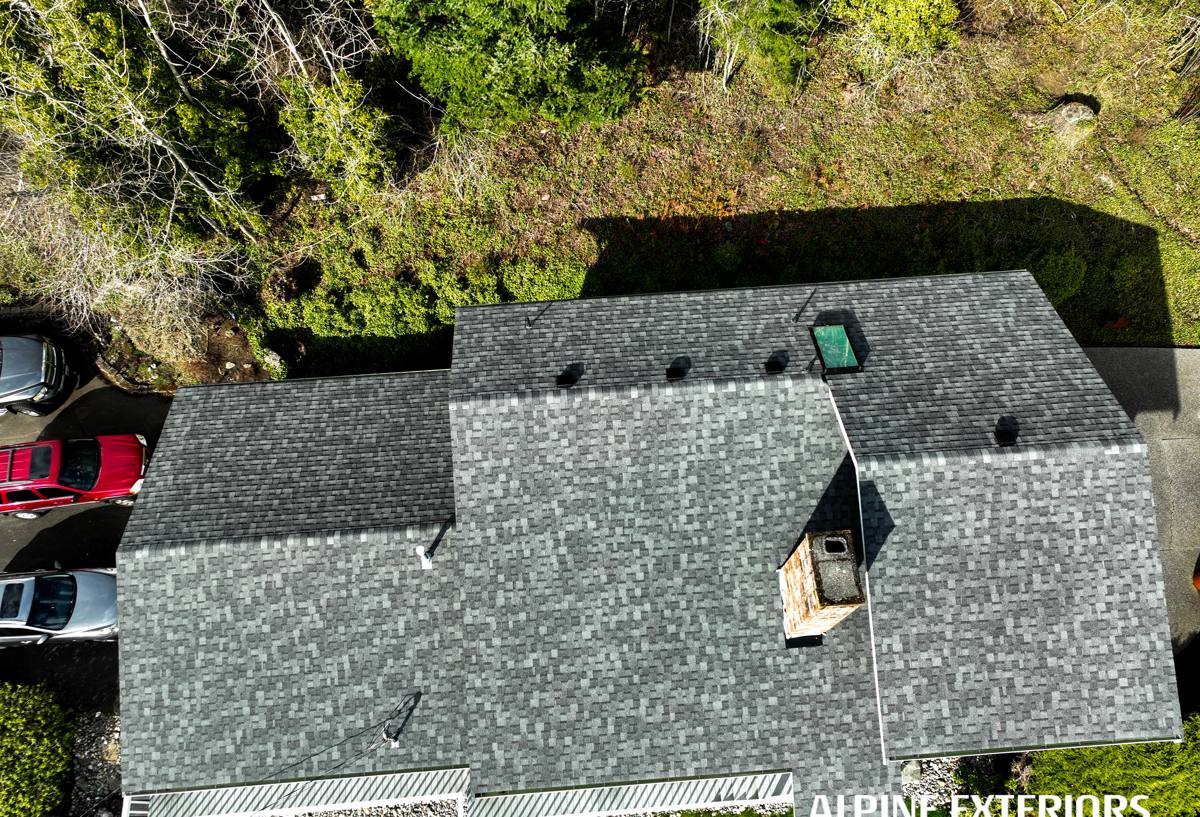
Common Types of Storm Damage We Repair
Not all storm damage looks the same, and the right fix depends on which of these you're actually dealing with.
| Damage Type | Typical Cause | How Urgent |
|---|---|---|
| Lifted or missing shingles | Wind gusts catching an edge or a full section | High — exposed decking takes on water fast |
| Wind-driven rain intrusion | Rain forced sideways into valleys, laps, and flashing | High — often invisible until it reaches the attic |
| Flashing separation | Wind flexing the roof deck or age-weakened sealant failing under storm stress | High — a common hidden leak source |
| Tree limb or debris impact | Wind bringing down branches or loose debris | Varies — depends on whether the deck is punctured |
| Granule loss and surface wear | Repeated storm cycles wearing down shingle surface | Lower — a durability concern, not usually an active leak |
An accurate diagnosis matters more than the repair itself — chasing the wrong damage type wastes money and leaves the actual entry point untouched.
Signs Your Oak Harbor Roof Has Storm Damage
Some of these are obvious right after a storm; others take a while to show up. Worth checking for both:
- Shingles that are visibly lifted, curled, cracked, or missing after a windstorm
- Granules collecting in gutters or downspouts beyond normal light shedding
- New staining on ceilings or walls, especially after a storm with strong wind-driven rain
- Flashing that looks bent, pulled loose, or separated at a chimney, skylight, or wall transition
- Soft or spongy spots on the roof surface underfoot
- Daylight visible through the roof deck from inside the attic
- A tree limb or heavy debris that came down on or near the roofline
- Musty smells or visible mold starting in the attic space
What a Correct Storm Damage Repair Involves
The visible damage after a storm is rarely the whole story, and a repair that only addresses what's obvious tends to leave the real problem in place.
Temporary Protection First
When a roof has active exposure — missing shingles, an open seam, a puncture — the first move is temporary protection to stop water intrusion while a permanent repair is planned. Tarping and temporary sealing aren't the fix, but skipping this step while waiting on scheduling or materials just lets a contained problem spread.
Assessing the Full Extent, Not Just the Obvious Spot
Wind and driving rain rarely damage just one shingle. We check the surrounding field, adjacent flashing, and the roof deck itself, since a storm strong enough to cause visible damage in one spot has usually stressed the fasteners and seams nearby too, even if they haven't failed yet.
Matching Materials and Technique
A patch repair needs to match the existing roofing material's profile, color, and fastening pattern closely enough that it actually integrates with the surrounding roof rather than becoming its own weak point. Mismatched or improperly fastened patch shingles are a common source of repeat leaks after a rushed repair.
Flashing and Underlayment Get Fixed Too
If the storm compromised flashing or underlayment near the damaged area, replacing shingles alone doesn't solve the problem — water will keep finding the same path. We treat the flashing and underlayment under and around storm damage as part of the repair, not an optional add-on, and use corrosion-resistant materials suited to this area's salt air exposure.
Our Storm Damage Repair Process
- Initial contact and triage. We ask what's visible and how urgent the exposure is, so active leaks get prioritized over cosmetic damage.
- Temporary protection if needed. For active water intrusion, we stabilize the roof first to prevent further damage while the repair is scheduled.
- On-site inspection. We assess the full extent of the damage — not just the obvious spot — including flashing, decking, and surrounding roof sections.
- Written estimate. We explain what we found, what needs repair versus what's just cosmetic, and what the work will cost.
- Repair work. Damaged material comes off, the deck is checked and repaired if needed, and new material, flashing, and underlayment go in to match the existing roof.
- Final walk-through. We review the completed repair with the homeowner and go over what to watch for going forward.
Repair or Replace — and What It Costs
Storm damage doesn't always mean a full roof replacement, but sometimes it's the event that reveals a roof was already near the end of its useful life. These are the main factors that push the decision one way or the other.
| Factor | Leans Toward Repair | Leans Toward Replacement |
|---|---|---|
| Extent of damage | Isolated to one section or a few shingles | Widespread across multiple roof planes |
| Roof age | Well within its expected service life | Already near or past manufacturer-rated lifespan |
| Deck condition | Sound decking under the damaged area | Rot or soft sheathing found during inspection |
| Prior repair history | First significant storm event on this roof | Repeated patches and recurring leak spots |
| Material availability | Matching material still available | Discontinued material forcing a mismatched patch |
We don't quote a number without seeing the roof — access, pitch, and what we find once damaged material comes off can all move a repair estimate. What we can say honestly: most isolated storm repairs are a modest job measured in hours, not days, while widespread damage or a compromised deck moves the conversation toward partial or full replacement.
Working With Your Insurance Company
Many storm repairs on Whidbey Island get covered in part or in full by homeowners insurance, though coverage depends on the policy and the cause of damage — that's a conversation between the homeowner and their insurer, not something we can promise. What we do is document the damage clearly with photos and a detailed written estimate, and we're glad to be on-site if an adjuster wants to see the roof directly. Getting a professional assessment soon after a storm, rather than waiting, generally makes that documentation more useful and the timeline of cause and effect clearer.
Why Hire a Crew That Already Works Oak Harbor
A roofer who mostly works inland isn't wrong about roofing generally — they're working from a different set of defaults. Fastener and flashing choices that hold up fine on a typical mainland roof often aren't rated for what salt air and sustained wind-driven rain do to a roof on Whidbey Island year after year. A crew that already works Oak Harbor and the surrounding area has seen which repair shortcuts actually fail out here, not just which ones fail in general.
There's a practical side too. Our crew is based in Anacortes and already routes across Deception Pass to reach jobs on Whidbey Island, so a service call to Oak Harbor isn't an unfamiliar trip tacked onto someone else's schedule — it's a normal part of how we work. That matters most right after a storm, when a fast, reliable response is the difference between a contained repair and a much bigger problem.
After the Repair: Reducing Damage From the Next Storm
A correctly completed repair still benefits from a few habits, given how often this area sees weather worth watching:
- Keep gutters and downspouts clear so wind-driven rain isn't backing up under roof edges
- Trim back tree limbs that overhang the roofline before the next windstorm, not after
- Have moss addressed before it spreads across a full slope and starts holding moisture
- Walk the roofline visually after any major storm and note anything that looks different
- Get a professional look at any new staining, sagging, or soft spots right away rather than waiting
If a recent storm left your Oak Harbor roof with damage, or you just want a second opinion on something you noticed, we're glad to take a look. Reach out for a free, no-pressure estimate using the form below.