 Anacortes Exterior
 Roofing in Burlington Has Its Own Set of Problems
Burlington sits close enough to the water and low enough in the Skagit Valley that its roofs deal with a specific combination of stresses: salt-tinged air drifting in off the sound, long stretches of driving rain that doesn't let up for days, and a moss season that can run nearly year-round in the shaded, damp spots on a roof. None of these things alone is unusual for a Pacific Northwest roof. Together, over years, they wear down an asphalt shingle roof faster than homeowners expect if the original install didn't account for them.
A shingle roof that would hold up fine in a drier inland climate can start showing granule loss, soft spots, and moss colonies within a handful of years here if the underlayment, flashing, and ventilation weren't done with this climate in mind. This page is about what actually goes into an asphalt shingle roof that's built to last on a Burlington home — not a generic overview of shingles in general.
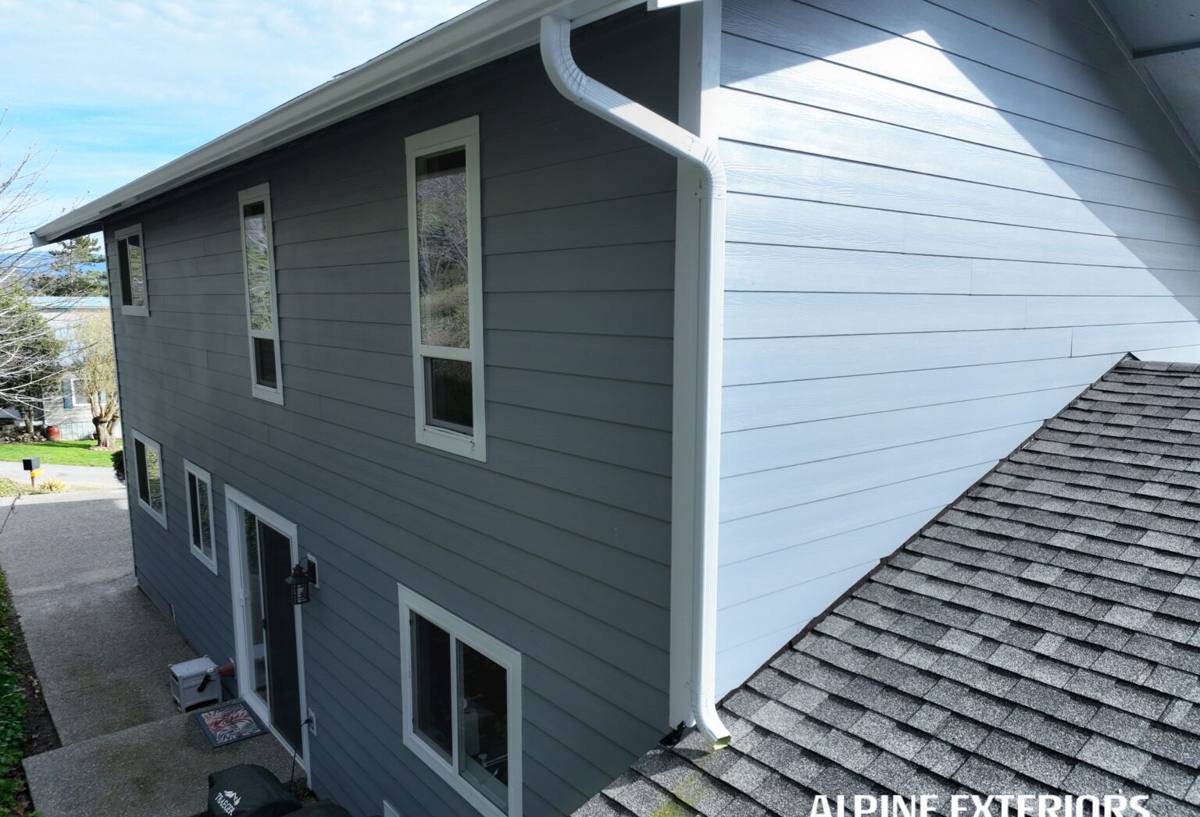
What Salt Air, Rain, and Moss Actually Do to a Shingle Roof
Salt Air and Metal Components
Asphalt shingles themselves aren't harmed directly by salt air, but the metal parts of a roofing system are. Nails, flashing, drip edge, and roof vents can corrode faster in a coastal-influenced climate than they would further inland. Once a fastener or flashing seam starts to corrode, it stops doing its job — and a shingle roof is only as good as the metal and underlayment working underneath it.
Driving Rain
Wind-driven rain doesn't just fall straight down — it gets pushed sideways and upward under shingle edges, around chimneys, and into valleys. A roof that only relies on the shingles themselves to shed water, without proper underlayment and flashing detail at every transition, will eventually leak in exactly these spots. This is where most of the roof leaks we get called out for actually originate — not in the open field of the roof, but at edges, valleys, and penetrations.
Moss
Moss needs shade, moisture, and organic debris to get started, and a lot of Burlington properties have tree cover that provides exactly that. Moss holds moisture against the shingle surface far longer than it would otherwise dry, which accelerates granule loss and, over time, can lift shingle tabs enough to let water underneath. A roof with poor ventilation or a north-facing slope under trees is going to grow moss faster than a south-facing, well-ventilated one, regardless of shingle brand.
Choosing an Asphalt Shingle That's Actually Suited to This Climate
Not every asphalt shingle is built the same way, and the differences matter more here than in a milder climate. We look at three things when recommending a shingle for a Burlington roof: how well it resists algae and moss growth, how it's rated for wind, and how forgiving it is of the granule loss that comes with age and moisture exposure.
| Shingle Type | Typical Lifespan Here | Best For | Trade-Offs |
|---|---|---|---|
| 3-Tab Asphalt | Shorter end of the range in this climate | Budget-conscious re-roofs on simpler roof lines | Lower wind rating, less algae resistance, flatter look |
| Architectural (Dimensional) | Longer end of the range | Most Burlington homes — better durability for the money | Higher upfront cost than 3-tab |
| Algae-Resistant Architectural | Longer, with better appearance retention | Shaded lots, north-facing slopes, tree cover | Slight cost premium; still needs periodic moss removal |
| Impact-Resistant Architectural | Longer, with added durability | Homes wanting extra resilience against debris and hail | Highest upfront cost of the asphalt options |
For most Burlington homes, we steer people toward an algae-resistant architectural shingle. The copper- or zinc-infused granules used in algae-resistant lines slow down the moss and algae growth that this climate practically guarantees over time, and the heavier profile of an architectural shingle simply holds up better to sustained wind-driven rain than a 3-tab. It costs more upfront than the cheapest option, but it's the honest recommendation for how this roof will actually be used.
What a Correct Installation Involves — Not Just the Shingles
The shingle brand gets most of the attention, but it's the layers underneath and the detail work around penetrations that determine whether a roof actually performs in this climate. A correct asphalt shingle install for a Burlington home includes:
- Ice and water shield at eaves, valleys, and around chimneys and skylights — the areas most exposed to wind-driven rain and ice damming.
- Synthetic underlayment across the full roof deck as a secondary water barrier beneath the shingles.
- Corrosion-resistant flashing and drip edge at every roof-to-wall transition, valley, and penetration.
- Balanced intake and exhaust ventilation so moist attic air doesn't condense against the underside of the deck and feed rot or moss from below.
- Correct nailing pattern and fastener count per the shingle manufacturer's wind-rated installation instructions, not just a generic nail count.
- Deck inspection and repair before any new material goes down — covering rot with new shingles just hides the problem.
Skipping any one of these doesn't necessarily cause a problem in year one. It shows up in year five or eight, usually as a leak that traces back to a detail that was never done right in the first place.
How We Approach an Asphalt Shingle Job on a Burlington Home
1. On-Site Inspection and Honest Assessment
We start by getting on the roof, not just looking at it from the ground. We check the deck condition, existing ventilation, flashing at every penetration, and how much moss or granule loss is already present. If a full replacement isn't actually necessary yet, we'll tell you that.
2. A Written Scope, Not a Verbal Estimate
You get a written scope of exactly what's being done — tear-off layers, underlayment type, flashing work, ventilation changes, and shingle selection — so there's no ambiguity about what you're paying for.
3. Tear-Off and Deck Repair
We remove the old roofing down to the deck, repair or replace any damaged sheathing, and address any ventilation or structural issues we find before anything new goes on.
4. Installation to Manufacturer Spec
Underlayment, ice and water shield, flashing, and shingles go down in the sequence and fastening pattern the manufacturer requires — this is also what keeps a manufacturer's warranty valid, since most warranties are voided by incorrect installation.
5. Cleanup and Final Walkthrough
We magnet-sweep for stray nails, clear debris, and walk the job with you before we consider it done.
Signs a Burlington Roof Needs Attention Sooner Rather Than Later
Because moss and moisture damage build up gradually, a lot of homeowners don't notice a problem until it's already inside the attic. Worth checking for:
- Moss patches, especially on north-facing slopes or under tree cover
- Granules collecting in gutters or at downspout outlets
- Shingle edges that look curled, cupped, or lifted
- Dark streaking that doesn't wash off with normal rain
- Soft or spongy spots when walking the roof
- Daylight visible through the attic roof deck
- Water stains on interior ceilings, especially near chimneys or valleys
- Rusted or visibly corroded flashing and fasteners
Any one of these on its own might not mean an urgent problem. Several together, or anything involving interior water stains, is worth a look before the next stretch of driving rain.
Maintenance That Actually Extends Roof Life Here
An asphalt shingle roof in Skagit County benefits from a different maintenance rhythm than one in a drier climate, mostly because of how long moss season runs. A few things make a real difference over the life of the roof:
- Removing moss and debris before it has a chance to hold moisture against the shingles long-term
- Keeping gutters and downspouts clear so water isn't backing up under the shingle edge
- Trimming back overhanging branches to reduce shade and debris buildup
- Checking attic ventilation periodically, since blocked vents accelerate both moss growth and deck moisture problems
- Having flashing and fasteners checked for corrosion every few years, particularly on older roofs
None of this replaces a correct installation in the first place, but it meaningfully extends the life of a roof that was built right to begin with.
Why Local Roofing Experience Matters for Burlington Homes
A crew that only occasionally works in Skagit County can still install a roof competently, but they're less likely to instinctively account for how this specific combination of salt air, driving rain, and long moss season plays out over years rather than months. Knowing which slopes on a Burlington roof stay damp longest, which shingle lines actually resist algae growth here rather than just on paper, and where wind-driven rain tends to find its way in — that comes from doing this work in this area repeatedly, not from a general roofing background alone.
We'd rather walk your roof, tell you honestly what condition it's in, and give you a straightforward scope of work than push a product or a repair you don't need. If you're weighing a repair against a full replacement, or just want a second opinion on what you're looking at, we're glad to take a look.
If you're dealing with moss, granule loss, an aging roof, or just want an honest assessment of what your Burlington home's roof needs, we offer free, no-pressure estimates — use the form below to get started.