 Anacortes Exterior
 Deck Repair Built for Bow's Coastal Climate
Bow sits close enough to Samish Bay and the Skagit County shoreline that salt-laden air reaches almost every deck in the area, even ones set back from the water. Combine that with the long, wet Pacific Northwest winter and the moss season that follows, and a deck here works harder than the same structure would in a drier inland climate. Fasteners corrode faster. Wood stays damp longer between dry spells. Moss and algae get a foothold on any shaded or north-facing section and don't let go until late spring.
We repair decks throughout Bow and the surrounding Anacortes service area, and the pattern we see is consistent: the deck surface often still looks presentable while the structure underneath — ledger boards, joists, post bases, and fasteners — is quietly failing. A deck repair done right here isn't just about swapping a few boards. It's about understanding where water is getting in, why it's staying, and what that moisture has already done to the wood and metal it touched.
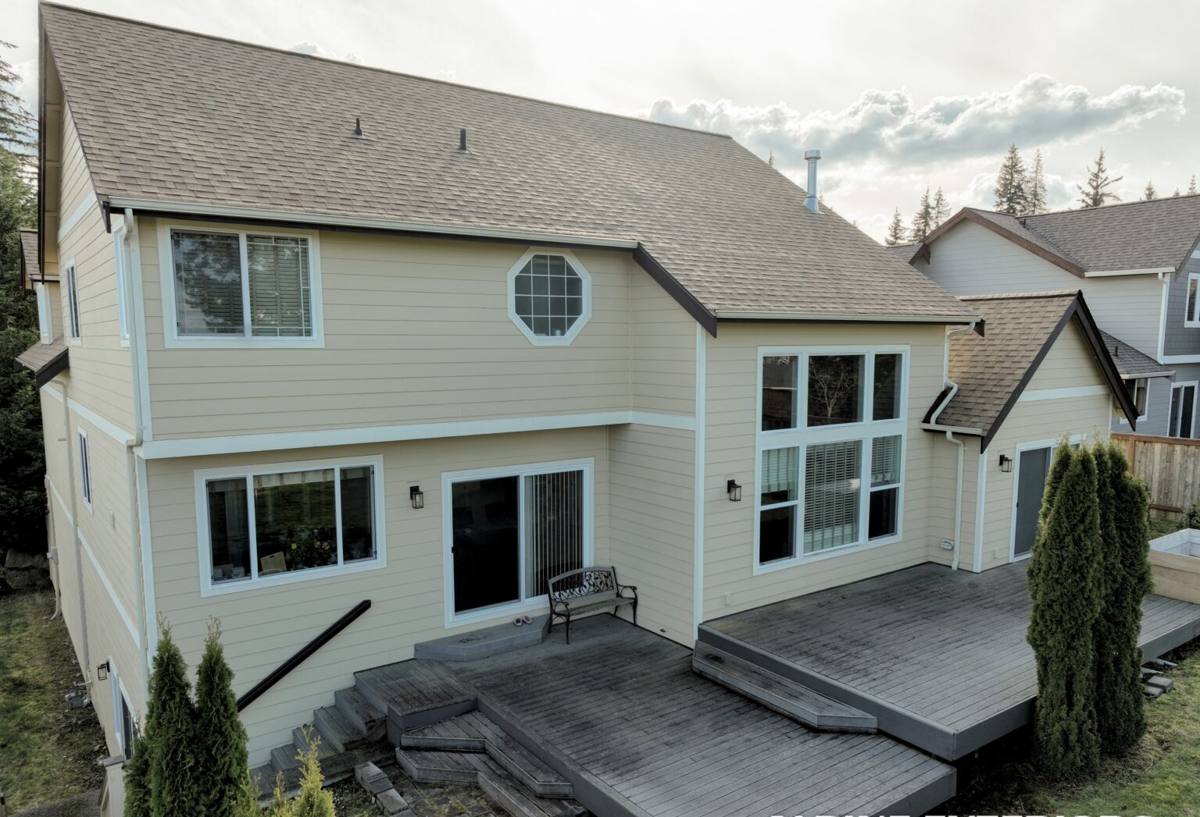
Why Bow Homes See Faster Deck Wear
A few things about this specific area combine to shorten the working life of an untreated or poorly maintained deck:
- Salt air corrosion: Proximity to Samish Bay means airborne salt reaches fasteners, flashing, and any exposed metal hardware, accelerating rust even on products rated for exterior use.
- Driving rain: Storms off the Sound tend to come in sideways, pushing water into joints, under ledger flashing, and behind rim boards that would stay dry in a calmer climate.
- Extended moss season: Shaded decks under trees or on the north side of a house can stay damp for months, giving moss and algae time to work into the wood grain and hold moisture against the surface.
- Rural tree cover: Many Bow properties sit near mature trees or open farmland, which means more debris in gaps, more shade on parts of the deck, and more organic matter feeding moss growth.
None of these factors are unusual for Skagit County. What matters is that a deck repair plan for a Bow home has to account for all of them at once, not just patch the board that's visibly failing.
The Deck Problems We See Most in Bow
Ledger Board and Rim Joist Rot
The ledger board — where the deck attaches to the house — is the single most common failure point we find. If flashing was installed poorly, or wasn't installed at all, water tracks behind the ledger every time it rains and never fully dries out between storms. By the time staining or soft wood shows on the surface, the rot underneath is often further along than it appears. This is a structural issue, not a cosmetic one, and it's the first thing we check on any repair call.
Corroded or Failing Fasteners
Nails, screws, and joist hangers that aren't rated for coastal exposure will rust faster in Bow than almost anywhere inland in the county. Rust stains bleeding out around a fastener head are an early warning sign. Left alone, the fastener loses holding strength long before the surrounding wood looks bad, which is why a deck can feel "loose" or springy even when the boards themselves seem fine.
Moss, Algae, and Surface Decay
Moss holds moisture directly against the wood surface, which speeds up soft rot and makes boards slick and unsafe underfoot. It's most aggressive on shaded sections, under overhangs, and anywhere debris collects instead of draining. A deck that's pressure-washed without addressing the underlying moisture problem will just grow moss back within a season.
Post Base and Footing Movement
Rural Bow properties often sit on soil that holds water differently than in-town lots — clay-heavy ground, farmland runoff, or grading that channels water toward the house rather than away from it. Post bases set in or near standing water degrade faster, and footings that were adequate when the deck was built can shift as the ground around them saturates and dries repeatedly over the years.
Repair or Replace? How We Make That Call
Not every problem deck needs to come down. We evaluate structural members, fasteners, and surface material separately, because they often fail at different rates.
| Deck Condition | Usually Repairable | Usually Needs Replacement |
|---|---|---|
| Ledger board / rim joist | Isolated rot caught early, flashing not yet failed everywhere | Widespread soft wood, flashing failure across the full ledger run |
| Deck boards | A handful of boards with surface damage or splitting | Cupping, splintering, or soft spots across most of the deck |
| Framing (joists/beams) | One or two joists with localized rot, sistered and reinforced | Multiple joists compromised or beam showing structural sag |
| Posts and footings | Post base hardware replaced, post itself still sound | Post rot at grade line, footing heaving or settling |
| Railings | Loose balusters, single damaged section | Railing system doesn't meet current safety spacing or height |
A deck that's structurally sound but cosmetically tired is usually a good repair candidate. A deck where the framing itself has been compromised in multiple places is often a better candidate for partial or full rebuild — patching around failed structure just moves the problem, it doesn't solve it.
What a Correct Deck Repair Actually Involves
- Full structural inspection — we check the ledger connection, joists, beams, posts, and footings before touching the surface, probing for soft wood rather than just looking at it.
- Moisture source identification — every repair traces back to where water is getting in or staying too long, whether that's failed flashing, poor drainage, or shade-driven moss buildup.
- Fastener and hardware assessment — we check joist hangers, structural screws, and connectors for corrosion, since coastal air ages hardware faster than it ages wood.
- Targeted repair or reinforcement — sistering a joist, replacing a section of ledger with proper flashing, resetting a post base — matched to what the inspection actually found, not a blanket approach.
- Correct flashing and drainage details — this is the step that gets skipped most often on lower-quality repairs, and it's the one that determines whether the fix lasts.
- Surface restoration — replacing damaged boards, resetting fasteners, and addressing moss-prone areas so the repair doesn't just recur next winter.
Materials and Fasteners We Use
Given the salt air exposure common in Bow, we default to stainless steel or heavy hot-dip galvanized fasteners and hardware rated for coastal use rather than standard exterior-grade hardware. For structural lumber, properly treated framing lumber remains the standard for joists and posts because it can be sistered or field-cut without compromising a factory coating. For decking surfaces, we'll talk through wood versus composite honestly: composite reduces surface maintenance but adds cost up front and needs correct ventilation underneath to avoid trapping moisture against the framing; wood costs less initially but needs more regular attention in this climate. Neither is automatically "better" — it depends on the homeowner's budget and how much upkeep they want to do.
Our Process on a Bow Repair Call
We start with an on-site inspection, not a phone estimate, because deck problems in this climate are rarely just what's visible from the top. We check underneath, probe suspect boards and framing members, and look at how water is actually moving across and off the structure. From there we give a straightforward assessment: what's failing, why, and what it will take to fix it correctly — including whether a full repair makes more sense than a partial patch. We handle scheduling around rural access on Bow properties, whether that means a longer driveway, farmland setbacks, or seasonal timing around weather windows. Work is scoped and priced before we start, with no surprise add-ons once we've opened up a section of decking.
Maintenance Between Repairs
A repaired deck still needs regular attention in this climate to get its full lifespan. A simple seasonal routine goes a long way:
- Clear leaves, needles, and debris from between boards before fall rains set in, so water can drain instead of pooling.
- Check for moss growth each spring, especially on shaded or north-facing sections, and remove it before it works into the wood grain.
- Inspect fasteners and hardware once a year for early rust staining, particularly on decks closer to the water.
- Keep gutters and downspouts near the deck clear so runoff isn't being dumped directly onto ledger boards or posts.
- Reseal or refinish wood decking on the manufacturer's recommended schedule rather than waiting for visible graying or cracking.
Why a Crew That Works Bow Already Matters
A deck repair crew that mostly works drier, inland climates will often underestimate how fast salt air and moss can undo a repair that wasn't detailed correctly the first time. Working throughout Skagit County and the Anacortes area means we see the same ledger flashing failures, the same fastener corrosion patterns, and the same moss buildup on shaded Bow lots often enough to know what to check before it becomes an emergency. That familiarity shows up in the details — the flashing method, the fastener grade, the drainage path — not in anything dramatic, just in a repair that's still solid several winters later instead of needing to be redone.
If you're seeing soft spots, rust stains, a springy feel underfoot, or moss that keeps coming back no matter how often you clean it, it's worth having a look before winter rain makes the problem worse. We offer a free, no-pressure estimate for deck repair in Bow and the surrounding area — just fill out the form below and we'll take it from there.