 Anacortes Exterior
 Why Ship Harbor Homes Are Tough on Siding
Homes near Ship Harbor sit close enough to the water that salt-laden air is a daily fact of life, not an occasional nuisance. That air carries fine salt particles that settle on exterior surfaces, and combined with the near-constant humidity of a Skagit County marine climate, it accelerates the breakdown of siding materials that aren't built to handle it. Add in driving rain that comes sideways off Rosario Strait during winter storms, and you have two forces working together: moisture pushed hard against the wall assembly, and salt residue that keeps surfaces damp longer than they would be a few miles inland.
Then there's moss. Anacortes gets a long, mild, wet stretch from fall through spring, and homes with any shade from trees or neighboring structures see moss and algae establish themselves on siding, trim, and anywhere water sits without drying quickly. Moss holds moisture against the substrate for months at a time. On a siding product that isn't dimensionally stable or properly finished, that sustained dampness is exactly what causes swelling, delamination, or paint failure.
None of this means Ship Harbor is an unusually harsh place to live — it's a beautiful part of Fidalgo Island for a reason. But it does mean siding decisions here should be made with the actual local exposure in mind, not a generic national spec sheet.
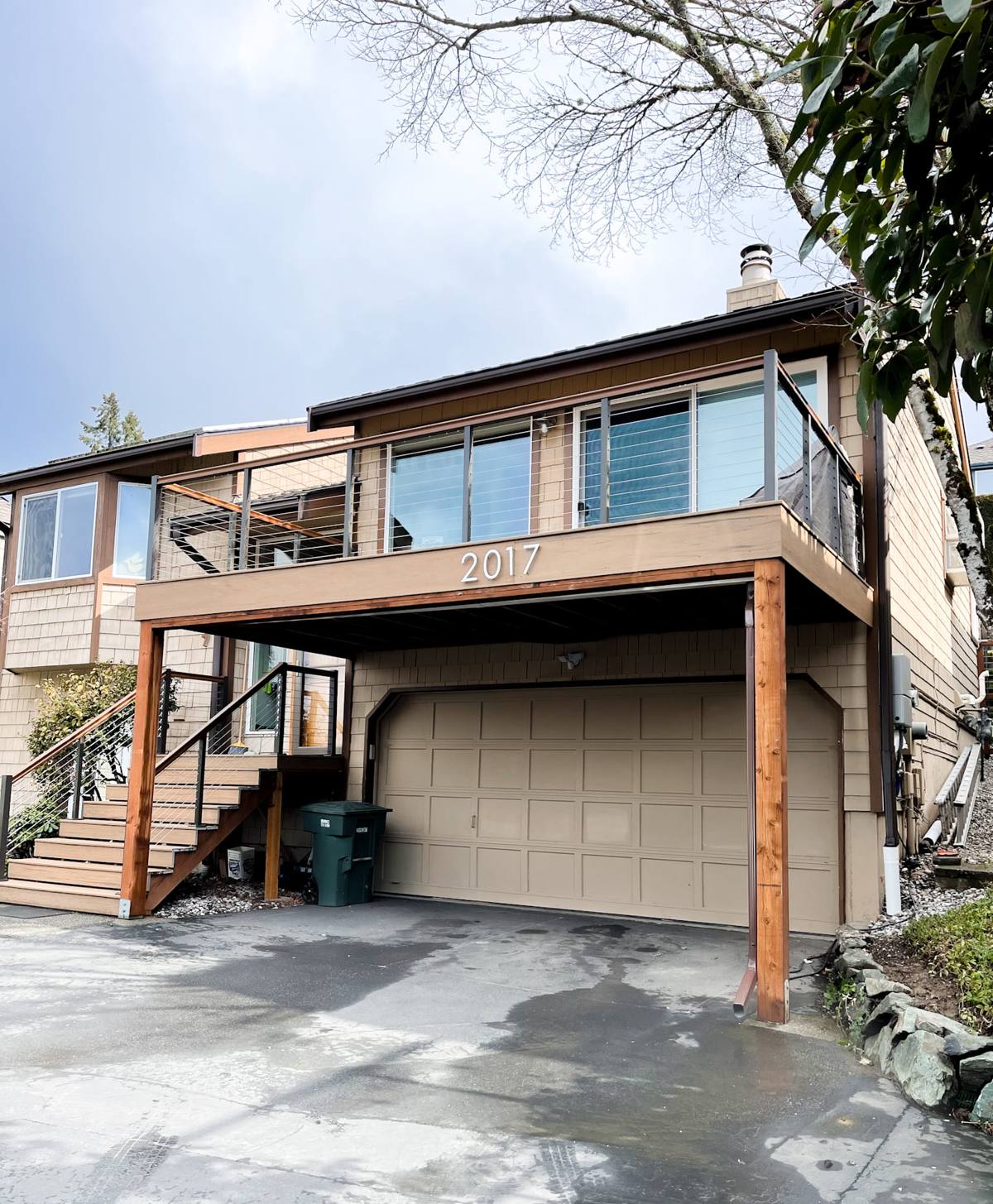
Signs a Ship Harbor Home Needs Siding Replacement
Because the damage from salt air, wind-driven rain, and moss is gradual, a lot of homeowners don't notice how far it's progressed until they're pointed to what to look for. Walk your exterior and check for these:
- Soft, spongy, or crumbling spots when you press on siding, especially near the bottom courses and around window and door trim
- Paint that's peeling, bubbling, or needs repainting more often than every 5-7 years
- Visible cupping, warping, or gaps opening between boards or panels
- Persistent moss or algae growth that comes back within a season of cleaning
- Staining or dark streaking below seams, nail heads, or trim joints, which usually points to water getting behind the siding
- Siding that's noticeably faded, chalky, or has lost its factory finish in patches
- Interior signs — musty smells, peeling interior paint near exterior walls, or visible mold — that suggest moisture is getting through
Any one of these on its own might just mean a repair or a repaint. Several of them together, especially on a home that's 15-25 years old, usually means the siding system itself has reached the end of its useful life and is no longer doing its job of keeping water out.
What a Correct Siding Replacement Actually Involves
Siding replacement is not just swapping old boards for new ones. In a climate like this, most of the long-term performance comes from what's underneath the visible surface.
Water Management Behind the Siding
A properly installed weather-resistant barrier (WRB) goes on the sheathing first, lapped correctly from bottom to top so water is always directed outward and down. Any tears, gaps, or improperly lapped seams in this layer become entry points, and on a home exposed to driving rain, those small mistakes show up as rot years later. We also confirm there's a drainage gap or rain screen where the assembly calls for one, so water that does get behind the cladding has somewhere to go instead of sitting against the sheathing.
Flashing and Trim Details
Window and door flashing, kick-out flashing at roof-to-wall intersections, and proper head flashing above trim boards are where most water intrusion problems actually start. These details matter more on a home taking direct salt air and wind-driven rain than they do on a sheltered inland lot, because the water is hitting the wall with more force and more frequency.
Fastening and Clearances
Fiber cement siding has specific fastening patterns, nail penetration depths, and clearance requirements from grade, roofing, and other surfaces. Skipping these — over-driving nails, fastening too close to panel edges, or leaving insufficient clearance at the bottom — is a common source of premature failure, and it's invisible to a homeowner until problems show up.
Why We Install Only James Hardie Fiber Cement
We made a decision as a company to install one siding system: James Hardie fiber cement. We don't install vinyl, LP SmartSide, Cemplank, Allura, primed spruce, or cedar. That's a deliberate standard, not a lack of options.
Fiber cement is non-combustible and dimensionally stable — it doesn't expand and contract with moisture the way wood-based products do, which matters directly on a home dealing with the humidity swings and sustained dampness that come with a long moss season. James Hardie's HZ5 product line is engineered specifically for climates with significant moisture exposure, which describes the Pacific Northwest generally and a water-adjacent property in Anacortes specifically.
The ColorPlus factory finish is baked on under controlled conditions rather than field-applied, which gives it better adhesion and color consistency than job-site painting, and it comes with its own finish warranty separate from the substrate warranty. In a location where repainting every few years because of salt exposure and UV would otherwise be part of the maintenance routine, a factory finish rated for this kind of exposure is a meaningful long-term difference, not a marketing detail.
We're not going to tell you other products don't work anywhere — vinyl and engineered wood sidings have real uses and real installed base. What we will say is that for the moisture load, salt exposure, and moss pressure a Ship Harbor home deals with year-round, we've standardized on the product we believe holds up best when installed correctly, and we'd rather install one system well than several systems inconsistently.
Comparing Siding Materials for a Marine-Exposure Home
| Factor | James Hardie Fiber Cement | Vinyl | Wood / Cedar |
|---|---|---|---|
| Salt air resistance | Engineered for moisture-heavy climates; non-corrosive material | Doesn't corrode, but can become brittle and fade under coastal UV/salt exposure | Absorbs moisture and salt residue; needs ongoing sealing |
| Moss / algae resistance | Dense, stable material resists moisture intrusion when properly maintained | Surface growth is common; doesn't structurally damage the panel | Moss holds moisture against wood, accelerating rot |
| Fire rating | Non-combustible | Combustible; can melt or warp near heat sources | Combustible |
| Finish durability | Factory-baked ColorPlus finish, separately warrantied | Color is through-body but can fade and chalk over time | Field-applied paint/stain, typically needs recoating every few years |
| Dimensional stability | Minimal expansion/contraction with moisture | Expands/contracts with temperature; can warp or buckle | Swells, cups, and warps with moisture cycling |
| Typical lifespan when correctly installed | Multiple decades, backed by a transferable warranty | Decades, but appearance and seals degrade faster in coastal exposure | Requires ongoing maintenance to reach a comparable lifespan |
Our Process, From Estimate to Finished Install
1. On-Site Evaluation
We walk the exterior with you, look at the current siding condition, check for signs of moisture intrusion, and talk through what we're seeing before anything is priced.
2. Tear-Off and Sheathing Inspection
Once old siding comes off, we can actually see the sheathing and framing underneath. This is when hidden rot or water damage from years of past exposure gets found — and it needs to be dealt with before new siding goes on, not covered up.
3. Water-Resistive Barrier and Flashing Installation
We install and properly lap the WRB, then handle flashing at every window, door, and roof intersection before a single piece of Hardie siding goes up.
4. Siding Installation to Manufacturer Spec
Fastening patterns, clearances, and seam treatment follow James Hardie's published installation requirements, which is also what keeps the product warranty intact.
5. Trim, Caulking, and Final Walkthrough
Trim details get finished, joints are properly sealed with appropriate materials, and we walk the finished job with you before calling it done.
Why Local Experience in Ship Harbor Matters
A crew that's worked other homes in this part of Anacortes already understands the wind exposure, the direction storms typically come from, and how quickly moss re-establishes itself on a shaded elevation here versus a sun-exposed one. That's not something you get from a general spec sheet — it comes from having actually stood on ladders on these lots in January.
Local familiarity also means fewer surprises with permitting and inspection expectations for Anacortes and Skagit County, and a realistic sense of how a project timeline holds up against Pacific Northwest weather windows rather than an optimistic estimate written somewhere that doesn't deal with the same rain patterns.
What Affects the Cost of a Siding Replacement Here
We won't quote a number without seeing the home, but the real cost drivers on a project like this are consistent:
| Factor | Why It Matters |
|---|---|
| Home size and wall complexity | More square footage and more corners, gables, and trim details mean more material and labor |
| Condition of sheathing underneath | Hidden rot found during tear-off has to be repaired before new siding goes on |
| Number of stories and access | Multi-story or hard-to-access walls take more time and equipment |
| Trim and detail work | Window/door surrounds, fascia, and architectural details add labor beyond flat wall area |
| Siding profile and color selection | Different Hardie profiles and ColorPlus colors carry different material costs |
The only way to get an honest number is to have someone look at your specific home, which is exactly what a free estimate is for.
Ready to Talk About Your Home
If your siding is showing wear, staying damp longer than it should, or you're simply planning ahead before winter storms roll back in, we're happy to take a look and give you a straight answer about what your Ship Harbor home actually needs. There's no pressure and no obligation — just a clear assessment and, if you want one, a written estimate for James Hardie siding replacement done right. Use the form below to get started.