 Anacortes Exterior
 Guemes Island Roofs Work Harder Than Most
Guemes Island sits right in the path of everything Skagit County's marine weather throws at it. Salt-laden air blows off the water and settles on every exposed surface. Wind-driven rain finds its way under flashing that would hold up fine somewhere more sheltered. And the tree cover that makes so many island lots beautiful also keeps roofs shaded, damp, and slow to dry out for weeks at a time. That combination — salt, wind-driven rain, and shade — is why roofs out here often show wear patterns you don't see as much on a typical in-town Anacortes home.
A roof repair on Guemes Island isn't just a smaller version of a mainland repair job. The materials need to hold up to corrosion, the flashing details need to account for wind coming off the water from more than one direction, and the timeline needs to work around the fact that you can't just run back to the shop for a forgotten part. Getting all of that right is the difference between a repair that lasts and one you're calling us back for next winter.
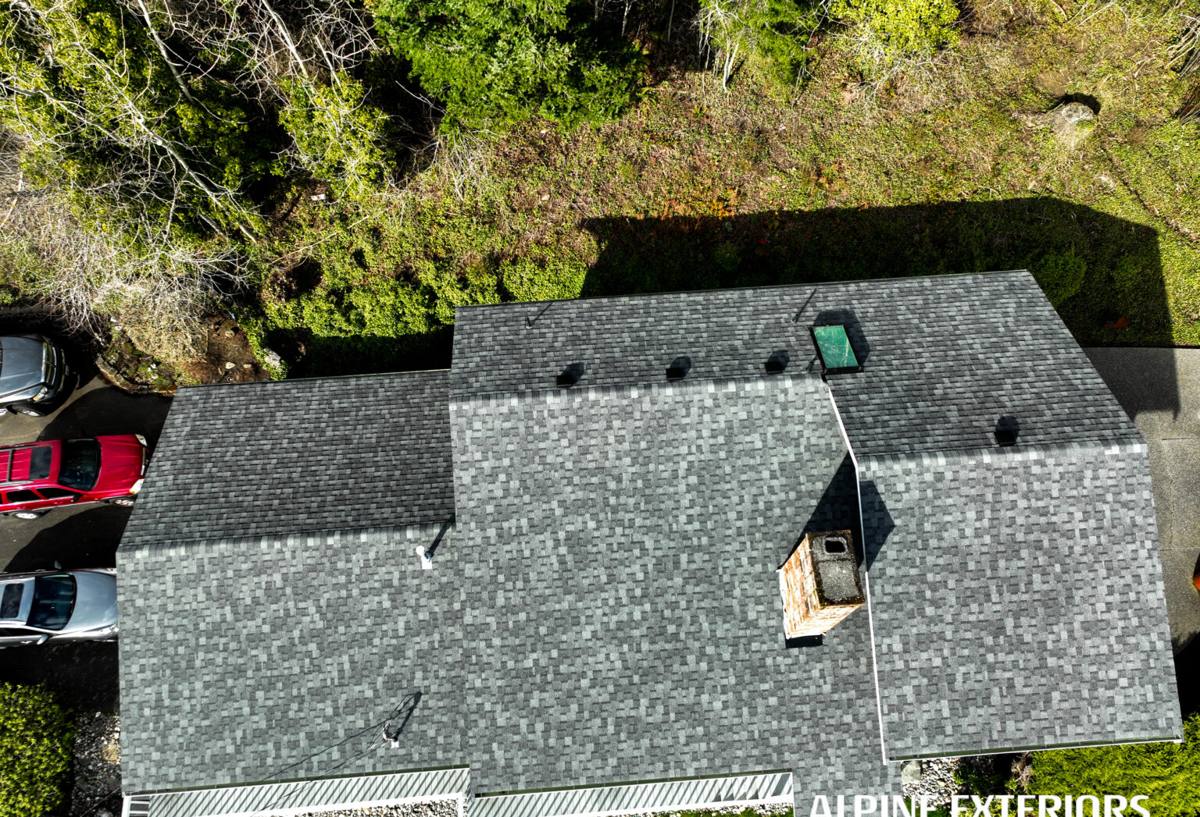
Signs a Guemes Island Roof Needs Repair, Not Just a Look
Because of the tree cover and moisture on the island, some of the early warning signs get written off as normal "island roof stuff." A few of them are, but several are worth a real inspection before they turn into a bigger repair or an interior leak.
- Moss or algae buildup that's thick enough to hold moisture against the shingles rather than just sitting on the surface
- Granules collecting in gutters or at downspout outlets, which signals the shingle surface is breaking down
- Shingles that are curling, cupping, or lifting at the edges, especially on north-facing or shaded slopes
- Rust streaking or soft spots around flashing at chimneys, skylights, and roof-to-wall transitions
- Daylight visible through the roof deck from inside the attic
- Water stains on ceilings or in the attic that appear only during wind-driven rain, not steady rain
- Gutters pulling away from the fascia or overflowing during heavy rain events
- Missing or displaced ridge cap pieces after a windstorm
Any one of these on its own might just mean routine maintenance. A few of them together, especially combined with the age of the roof, usually means it's time for a closer look.
What a Correct Repair Actually Involves
Diagnosis Before Anything Gets Fixed
The most common mistake we see in roof repairs — on Guemes Island or anywhere — is patching the spot where water showed up inside the house instead of the spot where it's actually getting in. Water travels along the underside of the deck and down rafters before it drips somewhere visible, so a proper repair starts with tracing the path back to the real entry point, usually at a flashing detail, a nail pop, a cracked pipe boot, or a section of worn shingles.
Matching Materials, Not Just Covering the Hole
A repair only looks right and performs right if the new material matches the existing roof in type, weight, and profile as closely as possible. For fasteners and exposed metal, we lean toward stainless steel or hot-dip galvanized rather than standard electro-galvanized, because the salt air here accelerates corrosion on lighter coatings. It costs a little more up front and saves a callback in a few years.
Flashing Gets the Most Attention
The majority of roof leaks we find on island homes trace back to flashing, not the field of the roof itself. Step flashing at wall intersections, counterflashing at chimneys, and valley metal all need to be properly lapped and sealed to shed wind-driven rain rather than just vertical rainfall. This is the detail work that separates a repair that holds up through a real Puget Sound windstorm from one that fails at the first sideways rain.
Common Roof Types on Guemes Island and How We Approach Repairs
The island has a mix of roofing materials, and the right repair approach depends heavily on which one you have.
| Roof Type | Typical Island Issue | Repair Approach |
|---|---|---|
| Composition (asphalt) shingle | Moss lifting shingle edges, granule loss from shade and moisture | Careful moss removal, spot shingle replacement matched to existing color/style, flashing check |
| Cedar shake or shingle | Moisture retention under shade, moss and moderate decay in low-sun areas | Selective shake replacement, improved ventilation where possible, moss treatment |
| Standing seam or metal panel | Fastener corrosion, sealant failure at penetrations | Fastener replacement with corrosion-resistant hardware, panel reseating, penetration reseal |
| Low-slope / torch-down or membrane | Ponding water, seam separation from thermal movement | Seam repair or reinforcement, drainage correction at low points |
Whatever the roof type, the goal of a repair is the same: fix the actual point of failure with materials suited to a marine, shaded environment, and leave the rest of the roof's remaining service life intact rather than disturbing more than necessary.
The Ferry Factor: Why Logistics Matter for Island Roof Work
Anything that happens on Guemes Island has to work around the Guemes Island Ferry, and roofing is no exception. A contractor who doesn't work the island regularly tends to underestimate this — they show up for the inspection, realize they're missing a part or a specific fastener, and now the job is waiting on the next ferry crossing, sometimes the next day's schedule.
We plan island repair jobs differently than in-town Anacortes work. That means loading trucks with the material and hardware for the whole job before crossing, not just what we think we'll need, and scheduling crews around ferry departure and return times so a repair doesn't turn into two separate short work windows. It also means being upfront that a same-day emergency tarp job on the island runs on the ferry's clock, not ours — something worth knowing before a storm is already rolling in.
Moss, Trees, and Shade: The Island's Ongoing Maintenance Issue
Moss is the single biggest recurring maintenance issue we see on Guemes Island roofs, and it's almost entirely a function of shade and moisture holding time. A roof that gets direct sun for part of the day dries out between rain events. A roof buried under fir and cedar canopy often doesn't, and moss takes hold in the granule layer, lifts shingle tabs slightly, and holds water against the roof deck longer than the material was designed to tolerate.
Moss removal has to be done correctly. Pressure washing strips granules and shortens the life of asphalt shingles, and aggressive scraping can lift tabs and break the seal strips that keep wind from getting under them. We remove moss with low-pressure methods and hand tools suited to the roof type, then address the conditions that let it grow back — trimming overhanging limbs where it's practical, keeping valleys and gutters clear of needle and leaf debris, and, where zinc or copper strips make sense for the roof type, installing them to slow regrowth between service visits.
Our Repair Process, Start to Finish
- Inspection — a full walk of the roof (weather permitting) or a ground and attic assessment when conditions don't allow safe roof access, documenting the roof's age, material, and every area of concern
- Diagnosis — tracing any active leak back to its actual entry point rather than just the interior symptom
- Written estimate — a clear explanation of what needs repair, what materials we'll use, and why, before any work starts
- Material staging — for island jobs, all materials and hardware are loaded and confirmed before the ferry crossing
- Repair work — matched materials, corrosion-resistant fasteners, and flashing details built to handle wind-driven rain
- Cleanup and walk-through — debris removed, work areas checked, and a plain explanation of what was done and what to watch for going forward
Why a Crew That Already Works Guemes Island Matters
Roof repair is detail work, and on an island, logistics are part of getting those details right. A crew that's already familiar with Guemes Island isn't learning the ferry schedule, the typical roof ages and materials, or the moss patterns on your job — they already know it, which means fewer surprise return trips, fewer "we'll need to come back for that part" delays, and a repair estimate that already accounts for island access instead of tacking on a surprise trip charge after the fact.
We're based in Anacortes and treat Guemes Island as part of our regular service area, not a special trip. That familiarity is worth something when you're comparing quotes — ask any contractor bidding island work how many roofs they've actually repaired out there, and how they plan around the ferry. The answer tells you a lot about what your project will actually look like.
Get a Straight Answer About Your Roof
If you're dealing with a leak, moss buildup, storm damage, or just want an honest read on how much life is left in your roof, we're glad to come take a look. Reach out for a free, no-pressure estimate using the form below, and we'll tell you plainly what we see and what it would take to fix it right.