 Anacortes Exterior
 Why Skyline Homes Go Through Siding Faster Than Most
Skyline sits close enough to the water that homes here take a different kind of weathering than houses further inland in Skagit County. It isn't one big storm that causes the damage — it's the daily grind of salt-laced air, wind-driven rain, and long stretches of shade and dampness that never fully dry out between fall and spring. Siding that would coast along for decades in a drier inland climate starts showing real wear here in half that time if it isn't built and installed for this exposure.
When we talk to Skyline homeowners about siding replacement, the conversation almost always starts with one of three complaints: paint that won't hold, panels that have gone soft or delaminated at the seams, or a green-black film that keeps coming back no matter how many times it's washed off. All three trace back to the same root causes.
Salt Air and Corrosion
Homes near Puget Sound and the Salish Sea shoreline are exposed to airborne salt that settles on siding, trim, and fasteners. Over years, that salt film holds moisture against the surface longer than plain rainwater would, which accelerates fastener corrosion and breaks down paint adhesion faster than manufacturers' standard testing usually accounts for. It's a slow, cumulative effect — you don't notice it in year one, but by year eight or ten on the wrong product, it shows up as rust streaking, chalky paint, or panels that have started to swell at the edges.
Wind-Driven Rain
Anacortes doesn't get the heaviest rainfall totals in the state, but the rain that does fall here often comes in sideways off the water. Wind-driven rain doesn't just wet the face of the siding — it pushes moisture into laps, seams, and any gap around trim, windows, and penetrations. If the water-resistive barrier, flashing, and siding overlaps underneath aren't detailed correctly, that moisture finds its way behind the cladding and into the wall assembly, where it causes damage long before anyone sees a problem on the surface.
Moss, Algae, and a Long Damp Season
Skagit County's overcast, wet stretch runs long, and shaded sides of Skyline homes — north walls, areas under trees, spots that don't get afternoon sun — can stay damp for weeks at a time. That's exactly the environment moss and algae need. Porous or poorly sealed siding gives them something to grip onto and feed off of, and once a siding product's surface starts to break down, moss growth accelerates the deterioration underneath it.
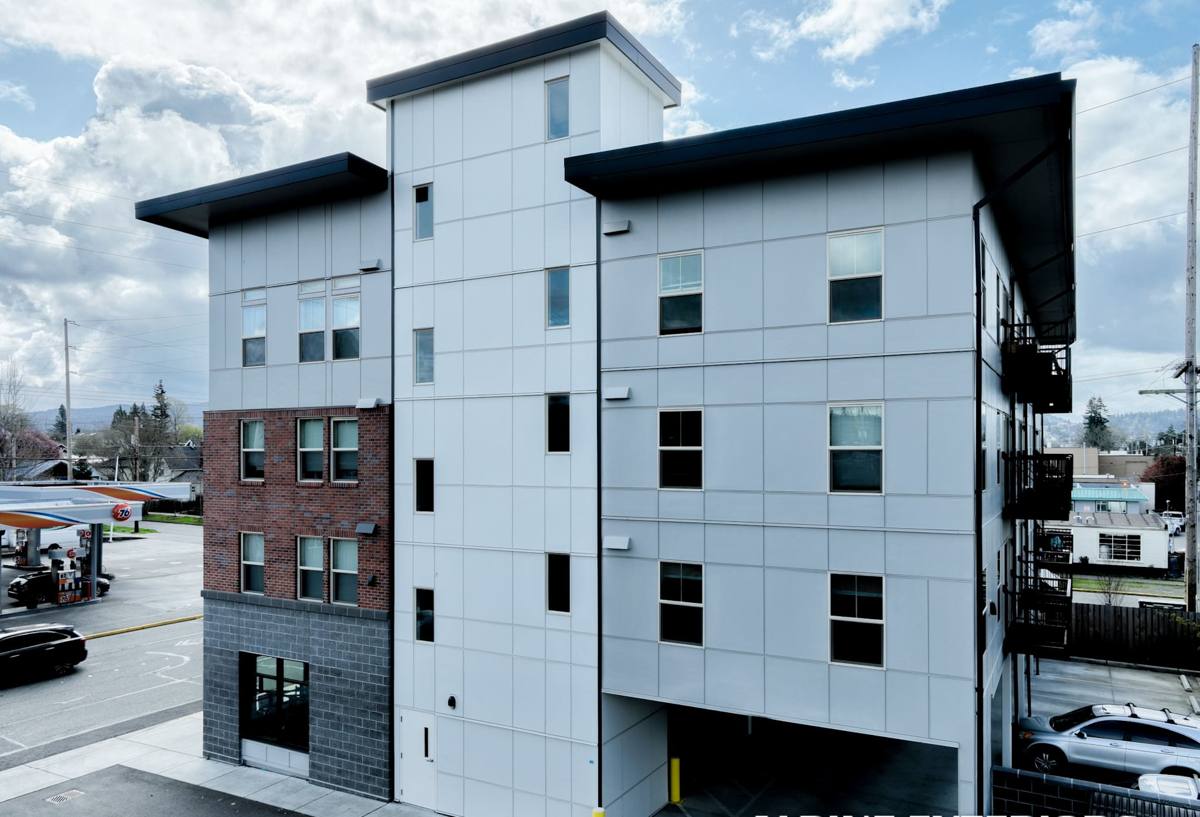
Repair or Full Replacement? Know Which One You Actually Need
Not every siding problem in Skyline calls for a full tear-off. Isolated impact damage, a handful of failed caulk joints, or a section damaged by a fallen branch can often be repaired. Full replacement makes sense when the damage is systemic — spread across multiple walls, tied to the material itself failing, or hiding moisture problems underneath.
- Panels that are soft, spongy, or crumble when pressed at the bottom edges
- Persistent moss or algae staining that returns within months of cleaning
- Paint that's peeling, bubbling, or won't hold a new coat for more than a couple of years
- Visible gaps, warping, or buckling at seams and corners
- A musty smell or soft drywall on interior walls that back up to exterior siding
- Siding that's original to a home built more than 20-25 years ago, especially with untreated wood or older composite products
- Rot found at even one or two spots — often a sign of a systemic moisture path, not an isolated event
If you're seeing two or more of these, it's worth having someone pull a section and look at what's happening behind it before deciding between another round of patching and a full replacement.
What a Correct Siding Replacement Actually Involves
Replacing siding is not just swapping old panels for new ones. Done right, it's a full rebuild of the wall's weather barrier system, and skipping steps here is where most siding failures — regardless of brand — actually start.
Full Tear-Off and Inspection
We remove the old siding completely, not just over the worst sections, because you can't properly inspect or replace the water-resistive barrier and flashing underneath with old material still in place. This is also the point where hidden rot, damaged sheathing, or past water intrusion gets found and dealt with — not covered over.
Water-Resistive Barrier and Flashing
A new, continuous water-resistive barrier goes over the sheathing, lapped correctly from bottom to top so water sheds outward and down. Flashing gets installed at every window, door, and penetration — this is the detail that matters most in a wind-driven-rain climate like Skyline's, and it's invisible once the siding goes back on.
Correct Fastening and Clearances
Fiber cement siding has specific fastening patterns, nail types, and minimum clearances from grade, roofing, and decks that are engineered for the product to perform as designed. Corners are cut here more often than anywhere else on a siding job, and it's exactly where salt-air corrosion and moisture problems tend to show up first.
Finish and Sealant Details
Cut edges get sealed, joints get the right sealant for the substrate, and factory-finished panels are handled so the factory coating stays intact. This is where a factory-applied finish has a real advantage over anything sealed and painted on site after the fact.
Why We Only Install James Hardie in This Climate
We install James Hardie fiber cement siding exclusively — not vinyl, not LP SmartSide, not Cemplank, Allura, or primed wood. That's a deliberate standard, not a sales preference, and it comes directly from what holds up against salt air, driving rain, and a long moss season versus what tends to struggle.
| Factor | James Hardie Fiber Cement | Vinyl | Engineered Wood (LP SmartSide) | Cedar / Primed Wood |
|---|---|---|---|---|
| Moisture behavior | Non-combustible, dimensionally stable, engineered for wet climates | Sheds water but can warp; seams allow moisture behind panels | Wood-based core is vulnerable if any moisture reaches cut edges | Absorbs moisture readily; needs consistent maintenance to manage it |
| Salt air / corrosion resistance | Fiber cement itself doesn't corrode; built for coastal exposure | Can become brittle and discolored with UV and salt exposure over time | Coatings can degrade faster in salt-laden air | No inherent resistance; relies entirely on maintained finish |
| Moss / algae resistance | Dense, factory-finished surface resists growth better than porous materials | Smooth surface, but seams and J-channel trap debris and moisture | More porous surface can favor growth if coating wears | Naturally porous; a known host for moss and algae |
| Maintenance | Occasional washing; ColorPlus finish holds color for years | Low maintenance but limited repair options if damaged or faded | Requires ongoing paint/caulk upkeep at seams | Regular repainting, staining, and caulking required |
| Fire resistance | Non-combustible material | Combustible, can melt or deform near heat | Combustible wood-based product | Combustible |
Each of these products has legitimate strengths and a place in the market — vinyl is inexpensive and light, engineered wood is workable and affordable, cedar has a look some homeowners want badly enough to accept the upkeep. Our standard is simply that, for the exposure Skyline homes see, fiber cement's moisture stability, non-combustibility, and factory-applied finish hold up more consistently over the decades that matter, and that's what we're willing to put our name behind.
Choosing the Right Hardie Product Line and Finish
James Hardie makes climate-engineered product lines, and for a marine-exposed area like Skyline, the specification matters as much as the brand name. We factor in wall orientation, sun exposure, and how sheltered or exposed each elevation is when recommending a plank profile, panel style, and trim system. ColorPlus factory finish is worth prioritizing here specifically because it's baked on and backed by its own finish warranty — a stronger starting point than field-applied paint when a home is going to spend years absorbing salt air and rain.
Color Considerations for Skyline's Setting
Darker colors show less staining from airborne salt residue between washings, while lighter colors can make early moss growth more visible so it gets addressed sooner. Neither is wrong — it's a trade-off worth talking through based on your home's sun exposure and how the surrounding streetscape looks.
What Cost Factors Actually Change on a Skyline Job
We don't publish blanket per-square-foot pricing because it genuinely depends on the house, but these are the variables that move the number most on jobs in this area:
| Factor | Why It Matters |
|---|---|
| Extent of tear-off and hidden damage | Rot or moisture damage found underneath old siding adds sheathing repair before new siding can go on |
| Home height and access | Multi-story homes and steep or view lots common in Skyline can require more scaffolding and staging time |
| Trim and detail complexity | Corner boards, window trim, and architectural detailing add labor beyond flat wall coverage |
| Product line and finish | Plank profile, panel style, and ColorPlus finish options carry different material costs |
| Wall orientation and exposure | Elevations facing prevailing wind and rain may need extra flashing and sealant detail |
The only way to get a real number is a walk-around of your specific home, which is exactly what a free estimate is for.
How Our Siding Replacement Process Works
- On-site assessment. We walk the exterior, check for hidden moisture or rot, and look at each elevation's exposure to wind, rain, and shade.
- Written scope and estimate. You get a clear breakdown of what's being torn off, repaired, and replaced, with product and finish options explained plainly.
- Tear-off and inspection. Old siding comes off entirely; any sheathing or framing damage found gets flagged and addressed before moving forward.
- Weather barrier and flashing install. New water-resistive barrier and flashing go in at every seam, window, door, and penetration.
- Hardie siding installation. Panels or planks go on to manufacturer fastening and clearance specifications, with cut edges sealed.
- Final walkthrough. We go over the finished work with you before calling the job done.
Why a Crew That Already Works in Skyline Matters
Siding installation isn't one-size-fits-all across Skagit County. A crew that regularly works Skyline's homes already understands which walls typically take the worst of the wind and rain, how much moss pressure to expect on shaded elevations, and where corrosion tends to start on homes with years of salt air exposure. That local pattern recognition shows up in small decisions — flashing details, fastener choices, which sections get extra attention — that don't appear on a spec sheet but make a real difference in how the siding performs ten and twenty years out.
It also means faster, more accurate estimates, since we're not guessing at what this specific coastal exposure does to a house — we've seen it firsthand on homes near yours.
If your Skyline home's siding is showing its age or you're just trying to get ahead of it before the next wet season, we're happy to take a look and give you a straightforward, no-pressure estimate — no obligation, just an honest read on what your home actually needs.