 Anacortes Exterior
 Why Flounder Bay Homes Are Harder on Windows Than Most
Flounder Bay sits close enough to open water that homes here take a different kind of weather than a house a few miles inland. Salt-laden air moves off the water and settles on everything — glass, frames, hardware, trim — and it doesn't wash off with a single rain. Add wind-driven rain that hits window walls at an angle instead of falling straight down, and a moss season that can stretch from fall through spring in Skagit County's marine climate, and you've got three separate stresses working on a window at the same time. Most window problems we find in this area aren't from one dramatic failure. They're from years of steady exposure that a standard inland installation was never built to handle.
None of this means Flounder Bay is a bad place to have windows — it means the windows and the installation have to be matched to the actual conditions, not to a generic spec sheet.
What "Custom" Actually Means for This Neighborhood
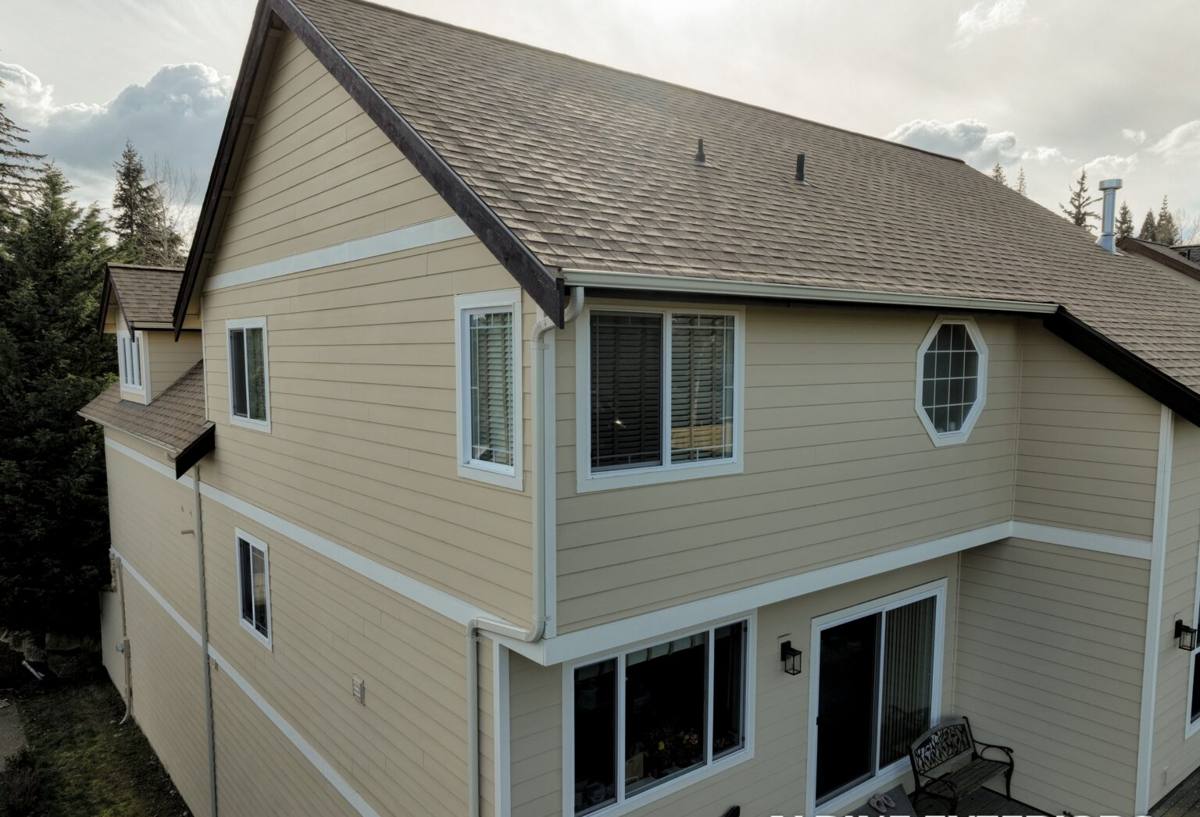
Custom windows aren't just about size, though that matters here more than in a lot of neighborhoods. Many homes near the water were built or added onto over different decades, and rough openings have often shifted slightly with age and settling. A true custom window is measured and built to the opening as it actually exists today, not to a catalog size that gets shimmed and caulked into place.
Sizing and View Considerations
Waterfront and near-waterfront lots often call for larger glass areas to take advantage of the view, which changes the structural picture. Bigger units mean more wind load on the frame, more expansion and contraction to plan for, and sometimes a need to check the header above the opening before we go larger than what's there now. We look at that before quoting anything, not after the window shows up.
Matching the Home
Custom also means matching grid patterns, trim profiles, and sightlines to the rest of the house, especially on older homes where a mismatched replacement window stands out immediately from the street or the water side.
Choosing a Frame Material for a Salt-Air Environment
Every window frame material handles coastal exposure differently. There's no single "best" choice — it depends on how much upkeep you want to do, your budget, and how close the home sits to the water. Here's how the common options actually compare in this kind of environment, based on how they age under salt exposure and repeated moisture cycling.
| Material | Coastal / salt-air suitability | Maintenance | Typical lifespan |
|---|---|---|---|
| Vinyl | Good — won't corrode or rot; hardware is the weak point | Low; occasional cleaning and hardware checks | 20–30 years |
| Fiberglass | Very good — dimensionally stable, resists salt and moisture well | Low | 30+ years |
| Aluminum-clad wood | Fair to good if detailed correctly; cladding must be fully sealed at joints | Moderate; wood core needs interior finish upkeep | 20–30 years |
| Bare wood | Poor to fair without diligent upkeep; most vulnerable to rot near water | High; repainting/sealing on a regular cycle | Varies widely with maintenance |
We don't push one material on every job. A view-facing wall that catches direct spray off the water is a different conversation than a sheltered window on the lee side of the same house. Part of our job is telling you honestly which option fits which opening, including where a lower-maintenance material saves you real headaches down the road even if the upfront cost is higher.
What a Correct Installation Involves Here
A window is only as good as the flashing and sealing around it, and that's doubly true when wind-driven rain is a regular event rather than an occasional storm. A poor installation can make even a premium window fail early, while a careful installation extends the life of a mid-range one.
The Details That Matter Most in This Climate
- Sill pan flashing that directs any water that gets past the window back outside, not into the wall cavity
- Weather-resistive barrier integration that's lapped correctly with the flashing, not just taped over
- Sealants and backer rod rated for exterior exposure and UV, not general-purpose caulk
- Shimming that keeps the frame square and true so the sash operates and seals correctly for years, not just on install day
- Weep holes and drainage paths left clear and functional, not sealed shut by accident
- Fasteners and hardware rated to resist corrosion, since standard steel screws will rust in this air over time
Every one of these steps is the difference between a window that holds up through a Skagit County winter and one that starts showing water staining or soft trim within a few years.
How Our Process Works
The steps are straightforward, but we don't skip any of them, especially on a home this close to the water.
- On-site assessment. We look at the actual openings, the current flashing and framing condition, and how each wall is exposed to wind and water before recommending anything.
- Measuring and material selection. Openings are measured precisely, and we walk through material and glass options based on that wall's specific exposure.
- Permitting. Depending on scope, window replacement in the City of Anacortes may require a permit, particularly if openings are being resized or it's a larger structural change. We handle that step rather than leaving it to you.
- Removal and inspection. Old windows come out carefully so we can check the framing, sheathing, and existing flashing underneath for hidden moisture damage before anything new goes in.
- Installation. New flashing, weather barrier tie-in, and the window itself are installed to hold up to sustained wind and rain, not just pass a quick visual check.
- Trim and finish. Interior and exterior trim is finished to match the home, and all sealant lines are tooled properly rather than just run in a bead.
- Walkthrough. We go over operation, locking hardware, and basic care with you before we consider the job done.
Problems We See Most Often on This Kind of Job
A lot of the calls we get in this area aren't for full replacements — they're because an existing window started showing a specific problem. Recognizing these early can save the surrounding trim and framing.
Seal Failure and Fogging
Double-pane windows have a sealed gas gap between the panes. Constant humidity swings off the water can accelerate seal breakdown faster than in a drier inland location, which shows up as permanent fogging or moisture between the panes that no amount of cleaning fixes.
Corroded Hardware
Locks, hinges, and balance mechanisms made from standard-grade metal will pit and seize up faster in salt air. This is often the first sign of a window that's otherwise still structurally fine but needs better-rated hardware.
Moss and Mildew at Sills and Corners
Shaded, north-facing walls that stay damp through the long moss season are prone to moss and mildew building up at sills and lower corners. Left alone, that moisture holds against wood trim and can lead to soft spots or rot underneath.
Staining or Soft Trim from Old Flashing Gaps
On older homes, original flashing details often weren't built for today's wind-driven rain loads. Staining below a window or slightly soft trim is usually a sign that water has been getting behind the frame for a while, even if the window itself still looks fine from outside.
Energy Performance and Comfort on a Waterfront Wall
Bigger view glass and marine humidity both affect comfort inside the house, not just the exterior. Low-E coatings help manage heat loss through large glass areas during Anacortes winters, and a window's condensation resistance rating matters more here than it does further inland, since interior humidity combined with cold glass surfaces can lead to condensation on the inside of the window if the unit isn't suited to the exposure. We factor both of these into what we recommend for view-facing walls versus more sheltered elevations of the same house, so you're not paying for performance you don't need on one side or under-spec'd glass on the side that actually needs it.
A Simple Maintenance Checklist for Coastal Windows
Whatever material you choose, a little regular attention goes a long way in this environment. A few minutes a couple of times a year catches most problems before they become expensive ones.
- Rinse frames and glass periodically to clear salt residue, especially on walls facing the water
- Check and lubricate locks, hinges, and balances so hardware doesn't seize from corrosion
- Clear weep holes of debris, moss, or dirt so water can drain as designed
- Inspect exterior caulk lines each fall for cracking or gaps before winter rains set in
- Look at sills and lower corners for early moss growth or soft spots during the wetter months
- Watch for fogging between panes as an early sign of seal failure
Why Hiring a Crew That Already Works This Area Matters
Anyone can install a window on a calm, dry day. The real test is whether it's still performing correctly after a few winters of Fidalgo Island weather. A crew that regularly works in Flounder Bay and the surrounding Anacortes waterfront knows how far wind-driven rain travels up a wall, which elevations tend to grow moss first, and which flashing details actually hold up here versus what's technically "to code" but marginal in this exposure. That local pattern recognition is hard to get from a crew that mostly works drier, inland jobs and treats every house the same way.
It also matters for permitting and inspection — knowing what the City of Anacortes and Skagit County typically expect on a window job means fewer surprises and delays for you during the project.
Get a Straightforward, No-Pressure Estimate
If you're dealing with foggy panes, corroded hardware, moss buildup, or you're just planning ahead for a home near Flounder Bay, we're happy to take a look and give you an honest read on what your windows actually need — no pressure, no upsell. Fill out the form below and we'll set up a time to come out.