 Anacortes Exterior
 Why Similk Beach Is Harder on Siding Than the Average Anacortes Lot
Similk Beach sits close to the water on Fidalgo Island, which means the siding on these homes deals with a different set of stresses than a house a few miles inland in Skagit County. Salt-laden air off Similk Bay and the surrounding Salish Sea waters works into seams, fasteners, and trim joints year-round. Winter storms bring driving rain that hits walls sideways rather than falling straight down, which pushes water into places a calmer climate would never test. And the tree cover common to this part of Fidalgo Island keeps some walls shaded and damp long after the rest of the house has dried out, which is exactly the recipe moss and algae need.
None of that makes siding here impossible to get right. It just means the material and the installation details matter more than they would on a dry, inland lot. That's the whole reason we standardized on James Hardie fiber cement and walked away from vinyl, LP SmartSide, and other fiber cement brands — this climate exposes the weak points in lesser products faster than most, and we'd rather not have that conversation with a homeowner five years into a siding job.
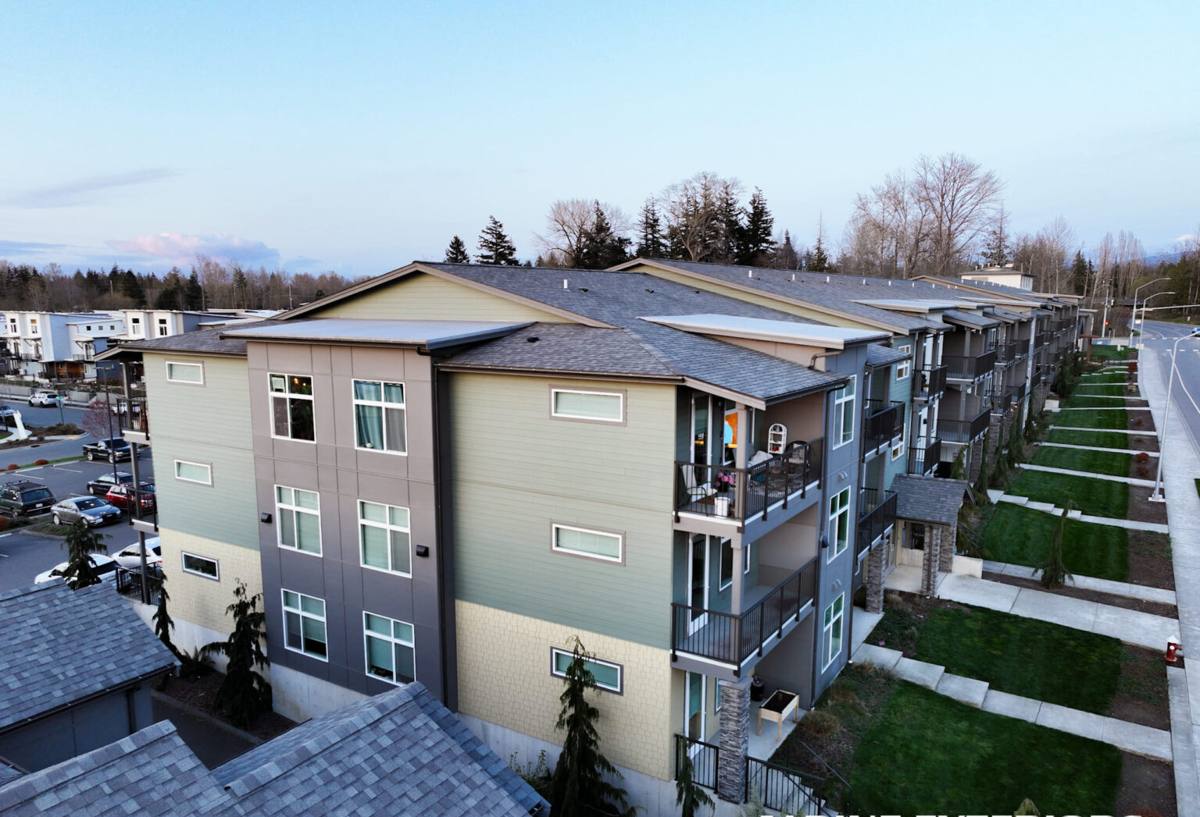
What James Hardie Brings to a Marine, High-Rainfall Climate
James Hardie fiber cement is engineered by climate zone rather than sold as one national product. Western Washington, including Anacortes and Skagit County, falls in James Hardie's HZ5 zone — formulated for areas that see sustained moisture and mild freeze-thaw cycling rather than the deep-freeze extremes of the interior. That matters because a siding product built for Arizona sun or Midwest winters is not the same product performing on a house looking out over Similk Bay.
Three things about Hardie siding specifically address what this location deals with:
- It's non-combustible fiber cement — it won't rot, delaminate, or feed mold the way wood or wood-composite siding can when it stays damp under shade or salt spray.
- ColorPlus Technology is a factory-baked finish, not field-applied paint. It's formulated to hold color and adhesion in exactly this kind of UV-and-moisture combination, and it comes with its own finish warranty separate from the substrate warranty.
- It's dimensionally stable — it doesn't swell and shrink with every wet-dry cycle the way wood-based products do, which matters when a wall goes through dozens of moisture cycles a year here.
Why We Don't Substitute Other Brands or Vinyl
We get asked this regularly, especially by homeowners comparing quotes. Vinyl expands and contracts with temperature swings and can warp or crack in wind-driven weather; it also isn't repairable in the same way — a damaged panel usually means a full swap. Other fiber cement brands and primed wood products can look similar on a spec sheet, but the finish systems, warranty structure, and climate engineering behind them aren't the same as what James Hardie backs. On a lot exposed to salt air and driving rain, those differences show up faster than they would somewhere drier, and that's not a risk we're willing to install and then walk away from.
The Hardie Product Lines That Make Sense for This Neighborhood
| Product | Best Use on Similk Beach Homes | Why |
|---|---|---|
| HardiePlank Lap Siding | Primary wall covering, most home styles | Traditional lap profile, factory ColorPlus finish, widest color selection |
| HardiePanel Vertical Siding | Accent gables, modern facades, board-and-batten looks | Clean vertical lines, pairs well with trim for a distinct entry or gable treatment |
| HardieTrim Boards | Corners, window and door surrounds, fascia | Matches the siding's moisture resistance so trim doesn't become the weak point |
| HardieSoffit Panels | Eaves and overhangs | Holds up under the same damp, shaded conditions that promote moss on roofs and eaves |
What a Correct Install Looks Like When Rain Comes in Sideways
Fiber cement siding is only as good as the assembly behind it. In a driving-rain environment like this one, most siding failures we get called out to inspect trace back to installation shortcuts, not the material itself. A correct install here includes:
- A continuous weather-resistant barrier behind the siding, lapped correctly so water sheds outward at every seam.
- A drainage gap (rainscreen) between the barrier and the siding so any water that does get past the surface has somewhere to go instead of sitting against the wall.
- Proper flashing at every window, door, and roof-to-wall intersection, including kick-out flashing where a roofline meets a sidewall — a detail that's easy to skip and expensive to fix later.
- Fastener placement and spacing that follows Hardie's published specifications for our exposure category, not a generic nailing pattern.
- Field-cut edges primed or sealed before installation, since a raw cut edge is the one place factory ColorPlus protection doesn't already cover.
- Minimum clearance from grade, decks, and hardscape so the bottom course isn't sitting in a splash zone.
Skip any one of these and you can end up with a wall that looks fine for a couple of years before trapped moisture starts causing problems behind the siding — the kind of problem that's invisible until it isn't.
Moss, Shade, and the North-Facing Walls
Homes tucked under the tree canopy common to this part of Fidalgo Island often have one or two walls that simply don't get much sun or airflow. That's where moss and algae take hold first, usually on north-facing siding, soffits, and anywhere overhangs keep a surface shaded most of the day. Fiber cement itself doesn't feed moss the way wood does, but a shaded wall still collects the same organic buildup on its surface. Two things help: siding installed with the drainage gap mentioned above so the wall itself stays dry even if the surface doesn't, and periodic gentle washing (never high-pressure blasting directly into seams) to keep growth from staining the ColorPlus finish over time.
Salt Air and the Metal Details Most People Never Think About
Siding gets the attention, but the fasteners and flashing holding it together are just as exposed to salt air off the bay. We spec corrosion-resistant fasteners appropriate for coastal exposure and avoid mixing incompatible metals in flashing details, since dissimilar metals in contact with each other corrode faster in a salt environment. Cutting corners here doesn't show up as a problem on install day — it shows up as rust streaking down a wall or a loose panel a few years later, which is a repair nobody wants to make on siding that otherwise still looks new.
How We Approach a Similk Beach Project
- On-site assessment — we look at wind and moisture exposure specific to the lot, existing siding condition, and what's underneath it before quoting anything.
- Tear-off and sheathing check — removing the old siding is also when we find out if there's hidden water damage that needs to be addressed before new siding goes on. We won't cover up a problem.
- Weather barrier and drainage gap installation — the unglamorous part of the job that determines how the siding performs in year ten, not just year one.
- Hardie installation to spec — correct fastening, flashing, and clearances for our specific exposure, not a generic install.
- Trim, caulking, and finish detail — the places most likely to leak if rushed.
- Final walk-through — going over the finished job with the homeowner before we consider it done.
Cost Factors on a Job Like This
| Factor | Why It Moves the Price |
|---|---|
| Home size and wall complexity | More corners, gables, and dormers mean more cutting, trim, and flashing detail |
| Condition of existing siding and sheathing | Hidden moisture damage found at tear-off adds repair scope before new siding can go on |
| Product mix | Adding vertical accent panels, upgraded trim, or a wider ColorPlus palette changes material cost |
| Site access | Waterfront and near-waterfront lots can have tighter access, slopes, or limited staging space |
| Drainage and flashing detail required | A house with more roof-wall intersections and window openings needs more flashing labor |
Why It Matters That We Already Work This Area
A crew that's worked Similk Beach and the rest of Anacortes and Skagit County knows what a lot facing the water is going to throw at a siding job before the first panel goes up — which walls will be shaded, which ones take the worst of a winter storm, and where past homes in the area have run into trouble. That's not something you get from a crew driving in from outside the region for a one-off job. It shows up in the small decisions: where the drainage gap gets extra attention, which fasteners get specified, how flashing gets detailed at a roof-wall intersection facing prevailing wind.
Here's a short list worth going through with any contractor bidding a Similk Beach siding job, ours included:
- Do they install a drainage gap behind the siding, or just a weather barrier?
- What fastener type do they spec for coastal/salt-air exposure?
- Do they inspect and address sheathing condition before re-siding, or just cover what's there?
- Are they installing to James Hardie's published specifications for our climate zone?
- Can they explain their flashing detail at roof-wall intersections without hesitating?
If you're weighing a siding project on a Similk Beach home, we're happy to come take a look and walk you through what we'd actually recommend for your walls, no pressure and no obligation. Use the form below to request a free estimate.