 Anacortes Exterior
 Building a Deck That Actually Belongs on Fidalgo Island
West Anacortes sits close enough to the water that the air itself is part of the construction problem. Salt-laden marine air, driving rain off the Strait, and long stretches of gray, damp weather each year put more stress on an outdoor structure than most decking products are designed for out of the box. A deck built with mainland assumptions — standard fasteners, minimal drainage detailing, no thought given to shade and moss — tends to show its age within a few seasons here. A deck built for this specific corner of Skagit County holds up for decades.
This page is about one job, done right, for this neighborhood: custom deck construction for West Anacortes homes. Not a generic overview of decking — the specific choices that matter when your structure will spend its life a short distance from saltwater, under a lot of rain, and in the kind of shaded, damp microclimate that grows moss faster than most homeowners expect.
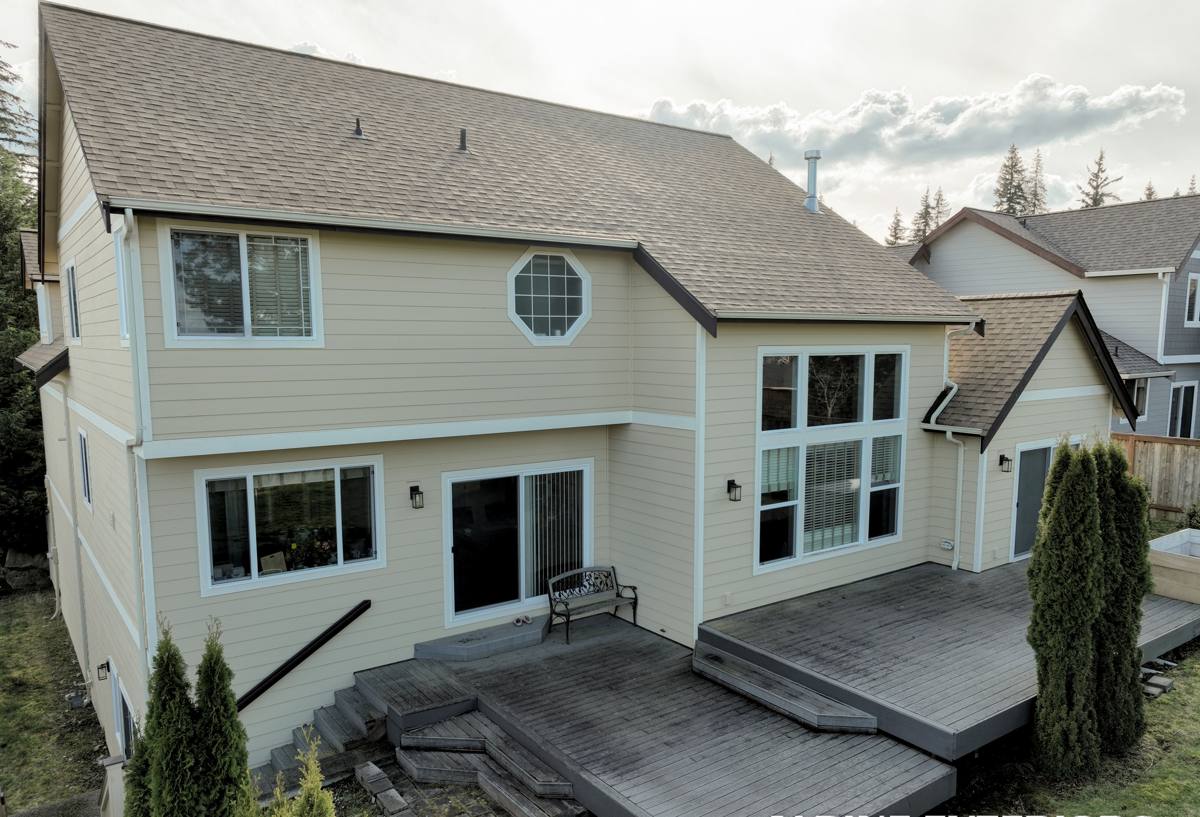
What the Coastal Climate Actually Does to a Deck
Salt Air and Corrosion
Airborne salt accelerates corrosion on anything metal — fasteners, brackets, post bases, railing hardware. It doesn't take direct ocean spray to matter; homes with any exposure to prevailing marine air see faster rust and pitting on standard hardware than the same materials would experience twenty miles inland. Once a fastener starts corroding, it weakens the connection it's holding and can stain the surrounding decking.
Driving Rain and Moisture Intrusion
Anacortes gets plenty of rain that doesn't fall straight down — wind-driven rain finds its way under flashing, into ledger connections, and behind poorly sealed post bases. Wood framing that stays wet longer than it can dry starts to rot from the inside, often invisibly, at the exact points where the deck bears the most load.
Moss, Algae, and Shade
Between tree cover, fence lines, and the region's long overcast season, many West Anacortes yards hold moisture on horizontal surfaces for days at a time. That's exactly what moss and algae need to establish. On a walking surface, moss isn't just a maintenance annoyance — it's a slip hazard, and it holds moisture against the decking material itself, shortening its life.
Choosing the Right Decking Material for This Climate
There's no single "best" decking material for every home — it depends on your budget, how much upkeep you're willing to do, and how much shade and moisture exposure your particular lot gets. Here's how the common options actually perform under West Anacortes conditions.
| Material | Salt Air / Moisture Resistance | Moss & Algae Behavior | Maintenance |
|---|---|---|---|
| Pressure-treated wood | Good if fasteners and flashing are matched correctly; wood itself absorbs moisture | Prone to moss/algae without regular cleaning and sealing | Annual cleaning, periodic sealing or staining |
| Cedar or other natural wood | Naturally moisture-resistant but still needs sealing in this climate | Moderate; darker, damp cedar can still host moss in shaded spots | Sealing every 1–2 years, regular cleaning |
| Composite decking | Very good; won't rot, minimal water absorption | Capped composite resists algae better than wood; uncapped boards can still stain | Occasional washing; no sealing needed |
| PVC / cellular decking | Excellent; fully non-organic, doesn't absorb moisture | Best moss/algae resistance of the common options | Lowest; occasional washing |
We don't push one material on every homeowner. What we do insist on is being honest about the trade-off: wood costs less up front and looks great, but in a shaded, damp West Anacortes yard it needs real annual attention to stay safe and good-looking. Composite and PVC cost more initially but ask far less of you over the next twenty years.
Why We're Selective About Certain Wood Species
Some lower-grade treated lumber sold for decking is milled to a moisture content that doesn't fully account for a marine climate — it can cup, check, or warp as it dries and re-wets through repeated wet-dry cycles. Our standard is to spec framing and decking lumber to a grade and moisture content that holds up to that cycling, even when it costs a bit more than the minimum lumberyard option.
The Details That Separate a Correct Build From a Problem Waiting to Happen
Fasteners and Hardware
This is the single most overlooked detail in coastal deck construction. Standard electro-galvanized screws and brackets corrode quickly in salt air, and mixing incompatible metals — say, an aluminum flashing against a steel bracket — sets up galvanic corrosion that eats through hardware from the inside. Our standard for West Anacortes builds is hot-dip galvanized or stainless steel fasteners and connectors throughout, matched so dissimilar metals never touch directly.
Ledger Attachment and Flashing
Where a deck attaches to the house is the single most common failure point in wet climates. We flash that connection properly — metal flashing integrated with the house's water-resistive barrier, not just caulk over a ledger board — so driving rain can't work its way behind the deck and into the rim joist or wall framing.
Drainage and Slope
A deck surface should shed water, not hold it. We build in a slight slope away from the house and, where the structure allows, use joist tape and proper spacing between boards so water moves through and off the deck instead of pooling on top of the framing.
Post Bases and Footings
Wood posts set directly in or near standing water are one of the fastest ways to rot a substructure. We use elevated post bases that keep end grain off wet concrete and out of standing water, sized and set to meet Skagit County's frost and load requirements.
Our Process for a West Anacortes Deck Project
- Site evaluation — we look at sun exposure, tree cover, drainage patterns, and how close the lot sits to marine air, since that shapes both material recommendations and hardware specs.
- Design and material selection — layout, railing style, and decking material chosen against your budget and how much upkeep you want going forward.
- Permitting — we handle the permit application and inspections required for your project.
- Framing and structural work — footings, posts, beams, and joists built to the fastener and flashing standards above.
- Decking, railing, and finish work — surface installation, railing systems, and any stairs or lighting.
- Final walkthrough — we go over the finished deck with you, including what maintenance (if any) your chosen material needs.
Why Hiring Local Experience for West Anacortes Matters
A contractor who mostly builds decks in drier, inland parts of the state isn't necessarily going to think about galvanic corrosion between hardware, or spec lumber for a climate that cycles wet and dry all winter. Experience specific to Anacortes and the surrounding Skagit County coastline means the fastener choice, the flashing detail, and the drainage slope aren't afterthoughts — they're the first things we plan around, because we've seen what happens when they're skipped.
We also know this area's permitting process and typical inspection expectations, which keeps a project moving instead of stalling on paperwork.
Questions to Ask Before You Hire
- What fastener and hardware material do you use, and why?
- How is the ledger board flashed where it meets the house?
- What slope or drainage detailing is built into the deck surface?
- Are you licensed and insured to work in Washington, and will you pull the required permit?
- What maintenance will this specific decking material need in a shaded, damp yard?
- Can you walk me through the post base and footing approach for this site?
If a contractor can't give you clear, specific answers to those questions, that's worth noticing before you sign anything.
Maintenance That Actually Keeps a West Anacortes Deck Looking Good
Whatever material you choose, a few habits matter more here than in a drier climate. Keep gutters and downspouts clear so runoff doesn't dump onto or near the deck. Sweep leaves and debris off the surface regularly, especially in fall, since trapped organic matter is what feeds moss and algae growth. If you have wood decking, plan on an annual cleaning and periodic sealing; if you chose composite or PVC, an occasional wash with a deck cleaner and soft brush is usually enough. Either way, a quick yearly check of railings and fastener heads catches small corrosion issues before they become structural ones.
Let's Talk About Your Deck
Every lot in West Anacortes has its own mix of sun, shade, and exposure to marine air, and that mix should shape the materials and details we recommend for your deck. If you're planning a new deck or replacing one that hasn't held up, we're happy to walk the site with you, talk through honest material trade-offs, and put together a clear plan. Reach out for a free, no-pressure estimate using the form below.