 Anacortes Exterior
 Oak Harbor's Climate Is Harder on Siding Than Most Homeowners Realize
Homes near Oak Harbor sit close enough to Puget Sound and the open water around Anacortes that siding takes a beating most inland Washington homes never see. Salt-laden air off the water accelerates corrosion on fasteners and trim, driving rain pushes moisture sideways into seams and laps that would stay dry in a calmer climate, and the long, damp shoulder seasons here give moss and algae months at a time to take hold on north-facing walls and anything shaded by trees. None of this is dramatic on its own. It's cumulative — siding that would last decades in a drier region starts failing years early when it's exposed to this combination without the right materials and the right installation details.
That's the starting point for every Oak Harbor project we take on. We're not just installing siding to match a color swatch — we're building an exterior system that has to hold up to salt exposure, wind-driven rain, and persistent moisture for the long haul.
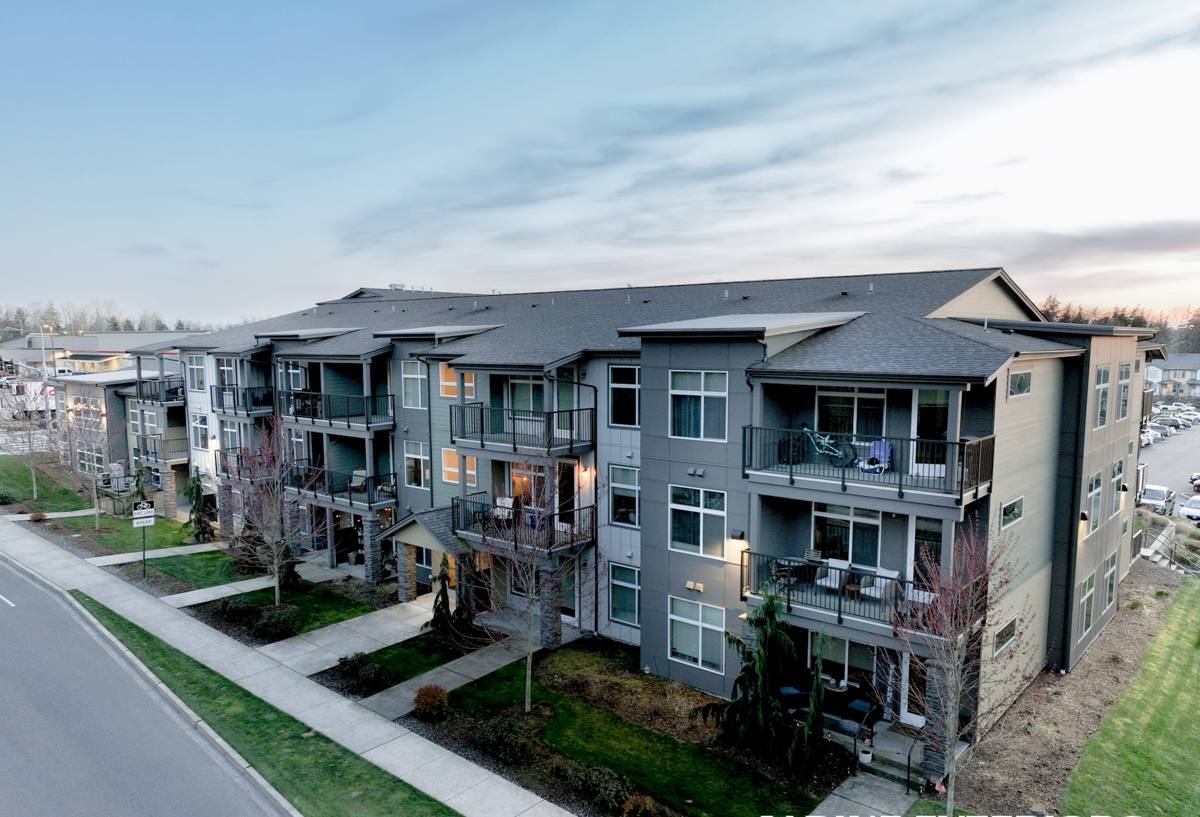
What "Correct" Siding Installation Actually Means
Siding failure is rarely caused by bad material. It's almost always caused by installation shortcuts that don't show up until years later — a missing piece of flashing, a fastener driven too tight, a clearance gap that got skipped to save time. On a coastal property like Oak Harbor, those shortcuts fail faster because there's more moisture and more airborne salt working against every seam.
Weather-Resistive Barrier and Flashing
Every wall gets a continuous weather-resistive barrier behind the siding, lapped correctly from the bottom up so water is always shed outward, never trapped behind the cladding. Windows, doors, and any wall penetration get properly integrated flashing — this is the single most common failure point we find when we tear off old siding on homes near the water. A house wrap that's torn, stapled through in the wrong spots, or missing flashing at a window head will let water in no matter how good the siding on top of it looks.
Fastening and Clearance
Fiber cement siding has to be fastened to manufacturer spec — correct fastener type, correct penetration depth, correct spacing. Overdriven or underdriven fasteners are one of the most common causes of premature siding problems, and it's a detail that's invisible once the job is finished unless you know what to look for during installation. Ground clearance and clearance from roof lines, decks, and other flatwork also matter more here than in a dry climate — six inches of clearance from soil and two inches from horizontal surfaces gives splashback and driving rain somewhere to go besides the bottom edge of your siding.
Why We Only Install James Hardie Fiber Cement
We made a deliberate decision as a company to install James Hardie fiber cement exclusively — not LP SmartSide, not vinyl, not Cemplank or Allura, not primed spruce or cedar. That's not a marketing position, it's a standard we hold ourselves to because of what we've seen hold up in this climate and what we've seen struggle.
Fiber cement is non-combustible, which matters increasingly in Washington, and it's dimensionally stable in a way that wood-based and engineered-wood products aren't — it doesn't swell, cup, or delaminate when it absorbs moisture the way an OSB-core product can. James Hardie also builds region-specific product lines engineered for different climate demands, and for the Pacific Northwest that means the HZ5 and HZ10 lines, formulated specifically to resist the moisture and moss-friendly conditions common to this part of the state.
ColorPlus Factory Finish
Most Hardie siding we install uses the ColorPlus finish — baked on in a factory-controlled process rather than field-applied paint. It resists fading and holds up to UV and moisture exposure better than a job-site paint job, and it comes backed by its own finish warranty separate from the product warranty. In a climate where a house gets rained on more months than not, a finish that isn't depending on perfect field conditions to cure correctly is worth a lot.
The Trade-Offs of Other Products
We're not going to tell you vinyl or LP SmartSide are bad products — they're not, and plenty of homes wear them fine. But vinyl expands and contracts more than fiber cement and can warp or crack in strong wind exposure, which is a real consideration on open, water-adjacent lots. LP SmartSide is an engineered wood product, meaning its core is still wood-based — it depends heavily on caulking, flashing, and finish maintenance staying perfect over the long term to keep moisture out, which is a harder bar to clear in a climate this wet. Cedar and primed spruce look great initially but need active, ongoing maintenance — repainting, recaulking, monitoring for rot — that most homeowners underestimate until they're a few years in. We'd rather put a product on your home that's engineered to need less of that vigilance from day one.
Signs Your Current Siding Is Already Losing the Battle
Homeowners in Oak Harbor often call us after noticing one of these signs, sometimes years after they first appeared:
- Moss or dark algae streaking on north- or shade-facing walls that keeps coming back after cleaning
- Soft or spongy spots when you press on siding near the bottom edge or below windows
- Paint that's bubbling, peeling, or failing faster than it should on one side of the house
- Visible gaps, warping, or separation at seams and corners
- A musty smell or discoloration on interior walls that back up to exterior siding
- Fastener heads showing rust streaks running down the siding face
Any one of these can be cosmetic. Several together, especially on the weather-facing side of a home, usually means moisture has been getting behind the siding for a while — and the sooner that's addressed, the less sheathing and framing damage there is to deal with underneath.
How We Approach an Oak Harbor Siding Project
The process is the same discipline on every home, adjusted for what we find once the old siding comes off.
- Assessment and walk-through. We look at exposure — which walls take the worst of the wind and rain, where moss has been a recurring problem, where the old siding is already showing wear.
- Tear-off and sheathing inspection. Once old siding is removed, we inspect the sheathing underneath for rot or moisture damage. This is the point where hidden problems from a prior installation usually surface, and it has to be fixed before anything new goes on.
- Weather-resistive barrier and flashing installation. New house wrap, correctly lapped, with flashing integrated at every window, door, and penetration.
- Hardie installation to spec. Correct fastener schedule, correct clearances, correct joint treatment — installed to James Hardie's published specifications, which is also what keeps the manufacturer warranty intact.
- Trim, caulking, and finish detail. Final detailing at corners, transitions, and penetrations, because these are the spots most exposed to wind-driven rain.
- Walk-through. We go over the finished work with you before we consider the job done.
What Affects the Cost of a Siding Installation
Every home is different, but these are the factors that most often move the price of a siding project up or down:
| Factor | Why It Matters |
|---|---|
| Home size and wall complexity | More square footage, more corners, dormers, and roof lines mean more material and labor |
| Condition of existing sheathing | Rot or moisture damage found during tear-off adds repair work before new siding can go on |
| Siding profile and trim style | Lap siding, shingle-style panels, and board-and-batten each involve different labor and material costs |
| ColorPlus vs. field-painted finish | Factory-applied color adds cost up front but removes a future repaint cycle |
| Access and site conditions | Steep lots, limited access, or extensive landscaping near the house can add labor time |
| Number of windows, doors, and penetrations | Each one requires flashing and trim detail, which adds labor regardless of home size |
We won't give you a number without seeing the house, but these are the variables worth understanding before you start collecting quotes — they're also why two bids for the "same" job can come in far apart.
What to Look for in a Contractor Near Oak Harbor
Siding installed wrong is worse than no new siding at all, because problems get sealed up behind it instead of being visible. Before hiring anyone for a project in this area, it's worth checking:
- They're licensed and insured to do exterior work in Washington, and can show proof without hesitation
- They can explain their flashing and weather-resistive barrier details specifically, not just "we follow code"
- They've worked on homes in coastal or water-adjacent conditions like Oak Harbor's, not just inland new construction
- They install to the manufacturer's published specifications, which is what keeps a material warranty valid
- They give you a written scope of work, not just a total price
- They're willing to walk you through what they find once old siding comes off, before covering anything up
A crew that already works this coastline knows which walls take the worst weather, what moss and moisture problems tend to look like before they're obvious, and how to detail flashing for wind-driven rain rather than just following a generic install sheet.
Living With Hardie Siding After Installation
One of the practical advantages of fiber cement in this climate is how little it asks of you afterward. It doesn't need repainting on the schedule that wood or engineered wood does, and the factory ColorPlus finish holds color without the fading you'd expect from field-applied paint exposed to this many wet months a year. Periodic rinsing to keep moss and algae from establishing on shaded walls is worth doing, along with a visual check after major storms for any trim or caulking that needs attention. That's a meaningfully lighter maintenance load than what cedar, primed spruce, or engineered wood siding require to stay ahead of moisture in this region.
If your Oak Harbor home's siding is showing its age — or you're just planning ahead before it becomes a bigger problem — we're happy to take a look and walk you through what we find. The estimate is free, there's no pressure, and you'll get a straight answer about what your home actually needs.