 Anacortes Exterior
 Windows Built for Oak Harbor's Marine Climate
Oak Harbor sits right in the path of the same weather system that shapes every home along this stretch of the Salish Sea — salt-laden wind off the water, long stretches of driving rain, and a moss season that seems to start earlier every year. Windows here don't fail the way they do in drier inland climates. They fail at the seams: where flashing was skipped, where caulk was asked to do a job it was never designed for, or where a frame was set without real attention to how water moves around a house.
We work the Anacortes-to-Oak Harbor corridor regularly, crossing Deception Pass often enough that we've seen the same patterns repeat on different streets. A window installation done for a dry-climate spec sheet doesn't hold up out here. One done with this coastline in mind does.
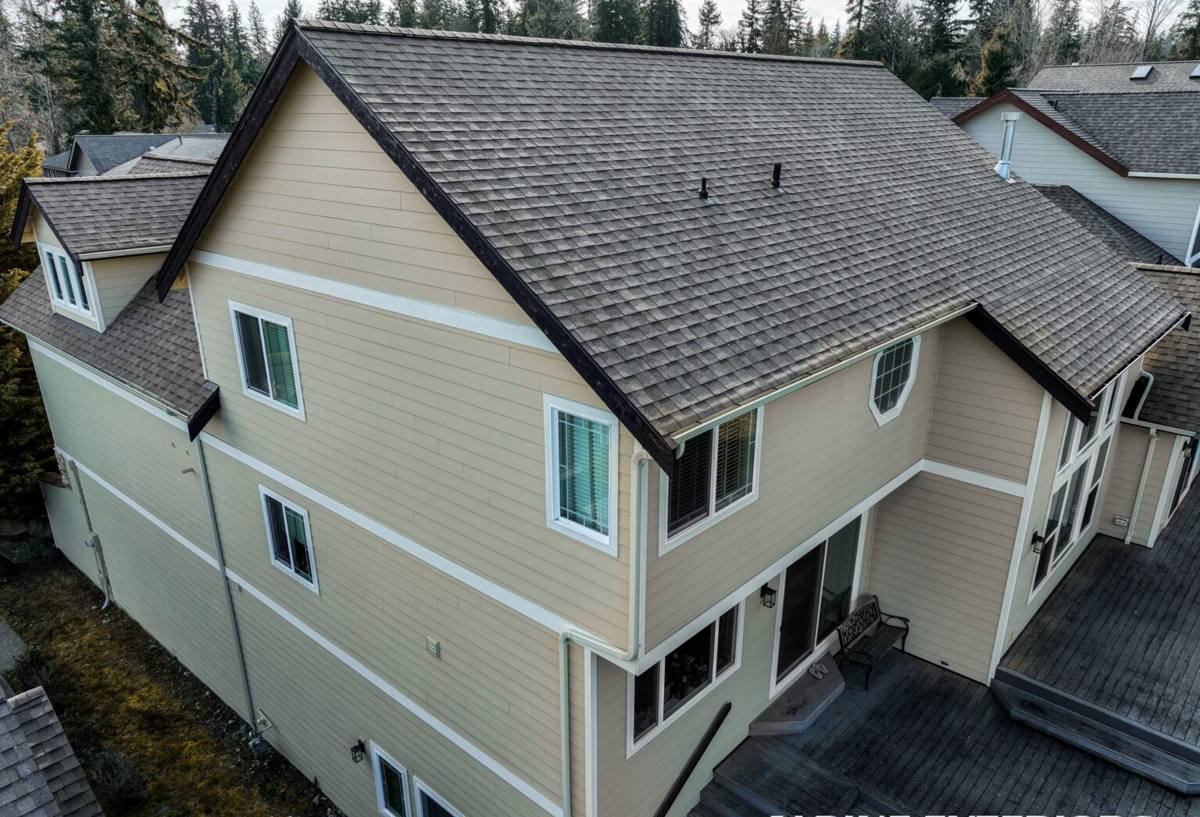
What Salt Air, Rain, and Moss Actually Do to a Window
It helps to understand the specific ways coastal exposure wears down a window system, because it changes what "correct installation" actually means:
- Salt air accelerates corrosion on hardware, screws, and lower-grade metal flashing — cheap fasteners rust and lose their grip years before a homeowner expects them to.
- Driving rain doesn't just fall straight down here; wind-driven storms push water sideways and upward, testing flashing details and sill pans that a calm-weather installation would never expose.
- Moss and algae hold moisture against siding and trim longer than most people realize, keeping the area around a window opening damp well after a storm has passed — which is exactly where rot gets a foothold if the original install left any gaps.
None of this means windows can't last decades out here. It means the installation details that get skipped elsewhere can't get skipped in Oak Harbor.
Signs It's Time to Replace Instead of Repair
Not every window problem calls for full replacement, but certain signs point to a system that's past the point of patching:
- Fogging or moisture trapped between panes on a double-pane unit — the seal has failed and can't be restored
- Soft or discolored trim and sill material around the frame, especially on the weather-facing side of the house
- Windows that are difficult to open, close, or lock, which often points to a frame that's shifted or swollen
- Visible daylight or a noticeable draft along the frame edge
- Condensation forming on interior glass regularly, which can signal both an aging window and ventilation issues worth checking
If you're only seeing one or two of these on an otherwise sound window, a repair or re-caulk may be enough. If you're seeing several, or if the surrounding wall material is already showing damage, replacement is usually the more honest recommendation.
What a Correct Window Installation Involves
A window installation is a water-management job first and a carpentry job second. The window itself matters, but most failures we're called out to fix trace back to what happened — or didn't happen — around the opening before the new unit ever went in.
Flashing and Water Management
Every opening needs a sill pan or sloped sill flashing that directs any water that gets past the window back outside the wall assembly, not into it. Head flashing and side flashing need to integrate with the house wrap in the correct shingle-lap order — top layer over the one below it — so water is always directed down and out, never trapped behind the siding.
Air Sealing and Insulation
The gap between the window frame and the rough opening needs to be sealed with a proper low-expansion foam or backer rod and sealant, not packed with fiberglass insulation alone, which does nothing to stop air and moisture movement. Interior and exterior sealant beads both matter, and they're not interchangeable — each is doing a different job.
Fitting to the Rough Opening
A window needs to be set plumb, level, and square, and shimmed correctly so it isn't relying on the fasteners alone to hold its shape. A frame installed slightly out of square will bind, leak, or wear its weatherstripping unevenly within a few years, even if the window itself was a good product.
Frame Material Comparison for Coastal Homes
Frame material choice matters more here than in a dry inland climate, because it determines how the window handles years of moisture cycling and salt exposure.
| Material | Coastal Durability | Maintenance | Typical Trade-Offs |
|---|---|---|---|
| Vinyl | Good — won't rust or rot | Low | Frame flexes more in temperature swings; limited color/repaint options |
| Fiberglass | Very good — stable and corrosion-resistant | Low | Higher upfront cost than vinyl |
| Aluminum | Fair without upgraded hardware — prone to corrosion near salt air unless properly coated | Moderate | Conducts heat and cold; less efficient than vinyl or fiberglass |
| Wood (clad exterior) | Good on the exterior face; interior wood still needs protection from condensation | Higher | Best appearance for period homes; requires more diligence around seals |
We don't push one material on every home. The right call depends on the house's exposure, its age, and what the homeowner wants to maintain over time. What we won't do is set a window with hardware or flashing components that aren't rated for a marine environment, regardless of how the frame itself is marketed.
Our Window Installation Process
- On-site assessment. We look at each opening individually — sun exposure, wind exposure, existing water damage, and how the current window was originally flashed.
- Honest scope and pricing. You get a clear breakdown of what's being replaced, what materials are being used, and why — no vague line items.
- Removal and opening inspection. Once the old window is out, we check the sheathing and framing underneath for rot or moisture damage before anything new goes in. This step catches problems a surface inspection can't.
- Sill pan and flashing installation. Every opening gets proper sloped flashing and shingle-lapped integration with the house wrap.
- Window setting and sealing. The unit is shimmed plumb, level, and square, then sealed inside and out with the correct materials for each layer.
- Trim and finish work. Interior and exterior trim is reinstalled or replaced to match the surrounding siding and finish.
- Final walkthrough. We test operation, check seals, and walk the homeowner through what to expect during break-in and the first rainy season.
What Affects the Cost of Window Installation
Costs vary by home and scope, but the main factors that move the number are consistent from job to job:
| Factor | Why It Matters |
|---|---|
| Number and size of openings | More or larger windows means more material and labor time |
| Frame material | Vinyl, fiberglass, aluminum, and clad-wood units carry different material costs |
| Condition of the existing opening | Rot or water damage found during removal adds repair scope before the new window can go in |
| Access and height | Second-story or hard-to-reach windows take more time and equipment |
| Trim and finish scope | Matching existing trim profiles or upgrading exterior finish adds to the job |
We give a firm, itemized quote after seeing the actual openings — not a phone estimate — because the condition behind the old window is often the biggest variable on a coastal home.
Why a Crew That Already Works Oak Harbor Matters
Window installation isn't complicated in principle, but it's unforgiving of shortcuts in a climate like this one. A crew that installs windows mostly in drier, calmer parts of the state may not default to sill pan flashing, may not think twice about hardware corrosion resistance, and may not recognize early moss or moisture damage around an opening for what it is.
Working this area regularly means we've seen how these homes age — which orientations take the worst of the weather, which older flashing details tend to fail first, and what it actually takes for a window to hold up through another twenty years of Pacific Northwest winters. That's not a marketing point; it's the difference between an installation that looks right on day one and one that's still performing correctly a decade later.
Keeping New Windows Performing After Installation
A correct installation does most of the work, but a little homeowner attention extends the life of any window system in this climate:
- Rinse accumulated salt residue and grime off exterior glass and frames a few times a year, especially after storms
- Check and clear weep holes on the exterior sill so water can drain instead of pooling
- Keep gutters and downspouts clear so roof runoff isn't sheeting directly across upper windows
- Inspect exterior caulk lines annually and have any cracking or separation addressed before the rainy season
- Trim back vegetation or moss buildup that's holding moisture against nearby trim or siding
If you're weighing whether your Oak Harbor home needs new windows, a repair, or just better maintenance around the openings you already have, we're glad to take a look. Reach out for a free, no-pressure estimate using the form below.