 Anacortes Exterior
 Edison Sits Right at the Edge of Three Problems at Once
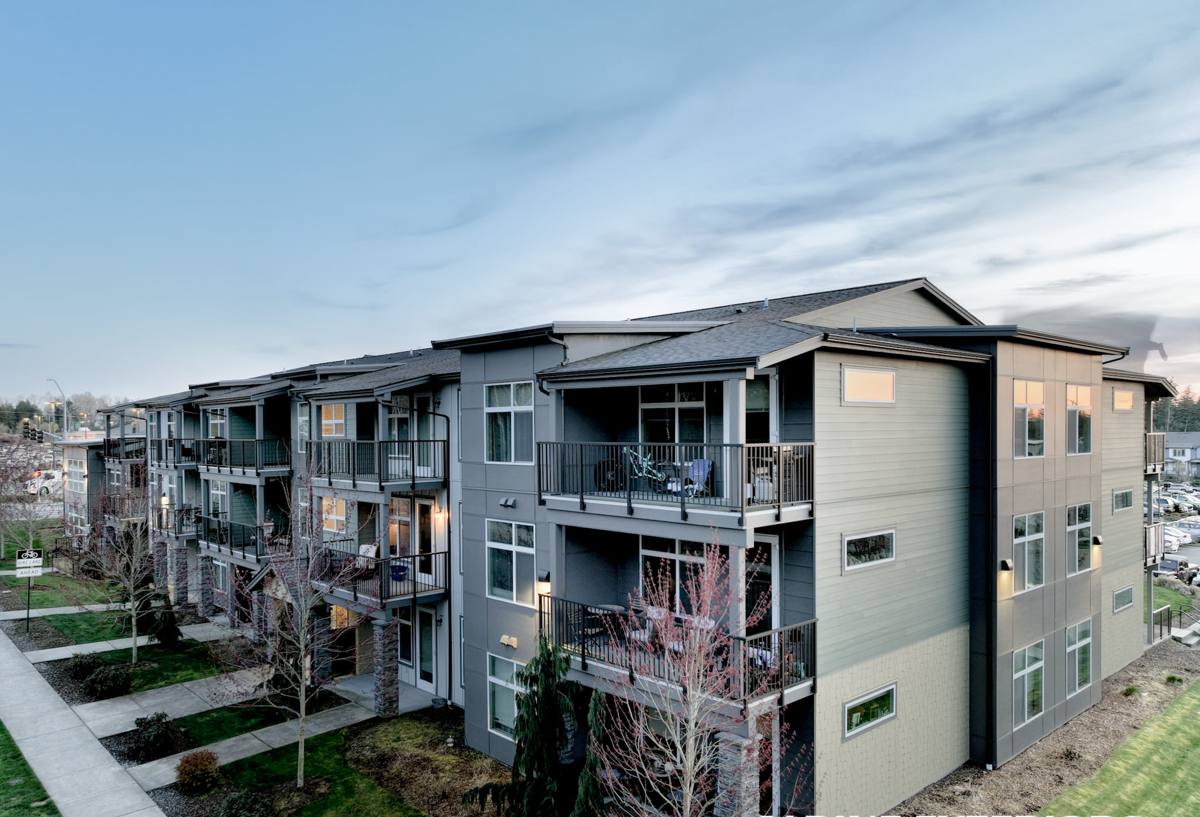
Edison is a small community, and small communities like this one don't get talked about much in siding marketing — but the houses here take a beating that plenty of more inland Skagit County towns don't. You've got open exposure off Samish Bay and the surrounding tidal flats, farmland on nearly every side with little windbreak, and enough tree cover in pockets to keep siding damp for days after a storm passes. Salt air, driving rain, and a long moss season aren't three separate problems for a home here — they compound each other, and they show up on siding faster than most homeowners expect.
We work throughout the Anacortes area and Skagit County, and Edison homes consistently show a pattern: whatever siding was installed without that combination in mind fails early, usually at the joints, the bottom courses, and anywhere shade keeps a wall from drying out between rains.
What This Climate Actually Does to Siding Over Time
Salt Air Attacks Fasteners and Finishes First
Airborne salt from Samish Bay doesn't need to be a strong breeze to do damage — it settles on exterior surfaces day after day. On siding with exposed or poorly-coated fasteners, that salt accelerates corrosion, which shows up as rust streaking down the face of the boards. On painted wood or composite products, salt-laden moisture works into any hairline crack in the finish and starts breaking down the coating from underneath, well before the surface looks obviously bad.
Driving Rain Finds Every Weak Seam
Storms coming off the water don't fall straight down — they drive in sideways, which means water gets pushed into laps, joints, and trim intersections that would stay dry in a calmer climate. Siding that isn't installed with the right clearances, flashing, and joint treatment for wind-driven rain will take on moisture behind the surface long before anyone notices a problem from the street.
Moss Season Keeps Walls Wet Longer Than They Should Be
Between farmland humidity, shaded lots, and our long stretch of overcast, wet months, moss and algae get a real foothold on north-facing and shaded walls. Moss holds moisture against the siding surface far longer than open sun and wind would allow, and on materials that absorb water or swell, that prolonged dampness is what actually causes rot, delamination, or paint failure — the moss itself is more of a symptom than the root cause.
Why We Only Install James Hardie Fiber Cement
We don't install vinyl, LP SmartSide, Cemplank, Allura, primed spruce, or cedar — not because those products can't be installed correctly somewhere, but because we've made a professional decision about what holds up in this specific climate over the long run, and James Hardie fiber cement is what we're willing to put our name behind for homes in Edison and the rest of Skagit County.
Fiber cement is made from cement, sand, and cellulose fibers — it doesn't have the organic wood content that gives moisture and moss something to feed on, and it's non-combustible, which matters more every year as regional wildfire smoke and dry-season risk become part of the conversation even on the wet side of the state. It doesn't swell, warp, or delaminate the way wood-based or wood-composite sidings can when they stay damp for extended periods, which is exactly the condition a shaded, salt-exposed Edison wall will see for months at a time.
The HZ5 Product Line: Engineered for This Exact Exposure
James Hardie doesn't sell one siding formulated for every part of the country — the company engineers its board specifically by climate zone, and the Pacific Northwest falls under the HZ5 line, built around resistance to prolonged moisture exposure and freeze-thaw cycling rather than the extreme heat formulations sold in the Southwest or Southeast. That distinction matters here specifically because Edison's exposure profile — salt, rain, and shade-driven dampness — is the exact combination the HZ5 engineering targets.
On top of the substrate itself, we install Hardie's ColorPlus finish, which is baked on at the factory under controlled conditions rather than field-applied on site. That matters for a wall that's going to see salt air and driving rain immediately after installation — a factory finish cures fully before it ever meets weather, where field-applied paint is curing in whatever conditions show up that week, which in Skagit County in the wrong season can mean damp air working against the coating from day one.
What a Correct James Hardie Installation Actually Involves
The board itself is only part of the job. Most of the siding failures we get called out to look at in this area trace back to installation shortcuts, not the product. A correct installation for an Edison home includes:
- Full inspection and repair of the sheathing underneath before any new siding goes up — covering over rotten sheathing with new siding just delays the same failure
- A weather-resistive barrier installed and lapped correctly, with attention to how it integrates around windows, doors, and penetrations
- Proper clearance at the bottom of the wall — generally a minimum of 6 inches from grade and 1-2 inches from roof and deck surfaces — so splash-back and standing moisture don't sit against the board
- Correct fastener type, spacing, and placement per Hardie's published installation instructions, since under- or over-driven fasteners are one of the most common causes of early cracking
- Flashing at every horizontal joint, window head, and trim intersection, sized and lapped to shed wind-driven rain rather than just vertical rainfall
- Caulking only where Hardie specifies it — over-caulking traps moisture just as often as under-caulking lets it in
Skip any one of these steps and the board itself becomes almost irrelevant — the wall behind it will still take on moisture in a climate that drives rain sideways for a good part of the year.
Common Siding Situations We See on Edison Homes
Because Edison has a mix of older farmhouses, waterfront-adjacent properties, and newer construction, we run into a wide range of existing siding conditions. The table below reflects general patterns we see across the region, not any specific home:
| Existing Siding | Typical Issue in This Climate | What Hardie Fiber Cement Changes |
|---|---|---|
| Cedar lap or shingle | Moss retention, checking, and rot at butt joints and lower courses | No organic material for moss to feed on; engineered to resist prolonged moisture without swelling |
| Vinyl siding | Warping, fading, and gapping at seams under wind-driven rain and temperature swings | Rigid, dimensionally stable board that holds its fastening and doesn't distort in the sun or cold |
| LP SmartSide or OSB-based composite | Edge swelling and delamination once moisture finds an unsealed cut edge or seam | Cement-based composition doesn't absorb and swell the way wood-strand products can |
| Primed, unfinished wood | Field-applied paint failing early under salt air and constant damp cycling | Factory-cured ColorPlus finish, applied before the board ever meets weather |
Our Process When We Take On a Job in Edison
We start with an on-site walkthrough of the existing siding and the sheathing underneath, since that's where a real scope of work actually gets set — not from a drive-by estimate. If there's hidden moisture damage, we identify it and address it before any new siding goes up, rather than surfacing it as a surprise mid-project. From there, installation follows James Hardie's published specifications for our climate zone, including the flashing, clearance, and fastening details covered above. We finish with a walkthrough of the completed work so you can see the joint treatment, trim details, and finish before we consider the job done.
What to Expect From Hardie Siding After Installation
Correctly installed fiber cement in this climate is genuinely low-maintenance compared to what most Edison homeowners are used to, but "low-maintenance" doesn't mean zero-attention. A short seasonal checklist keeps a Hardie exterior performing the way it's designed to:
- Rinse off salt residue and moss buildup with a garden hose once or twice a year, especially on shaded or north-facing walls
- Keep gutters clear so overflow doesn't run down the face of the siding repeatedly in the same spot
- Trim back vegetation that keeps a section of wall shaded and damp longer than the rest of the house
- Watch caulked joints for cracking or separation over time and have them refreshed before gaps let water behind the board
- Note any impact damage (branches, equipment, etc.) early — small repairs are simple on fiber cement when they're addressed promptly
Why Hiring a Crew That Already Works in Edison Matters
Edison isn't a big enough market to support crews that specialize in it exclusively, but that's exactly why local familiarity matters — a contractor who's already done work in this specific stretch of Skagit County has seen how the combination of bay exposure, farmland wind, and shaded lots actually plays out on real walls, rather than treating it as a generic "coastal Washington" job. That shows up in small decisions: where extra flashing attention is worth it, which orientations need a harder look at moss and shade exposure, and how the wind off the bay behaves differently than it does even a few miles inland toward Anacortes.
It also matters for the practical side of a project — permitting through Skagit County, coordinating around a rural or farmland lot, and being realistic about scheduling around the wetter months when installation conditions actually matter for how well a finish cures. A crew that's already worked in the area isn't learning these details on your project.
If your Edison home's siding is showing moss buildup, rust streaking, cracked caulking, or bubbled paint, we're happy to take a look and give you a straightforward, no-pressure estimate on what a correct James Hardie installation would involve for your specific house — fill out the form below to get started.