 Anacortes Exterior
 Conway's Climate Puts Real Demands on Siding
Conway sits low in the Skagit River delta, close enough to saltwater to feel its effects and low enough in the valley to hold onto moisture longer than homes up on higher ground. That combination — salt-laden air, frequent driving rain off Puget Sound, and long stretches of gray, damp weather — is exactly the kind of environment that exposes weak siding work fast. A siding job that looks fine on day one in Conway can start failing within a few years if it wasn't built for this specific climate.
Salt Air and Coastal Moisture
Homes here don't sit directly on the water the way some Anacortes properties do, but Skagit County's proximity to Puget Sound still means salt-bearing moisture in the air. Over time, that moisture works into fasteners, trim joints, and any place where siding material isn't fully sealed or is prone to swelling. Materials that handle dry-climate installation fine elsewhere often show their weaknesses here first.
Driving Rain and Wind-Driven Wet Walls
Conway gets its share of wind-driven rain moving up the valley, and wind-driven rain doesn't behave like a gentle vertical shower — it gets pushed sideways and upward into laps, corners, and penetrations. Siding installed with generic clearances or rushed flashing details will let water in eventually. The fix isn't a thicker material; it's correct water management behind the siding, which is a installation issue as much as a product issue.
Moss, Mildew, and Shade
Between the Skagit Valley's tree cover and the region's long wet season, moss and mildew growth on exterior walls is a normal fact of life, not a sign that something went wrong. But some siding materials give moss and mold more to hold onto than others, and poor drainage behind the siding creates the damp, shaded microclimate that moss thrives in. A siding system that dries out properly after each rain event fights moss far better than one that stays damp.
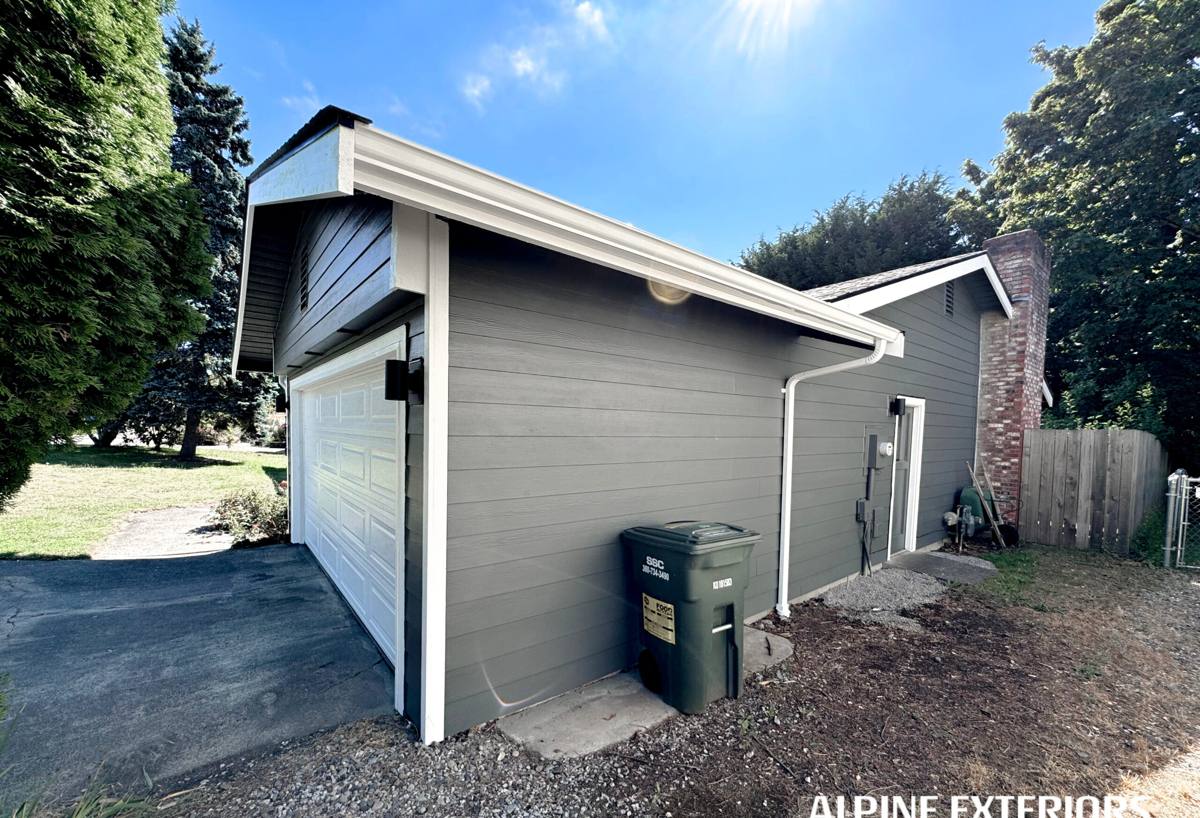
What Correct Siding Installation Requires in a Climate Like This
Water Management Comes Before the Siding Goes On
Long before the first piece of siding is fastened, the wall needs a proper weather-resistive barrier, correctly lapped and taped seams, and flashing at every window, door, and penetration that directs water out and away from the sheathing. In Conway's conditions, skipping or rushing this step is the single biggest reason siding jobs fail early — and it's invisible once the siding is up, which is exactly why it matters who does the work.
Clearances, Fastening, and Field-Cut Sealing
Fiber cement siding has to be installed with the manufacturer's specified clearances from grade, roof lines, and decks, and every field-cut edge needs to be sealed to keep moisture from wicking into the cut end of the board. Fasteners need to be the correct type, driven to the correct depth, and placed according to the manufacturer's pattern — over-driven or under-driven nails are a common source of premature failure that isn't obvious from the ground.
Ventilation Behind the Cladding
A wall assembly that traps moisture between the siding and the sheathing will stay damp longer after every rain, which feeds moss and accelerates rot in the framing underneath. Proper drainage planes and, where appropriate, a rainscreen gap give the wall a way to dry out between storms instead of holding water against the structure.
Why This Company Installs Only James Hardie Fiber Cement
We made a deliberate decision to install one siding system — James Hardie fiber cement — rather than offering vinyl, LP SmartSide, or wood products alongside it. That's not because those products have no merit; it's because in a marine climate like Skagit County's, we've seen which materials hold up to salt air, driving rain, and constant moss exposure over the long haul, and which ones create ongoing maintenance headaches or premature replacement. Standardizing on one proven system also means our crews install it correctly every time, rather than switching techniques between products.
| Factor | James Hardie Fiber Cement | Vinyl Siding | Wood / LP SmartSide |
|---|---|---|---|
| Moisture behavior | Non-combustible, engineered for moisture; resists swelling and rot | Doesn't rot, but can warp and gap, letting water behind panels | Wood-based core is vulnerable to moisture intrusion if any coating fails |
| Moss/mold resistance | Dense fiber cement surface resists moss anchoring better than porous materials | Surface texture can trap grime and moss in a damp climate | Wood-based surfaces are more hospitable to moss and fungal growth |
| Fire resistance | Non-combustible core material | Combustible (vinyl/PVC based) | Combustible (wood-based) |
| Finish durability | Factory-applied ColorPlus finish, engineered for UV and weather | Color can fade unevenly; finish is part of the material itself | Field-applied paint/stain needs more frequent recoating |
| Long-term maintenance | Periodic cleaning and repainting on standard finish; ColorPlus needs little | Low maintenance but limited repair options if damaged | Regular repainting/sealing to protect against moisture |
We're not claiming these other products are unusable everywhere — they simply don't match up well against Conway's combination of salt air, wind-driven rain, and shade-heavy moss conditions the way Hardie's climate-engineered HZ product line does.
Our Installation Process for Conway Homes
Every project follows the same disciplined sequence, adjusted for the specific exposure of the home — a wall facing prevailing weather off the valley gets more attention to flashing detail than a sheltered elevation, for example.
- On-site assessment of existing siding, sheathing condition, and moisture damage before any work begins
- Removal of old siding and inspection of the wall for hidden rot, especially around windows, corners, and low clearance areas
- Installation or repair of the weather-resistive barrier with properly lapped and taped seams
- Flashing installed at every window, door, and penetration to direct water outward
- James Hardie HZ10 siding installed to manufacturer clearance and fastening specifications for our climate zone
- All field-cut edges sealed before installation
- Final walkthrough covering caulking lines, trim details, and touch-up paint on any factory finish scuffs
Choosing the Right Hardie Product Line for Conway
HardiePlank Lap Siding
HardiePlank is the most common choice for Conway homes — it gives a traditional lap profile, comes in a range of factory ColorPlus finishes, and performs well against wind-driven rain when installed with correct overlap and fastening.
HardiePanel Vertical Siding
For homes with a more modern look or specific architectural accents, HardiePanel gives a clean vertical line. It requires the same rigorous flashing and water-management detailing as lap siding, particularly at horizontal seams.
HardieTrim and Accessories
Trim boards, fascia, and soffit details matter as much as the field siding itself — gaps or poorly sealed trim joints are a common entry point for the moisture that feeds moss and rot in this climate.
Living with Siding After Installation: Moss and Maintenance in Conway
Even well-installed Hardie siding will see some moss and algae growth over time in a climate this wet and shaded — that's normal, not a defect. What correct installation does is keep that growth on the surface, where it can be washed off, rather than letting moisture work behind the siding where it causes real damage. A periodic gentle wash (avoiding high-pressure equipment that can force water behind laps) and keeping vegetation trimmed back from walls goes a long way toward keeping siding looking clean between deeper cleanings.
Why It Matters to Hire a Crew That Already Works in Conway
Siding installation isn't one-size-fits-all across Skagit County. A crew that regularly works Conway and the surrounding Anacortes area already understands the exposure differences between a sheltered lot and one that takes wind and rain straight off the valley, and adjusts flashing and clearance details accordingly. That local familiarity, combined with installing a single product system to spec every time, is what keeps a siding job performing the way it's supposed to for decades rather than years.
Cost Factors for Conway Siding Projects
Every home is different, but the same handful of factors tend to drive the scope and cost of a siding project in this area:
| Factor | Why It Matters Locally |
|---|---|
| Extent of existing moisture damage | Hidden rot from prior water intrusion adds sheathing and framing repair before new siding goes on |
| Home size and wall complexity | More corners, dormers, and penetrations mean more flashing detail work |
| Siding profile and trim selection | Lap vs. panel siding and trim detailing affect material and labor |
| Site access and exposure | Wind and rain exposure on a given elevation can affect the level of detailing required |
We won't quote a number without seeing the home, but we can walk you through these factors honestly during an estimate so there are no surprises later.
If your Conway home needs new siding or you're dealing with moss, moisture damage, or aging material that's starting to fail, we're happy to take a look and walk you through what correct James Hardie installation would involve for your specific property. Reach out for a free, no-pressure estimate using the form below.