 Anacortes Exterior
 Deck Building for Oak Harbor's Coastal Climate
Oak Harbor sits close enough to the water that every deck built here is, in a real sense, a marine structure. The same air that makes this part of Washington beautiful — the salt-tinged breeze off the Salish Sea, the damp winters, the long gray stretches where nothing quite dries out — is also what wears decks down faster than it does inland. A deck built with generic, big-box specs might look fine for a season or two. Out here, the difference between a deck that lasts fifteen-plus years and one that's rotting at the ledger by year six almost always comes down to a handful of decisions made before the first board goes down.
We build decks throughout the Anacortes and Oak Harbor area, and we design every one of them around this region's specific conditions, not a one-size-fits-all spec sheet. That means material choices, fastener choices, and framing details that are chosen because they hold up here — not because they're the cheapest option on the truck.
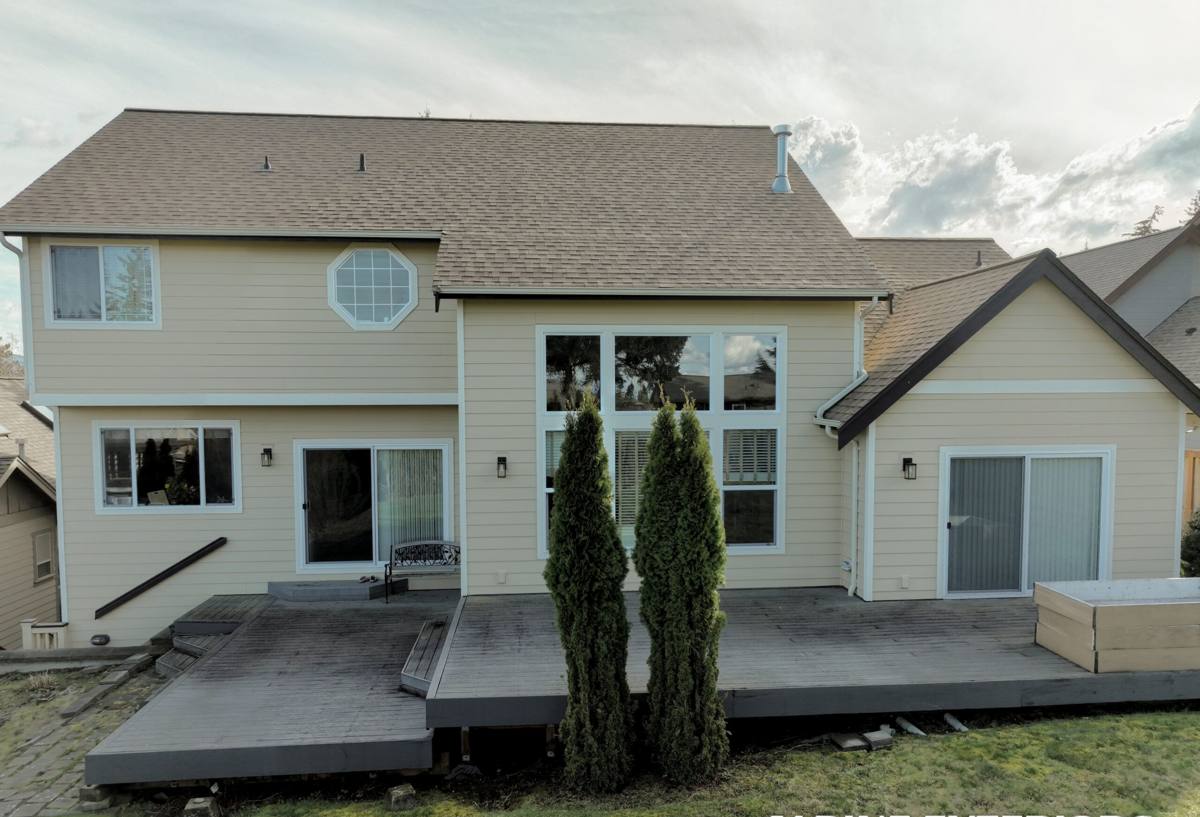
What Salt Air, Rain, and Moss Actually Do to a Deck
It helps to understand the failure points before talking about the fix, because most deck problems we see in this area trace back to the same three things.
Salt Air
Airborne salt is corrosive to metal, even at a distance from the shoreline. Standard galvanized fasteners, brackets, and screws can start showing rust and pitting well before their inland equivalents would. Once corrosion starts on a structural fastener, it's not cosmetic — it's a slow loss of holding strength in exactly the connections that carry the deck's weight.
Driving Rain
This region doesn't just get rain — it gets sustained, wind-driven rain that finds its way into every gap, seam, and unflashed joint. A ledger board attached to the house without proper flashing is the single most common source of hidden rot we find on older decks, because water gets behind the board and sits there, unseen, for years.
Moss and Organic Growth
Long, damp seasons with limited direct sun are ideal moss conditions. Moss on a deck surface isn't just a slip hazard — it holds moisture against the wood and accelerates decay in exactly the spots where it grows, usually the shaded, low-airflow corners that already drain and dry the slowest.
Choosing the Right Decking Material for This Climate
There's no single "best" decking material — there's a best material for your budget, your maintenance appetite, and how much sun and shade your specific site gets. Here's how the common options actually compare once you factor in local conditions.
| Material | Upfront Cost | Maintenance | How It Handles This Climate |
|---|---|---|---|
| Pressure-treated lumber | Lowest | Regular cleaning, periodic sealing | Good performance if properly sealed and re-sealed on schedule; moss and mildew show fastest here without upkeep |
| Cedar | Mid-range | Sealing/staining every 1-2 years | Naturally rot-resistant and handles moisture well, but needs consistent maintenance to keep its color and resist graying |
| Composite decking | Higher | Occasional washing, no sealing/staining | Excellent moisture and rot resistance; still needs periodic cleaning since moss and algae can grow on any surface, composite included |
| PVC decking | Highest | Very low | Fully moisture-resistant material; best long-term option where budget allows and maintenance time is limited |
What we won't do is put a low-maintenance material on top of a poorly built frame, or sell a homeowner on composite decking while skipping the flashing and fastener details underneath — the surface material only matters if the structure behind it is done right.
Framing and Ledger Details That Matter Near the Water
The ledger board — where the deck attaches to the house — is the single most important detail on any deck, and it's the one most often shortcut on older or budget builds. A correct ledger connection includes proper flashing that sheds water away from the house, a gap or drainage path so water doesn't pool against the band board, and structural fasteners rated for the load, not just whatever screw was on hand.
Beyond the ledger, framing in this climate should account for:
- Joist spacing and blocking appropriate to the decking material chosen, since composite and PVC products often have tighter span requirements than lumber
- Post bases that keep wood off concrete and standing water, rather than posts set directly into or against damp footings
- Adequate airflow underneath the deck so the frame can actually dry out between rain events
- Beam and footing sizing based on real load calculations, not guesswork, especially for elevated decks or decks carrying hot tubs or heavy furniture
Fasteners and Hardware: Where Corrosion Resistance Actually Matters
This is the detail that separates a deck built for this region from a deck built anywhere else in the country. In a coastal, salt-air environment, we use fasteners and structural connectors rated for corrosion resistance — stainless steel or coated hardware specified for exterior marine-grade use — particularly at the ledger, the post bases, and any hardware exposed to direct weather. Mixing metals matters too: pairing the wrong fastener with the wrong bracket material can accelerate corrosion in both. It's a small cost difference at the time of build and a significant difference in how the connections hold up ten years in.
Moss, Drainage, and Realistic Long-Term Maintenance
No deck material in this climate is maintenance-free forever, and any contractor who tells you otherwise is setting you up for disappointment. What a well-built deck does is make maintenance manageable rather than constant. That starts with design: decking boards with proper gapping for drainage and airflow, layouts that avoid trapping water in shaded corners, and surfaces chosen with your site's actual sun exposure in mind.
From there, a simple seasonal routine keeps most Oak Harbor decks in good shape:
- Sweep debris and standing organic matter off the deck regularly through fall and winter, when moss growth is most active
- Rinse or gently wash the surface periodically to keep moss and algae from establishing
- Check and clear gaps between boards so water keeps draining instead of pooling
- Reseal or restain wood decking on the schedule appropriate to that material — don't wait until it's visibly gray or worn
- Have fasteners and framing spot-checked every few years, especially at the ledger and post bases
Permits and Local Building Requirements
Most deck projects above a certain height or attached to the structure require a building permit, and requirements can vary by jurisdiction. Rather than asking homeowners to navigate that themselves, we handle the permitting process as part of the job — pulling the right permit, building to code, and scheduling the required inspections. That protects you at resale and, more immediately, means the deck is actually built to the structural and safety standards it's supposed to meet.
Our Process for Oak Harbor Deck Projects
Every deck starts with an on-site look at the specific conditions of your property — sun exposure, drainage, how exposed the site is to wind and salt air, and what's already happening with any existing deck or structure we're replacing. From there we talk through material options honestly, including the real maintenance trade-offs of each, and put together a design and quote that matches your budget without hiding corners that will cost you later.
Once a project is approved, we handle permitting, demolition of any existing structure, framing, decking installation, railings, and final inspection — with the same corrosion-resistant hardware and flashing details on every job, not just the ones where it's requested. We're not travelling in from out of the area to build one deck and move on; we work this region regularly, which means we're around to answer questions or handle warranty issues long after the last board is installed.
Checklist: What a Correctly Built Coastal Deck Includes
- Properly flashed ledger connection with a drainage gap at the house
- Corrosion-resistant, marine-rated fasteners and structural connectors throughout
- Post bases and footings that keep framing off standing water
- Adequate under-deck airflow for drying between rain events
- Decking material matched to your site's sun exposure and your maintenance preference
- Board gapping and layout that supports real drainage, not just appearance
- Permit pulled and inspections completed, not skipped
- A clear, honest maintenance plan handed to you at project completion
If you're planning a new deck or replacing one that's showing its age, we're happy to take a look and walk you through honest options for your property. Use the form below to request a free, no-pressure estimate.