 Anacortes Exterior
 Roof Repair Built for Bow's Weather, Not a Generic Climate
Bow sits in the stretch of Skagit County between Anacortes and Burlington, where open farmland meets tidal shoreline along Samish Bay. That mix matters for roofs. Homes here take on salt-laden air drifting in off the water, long stretches of driving rain pushed in by Pacific storms, and a moss season that can run most of the year in the shaded, damp conditions typical of this part of Western Washington. A roof repair that doesn't account for all three isn't really a repair — it's a temporary patch that fails again in a season or two.
We work on roofs throughout the Anacortes and Skagit County area, and Bow's rural and waterfront-adjacent properties show wear patterns that differ from what we see closer to town. Understanding those patterns before we ever get on the roof is what separates a repair that lasts from one that doesn't.
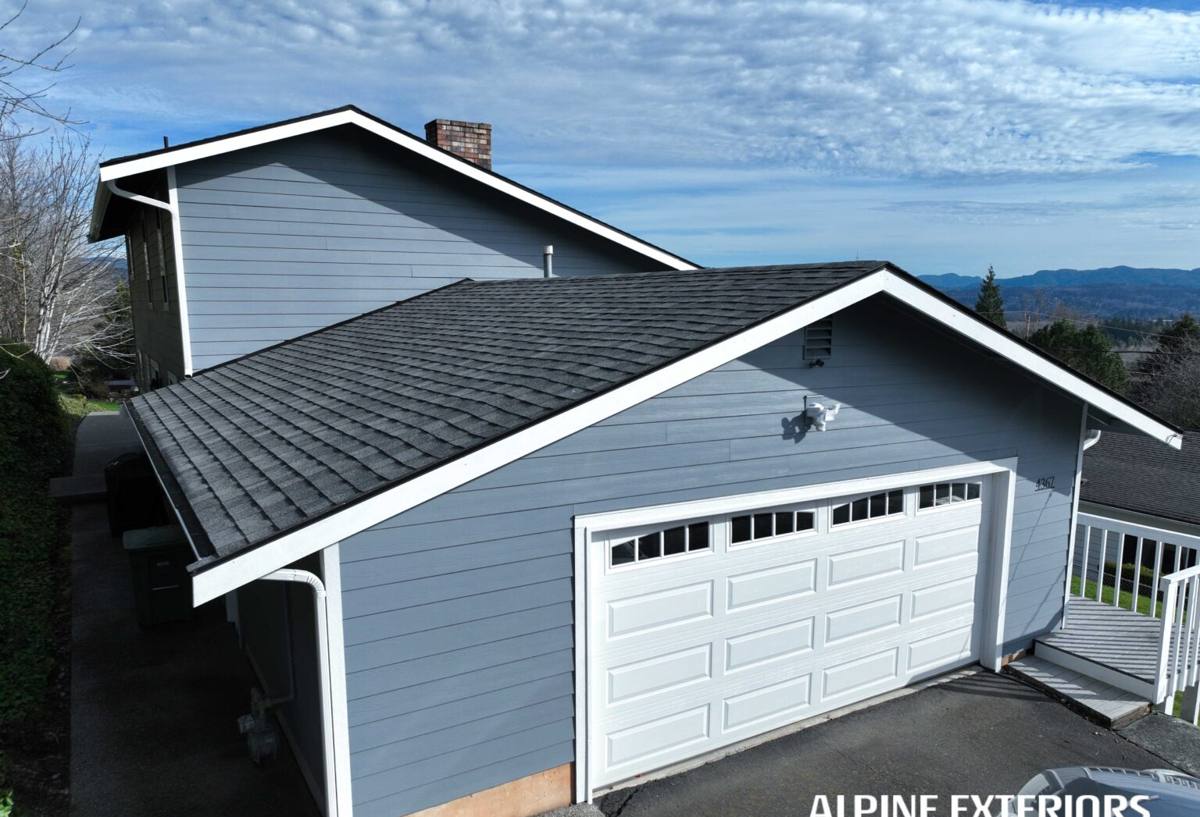
Why Bow Roofs Wear the Way They Do
Salt Air and Metal Fatigue
Proximity to Samish Bay means airborne salt settles on roofing materials, flashing, fasteners, and gutters. Over time this accelerates corrosion on exposed metal — nail heads, flashing seams, and any unpainted or uncoated steel components. A repair that reuses corroded fasteners or standard flashing without accounting for salt exposure will show rust streaks and leaks again within a year or two.
Driving Rain and Wind-Driven Water
Skagit County storms often come with sustained wind, and rain doesn't just fall straight down here — it gets pushed sideways under shingle edges, around vents, and into any gap in the flashing. Roofs that would stay dry in a calmer climate can leak in Bow simply because water is being forced uphill and sideways instead of running off downhill the way the design assumes.
Moss, Algae, and Constant Moisture
Shaded roof sections, north-facing slopes, and areas near trees rarely dry out fully for much of the year. That's ideal growing conditions for moss and algae, both of which hold moisture against the roofing material, lift shingle edges, and work into seams and fastener penetrations. Left unaddressed, moss doesn't just look bad — it actively creates the small openings that turn into real leaks.
Signs a Bow Roof Needs Repair
Most roof repairs we're called out for started small and got ignored, usually because the early signs aren't dramatic. Here's what we tell Bow homeowners to watch for between inspections:
- Dark streaking or green-black growth on shingles, especially on shaded or north-facing slopes
- Granules collecting in gutters or at downspout outlets — a sign shingles are wearing thin
- Soft spots, sagging, or discoloration on interior ceilings near exterior walls
- Daylight visible through the roof deck from inside an attic space
- Rust staining below metal flashing, vents, or valleys
- Curling, cracked, or lifted shingle edges, particularly around penetrations
- Water stains or peeling paint on fascia boards and soffits
- Missing or displaced shingles after a windstorm
Any one of these on its own might not mean much. Two or three together, especially after a wet winter, usually means active water intrusion somewhere in the system.
What a Correct Roof Repair Actually Involves
A proper repair isn't just swapping out a few damaged shingles and calling it done. In a climate like this, the work underneath the visible surface matters as much as what you can see.
Diagnosis Before Demolition
We start by tracing the leak or damage back to its actual source, not just the spot where water showed up inside. Water travels along rafters and sheathing before it drips through a ceiling, so the visible stain and the actual failure point are often several feet apart.
Flashing and Penetration Details
Flashing around chimneys, vents, skylights, and roof-to-wall transitions is where most leaks start, not in the open field of shingles. A repair that doesn't reset or replace compromised flashing is addressing a symptom, not the cause.
Deck and Underlayment Condition
If water has been getting in for a while, the roof deck underneath may be soft, delaminated, or rotted. Repairing over damaged sheathing just hides the problem until it fails again, so any competent repair includes checking the deck and underlayment, not just the shingles on top.
Matching Materials Correctly
Patch repairs need to match the existing roofing material's type, weight, and where possible, age and color, so the repaired section sheds water the same way the rest of the roof does and doesn't stand out as an obvious patch.
Comparing Roofing Materials for Repair Work in Bow's Climate
What the roof is made of affects how it should be repaired and how often. Here's how the common materials we work with hold up under Bow's specific conditions:
| Material | Salt Air Resistance | Moss Susceptibility | Typical Repair Approach |
|---|---|---|---|
| Asphalt composition shingle | Good with correct flashing metal | Moderate to high on shaded slopes | Spot shingle replacement, flashing reset, moss treatment |
| Metal roofing (standing seam) | Depends on coating quality; fasteners are the weak point | Low | Sealant renewal, fastener replacement, seam inspection |
| Cedar shake | Fair; needs regular treatment | High without maintenance | Individual shake replacement, moss and debris removal, breathability checks |
| Torch-down / membrane (low-slope) | Good | Low to moderate | Seam resealing, membrane patching, drainage checks |
None of these materials is wrong for the area — each just carries a different maintenance burden. We tell homeowners honestly what upkeep their existing roof needs rather than pushing them toward a different material during what should be a straightforward repair.
A Note on Product Choices
We use flashing metals and fasteners rated for coastal exposure on repair work near Samish Bay, even when the original installation used standard-grade materials. It costs a bit more up front, but standard hardware corrodes faster in this environment and creates repeat callbacks — which costs the homeowner more in the long run than doing it right the first time.
Moss and Algae: Treat It, Don't Just Cover It
Moss removal is part of most repair visits in Bow, not a separate service we tack on. Scraping moss off without treating the underlying growth means it's back within a season. Our approach:
- Hand-remove moss and debris rather than pressure-wash, which can drive water under shingles and strip granules
- Inspect the roofing material underneath for granule loss or lifted edges caused by the moss
- Apply a treatment suited to the roofing material to slow regrowth
- Check gutters and valleys for trapped debris that holds moisture against the roof edge
- Flag any trees or shade patterns contributing to the problem, so the homeowner knows what's driving it
We're straightforward about the fact that moss will come back in a shaded, damp climate like Skagit County's — the goal of a repair visit is to remove the damage it's already caused and slow the cycle down, not promise it's gone for good.
Our Repair Process
1. On-Site Assessment
We inspect the roof, attic space where accessible, and any interior water damage to identify the actual source of the problem, not just the symptom.
2. Clear, Written Scope
Before any work starts, the homeowner gets a plain-language explanation of what's wrong, what we recommend fixing, and what it involves — no pressure toward a full replacement if a repair is the honest answer.
3. The Repair Itself
This includes removing damaged material, checking the deck underneath, correcting flashing details, installing matched materials, and treating moss or algae as needed.
4. Cleanup and Walkthrough
We clear debris, check gutters and downspouts are running clear, and walk the homeowner through what was done and what to keep an eye on going forward.
What Roof Repair Costs Depend On
We don't publish flat prices because repair scope varies too much from roof to roof, but the main factors that drive cost are consistent:
| Factor | Why It Matters |
|---|---|
| Roof pitch and access | Steeper or harder-to-access roofs take longer and need more safety setup |
| Extent of deck damage | Rotted sheathing adds material and labor beyond surface repair |
| Material availability and match | Older or discontinued materials can be harder to match cleanly |
| Number and condition of penetrations | More vents, chimneys, and skylights mean more flashing detail work |
| Extent of moss or algae damage | Heavier growth means more removal and treatment time |
Most straightforward repairs — a section of damaged shingles, a flashing reset, moss treatment — fall into a modest range. Repairs involving deck replacement or multiple problem areas cost more, but we'll always explain why before doing the work.
Why a Crew That Already Works Bow Matters
A roofer who works this specific stretch of Skagit County regularly has already seen how salt air, driving rain, and moss behave on the roofing materials common to this area — and knows which repair shortcuts fail here even if they'd hold up somewhere drier or further from the water. That's the difference between a repair that's built for this climate and one that's built for a generic one.
If you're dealing with a leak, moss buildup, or storm damage on a Bow-area roof, we're glad to take a look and give you an honest read on what it actually needs. Reach out through the form below for a free, no-pressure estimate.