 Anacortes Exterior
 Cap Sante's Roofs Work Harder Than Most
Homes around Cap Sante sit close to the water on Fidalgo Island, which means they take on a combination most inland Skagit County houses never deal with at the same intensity: salt-laden air off the marina and Rosario Strait, driving rain that comes in sideways during winter storms, and a moss season that can stretch from late fall through spring. Any one of those is manageable on its own. Together, over years, they shorten the life of a roof that wasn't built or installed with this specific exposure in mind.
A new roof installation here isn't just about picking a shingle color and nailing it down. It's about choosing materials and details that hold up to salt-air corrosion, sealing the roof against wind-driven rain instead of just vertical rain, and building in enough ventilation and moisture control to keep moss from getting a foothold in the first place. That's the standard we build to on every Cap Sante project.
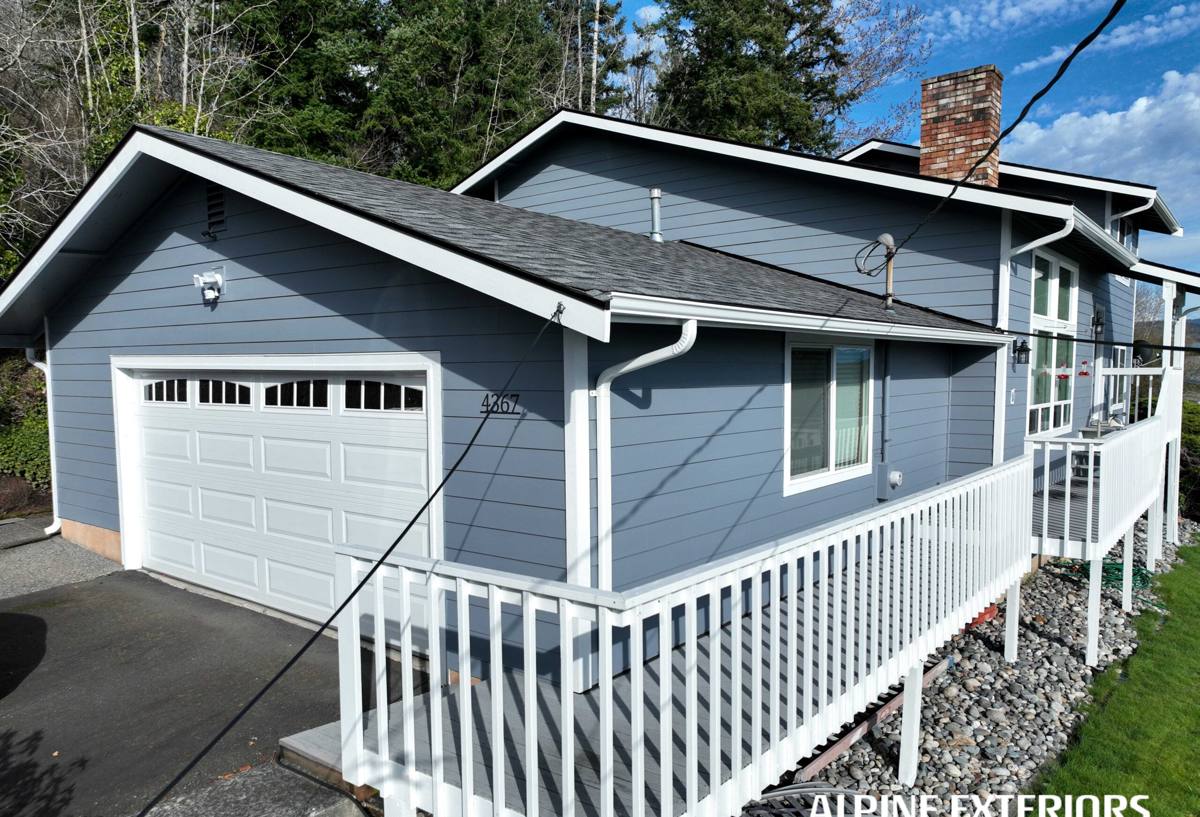
What Salt Air Actually Does to a Roof
Salt air doesn't damage roofing material the way UV or hail does — it works on the metal. Fasteners, flashing, drip edge, valley metal, and any exposed hardware are all vulnerable to accelerated corrosion when they're sitting a short distance from saltwater, especially with onshore wind carrying that air directly onto a roof deck.
Where corrosion shows up first
- Exposed nail heads on older roofs, where rust streaks bleed down the shingle below
- Valley metal and flashing seams, where two metal pieces meet and moisture sits longer
- Gutters and downspout hardware, especially uncoated steel fasteners
- Any roof vent or pipe boot collar made from lower-grade materials
None of this means a roof near Cap Sante is doomed to fail early. It means the installer has to spec corrosion-resistant fasteners and flashing from the start, rather than using whatever's standard for a roof twenty miles inland. We treat that as a baseline requirement here, not an upgrade.
Moss: The Slow Threat That Never Fully Goes Away
Anacortes' moss season is long because the conditions that grow moss — shade, moisture, and mild temperatures — persist for most of the year in this part of Skagit County. Moss itself doesn't punch holes in a roof, but it holds moisture against the shingle surface, lifts shingle edges as it grows, and creates a foothold for water to work its way under the roofing layer instead of running off it.
A correctly installed new roof reduces moss pressure in a few concrete ways:
- Proper attic ventilation keeps the roof deck temperature more even, which reduces the moisture cycling that moss favors
- Zinc or copper strips near the ridge, where appropriate, release trace metals with rain that inhibit moss growth over time
- Correct shingle overlap and nailing keeps the surface tight, so moss has less of an edge to grab onto
- Keeping the roof clear of overhanging branches — a homeowner maintenance item, not an installation one — cuts down shade and debris buildup
We won't tell you moss will never grow on your new roof. It will, eventually, in this climate. The goal is a roofing system that doesn't let moss turn into a moisture problem underneath it.
Material Choices for a Cap Sante Home
There's no single "correct" material for every house here — it depends on your roof's pitch, how exposed it is to wind, your budget, and how long you want to go before the next full replacement. Here's how the common options actually compare for this specific location.
| Material | Salt Air Durability | Moss Resistance | Wind-Driven Rain Performance | Typical Lifespan Here |
|---|---|---|---|---|
| Architectural asphalt shingle | Good, with corrosion-resistant fasteners | Fair — needs periodic cleaning | Good with correct underlayment and flashing | 20–30 years |
| Standing seam metal | Very good with coated/marine-grade panels | Very good — sheds moisture fast | Excellent | 40–50+ years |
| Synthetic composite shake/slate | Good | Good | Good | 30–50 years |
| 3-tab asphalt shingle | Fair | Fair | Fair — more prone to wind lift | 15–20 years |
Metal roofing tends to perform best against the combination of salt air and wind here, largely because it has fewer seams for water and corrosion to exploit and it doesn't give moss much to hold onto. Architectural asphalt shingles remain the most common choice because of the balance between upfront cost and performance, and they hold up well as long as the installation details — flashing, fasteners, ventilation — are done right. We'll walk through the honest trade-offs for your specific roof rather than push one product across the board.
How We Install a New Roof for This Exposure
Tear-off and deck inspection
We remove the existing roofing down to the deck and inspect for soft spots, rot, or prior water damage — common on older Cap Sante homes where wind-driven rain has been finding its way past aging flashing for years. Any damaged sheathing gets replaced before anything new goes down; installing over a compromised deck just hides the problem.
Underlayment built for wind-driven rain
We use synthetic underlayment rated for high-wind, high-moisture exposure, with self-adhered ice-and-water membrane at the eaves, valleys, and any roof-to-wall transitions — the spots where wind-driven rain most often finds a way in, regardless of the finish material on top.
Corrosion-resistant flashing and fasteners
All exposed metal — step flashing, valley metal, drip edge, and fasteners — is specified for coastal exposure rather than standard-grade hardware. This is the detail that most affects how well a roof holds up near the water over the next 20-plus years.
Ventilation sized to the attic
We calculate intake and exhaust ventilation based on your attic's actual square footage, not a generic rule of thumb. Under-ventilated attics run damp in our climate, which shortens shingle life and feeds moss growth from underneath.
Final inspection and cleanup
Every install ends with a full inspection of flashing, penetrations, and ridge details, plus a job-site cleanup that includes a magnetic sweep for stray nails.
Permits and Local Code
Roof replacements in the City of Anacortes and unincorporated Skagit County generally require a building permit, and code requirements can touch on things like ice-and-water shield coverage, ventilation ratios, and wind-load fastening schedules — all of which matter more here than in calmer inland areas. We handle the permitting process as part of the job rather than leaving it on the homeowner's plate, and we build to current code as a floor, not a ceiling, given what this exposure demands.
What Drives the Cost of a New Roof Here
| Factor | Why It Matters in Cap Sante |
|---|---|
| Roof size and pitch | Steeper roofs and complex rooflines near the water often need more flashing detail work |
| Material choice | Metal costs more upfront but reduces long-term maintenance from salt air and moss |
| Deck condition | Older homes with hidden water damage from wind-driven rain may need sheathing replacement |
| Ventilation upgrades | Attics that were never properly vented add scope but pay off in shingle life |
| Access and site conditions | Waterfront lots with limited staging area or steep grades affect labor and equipment needs |
We give a firm, itemized estimate after an on-site inspection — not a phone-quote guess — because the deck condition and flashing scope on a home near the marina can vary a lot from house to house even on the same street.
Why Local Experience on Cap Sante Roofs Matters
A crew that's worked roofs in this specific pocket of Anacortes knows which flashing grades hold up, how much ventilation a typical Cap Sante attic actually needs, and where wind-driven rain tends to find its way into older homes near the water. That's different knowledge than what a contractor brings from inland Skagit County or from outside the region entirely. It shows up in the small decisions — fastener grade, underlayment placement, ridge detail — that determine whether a roof is still performing well in fifteen years or starting to show salt and moss damage in five.
Homeowner Maintenance Checklist
A well-installed roof still needs basic upkeep to reach its full lifespan in this climate:
- Clear moss buildup gently once or twice a year rather than letting it accumulate for seasons
- Keep gutters and downspouts clear so water isn't backing up under the roof edge
- Trim back overhanging branches to reduce shade and debris
- Have flashing and roof penetrations inspected every few years, especially after major windstorms
- Address any interior ceiling stains promptly — they're often the first sign of a flashing or ventilation issue, not a shingle failure
If you're weighing a new roof for a Cap Sante home, we're happy to take a look and give you a straight, no-pressure estimate — what your roof actually needs, what it'll cost, and why. Just fill out the form below to get started.