 Anacortes Exterior
 Roofing in Flounder Bay: A Different Set of Conditions
Flounder Bay sits close enough to the water that homes here deal with a combination of stresses most inland Skagit County properties never see. Salt-laden air off Rosario Strait and the marina area accelerates the breakdown of exposed metal fasteners, flashing, and vent components. Add in driving, wind-pushed rain that comes at roofs sideways rather than straight down, plus a long, wet moss season that can run from fall through late spring, and you have a roofing environment that punishes shortcuts. An asphalt shingle roof installed the same way you'd install one in a dry inland climate will not hold up the same way out here — the details have to change.
This page covers what a correctly installed and maintained asphalt shingle roof looks like specifically for Flounder Bay homes, what our process involves, and why working with a crew that already understands this stretch of Anacortes coastline matters more than it might seem.
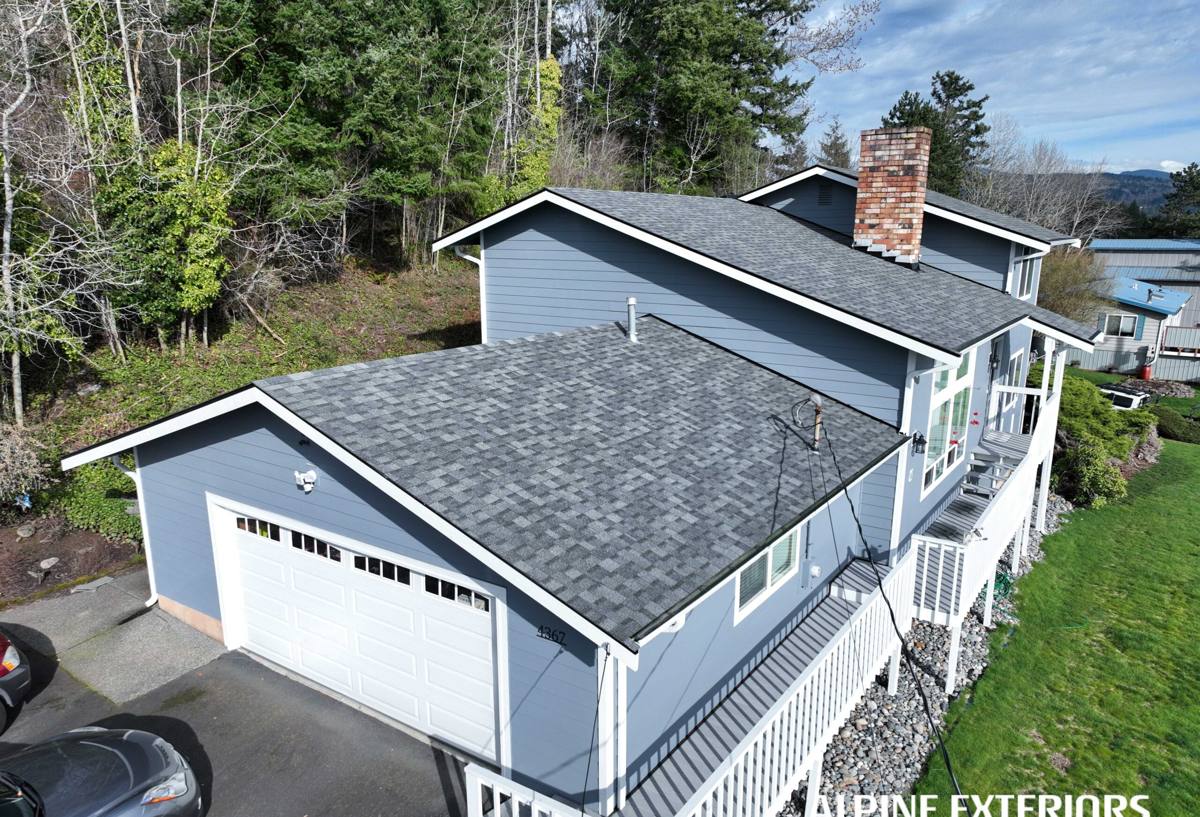
What Flounder Bay's Climate Actually Does to a Roof
Salt Air and Corrosion
Airborne salt doesn't just sit on the surface — it works into any exposed metal over time. Roofing nails, drip edge, step flashing, and vent boots are all vulnerable if the wrong materials or fastener grades are used. In a straightforward inland install, standard galvanized fasteners are often fine for decades. Near the water, that same fastener can start showing corrosion years earlier, which eventually shows up as streaking, loosened shingles, or leaks at flashing points long before the shingles themselves are worn out.
Driving Rain and Wind-Driven Water
Anacortes gets plenty of straight-down rain, but the wind off the water regularly pushes rain sideways and even slightly upward under eaves and at ridge lines. This matters because a roof that would shed water fine in calm rain can still take on moisture at laps, valleys, and edges if the underlayment and flashing details weren't built with wind-driven exposure in mind. Standard nailing patterns and minimal underlayment coverage that pass inland just don't give the same margin of safety here.
Moss and Sustained Moisture
Skagit County's damp, mild winters give moss a long growing season, and Flounder Bay's tree cover and proximity to the water keep humidity levels up for much of the year. Moss holds moisture against the shingle surface, which shortens shingle life, degrades granule protection, and can work its way under shingle tabs at butt joints if left unchecked. A roof with poor ventilation or shaded, slow-drying sections is especially prone to heavy moss buildup.
What a Correct Asphalt Shingle Job Looks Like Here
A roof built for Flounder Bay conditions isn't a different product line — it's the same asphalt shingle system installed with attention to the details that matter in a marine, high-moisture climate. That includes:
- Corrosion-resistant fasteners and flashing components rated for coastal or high-moisture exposure, not just standard-grade materials
- Full underlayment coverage with ice-and-water shield style membrane at eaves, valleys, and any low-slope transitions where wind-driven rain is most likely to find a way in
- Proper step flashing and counter-flashing at every wall intersection, chimney, and skylight — not just caulk-and-hope patch jobs
- Balanced intake and exhaust ventilation so the roof deck can actually dry out between wet stretches instead of staying damp
- Shingle selection with algae-resistant granules where moss and moss-adjacent growth are a known local issue
- Careful attention to valley construction, since valleys concentrate water flow and are where driving rain does the most damage if underbuilt
None of this is exotic. It's standard trade knowledge applied consistently, instead of skipped when it's inconvenient or invisible once the roof is finished.
Our Process for a Flounder Bay Re-Roof or Repair
1. On-Site Assessment
We start by getting on the roof, not just looking at it from the ground. We check the deck condition, existing ventilation, flashing details, and how much moss or moisture damage is already present. Salt-air corrosion and moss damage often hide under shingle tabs and around penetrations, so a real inspection matters more here than in a drier climate.
2. Honest Scope — Repair vs. Replace
Not every roof with moss or a few damaged shingles needs full replacement. If the deck is sound and the damage is localized, a targeted repair with proper flashing and moss treatment can be the right call. We'll tell you which situation you're in rather than defaulting to the bigger job.
3. Tear-Off and Deck Inspection
For full replacements, we remove existing roofing down to the deck and inspect for water damage, soft spots, or rot — common in older Flounder Bay homes where moisture has had years to work under aging shingles. Any compromised decking gets replaced before new roofing goes on; roofing over a damaged deck just hides a bigger problem.
4. Underlayment and Flashing First
This is where most of the long-term protection actually comes from. We install full underlayment coverage, ice-and-water membrane at vulnerable areas, and correctly layered flashing at every wall, chimney, vent, and skylight before a single shingle goes down.
5. Shingle Installation
Shingles go on with fastener placement and nailing patterns suited to wind exposure, not just manufacturer minimums. We pay particular attention to valleys, ridges, and eave lines — the areas that take the most direct hit from driving rain.
6. Ventilation Check
Before we consider the job finished, we confirm intake and exhaust ventilation are balanced. A roof that can't dry out between rain events is a roof that grows moss and degrades faster, regardless of how good the shingles themselves are.
Cost Factors for Flounder Bay Asphalt Shingle Roofing
Every roof is different, and we won't quote a number without seeing the actual roof — but the following factors are what typically move the price up or down on a project in this area:
| Factor | Why It Matters Here |
|---|---|
| Roof size and pitch | More surface area and steeper pitches mean more labor, material, and safety setup |
| Deck condition | Rot or soft spots found during tear-off require deck repair before new roofing can go on |
| Existing moss or moisture damage | Heavier moss buildup often means more underlying shingle damage than is visible from the ground |
| Flashing complexity | Homes with multiple valleys, chimneys, skylights, or wall intersections need more flashing work |
| Ventilation upgrades | Older homes may need added intake or exhaust venting, which affects labor and materials |
| Fastener and flashing grade | Coastal-rated corrosion-resistant materials cost more than standard grade but last longer in salt air |
| Access and site conditions | Tree cover, tight lots, or difficult staging near the water can add labor time |
Maintenance That Actually Matters Near the Water
A well-installed roof still needs periodic attention in this climate. The things worth doing regularly:
- Keep gutters clear so water isn't backing up against eaves and fascia during heavy rain
- Address moss growth early with proper treatment rather than waiting until it's thick — moss removed carelessly can damage granules and shorten shingle life
- Trim back overhanging branches where possible to reduce shade, debris buildup, and moisture retention on the roof surface
- Have flashing and penetration points checked periodically, since these are the first places salt-air corrosion or wind-driven rain show up as problems
- Watch for granule loss in gutters and downspouts, an early sign of shingle wear worth having looked at before it becomes a leak
Why a Crew That Already Works Flounder Bay Matters
Roofing crews that mostly work drier, inland parts of Skagit County can do fine work — but they may not default to the fastener grades, underlayment coverage, or ventilation approach that a marine, moss-heavy environment actually requires unless they're specifically thinking about it. A crew that regularly works Flounder Bay and the broader Anacortes waterfront has already seen what happens when those details get skipped: the corrosion patterns, the moss-related shingle failures, the leaks at under-flashed valleys. That experience shows up in how the job gets built the first time, not just in how problems get fixed later.
We're an Anacortes-based crew, and Flounder Bay is part of our regular service area — not a stretch job we occasionally drive out to. That familiarity with the specific conditions here is part of what you're paying for when you hire local.
Signs Your Flounder Bay Roof Needs Attention
A few things worth acting on before they become bigger problems:
- Visible moss growth, especially in shaded sections or along the north-facing slope
- Granules collecting in gutters or at the base of downspouts
- Curling, cupping, or lifted shingle edges, particularly near valleys or eaves
- Rust staining near flashing, vents, or fasteners
- Interior water stains on ceilings or in the attic after wind-driven rain events
- Daylight visible through the roof deck when viewed from inside the attic
If you're seeing any of these, it's worth having a real inspection rather than waiting for a leak to show up during the next storm.
If you're in Flounder Bay or elsewhere around Anacortes and want a straight answer on what your asphalt shingle roof actually needs, we're happy to take a look. Request a free, no-pressure estimate using the form below.