 Anacortes Exterior
 Ship Harbor's Roofs Take a Different Kind of Beating
Ship Harbor sits right at the edge of Fidalgo Island, close enough to the water that homes there deal with weather most inland Skagit County properties don't. Wind off Rosario Strait and Guemes Channel hits roofs at angles that don't match the "storm from the west" assumption a lot of repair estimates are built on. Add in salt-laden air, near-constant moisture for a good chunk of the year, and mature tree cover in some of the older lots, and you've got a roof environment that ages differently than a roof three miles inland in downtown Anacortes.
When we get a storm damage call from Ship Harbor, we're not treating it like a generic wind-and-rain job. We're looking at how coastal exposure has already been working on that roof before the storm ever hit, because that history changes what "repair" actually means.
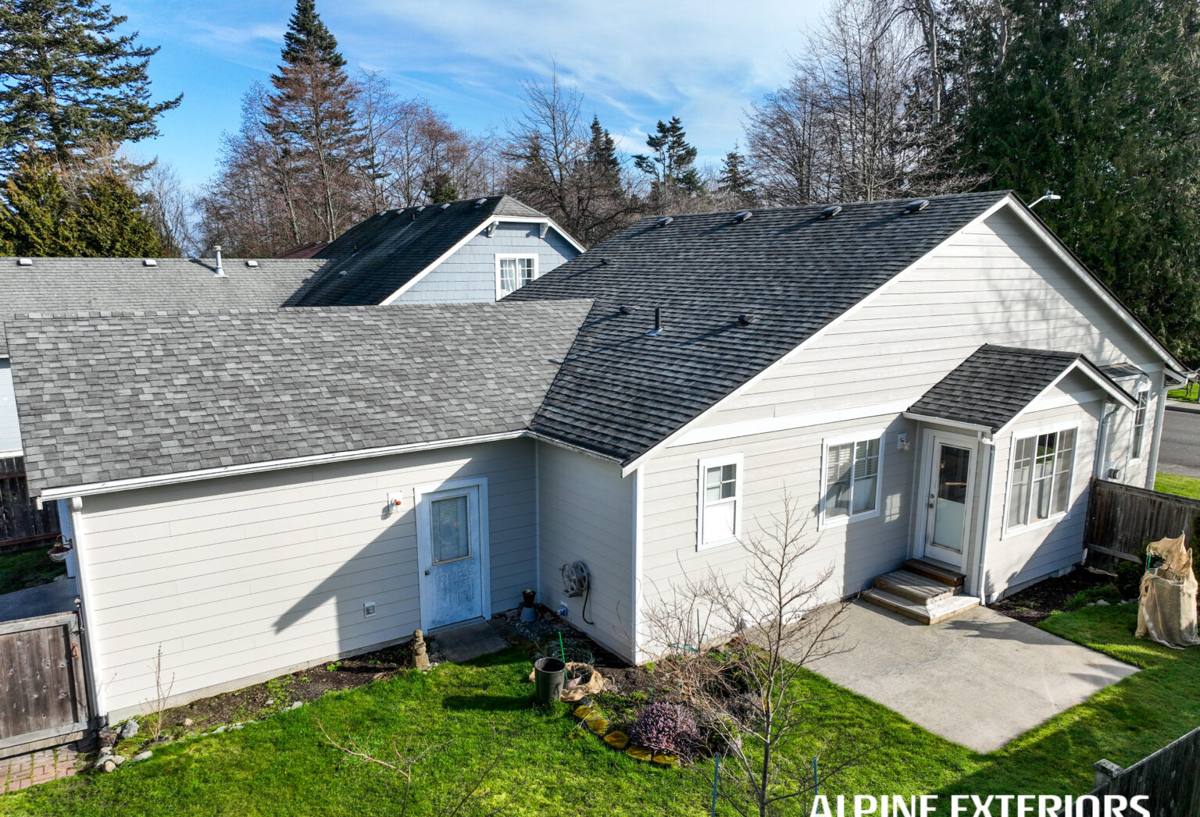
What Actually Counts as Storm Damage
Homeowners often call about one obvious problem — a lifted shingle, a leak in the ceiling, a branch that came down — and it turns out the storm just exposed damage that was building for a while. Real storm damage repair starts with telling those two things apart, because they're priced and handled differently.
- Wind-lifted or torn shingles/shakes — seals broken, tabs cracked or missing, exposing underlayment
- Impact damage — from falling limbs, debris, or hail (less common here than wind, but it happens)
- Flashing displacement — around chimneys, vents, and valleys, often from wind uplift rather than direct impact
- Water intrusion — staining, soft spots, or active leaks that show up during or right after the storm
- Pre-existing wear that finally failed — moss-lifted shingles, salt-corroded fasteners, or degraded underlayment that a storm just pushed past the breaking point
That last category matters most for Ship Harbor. A roof that's been sitting in salt air and shade for 15-20 years doesn't fail the same way a newer inland roof does — it fails at the weak points the coastal environment already created.
Why Salt Air Changes the Repair, Not Just the Roof
Salt air is corrosive to metal, and roofs have more exposed metal than most people realize — nails, flashing, drip edge, valley metal, vent housings. On a straightforward inland repair, we can often reuse existing flashing and fasteners if they're in decent shape. On a Ship Harbor roof, we check that metal more carefully, because corrosion doesn't always show on the surface first. A fastener that looks fine can have lost enough holding strength that it won't survive the next storm, even if today's repair looks solid.
Our standard for coastal Anacortes work is to spec corrosion-resistant fasteners and flashing on any repair where we're opening up the roof anyway — it costs a little more up front and it's the difference between a repair that lasts and one you're paying for again in three years.
What This Looks Like in Practice
On a typical wind-damage repair near the water, that means:
- Pulling and inspecting flashing in the repair zone rather than just working around it
- Using stainless or hot-dip galvanized fasteners instead of standard electro-galvanized in exposed areas
- Checking sealant and caulking at penetrations, since salt air and UV both break down sealants faster near the water
Moss and the Long Wet Season
Skagit County's wet season runs long, and Ship Harbor's tree cover and proximity to the water keep roofs damp longer than a fully exposed, sun-facing roof would stay. That's ideal moss growth conditions. Moss isn't just cosmetic — it holds moisture against the roof surface, works its way under shingle edges, and lifts tabs over time, which is exactly the kind of pre-existing weakness that turns a moderate windstorm into a real leak.
When we're repairing storm damage on a mossy roof, we don't just patch around the moss. We treat and clear it from the repair area, check how far it's already lifted adjacent shingles, and flag areas nearby that are likely to need attention soon so you're not calling us back after the next storm for a problem we could see coming.
Our Storm Damage Repair Process
1. Fast, Honest Assessment
We get on the roof (or use ladder/drone inspection when conditions don't allow safe roof access right after a storm) and document the actual damage — not a padded scope, not a guess from the ground. You get a clear explanation of what's storm-caused, what's pre-existing, and what's urgent versus what can wait.
2. Temporary Protection First, If Needed
If there's active leaking or exposed decking, we prioritize a tarp or temporary seal before anything else. That's a same-day concern, not something that waits for a full repair quote.
3. Scoped Repair Plan
You get a written scope: what's being replaced, what materials, what the fastener and flashing spec is, and a real price range — not a vague "we'll see once we're up there" number.
4. Repair Work
Matching materials where possible, proper underlayment repair (not just shingle replacement over compromised underlayment), and flashing/fastener work to the coastal standard above.
5. Follow-Up Documentation
Photos and a written summary of the completed work, useful for your records and for insurance if you're filing a claim.
Repair vs. Replacement: What Actually Drives the Decision
Not every storm-damaged roof needs a full replacement, and not every roof that "just needs a patch" should get one. Here's how we think through it:
| Factor | Leans Toward Repair | Leans Toward Replacement |
|---|---|---|
| Roof age | Under 12-15 years, good overall condition | Nearing or past expected material lifespan |
| Extent of damage | Localized to one slope or section | Multiple areas, or damage plus widespread wear |
| Underlayment condition | Intact where exposed | Degraded, brittle, or already leaking elsewhere |
| Moss/moisture history | Minor, treatable | Long-term moss damage across multiple sections |
| Material availability | Matching shingles/shakes still obtainable | Discontinued product, poor match likely |
We'll tell you honestly which side of that table your roof falls on. A repair-first approach is usually the right call financially, but not if it means you're back on the roof again next storm season.
What a Correct Storm Repair Actually Involves
A lot of "storm damage repair" in this region is really just shingle replacement — swap the damaged pieces, call it done. That's not wrong for minor, isolated damage, but it misses things that matter on a coastal roof:
- Checking the decking underneath damaged shingles for soft spots or rot, not just replacing the surface layer
- Verifying underlayment is still sealed and intact around the repair perimeter, not just at the damage point
- Re-checking flashing laps and valley metal for proper overlap, since wind uplift can shift metal without visibly damaging it
- Matching or upgrading fasteners to a corrosion-resistant spec in exposed, coastal-facing areas
- Confirming attic ventilation isn't contributing to moisture buildup that speeds up future moss and rot issues
Skip any of those and you get a repair that looks fine from the ground and fails again in a year or two, usually right when the next storm rolls through.
Insurance and Documentation
Most storm damage claims move faster when the documentation is clear from the start. We provide photos of the damage before and after repair, a written scope of work, and a description of cause (wind, impact, water intrusion) that lines up with what an adjuster needs to see. We're not an insurance company and won't promise claim outcomes, but a clean, honest assessment makes the process smoother on your end.
After-Storm Homeowner Checklist
If a storm has just come through Ship Harbor, here's what's worth doing before a contractor even shows up:
- Check ceilings and attic (if safely accessible) for new staining, dampness, or drips
- Look from the ground for obviously displaced or missing shingles, torn flashing, or debris on the roof
- Note the date and approximate time of the storm for insurance purposes
- Don't get on the roof yourself, especially right after a storm — wet, wind-loosened roofing is not stable footing
- Cover any interior leak points with a bucket or tarp to limit water damage while repairs are scheduled
- Call for an assessment sooner rather than later — a small storm-caused gap left open through another rain event turns into a much bigger repair
Why a Crew That Already Works Ship Harbor Matters
A contractor who mostly works inland treats every roof the same way — standard fasteners, standard flashing, standard assumptions about how fast moss builds or how far wind-driven rain can travel. A crew that's worked Ship Harbor and the rest of coastal Anacortes knows which slopes take the worst of the marine wind, how much faster salt air ages exposed metal here versus a few miles inland, and what a "normal" amount of moss looks like for this specific stretch of Skagit County versus what's actually a problem.
That local knowledge doesn't show up as a line item on an estimate, but it shows up in whether the repair is still holding three winters from now.
If you've got storm damage on a Ship Harbor roof — or you just want an honest opinion on whether what you're seeing needs attention now or can wait — we're happy to take a look. Fill out the form below for a free, no-pressure estimate.