 Anacortes Exterior
 Roofing in a Neighborhood Where the Weather Doesn't Take a Day Off
Old Town Anacortes sits close enough to the water that the weather off Fidalgo Bay and the Guemes Channel is a daily fact of life, not an occasional inconvenience. Homes here deal with salt-laden air, wind-driven rain that comes in sideways off the water, and a shaded, damp climate that keeps moss and moisture active for much of the year. That combination is hard on any roof, but it's especially hard on an asphalt shingle roof that wasn't installed with those conditions in mind. A shingle roof that would perform fine in a drier inland part of Skagit County can fail early here if the underlayment, flashing, and ventilation weren't chosen and installed for a marine environment.
We work on roofs throughout Old Town Anacortes regularly, and the patterns repeat: shingles that granule-lose faster than they should because of persistent moss and moisture, flashing that was never properly sealed against wind-driven rain, and attics that trap humidity because nobody accounted for airflow when the roof was last replaced. None of that is unusual for this part of Anacortes — it's just what the site conditions demand, and it's what a correctly built roof has to answer for.
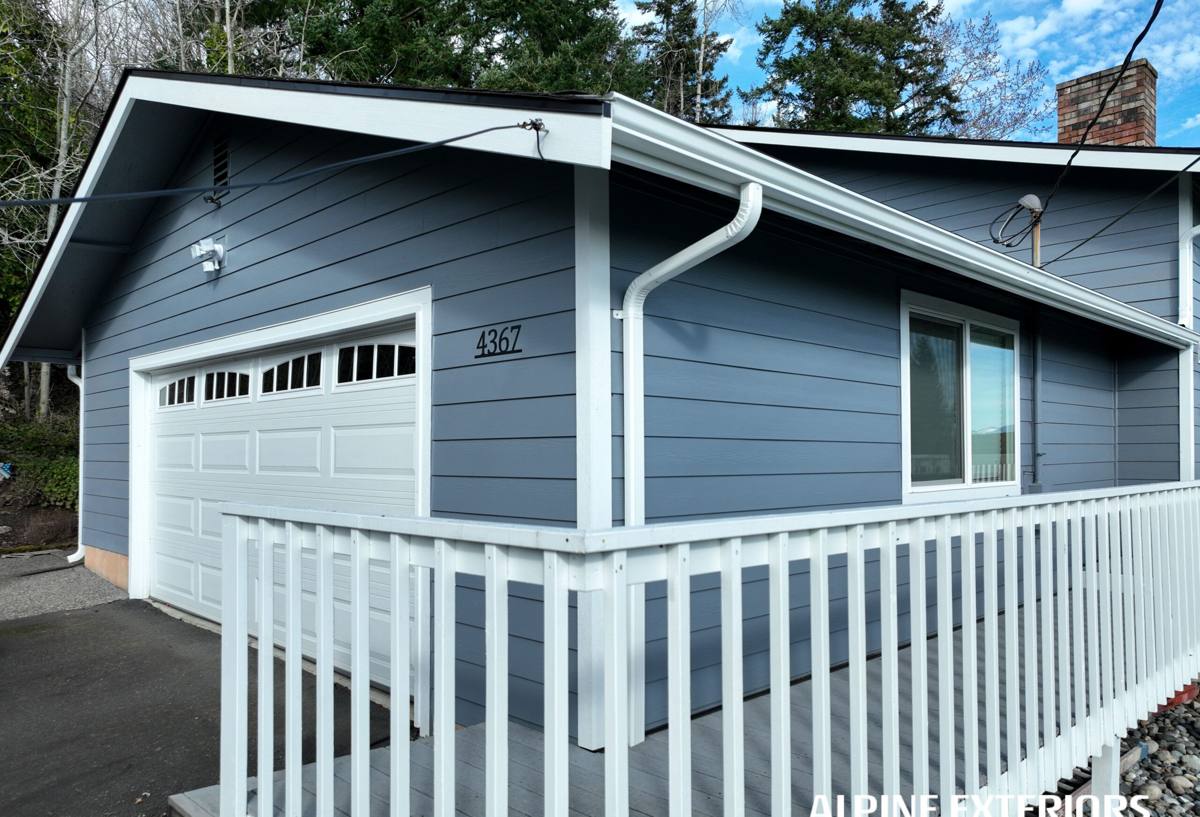
What Old Town Anacortes Homes Actually Need From a Shingle Roof
Salt Air and Metal Components
Salt air accelerates corrosion on anything metal — nails, flashing, vents, and drip edge. Standard electro-galvanized fasteners and flashing can start showing rust streaks and pinholing well before a shingle roof reaches the end of its expected life. In a coastal neighborhood like this one, we use corrosion-resistant fasteners and flashing metals rated for marine exposure rather than the minimum-spec hardware that's fine further inland.
Wind-Driven Rain and Water Path
Anacortes gets rain that doesn't just fall — it drives sideways under eaves, into valleys, and around penetrations. A shingle roof's actual water resistance comes less from the shingles themselves and more from what's underneath and around them: ice-and-water shield or high-quality synthetic underlayment at eaves and valleys, properly lapped flashing at every wall intersection and penetration, and shingle nailing that meets wind-rated installation patterns. Skip any of those details and wind-driven rain finds the gap.
Moss, Shade, and Moisture Retention
A lot of Old Town Anacortes has mature tree cover and homes positioned close together, which means shaded roof sections that stay damp long after the rest of the roof has dried. That's exactly where moss takes hold. Moss isn't just cosmetic — it holds moisture against the shingle surface, works its way under shingle edges, and can lift tabs enough to let water in. Zinc or copper strips near the ridge, decent attic ventilation, and periodic gentle cleaning all matter more here than in sunnier, drier neighborhoods.
What a Correct Asphalt Shingle Job Involves
A roof replacement is a system, not a stack of shingles. Every layer has a job:
- Tear-off and deck inspection: old roofing removed down to the deck so soft, rotted, or delaminated plywood/sheathing gets found and replaced before it's covered up again.
- Underlayment: synthetic underlayment across the field, with self-adhered ice-and-water shield at eaves, valleys, and any low-slope transitions — the details that matter most in a wind-driven-rain climate.
- Flashing: new step flashing at walls and chimneys, new valley metal where applicable, and new drip edge at eaves and rakes. Reusing old flashing is a common shortcut we won't take.
- Ventilation: balanced intake at the soffits and exhaust at the ridge or roof vents, sized to the attic, so moisture generated inside the house has somewhere to go instead of condensing on the underside of the deck.
- Shingle installation: correct nailing pattern and nail count for the wind exposure, proper starter strip at eaves and rakes, and manufacturer-spec exposure and offset so the shingle's own water-shedding design actually works.
- Penetration detailing: pipe boots, vent flashing, and any skylight curbs sealed and flashed individually, not just caulked over.
Any one of these done wrong shortens the roof's life regardless of which shingle brand or price tier you chose. The shingle is the visible part; the system underneath it is what actually keeps water out.
Choosing the Right Shingle for This Climate
Not every asphalt shingle line performs the same way in a coastal, moss-prone environment. We steer homeowners toward a few practical considerations rather than chasing the cheapest option or the flashiest one:
| Factor | Why It Matters Here |
|---|---|
| Algae/moss resistance rating | Shingles with copper-infused or algae-resistant granules hold up longer in the shaded, damp conditions common in Old Town Anacortes. |
| Wind rating | Coastal exposure calls for a shingle and nailing pattern rated for higher sustained wind and gusts off the water. |
| Warranty structure | Algae-resistance and wind warranties are often prorated or shorter than the base material warranty — worth reading before assuming full coverage. |
| Color and heat | Darker shingles run hotter and can affect attic temperature; lighter shades reflect more but show less contrast against moss growth. |
| Thickness/class | Heavier laminate/architectural shingles generally resist wind lift and impact better than 3-tab in exposed locations. |
We'll walk through these trade-offs with you specifically for your roof's exposure, tree cover, and slope — there isn't one universally "best" shingle, only the one that fits your house's actual conditions.
Our Process for an Old Town Anacortes Roof
1. On-Site Assessment
We look at the whole system, not just the shingles: deck condition where accessible, existing ventilation, flashing details at walls and penetrations, moss and staining patterns, and gutter/drainage performance around the roofline. Shade patterns from nearby trees factor into both moss risk and material choice.
2. Written Scope and Straight Numbers
You get a clear scope of work — what's being torn off, what underlayment and flashing are going in, what ventilation changes (if any) are planned, and which shingle line is being quoted. No vague "shingle and labor" line item standing in for the details that determine how long the roof lasts.
3. Tear-Off and Deck Repair
Full tear-off, deck inspected in daylight, any damaged sheathing replaced and documented before it's covered.
4. System Install
Underlayment, flashing, ventilation, and shingles installed in the sequence and to the spec outlined up front — not substituted mid-job without a conversation.
5. Cleanup and Walkthrough
Site cleaned, magnetic sweep for nails, and a walkthrough so you know what was done and what maintenance (if any) to expect going forward.
Maintenance That Actually Extends the Life of a Coastal Roof
- Keep gutters and downspouts clear so water isn't backing up under the shingle edge, especially during fall leaf drop and winter storms.
- Have moss growth addressed gently — soft washing or manual removal rather than pressure washing, which strips granules and shortens shingle life.
- Trim back overhanging branches where practical to reduce shade, debris buildup, and physical abrasion on the roof surface.
- Check attic ventilation isn't blocked by insulation or storage — poor airflow shows up as condensation and premature deck rot before it ever shows up as a leak.
- After major windstorms, a quick visual check (from the ground or gutter line) for lifted or missing shingles can catch small problems before they become deck damage.
Why Local Experience on This Specific Roof Type Matters
A crew that mostly works drier, inland roofs can still install a technically correct shingle roof — but "correct" changes when the site is exposed to salt air, wind-driven rain, and heavy shade. Fastener choice, flashing metal, underlayment coverage at valleys and eaves, and ventilation sizing all get adjusted for a coastal, moss-prone site like Old Town Anacortes. We build roofs in Anacortes and across Skagit County under these exact conditions, so those adjustments aren't an afterthought — they're the baseline spec we start from.
We also know what tends to go wrong on older Old Town homes specifically: roofs that have been re-covered once already without addressing underlying ventilation, additions where the roofline transitions were never properly flashed, and moss buildup that's been treated cosmetically instead of at the ventilation and shade source. Knowing where to look first saves time during the assessment and helps us give you an honest scope instead of a guess.
Get a Straight Answer About Your Roof
If you're weighing a shingle roof replacement or repair in Old Town Anacortes, we're glad to come take a look and tell you plainly what we see — including if a repair makes more sense than a full replacement right now. The estimate is free, there's no pressure, and you'll get a real scope of work, not a vague number. Use the form below to get started.