 Anacortes Exterior
 Board & Batten Siding Built for Oak Harbor's Weather
Oak Harbor sits right on the water, and that changes what siding has to survive. Salt-laden air moves off the strait and settles on everything, driving rain comes in sideways during winter storms, and shaded north walls stay damp long after the rest of the house has dried out. A board and batten profile — vertical boards with narrow strips covering the seams — is one of the most popular looks for homes in this area, but the look only holds up if the material underneath is chosen and installed with this climate in mind.
We install board and batten siding using James Hardie fiber cement exclusively. That's not a marketing preference — it's a decision built around what actually survives a Pacific Northwest coastal winter without turning into a maintenance project every spring.
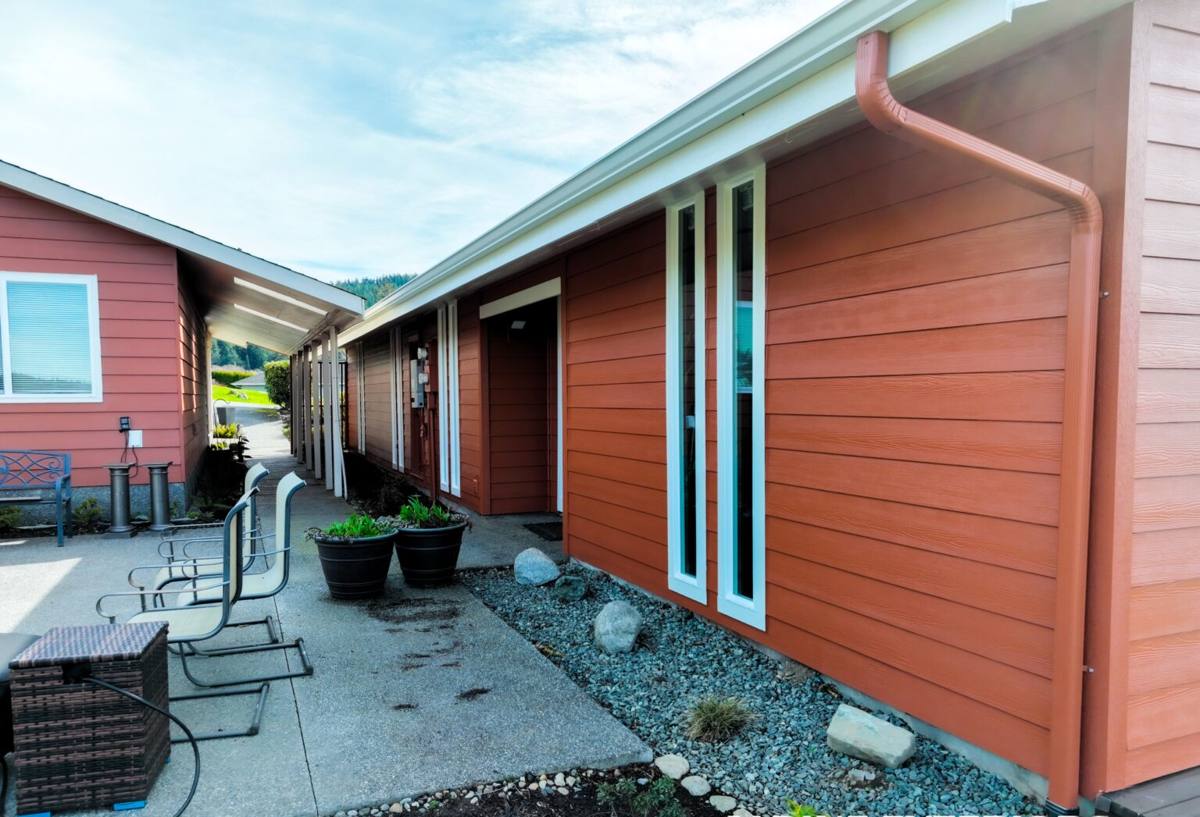
Why Board & Batten Specifically Struggles in Salt Air and Wet Climates
The board and batten profile is more exposed to weather than lap siding in a few specific ways. Vertical boards shed water differently than horizontal lap, and the seams where battens overlap the field boards are a common entry point for moisture if they're not detailed correctly. In a climate like Oak Harbor's — where rain rarely lets up for long and salt air accelerates corrosion of fasteners and finishes — those seams matter more than they would in a drier inland town.
What Salt Air Does Over Time
Airborne salt is mildly corrosive to exposed metal and can accelerate the breakdown of some paint finishes and less weather-resistant siding materials. It doesn't destroy a house in one season, but over ten or fifteen years it separates products that were engineered for coastal exposure from products that were not. This is one of the main reasons board and batten in wood or lower-grade composite materials tends to show wear faster in Oak Harbor than the same product would fifty miles inland.
What Constant Moisture Does to Vertical Seams
Vertical siding profiles have more seam length running top to bottom than lap siding does, and those seams need to be flashed and caulked correctly at every stage — not just at installation, but maintained over the life of the siding. Skip a step, use the wrong sealant, or let caulk fail without follow-up, and water tracks behind the boards. On a shaded, damp wall that never fully dries, that's where rot and mold start.
Why We Use James Hardie for Board and Batten in This Climate
James Hardie fiber cement is engineered specifically to resist moisture absorption, which is the core issue in a climate like Skagit and Island County's. It doesn't swell, warp, or rot the way wood-based products can when they take on repeated moisture. It's also non-combustible, which matters increasingly for insurance considerations even in a historically wet region. And Hardie's ColorPlus factory finish is baked on and warranted against fading and peeling — a real advantage on homes that face direct salt spray and sun off the water, where field-applied paint tends to fail first.
Hardie's HZ5 product line is engineered for climates with more moisture exposure and freeze-thaw cycling, which fits the maritime conditions around Oak Harbor better than a general-purpose product line would. We spec the right HZ variant for the specific site — orientation to the water, sun exposure, and how sheltered or exposed the wall is all factor into that call.
What a Correct Board & Batten Install Actually Involves
Board and batten looks simple from the ground, but a correct installation has more steps than most homeowners expect, and skipping any one of them is where problems start.
- Removal of old siding down to the sheathing, with the sheathing inspected for existing rot or moisture damage before anything new goes up
- A weather-resistant barrier installed correctly, lapped and sealed at every seam and penetration
- Proper flashing at windows, doors, and any roof-to-wall intersections — this is where most siding failures actually originate, not in the field of the wall
- Correct fastener spacing and placement per Hardie's engineering specs, not a generalized "close enough" pattern
- Battens installed with consistent spacing and proper fastening into structural framing, not just into the field boards
- Caulking and sealant at seams using products rated for the exposure level of that specific wall
- Factory-finished ColorPlus boards handled and cut with the correct blades to avoid chipping the finish
Every one of those steps is more consequential on a home facing open water than on a sheltered inland lot, because the margin for error in a wet, salty climate is smaller.
Board & Batten vs. Other Siding Profiles for Oak Harbor Homes
Homeowners often ask why board and batten costs what it does compared to lap siding, or whether it's the right call for a waterfront or near-waterfront property at all. Here's how the common options compare for this specific setting.
| Factor | Board & Batten (Hardie) | Lap Siding (Hardie) | Wood Board & Batten |
|---|---|---|---|
| Moisture resistance | Strong when detailed correctly | Strong, fewer vertical seams | Requires ongoing maintenance |
| Salt air durability | Excellent — factory finish | Excellent — factory finish | Finish degrades faster near water |
| Installation complexity | Higher — more seams and flashing details | Moderate | Higher, plus ongoing refinishing |
| Long-term upkeep | Low — periodic caulk inspection | Low | Regular repainting and sealing |
| Typical look | Modern farmhouse, craftsman accents | Traditional, most common | Rustic, natural |
Board and batten isn't a compromise choice — it's a legitimate, popular profile for this region, particularly as an accent on gables and entry features, or as full siding on craftsman and modern farmhouse-style homes. It just requires a crew that treats the extra seam work as non-negotiable, not optional.
Our Process for Oak Harbor Board & Batten Projects
We approach board and batten jobs in this area the same way every time, because the steps that get skipped are the steps that cause callbacks two winters later.
- On-site assessment — we look at wall orientation relative to the water, existing moisture or rot damage, and how exposed the home is to wind-driven rain
- Product and line selection — choosing the right Hardie HZ line and color for the specific exposure level of the home
- Tear-off and sheathing inspection — old siding comes off completely so we can see what's actually underneath, not guess at it
- Weather barrier and flashing — installed to manufacturer spec at every window, door, and transition
- Board and batten installation — fastened to spec with attention to seam sealing at every vertical joint
- Final inspection and cleanup — walking the job with the homeowner before we consider it done
Why Local Experience in Oak Harbor Matters
A crew that only occasionally works this stretch of the coast doesn't always know how much more attention a north-facing wall needs here compared to a south-facing one, or how differently a home right on the water behaves compared to one a mile inland. We work Anacortes, Oak Harbor, and the surrounding Skagit and Island County communities regularly, which means we've seen how board and batten holds up — and where it fails — in exactly this kind of maritime exposure. That experience shapes decisions like batten spacing, sealant selection, and which walls need extra flashing attention, before problems ever show up.
What to Expect for Cost
Board and batten with James Hardie generally costs somewhat more than standard lap siding, largely due to the added labor of the batten strips and the extra seam detailing required to do it correctly. Exact pricing depends on the size of the home, how much of the exterior gets the board and batten treatment versus lap or trim accents, and the condition of the sheathing once old siding comes off. We give straight, itemized estimates rather than vague ballpark numbers, because homeowners in this area deserve to know exactly what they're paying for and why.
A Few Signs Your Current Siding Needs Attention
Whether you already have board and batten or you're considering it for the first time, a few warning signs are worth acting on before they become bigger repairs:
- Soft or spongy spots when you press on the siding, especially near the bottom courses
- Visible gaps or cracking in caulk lines at seams and trim
- Paint or finish that's peeling or chalking faster on walls facing the water
- Dark streaking or persistent moss growth on shaded, north-facing walls
- Any bubbling or staining on interior walls that back up to exterior siding
None of these mean the whole house needs new siding immediately, but they're worth a professional look before the next wet season.
If you're weighing board and batten for a home in Oak Harbor or anywhere around Anacortes, we're glad to walk the property, look at your specific exposure, and give you a straight, no-pressure estimate — just fill out the form below.