 Anacortes Exterior
 Oak Harbor sits close enough to the water that its homes take a different kind of beating than houses twenty miles inland. Salt-laden air, wind-driven rain that finds its way sideways under eaves, and a long, damp moss season all work on window frames, sills, and seals year-round. If you've noticed swollen sashes, foggy glass, or a draft that wasn't there five years ago, it's usually not bad luck — it's the climate doing exactly what it does here. This page covers what window replacement actually involves for homes in this area, what separates a correct installation from a quick one, and what to look for in a contractor who understands the difference.
Why Windows Wear Differently in a Marine Climate
Wood, vinyl, and even aluminum all respond to sustained moisture exposure, but they respond in different ways and on different timelines. In Oak Harbor and the surrounding Anacortes area, three conditions do most of the damage:
- Salt air accelerates corrosion on hardware, hinges, and metal reinforcement inside vinyl frames, and it can pit or dull unprotected aluminum over time.
- Driving rain — rain pushed by wind rather than falling straight down — tests flashing and sealant details that a calm-weather installation might never expose.
- Extended moss and mildew season keeps exterior surfaces damp for longer stretches, which matters most where caulking has failed or where a sill doesn't shed water properly.
None of this means windows here fail faster than they should — it means the margin for a sloppy installation is smaller. A window that would perform fine for fifteen years in a dry inland climate can show problems in half that time here if it wasn't flashed and sealed correctly the first time.
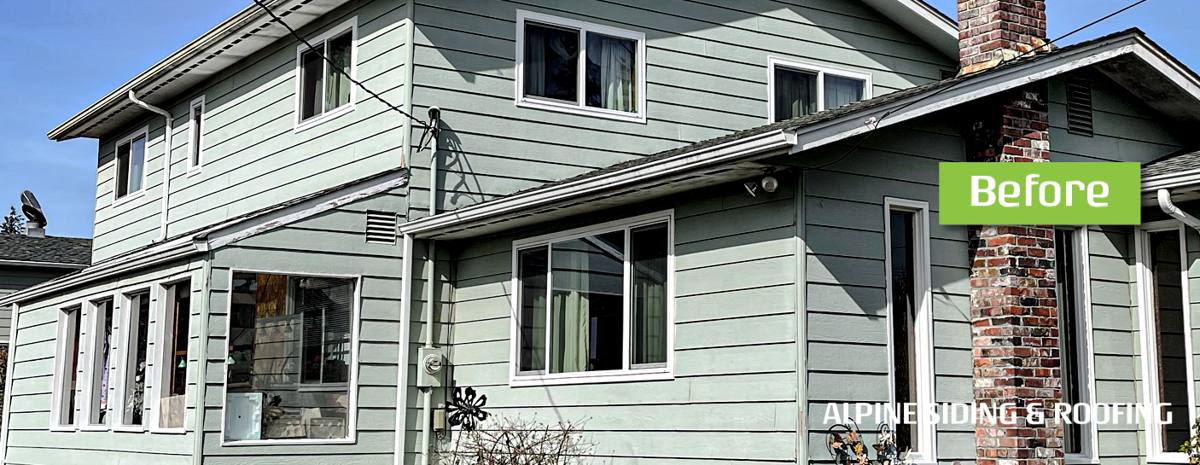
Signs an Oak Harbor Home Is Ready for Window Replacement
Replacement doesn't always announce itself with a cracked pane. More often it shows up as a slow accumulation of small annoyances that add up to real energy loss and, eventually, water intrusion into the wall itself. Before you call anyone, walk your home's exterior and check for these:
- Condensation or fogging between panes of double-glazed glass (a sign the seal has failed)
- Sashes that stick, won't stay open, or need force to latch
- Visible gaps around the frame where daylight or outside air is noticeable
- Soft or discolored wood on the sill, jamb, or exterior trim
- Paint that's peeling or bubbling near the window frame, especially on the side that takes the worst weather
- A noticeable draft or cold spot near the window in winter, or a room that's hard to keep comfortable
- Rising heating bills without any other obvious explanation
Any one of these can be a minor fix. Several at once, especially on windows original to the house, usually means replacement will cost less over time than another round of patch repairs.
What a Correct Window Replacement Job Actually Involves
Swapping the visible sash is the easy part. The work that determines whether a window performs well for the next twenty-plus years happens at the rough opening, and it's the part that's easiest to shortcut if a crew is moving fast.
Full-Frame vs. Insert Replacement
There are two basic approaches. An insert (or "pocket") replacement fits a new window into the existing frame, which is faster and less invasive — a reasonable option when the existing frame is still sound and square. A full-frame replacement removes the window down to the rough opening, which allows for a full inspection and repair of the sheathing, sill, and flashing underneath. On a home showing any signs of moisture damage, we won't recommend an insert just because it's quicker — if the framing underneath is compromised, covering it back up guarantees the same problem returns.
Flashing and Water Management
This is where driving rain either gets managed or gets in. A correct installation integrates flashing tape or a pan flashing at the sill so that any water that does reach the window is directed back out, not down into the wall cavity. The house wrap or building paper needs to be lapped correctly over the flashing — shingle-style, so water always runs down and over, never into a seam. Skipping or rushing this step is invisible on installation day and can take years to show up as rot, which is exactly why it matters more than almost anything else on the job.
Sealing and Insulation
Once the window is set, plumb, level, and square, the gap between the frame and the rough opening gets filled with low-expansion foam or backer rod and sealant — never packed tight with standard spray foam, which can bow a vinyl frame and cause it to bind. Exterior caulking at the trim is the last line of defense against wind-driven rain and should be a product rated for the temperature swings and UV exposure of this climate, not whatever tube happened to be in the truck.
Choosing Materials That Hold Up Near the Water
Every frame material has trade-offs. None of them are wrong choices in every case — the right pick depends on the home's exposure, style, and your maintenance tolerance.
| Frame Material | Coastal Performance | Maintenance | Best Fit |
|---|---|---|---|
| Vinyl | Good — won't rot or corrode; check hardware quality on lower-end lines | Low | Most homes prioritizing value and low upkeep |
| Fiberglass | Very good — dimensionally stable in temperature swings, resists moisture well | Low | Homes with heavy sun/rain exposure or larger window sizes |
| Wood | Requires diligent upkeep — beautiful but vulnerable to prolonged dampness | High | Character homes where appearance is the priority and upkeep is expected |
| Wood-clad (wood interior, metal/vinyl exterior) | Good — exterior shell shields the wood from weather | Moderate | Homeowners wanting a wood interior look without full wood maintenance |
| Aluminum | Fair — prone to corrosion and condensation in salt air unless thermally broken | Low to moderate | Limited residential use; better suited to specific architectural needs |
Glass matters as much as frame material. In this climate, we generally recommend double-pane units with a low-E coating and an argon or krypton gas fill, matched to the orientation of the wall — south and west-facing windows benefit from a different coating profile than north-facing ones. We'll walk through the specific glass package that fits your home rather than defaulting to whatever's cheapest to stock.
Our Process, Start to Finish
- On-site assessment — we look at every window being considered, check the condition of the surrounding trim and sill, and note any signs of existing moisture damage before quoting anything.
- Honest recommendation — insert vs. full-frame, frame material, and glass package, explained in plain terms with the reasoning behind each option.
- Written estimate — a clear scope of work so you know exactly what's being done, not just a total price.
- Careful removal — old windows come out without unnecessary damage to interior trim or exterior siding.
- Inspection and repair of the opening — any soft framing, damaged sheathing, or failed flashing found underneath gets addressed before the new window goes in, not painted over.
- Installation — set plumb, level, and square, flashed and sealed to shed water correctly.
- Interior and exterior finish work — trim, caulking, and cleanup so the job looks finished, not just functional.
- Final walkthrough — we test operation on every window before we consider the job done.
Energy Efficiency and Comfort
Old, leaky windows are one of the more noticeable places heat escapes in winter and heat gains in summer. Replacing failed seals and adding a proper low-E glass package typically shows up as a more even indoor temperature room to room, less condensation on the glass during cold snaps, and a modest but real reduction in heating costs. We won't promise a specific percentage savings, since that depends on your home's insulation, orientation, and how many windows are being replaced — but comfort improvements are usually noticeable within the first cold week after installation.
Why Local Installation Experience Matters Here
Window replacement is one of those jobs that looks similar everywhere on paper and performs very differently depending on where it's done. A crew that mostly works drier inland climates can get away with installation habits that don't hold up against sustained wind-driven rain. Working regularly in and around Anacortes and Skagit County means we're flashing and sealing for the actual weather this area sees — not a generic installation spec written for somewhere else. It also means we're familiar with the mix of older homes and newer construction common to this area, and we adjust the approach for each rather than treating every rough opening the same way.
What to Ask Before Hiring Anyone
- Do they inspect the rough opening, or just swap the sash?
- Do they explain flashing and water management, or skip straight to product brochures?
- Is the estimate a detailed scope of work, or a single lump-sum number?
- Do they carry proper licensing and insurance for exterior work in Washington?
- Will they walk you through material trade-offs honestly, including the downsides?
A contractor who can answer all of that clearly, without hedging, is one worth trusting with a job that's largely invisible once it's finished — which is exactly why it needs to be done right the first time.
If your Oak Harbor home has windows showing any of the wear signs above, we're happy to take a look and give you a straightforward, no-pressure estimate. Use the form below to get started.