 Anacortes Exterior
 New-Construction Windows Built for Skyline's Exposure
Skyline sits up on Fidalgo Island with open views and open exposure to go with them. That's the appeal of the location, but it's also exactly why new-construction windows here need more thought than a standard interior-lot build. Wind off the water, salt-laden air, and long stretches of driving rain all put extra load on window units, frames, and flashing before the home is even a year old. Building it right the first time matters more in a spot like this than almost anywhere else in Anacortes.
We install new-construction windows for builders and homeowners working on Skyline lots, and we treat the flashing, frame selection, and glass package as three separate decisions — not one bundled "pick a window" conversation. Each of those choices behaves differently once salt air and Skagit County's wet season get to work on it.
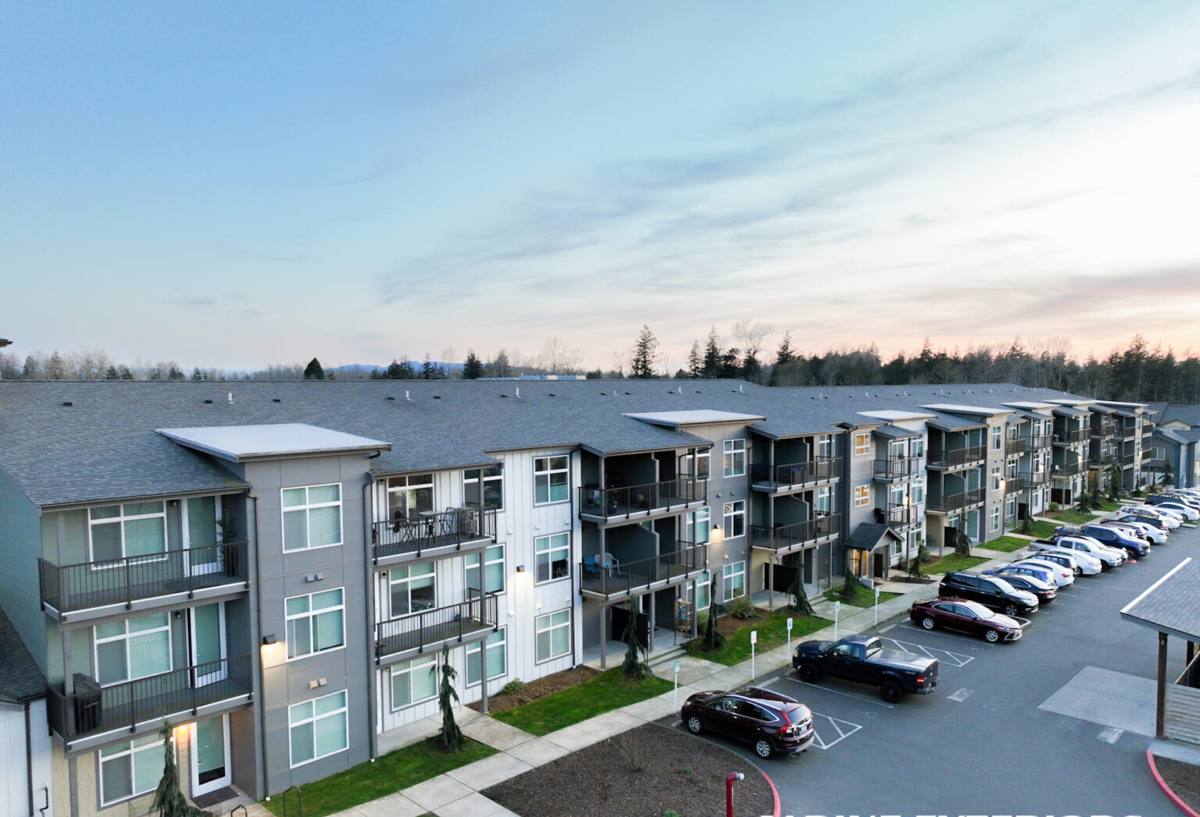
What Skyline's Climate Does to Windows Over Time
Salt Air and Metal Components
Homes with a water-facing exposure take in airborne salt even when they're not right on the shoreline. Over years, that salt attacks unprotected metal — hardware, screen frames, and especially cheap fasteners used in trim and flashing. It's slow, so it doesn't show up on a walkthrough a year after move-in, but it's the kind of thing that turns into a corroded lock mechanism or a rust-streaked sill a decade later. The fix isn't complicated: use corrosion-resistant fasteners and hardware from the start, and don't let anyone talk you into standard-grade hardware to save a few dollars on a Skyline build.
Driving Rain and Water Intrusion
Anacortes gets rain that comes in sideways, not just straight down, especially on exposed lots with a clear wind path off the water. A window that's watertight in a calm rain can still leak under wind-driven rain if the flashing details around it weren't built for that condition. On new construction, this is entirely preventable — it's a sequencing and detailing issue, not a window-quality issue. Get the flashing wrong on a new build and you're chasing a hidden leak inside the wall assembly years later, which is a far more expensive fix than doing it correctly during framing.
Moss, Mildew, and a Long Damp Season
Skagit County's wet season runs long, and anywhere shaded or slow to dry stays damp for extended stretches. That doesn't just grow moss on rooflines — it also feeds mildew growth in window tracks, weep holes, and sill areas that don't drain and dry properly. Weep holes that are undersized, blocked by trim, or angled wrong will hold water against the sill all winter. On a new build, getting drainage paths right from day one avoids years of homeowners fighting black mildew streaks on the interior sill.
What a Correct New-Construction Installation Actually Involves
Flashing and Water Management
New-construction installation means the window goes in before the siding, which is the whole advantage over a retrofit — you get full access to integrate the window into the wall's water management system properly. That means a sill pan to catch and direct any water that gets past the window, correctly lapped flashing tape at the jambs and head so water sheds outward and down, and a head flashing detail that kicks water away from the top of the window rather than letting it run down the face. Done in the right order, this system works with the housewrap and siding rather than against it.
Frame Material and Air Sealing
The frame material has to hold up to sun, salt air, and moisture cycling without warping, and the gap between the rough opening and the window frame needs continuous air sealing — not just insulation stuffed in loosely, which settles and leaves gaps over time. On an exposed Skyline lot, a poorly sealed rough opening shows up as a cold draft near the window and a higher heating bill every winter after.
Choosing Window Specs for a Skyline Build
There's no single "best" window — the right choice depends on exposure, budget, and how much upkeep the owner wants to take on. Here's how the common options stack up for a water-exposed Anacortes lot:
| Frame Type | Salt Air Durability | Maintenance | Typical Fit for Skyline |
|---|---|---|---|
| Vinyl | Good — won't corrode or rot | Low; occasional cleaning | Solid value option for most exposures |
| Fiberglass | Very good — dimensionally stable in temperature swings | Low | Strong choice for full-exposure, west/water-facing walls |
| Wood-clad | Depends heavily on cladding integrity and detailing | Higher — cladding seams and any exposed wood need monitoring | Works with disciplined maintenance; riskier on high-exposure walls |
| Aluminum | Poor without thermal break and coating upkeep | Moderate to high near salt air | Generally not our first recommendation on water-facing Skyline lots |
Glass package matters as much as the frame. On Skyline lots facing open water or prevailing wind, we generally steer builders toward a double-pane, low-E glass package rated for higher wind-load exposure, with attention to the seal quality between panes — a failed seal shows up years later as fogging between the glass, and it's not repairable without replacing the sash or unit.
Our Installation Process
- Site and plan review — we look at the wall orientation, exposure, and rough opening sizes against the actual window specs before anything is ordered.
- Sequencing with the builder — new-construction installation has to land at the right point in the framing schedule, after the rough opening is set and before siding closes it in.
- Sill pan and flashing installation — built and lapped in the correct order so water always sheds outward, never trapped behind the siding.
- Window set and shim — units are set plumb, level, and square, with proper shimming so the frame isn't stressed and sashes operate correctly for the life of the window.
- Air sealing and insulation — the gap between frame and rough opening is sealed continuously, not just packed loosely.
- Final check — operation, weep hole clearance, and flashing lap are verified before the wall closes up.
Common Mistakes We See in New Builds
Most window problems on new construction trace back to a handful of repeat issues, and they're almost always sequencing or detailing mistakes rather than a bad window unit itself:
- Flashing tape applied out of order, so water runs behind it instead of over it
- No sill pan, or a sill pan that isn't sloped to drain outward
- Weep holes blocked by trim, caulk, or debris left in during construction
- Loose-pack insulation used instead of continuous air sealing around the frame
- Standard-grade hardware and fasteners used on a salt-air-exposed wall
- Window schedule mismatched to actual wall orientation and wind exposure
Every one of these is preventable with the right sequence and the right materials — none of them require an exotic fix, just doing it correctly the first time.
A Practical Checklist If You're Building on Skyline
- Confirm your window schedule accounts for exposure differences wall by wall, not a single spec for the whole house
- Ask whether sill pans are included at every window opening, not just the most exposed ones
- Confirm flashing tape and housewrap integration is planned before framing is closed in
- Choose corrosion-resistant hardware and fasteners on any water-facing or wind-exposed elevation
- Get the glass package spec in writing, including seal warranty terms
- Walk the rough openings with your installer before windows are set, not after
Why a Crew That Already Works Skyline Matters
Anacortes as a whole deals with marine exposure, but Skyline's mix of elevation, open sightlines, and water-facing walls means the wind and rain patterns aren't identical to a sheltered lot a mile inland. A crew that's already worked builds in this neighborhood knows which elevations typically need the extra flashing detail, which exposures call for a heavier glass package, and how the local wind pattern tends to drive rain into specific wall faces. That's not something you get from a general spec sheet — it's built from having stood on enough Skyline framing sites to see how water actually moves across these homes.
After Installation: What Skyline Owners Should Keep Up With
New-construction windows installed correctly need very little from the homeowner, but a couple of habits go a long way in this climate. Rinse salt film off exterior frames and hardware a few times a year, especially on water-facing sides. Keep an eye on weep holes at the base of each window and clear any debris that collects, particularly during the wet months when moss and organic buildup happen fastest. Beyond that, a properly flashed, properly sealed window shouldn't need attention beyond normal cleaning for many years.
If you're building on Skyline and want a straight answer on window specs, flashing details, or scheduling with your builder, we're happy to walk the site and put together a free, no-pressure estimate.