 Anacortes Exterior
 Windows in the Skyline Area Take a Different Kind of Beating
Homes in the Skyline area of Anacortes sit up on Fidalgo Island, which means they catch more wind and more salt-laden air than a house tucked inland in the Skagit Valley. That combination is hard on windows in ways that aren't always obvious until a frame starts failing from the inside out. Salt air accelerates corrosion on hardware, screws, and metal components. Wind-driven rain finds any gap in flashing or sealant and pushes water sideways and upward, not just down. And the long, damp Pacific Northwest moss season keeps sills, tracks, and exterior trim wet for weeks at a stretch, which is exactly the environment mold and wood rot need to get established.
None of this means windows in Skyline fail faster than everywhere else in Skagit County by some fixed amount — it means they fail differently, and a replacement job that doesn't account for that will show problems again within a few years. We've built our process around the specific exposure this part of Anacortes gets, not a generic install.
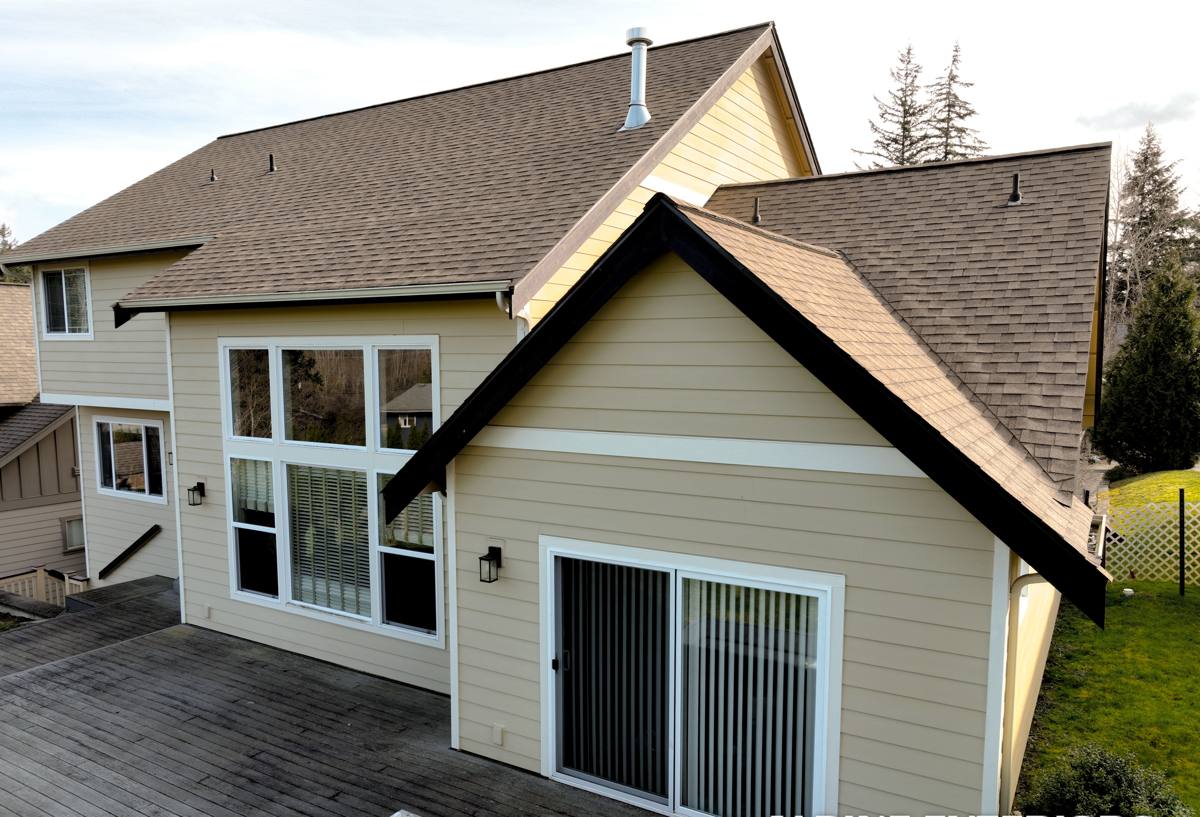
What Actually Wears Out on a Skyline Home's Windows
Before recommending replacement, it helps to know what's actually breaking down and why. The failure points we see most often on homes in this area include:
- Corroded hardware — locks, hinges, and balance mechanisms pitting or seizing from salt exposure, even when the glass and frame still look fine
- Failed seals on double-pane glass — fogging or moisture between the panes, usually from age combined with constant temperature and humidity swings off the water
- Wood rot at sills and jambs — especially on older wood-framed windows where paint or cladding has worn thin and moss or algae has been sitting against the wood
- Soft or cracked exterior caulking — UV and salt air break down cheaper sealants faster than they do inland, leaving gaps that wind-driven rain can exploit
- Warped vinyl frames — lower-grade vinyl can flex and bow under repeated wet-dry cycling and temperature swings, which throws off the seal around the sash
Any one of these can usually be patched. When several show up together, or when a window is original to an older home, replacement is almost always the better long-term value than another round of caulk and touch-up.
What a Correct Installation Involves
Window replacement is one of those jobs that looks simple from the outside and isn't. The window itself is only part of the story — how it's tied into the wall assembly is what determines whether it holds up through another twenty Anacortes winters.
Flashing and Water Management
Every window opening needs a sill pan and properly lapped flashing so that any water that gets past the exterior trim drains back out instead of sitting against the framing. This matters more here than in a drier climate, because wind-driven rain doesn't just run down a wall — it can be pushed sideways and even slightly upward under enough pressure. Flashing tape and sill pans have to be installed in the right order, lapped correctly with the weather-resistant barrier, so water always has a way out and never a way in.
Sealing Without Trapping Moisture
It's tempting to just caulk everything solid and call it weathertight, but that can trap moisture inside the wall cavity instead of keeping it out. Correct sealing uses the right products in the right places — sealant where it needs to be permanently watertight, and backer rod or drainage gaps where the assembly needs to breathe and drain. Getting this wrong is one of the most common reasons a "new" window ends up with rot behind the trim a few years later.
Shimming and Squaring
A window that isn't shimmed square will bind, won't lock tightly, and will wear unevenly at the weatherstripping — which then lets in exactly the kind of driving rain this area gets. Taking the time to properly square and shim every unit, rather than just fastening it to whatever the rough opening allows, is basic but frequently rushed.
Choosing Materials That Make Sense for This Climate
There's no single "best" window material for every home — it depends on budget, the home's age and style, and how much upkeep an owner wants to take on. For a coastal Skagit County property, here's how the common options generally compare:
| Material | Coastal / Salt Air Performance | Maintenance | Typical Trade-off |
|---|---|---|---|
| Vinyl | Good — won't rust or rot, handles moisture well | Low | Frame can flex over time if it's a thinner, lower-grade profile |
| Fiberglass | Very good — dimensionally stable, resists warping in temperature swings | Low | Higher upfront cost than vinyl |
| Wood (unclad) | Poor without diligent upkeep — most exposed to rot and moss in this climate | High | Classic look, but demands regular repainting and sealing |
| Wood-clad (vinyl or aluminum exterior) | Good — exterior shell protects the wood core | Moderate | Interior wood still needs occasional attention |
| Aluminum | Fair — conducts cold and can corrode without a marine-grade finish | Low | Less common for residential; better suited to specific architectural styles |
We generally steer homeowners in this area away from bare, unclad wood exteriors unless they genuinely want the look and are committed to the maintenance schedule that goes with it. It's not that wood is a bad product — it's that in a salt-air, high-moisture environment, an unprotected wood exterior asks for more upkeep than most people realize they're signing up for. Vinyl and fiberglass, by contrast, are built to shrug off exactly the conditions this stretch of Fidalgo Island produces.
Glass Packages Matter as Much as the Frame
The frame gets most of the attention, but the glass package affects comfort, condensation, and energy bills just as much. A few things worth understanding before you pick one:
- Low-E coatings reduce heat loss in winter and heat gain in summer — a real benefit given how much overcast, low-angle sun this region gets
- Argon or krypton gas fill between panes improves insulation value, which helps with both comfort and reducing interior condensation on cold, damp days
- Double vs. triple pane — double-pane with a good Low-E coating is sufficient for most homes here; triple-pane adds cost and weight but can be worth it on a north-facing or particularly wind-exposed wall
- Warm-edge spacers between the panes reduce the cold-spot effect at the glass edge, which is where condensation and eventual seal failure usually start
Signs a Skyline Home Is Ready for Replacement
Not every issue means full replacement — sometimes a window just needs new weatherstripping or a re-caulk. Here's a practical way to tell which situation you're in:
- Fogging or a visible film between the panes that won't clean off — the seal has failed and can't be repaired
- Visible daylight or a draft you can feel around the frame when it's windy
- Soft, spongy, or discolored wood at the sill or jamb
- Windows that are difficult to open, close, or lock, especially after damp weather
- Condensation forming on the inside of the glass regularly, not just on the coldest mornings
- Visible corrosion or pitting on hardware, locks, or hinges
- Noticeably higher heating costs compared to similar-sized homes nearby
If you're seeing two or three of these at once, it's usually a sign the window has reached the end of its useful life rather than needing another repair.
Our Process, Start to Finish
We keep the process straightforward and try to minimize disruption to the home:
- On-site assessment — we look at each window's condition, the framing behind it, and how exposed that side of the house is to wind and rain
- Honest recommendation — repair where it makes sense, replace where it doesn't; we're not trying to sell a full-house job when three windows would do
- Material and glass selection — matched to the home's exposure, style, and your budget, not a one-size-fits-all package
- Proper removal — checking framing for hidden rot or water damage before the new unit ever goes in
- Correct installation — flashing, sill pans, shimming, and sealing done in the right order, not shortcuts
- Cleanup and walkthrough — job site left clean, and we go over how the new windows operate and what maintenance, if any, they'll need
What Affects the Cost
Every home is different, but the main variables that move the price on a window replacement job are consistent:
| Factor | Why It Matters |
|---|---|
| Number and size of windows | Larger or custom-sized openings cost more in both materials and labor |
| Frame material | Vinyl is generally the most economical; fiberglass and clad-wood cost more upfront |
| Glass package | Triple-pane, upgraded Low-E coatings, and gas fills add cost but also long-term performance |
| Condition of existing framing | Rot or water damage found during removal adds repair work before the new window can go in |
| Access and site conditions | Second-story or hard-to-reach windows take more time and equipment |
| Trim and finish work | Matching existing interior or exterior trim adds labor beyond the window unit itself |
We give straight, itemized estimates so you can see exactly what's driving the number, not a lump-sum figure with no explanation behind it.
Why It Matters That We Already Work in Skyline
A crew that's already worked homes in this part of Anacortes knows what to expect before the first window comes out — which walls take the worst of the wind, how the local moss and moisture cycle affects sills and trim, and what a correctly weathered installation actually needs to hold up here versus somewhere more sheltered. That's different from a crew that installs the same way in every zip code regardless of exposure. We also know the practical side: what the City of Anacortes and Skagit County expect for permitting on window replacement, and how to keep a job moving without surprises on that front. Familiarity with the neighborhood also just makes the job smoother — fewer guesses about site access, parking, and the small logistics that either make a project easy or drag it out.
If your windows are original, drafty, fogged, or just tired of fighting the salt air and rain off the water, we're glad to come take a look. The estimate is free, there's no pressure, and you'll get a straight answer about whether you need full replacement or just a targeted repair — use the form below to get started.