 Anacortes Exterior
 Cap Sante's Exposure: What This Location Does to a Roof
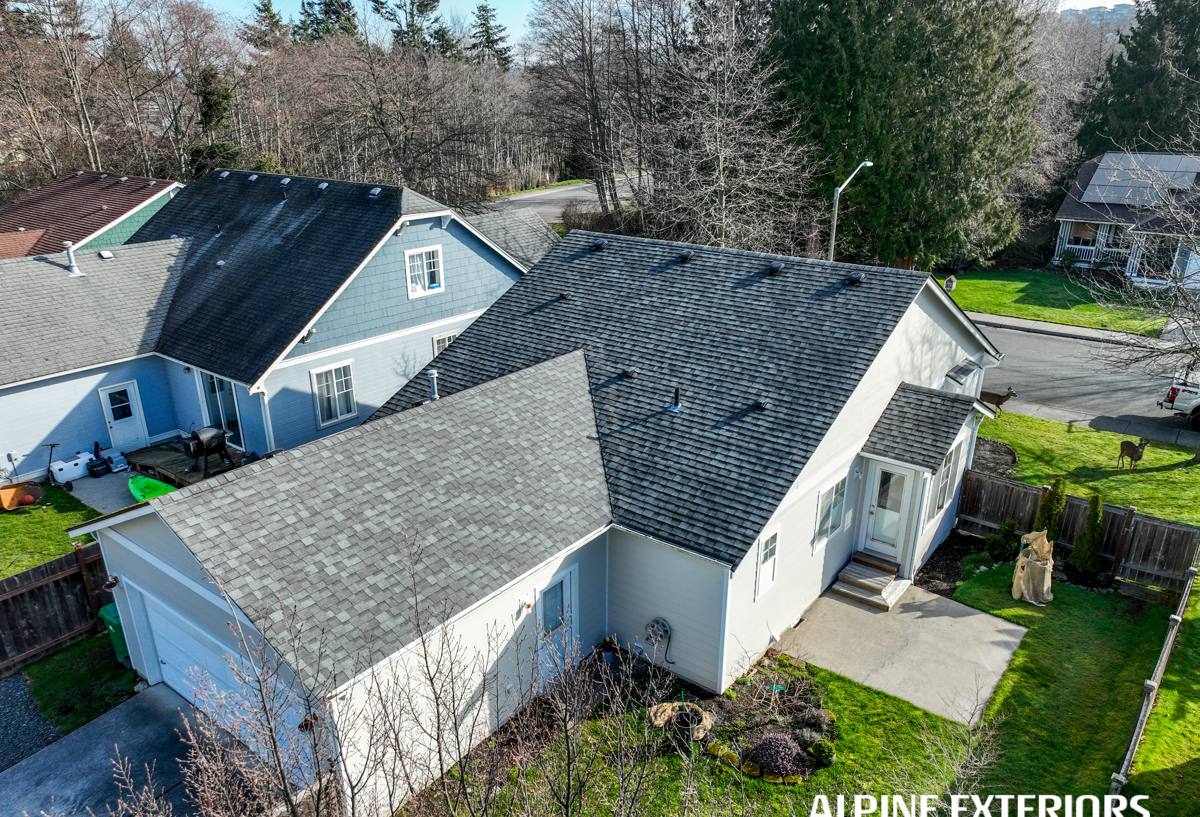
Cap Sante sits up above the marina and waterfront on the edge of Anacortes, and that position comes with more direct exposure than most homes tucked farther into town get. Roofs up here catch salt-laden air coming off the water, wind that pushes rain sideways instead of letting it fall straight down, and a damp Skagit County climate that gives moss and algae months at a stretch to take hold on any surface that stays shaded or slow to dry. None of those three things is unique to this one spot — they show up across our whole service area — but the combination and the intensity of it are what set an elevated, near-water lot apart from a roof half a mile inland with more shelter from terrain or tree cover.
That matters for roofing decisions because a roof that would hold up fine on a sheltered inland lot can wear noticeably faster here, especially if it wasn't detailed with salt exposure and wind-driven rain in mind. It's not that Cap Sante needs an exotic solution — it's that the ordinary mistakes cost more here, faster.
What We Typically See on Cap Sante Roof Inspections
- Rust bleeding from fasteners, flashing, or vent boots that weren't rated for salt exposure
- Moss holding moisture on shaded, north-facing roof slopes
- Lifted or curling shingle edges where wind has worked its way underneath
- Pitting or early corrosion on older metal roofing installed with the wrong fastener or coating combination
- Water staining near valleys and roof-to-wall transitions where wind-driven rain overwhelmed the flashing
Why Metal Roofing Makes Sense on an Exposed Lot Like This
Metal roofing has a real advantage on a site like Cap Sante: its smooth, non-porous surface sheds water fast and doesn't give moss and algae the foothold that a shingle's textured surface does. Properly fastened, a metal roof also handles wind uplift better than most shingle systems, which matters on a lot that takes wind more directly than an inland property. And because a well-installed metal roof can last decades longer than asphalt shingles, you're not putting a roof deck through a tear-off and re-install nearly as often — every re-roof is itself a moment of risk, since the deck is exposed to weather until the new roofing goes on.
That said, metal isn't a magic fix, and we won't pretend it is. It costs more upfront than asphalt shingles, it looks different, and it's less forgiving of installation shortcuts — thermal expansion, fastener choice, and flashing details all matter more with metal than with a shingle roof, where a lot of small imperfections just get absorbed by the overlapping layers. On an exposed, salt-air lot, doing metal roofing correctly is worth more than usual, and doing it poorly costs more than usual too.
Choosing the Right Metal for a Marine Environment
Not all metal roofing is built the same, and the material choice matters more here than it would on a sheltered inland roof. The main options homeowners weigh are coated steel, aluminum, and occasionally copper, and each behaves differently once salt air and moisture are part of the equation.
| Material | Corrosion Resistance Near Salt Air | Weight | Fit for Cap Sante |
|---|---|---|---|
| Galvalume-coated steel | Good, provided the coating and cut edges are properly treated | Moderate | Common, cost-effective choice when detailing is done right |
| Aluminum | Naturally corrosion-resistant, doesn't rely on a coating to hold up | Light | Strong fit for direct salt exposure with no rust risk |
| Galvanized (zinc-coated) steel | Weaker than Galvalume under sustained salt exposure | Moderate | Workable on sheltered inland roofs, less ideal on an exposed Cap Sante slope |
| Copper | Excellent — develops a protective patina over time | Moderate | Premium option, mainly chosen for appearance and longevity rather than cost |
Fasteners and flashing matter just as much as the panel itself. Mixing incompatible metals — say, steel fasteners on an aluminum panel, or the wrong flashing alloy at a valley — sets up galvanic corrosion, where the two metals react against each other and one of them degrades faster than it should. We match fastener and flashing material to the panel, not to whatever happens to be on the shelf, which is a detail that's easy to skip and expensive to fix later.
Panel Style: Standing Seam vs. Exposed Fastener
Beyond material, the panel style is the other major decision, and it has a bigger effect on long-term performance in this climate than most homeowners expect.
Standing Seam
Standing seam panels interlock at raised seams, and the fasteners are concealed underneath — they never penetrate the exposed face of the panel. Hidden clips let the panel expand and contract with temperature changes without stressing the fastener, which is exactly the kind of detail that matters on a roof taking regular wind-driven rain. It costs more than exposed-fastener panel systems, but it's the more weather-tight option and the one we lean toward recommending for exposed, near-water roofs.
Exposed Fastener
Exposed-fastener (corrugated or ribbed) panels are fastened directly through the face of the panel. It's a lower-cost system and a reasonable choice on a lot of roofs, but every one of those fastener penetrations is a potential point of water intrusion or corrosion over time, and the washers and seals around them need to be in good shape for the life of the roof. On a sheltered inland roof that's a manageable trade-off. On a roof taking direct salt air and wind-driven rain, it's a maintenance item you'll want to stay ahead of.
What a Correct Metal Roof Installation Involves
The panels get most of the attention, but what happens underneath them determines whether the roof actually performs the way it's supposed to. On every metal roofing job, that means:
- Inspecting and repairing the roof deck before anything goes down — old leaks and long-term moss retention often cause rot that isn't visible until the old roofing comes off
- Installing underlayment rated for sustained moisture exposure, with ice-and-water shield at eaves, valleys, and around penetrations
- Providing proper attic and roof deck ventilation, since a metal roof that can't breathe traps condensation underneath the panels and shortens the life of the deck
- Setting a fastening pattern that accounts for the actual wind exposure of an elevated, near-water lot, not just code minimums
- Flashing every valley, vent, chimney, and roof-to-wall transition with correctly lapped, sealed, and metal-matched materials
- Allowing for panel expansion and contraction — clip systems for standing seam rather than fixed fasteners that fight the metal's natural movement
Our Process for a Cap Sante Metal Roofing Job
- A walk-around inspection of the existing roof, noting condition, exposure, and any signs of moisture damage or moss buildup
- An honest assessment of the roof deck's condition and whether repair will be needed once the old roofing comes off
- A conversation about material and panel style, with real trade-offs explained rather than a single default pushed on every job
- A written scope and estimate, with no pressure to sign on the spot
- Tear-off and any necessary deck repair, done before new underlayment goes down
- Underlayment, ice-and-water shield, and flashing installed at every valley, penetration, and transition
- Panel installation with a fastening and clip approach matched to the site's actual wind and moisture exposure
- Final cleanup and a walkthrough so you know exactly what was done and why
Living With a Metal Roof in This Climate
A correctly installed metal roof is low-maintenance, not no-maintenance. Keeping debris out of valleys and off the roof surface helps water keep moving the way it's supposed to. An occasional rinse to clear off accumulated salt residue is worth doing on a lot this close to the water. Sealant at penetrations — vent boots, pipe collars, anywhere something interrupts the panel — should get a visual check periodically, since sealant is the one component on a metal roof with a shorter service life than the panels themselves. And if you ever add anything to the roof — a satellite mount, solar equipment, a vent — make sure whoever installs it uses fasteners and flashing compatible with the existing panel material, so you don't introduce a corrosion problem into an otherwise sound roof.
Cost Factors to Understand
Metal roofing costs more upfront than asphalt shingles, and the final number depends on more than just square footage. These are the factors that move the price most on a job like this:
| Factor | How It Affects Cost | Why It Matters More on Cap Sante |
|---|---|---|
| Panel material | Aluminum and copper cost more than coated steel | Direct salt exposure makes the corrosion-resistance upgrade worth weighing seriously |
| Panel style | Standing seam costs more per square than exposed fastener | Concealed fasteners hold up better against sustained wind-driven rain |
| Roof complexity | More valleys, penetrations, and transitions add labor | These are the spots wind-driven rain finds first on an exposed lot |
| Deck condition | Rot or moisture damage found at tear-off adds repair cost | Roofs with a history of moss or slow leaks are more likely to need deck work |
| Tear-off vs. overlay | Full tear-off costs more than overlaying existing roofing | We don't recommend overlaying metal onto a deck with unresolved moisture issues |
The upfront cost gap between metal and asphalt shingles is real, but it's worth weighing against a metal roof's longer service life and lower long-term maintenance, especially on a lot that's harder on roofing materials to begin with.
Why a Crew That Already Works Cap Sante Matters
A lot of what makes a roofing job hold up here isn't in the spec sheet — it's knowing how wind actually moves across an elevated, near-water lot, which slopes hold moss no matter what you do, and which flashing details are worth the extra time versus which ones are just code minimums. That's knowledge you build by working roofs in this specific area repeatedly, not by installing metal roofing in general. It also means fewer surprises on logistics — material staging, access, and scaffolding on a hillside or near-marina lot aren't always as simple as they are on a flat, open property elsewhere in town, and knowing that going in keeps a job on schedule.
Some properties in this area are also part of associations or have their own exterior guidelines, so it's worth checking on that early if it applies to your home — we're happy to work through it with you as part of the estimate. And because we handle the permitting side of roofing work in Anacortes and Skagit County regularly, that's one less thing you have to manage yourself.
If you own a home on or near Cap Sante and your roof is showing rust, moss, or wear from years of salt air and wind-driven rain — or you're just weighing whether metal roofing is the right move for your property — we're glad to take a look. Reach out using the form below for a free, no-pressure estimate and a straight answer about what your roof actually needs.