 Anacortes Exterior
 Deck Building for Skyline Homes
Skyline sits up on the hillside above Anacortes with some of the best water views in Skagit County, and that same exposure that makes the views worthwhile also makes decks work harder up here than almost anywhere else in the area. Wind off Rosario Strait and the surrounding waterways carries salt into the air, rain comes in sideways more often than straight down, and the shaded, tree-lined lots common in this neighborhood hold moisture long after a storm passes. A deck built without those specifics in mind will look fine for a season or two and then start showing problems — cupped boards, rusted fasteners, slick green film on the walking surface, soft spots at the ledger. We build and replace decks in Skyline with all of that factored in from the first conversation, not as an afterthought.
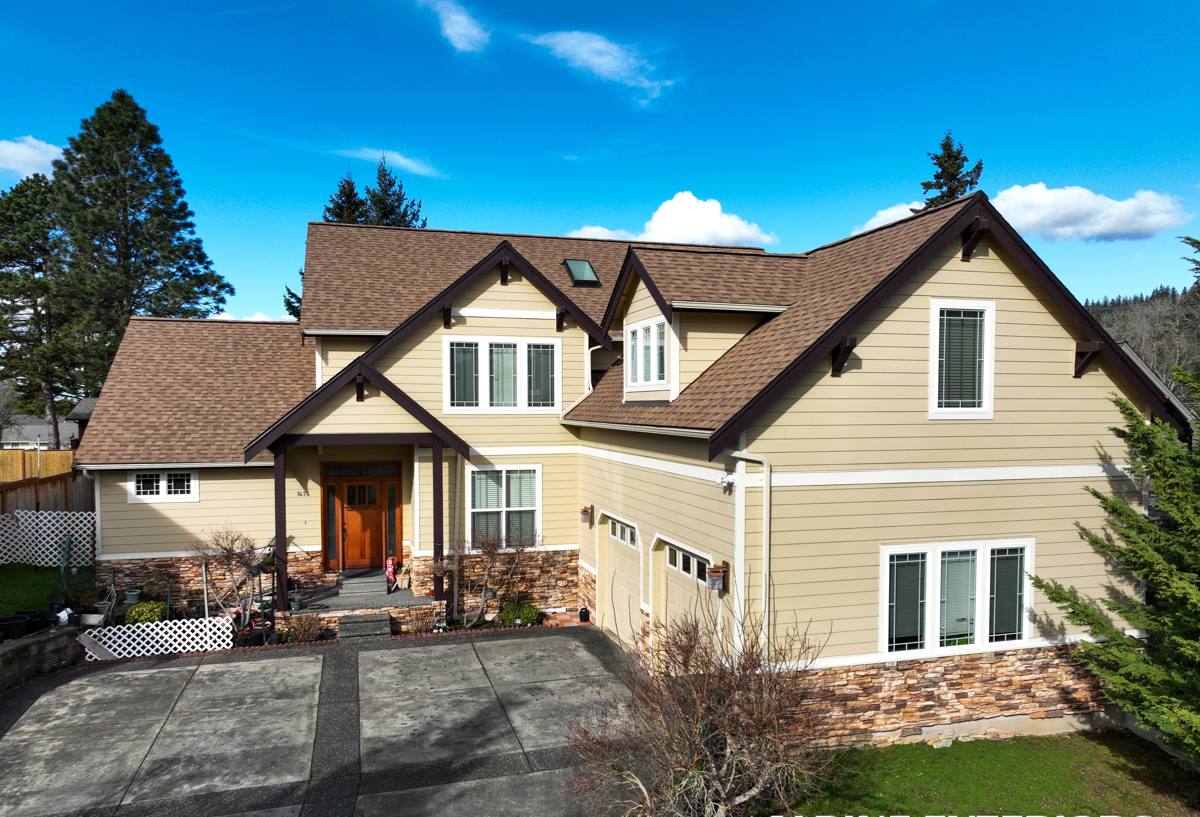
What Skyline's Climate Actually Does to a Deck
It helps to understand the mechanisms, not just the symptoms, because the mechanisms tell you what actually needs to change in the build.
Salt Air and Metal Fasteners
Homes closer to the water catch airborne salt that settles on every exposed surface, including the metal holding the deck together. Standard fasteners and generic hardware corrode faster in this environment, and once a fastener starts rusting it swells slightly, which cracks the wood fiber around it and lets in more moisture. That's a feedback loop we avoid by spec'ing hardware rated for coastal exposure throughout, not just at the ledger board.
Driving Rain
Storms here rarely come straight down. Wind-driven rain gets pushed sideways under railings, into board gaps, and behind fascia in a way that vertical-rain assumptions don't account for. That changes how we flash a ledger connection, how we treat the end grain of every board, and how much gap we leave between boards for drainage.
Moss Season
Anacortes gets a long stretch of the year — realistically fall through spring — where decks in shaded or tree-covered spots stay damp for days at a time. That's exactly the condition moss and algae need. Once moss gets a foothold in the grain of a board or the joints between boards, it holds even more moisture against the wood and the walking surface gets genuinely slippery, which is a real fall hazard on stairs and sloped approaches.
What a Correctly Built Deck Looks Like Here
A deck that's going to hold up in Skyline isn't a different product line — it's the same core build with specific decisions made correctly at each stage.
- Ledger board flashed and sealed so wind-driven rain can't track behind it into the house rim joist
- Fasteners and structural hardware rated for coastal/marine-grade exposure, not just standard exterior-rated
- Joist tape or equivalent protection on top of every joist so standing water can't sit against cut lumber
- Board spacing set to actually drain and air out, not just meet a minimum gap on paper
- Footings and posts sized and set below frost depth with proper drainage gravel, so ground moisture doesn't wick up into the structure
- Decking material chosen with this specific microclimate in mind, not a generic recommendation
- Railing and stair hardware matched to the same corrosion resistance as the rest of the structure
Choosing a Decking Material for a Shaded, Salt-Exposed Lot
There's no single "best" decking material — there's a best material for a given lot's sun exposure, shade pattern, and how much upkeep the homeowner actually wants to do. Here's how the common options compare for a typical Skyline setting.
| Material | Moss/Algae Resistance | Maintenance | Notes for This Area |
|---|---|---|---|
| Pressure-treated wood | Low without upkeep | Annual cleaning and periodic sealing | Lowest upfront cost; needs the most attention in shaded, damp spots |
| Cedar | Moderate | Regular cleaning, occasional oiling | Natural look many homeowners want; still needs real maintenance here |
| Capped composite | High | Occasional rinse/scrub | Best fit for shaded, damp lots; higher material cost offset by lower upkeep |
| Uncapped composite | Moderate | Periodic cleaning | Better than early composite generations but still absorbs some moisture at cut edges |
For most Skyline properties, especially ones tucked under tree cover or facing prevailing weather, we steer homeowners toward capped composite or well-detailed cedar over bare pressure-treated decking, simply because the maintenance burden of untreated wood in this specific microclimate is higher than most people want to sign up for. That's a maintenance and moisture-behavior call, not a knock on wood decking in general — wood is a fine material in the right setting with the right upkeep commitment.
Structural Details That Matter More Here Than Elsewhere
Ledger Attachment
The ledger board — where the deck ties into the house — is the single most common failure point on older decks we get called out to inspect in this area. Wind-driven rain finds any gap in the flashing and tracks straight into the rim joist, where it can sit hidden for years before anyone notices soft framing. We treat ledger flashing as non-negotiable, not an upgrade option.
Post Bases and Footings
Skyline's hillside lots often mean sloped grading, which affects how footings drain. A post base sitting in a low spot that collects water will rot from the bottom up regardless of how good the decking above it is. We grade and drain around every footing, not just pour a pad and set a post.
Stair and Railing Hardware
Stairs take the brunt of foot traffic and moss buildup because they're often in shade and see less direct sun to dry out between rains. We use the same corrosion-resistant hardware on stair stringers and railings as we do on the main structure — this is a common place other builds cut corners since it's less visible.
Our Process for a Skyline Deck Project
- On-site assessment — we look at sun exposure, shade pattern, existing drainage, and (for replacements) the condition of the current ledger and framing
- Material and layout conversation — we walk through decking options against your actual maintenance appetite and budget, not a one-size answer
- Permitting — most deck work in Anacortes and unincorporated Skagit County requires a permit; we handle that paperwork so it's not on you
- Demolition (if replacing) — old decking and framing removed, structure inspected once it's exposed
- Framing and structural work — ledger flashing, joists, footings, and posts built to hold up to this specific climate
- Decking, railing, and stairs installed — with proper spacing, fastening, and hardware throughout
- Final walkthrough — we go over care and cleaning specific to your material choice so you know what upkeep actually looks like
New Build vs. Deck Replacement
These are different projects with different cost drivers, and it's worth understanding which one you're actually facing before getting quotes.
| Factor | New Deck | Deck Replacement |
|---|---|---|
| Structural unknowns | None — building from scratch | Depends on hidden framing/ledger condition until demo |
| Permitting | Required for most projects | Often required, especially if footprint or footings change |
| Timeline | Generally more predictable | Can extend if rot or ledger damage is found once old decking comes off |
| Cost driver | Size, material, footings/height | All of the above, plus any repair work uncovered during demo |
If you're replacing an existing deck, we always recommend a real inspection before quoting a fixed price, because a deck that looks fine from the surface can be hiding a soft ledger or rotted post base underneath — something we won't know for certain until we're into the demo.
Maintenance That Actually Fits This Neighborhood
Whatever material you choose, a few habits go a long way in a shaded, damp, salt-exposed spot like Skyline:
- Sweep debris (leaves, needles) off the deck regularly — trapped organic matter is what feeds moss and algae growth
- Rinse or lightly scrub the surface a couple times a year, more often in heavily shaded areas
- Check railing and stair hardware annually for early corrosion, especially on homes closer to the water
- Keep gutters and downspouts clear near the deck so runoff isn't dumping extra water onto the structure
- Re-seal wood decking on the manufacturer's recommended schedule — skipping a cycle in this climate shows up fast
Why a Crew That Already Works Skyline Matters
General deck-building knowledge gets you a deck. Knowing that a specific Skyline lot sits in near-constant shade from October through April, or that a hillside property needs footing drainage handled a certain way because of how the grade sheds water, is what gets you a deck that's still solid in ten years. We've built and repaired decks throughout Anacortes and Skagit County long enough to know which details in this neighborhood aren't optional — the ledger flashing, the hardware grade, the material choice for a shaded lot — and we don't treat those as upgrades. They're just how we build here.
If you're planning a new deck or looking at replacing one that's showing its age, we're happy to come take a look and give you a straightforward, no-pressure estimate. Use the form below to get started.