 Anacortes Exterior
 Siding Built for Life on Guemes Island
Guemes Island sits just across the ferry channel from Anacortes, but in terms of what it does to a house, it might as well be a different climate zone. Homes here take a steady diet of salt-laden air off Rosario Strait and the surrounding waters, driving rain that comes in sideways during winter storms, and long stretches of shade under fir and cedar canopy that keep siding damp far longer than it would stay damp on a more exposed, sun-drenched lot. Add in the fact that the island is reachable only by ferry, and it's easy to see why siding installed by a crew that doesn't regularly work out here often underperforms — not because the product was wrong, but because the details that matter most in this environment got missed.
This page is about one job, done right, in one place: siding installation for Guemes Island homes. We install exclusively James Hardie fiber cement siding, and we'll explain both what the island's climate demands and why we standardized on this product for exactly this kind of exposure.
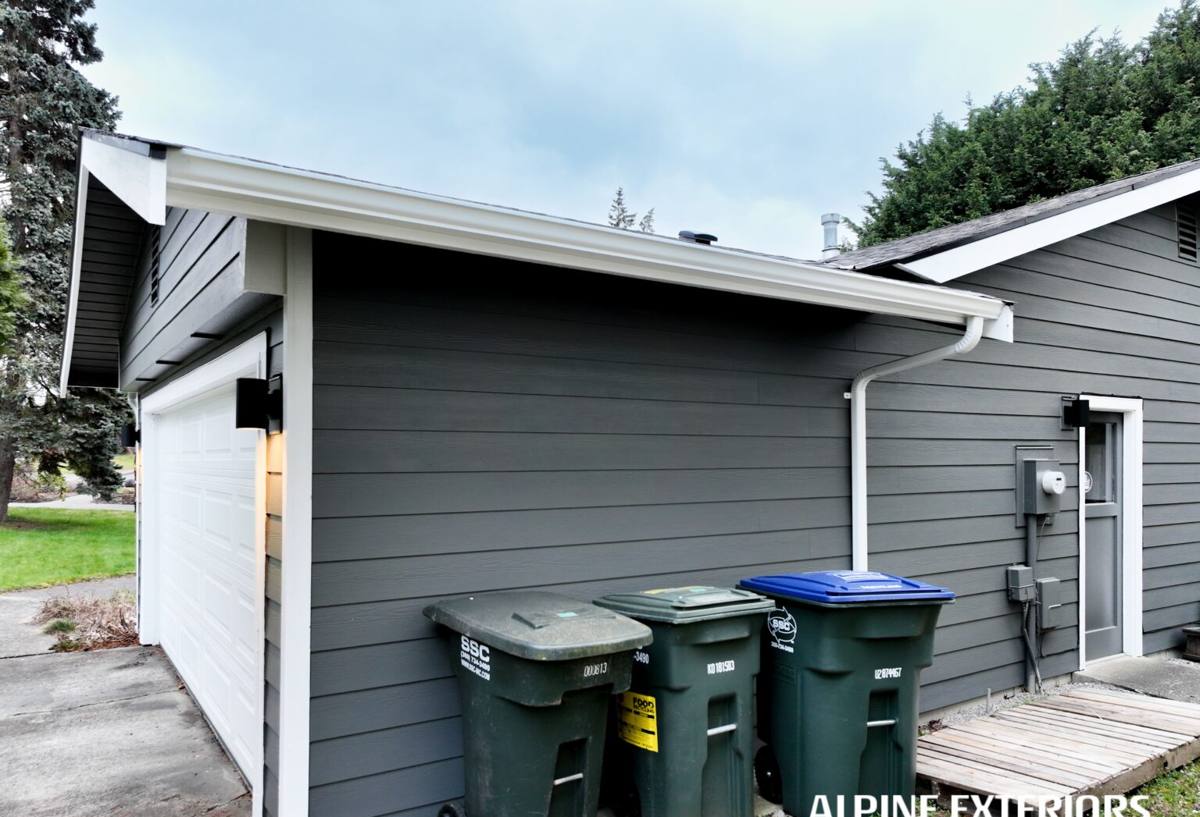
What Guemes Island's Climate Actually Does to Siding
Salt Air and Corrosion
Waterfront and near-waterfront homes on Guemes Island are exposed to airborne salt that settles on every exterior surface. Over time, salt accelerates corrosion of fasteners, flashing, and any metal trim components. It also draws moisture — salt is hygroscopic, meaning it actually pulls humidity out of the air and holds it against the surface it's coated on. For siding, that means fastener heads, cut edges, and any exposed metal need to be chosen and installed with corrosion resistance as a non-negotiable requirement, not an afterthought.
Driving Rain
Skagit County storms don't always fall straight down. Wind off the water pushes rain sideways and upward under eaves, around window and door trim, and into any gap in the siding envelope that a calmer climate might tolerate. Wind-driven rain finds weak flashing details, under-caulked joints, and butt seams that weren't properly backed. On a typical inland lot, a marginal installation might go years before showing a problem. On Guemes Island, the same shortcuts show up much faster.
The Long Moss Season
Between tree cover, marine humidity, and a mild but wet climate for much of the year, north-facing and shaded wall sections on the island stay damp longer than most sun-exposed elevations elsewhere in the county. That's the recipe for moss and algae growth on siding surfaces — not just a cosmetic issue, but a sign that a surface is holding moisture against itself. Siding material, factory finish, and even how a wall is furred out from the sheathing all affect how much moss growth a home will deal with over the years.
Ferry-Access Logistics: Why Local Experience Matters
Guemes Island isn't connected to the mainland by bridge — everything and everyone gets there by the Guemes Island Ferry. That changes how a siding project needs to be planned and run:
- Material deliveries have to be scheduled around ferry sailings and load capacity, not just a supplier's normal truck route
- Crews need to plan their day around ferry departure times so they aren't stranded mid-job or burning hours waiting for the next sailing
- Waste and debris removal (old siding, packaging, cutoffs) has to be barged or ferried off the island, which takes real planning, not a same-day dumpster swap
- Weather delays can compound with ferry schedule constraints, so a contractor unfamiliar with the island can lose more days than the weather alone would cost
A crew that already works Guemes Island regularly has these logistics built into how they bid, schedule, and staff a job. A crew that's never worked out here is learning these lessons on your project, on your timeline.
What a Correct Siding Installation Involves
Fiber cement siding performs the way it's supposed to only when the assembly behind it is built correctly. On a site like Guemes Island, with its combination of moisture and salt exposure, these details matter more than usual:
Drainage Plane and Rainscreen
A weather-resistive barrier behind the siding, combined with a drainage gap (rainscreen furring), lets any moisture that does get past the siding surface drain and dry out instead of sitting against the sheathing. On a shaded, damp lot, this ventilation gap is what keeps a wall assembly from staying wet for weeks at a time.
Flashing at Every Penetration
Windows, doors, hose bibs, vents, and any other wall penetration need proper flashing that sheds water outward and downward, not into the wall cavity. Wind-driven rain will find any flashing detail that was skipped or done with caulk alone instead of proper metal or membrane flashing.
Fastener Selection
In a salt-air environment, fastener material and coating matter. Hardie's installation specifications call for corrosion-resistant fasteners, and on a site like this we don't treat that as optional — it's the difference between fasteners that hold for decades and ones that start staining or failing within a handful of years.
Proper Clearances
Siding needs the right clearance from grade, roof lines, decks, and other horizontal surfaces so water doesn't wick up into the bottom edge of the material. On wooded, damp lots this clearance is one of the most commonly shortcut details — and one of the most consequential.
Why We Install Only James Hardie Fiber Cement
We don't install vinyl, LP SmartSide, primed spruce, cedar, or other fiber cement brands. That's a deliberate standard, not a limitation of what we're capable of installing. Here's the reasoning, specific to a climate like Guemes Island's:
Fiber cement is non-combustible, which matters on a heavily wooded island where wildfire risk is a real consideration for insurers and homeowners alike. It also doesn't feed moss and algae growth the way wood-based products can, and it holds its shape and fastening in wet-dry cycling far better than wood substrates, which swell, shrink, and are vulnerable to rot at cut edges and butt joints.
James Hardie's HZ5 product line is engineered specifically for climates with more moisture exposure — including coastal and marine environments like ours. The factory-applied ColorPlus finish is baked on under controlled conditions, which gives far more consistent, durable color and moisture resistance than field-applied paint, and it comes with its own finish warranty separate from the substrate warranty. For a salt-air, high-moisture site like Guemes Island, that combination of substrate durability and finish integrity is what we're not willing to compromise on.
Comparing Siding Options for a Site Like This
| Factor | James Hardie Fiber Cement | Vinyl | Wood / Engineered Wood |
|---|---|---|---|
| Salt air resistance | Strong — non-corrosive substrate, factory finish | Can become brittle and discolored over time | Vulnerable to moisture-driven rot at edges |
| Wind-driven rain tolerance | Strong when installed to spec with proper flashing | Prone to gapping and blow-off in high wind | Depends heavily on maintenance and sealing |
| Moss / algae resistance | Good — dense, factory-finished surface | Fair, but seams and laps trap debris | Poor in shaded, damp conditions |
| Fire resistance | Non-combustible | Melts/deforms under heat exposure | Combustible |
| Long-term maintenance | Low — repaint cycle is long, no rot risk | Low upfront, but cracks/fades over decades | High — regular painting/sealing and rot watch |
Our Installation Process on Guemes Island
- On-site assessment: we look at sun exposure, tree cover, existing moisture damage, and the wall assembly currently in place
- Material and logistics planning: siding, trim, and fasteners are ordered and staged for ferry transport well ahead of the install date
- Removal and sheathing check: old siding comes off and we inspect the sheathing underneath for rot or moisture damage before anything new goes up
- Weather barrier and rainscreen installation: the drainage plane goes on correctly the first time, since re-opening a finished wall later is far more disruptive
- Flashing at every penetration: windows, doors, and fixtures are flashed before siding closes around them
- Hardie siding installation to manufacturer spec: correct fastener pattern, clearances, and joint treatment throughout
- Final detailing and cleanup: caulking, touch-up, and full debris removal, coordinated with ferry logistics
Maintaining Hardie Siding in a Marine Environment
Fiber cement is low-maintenance, not no-maintenance. On Guemes Island, a little seasonal attention goes a long way toward protecting the investment:
- Rinse salt residue and debris off the siding surface once or twice a year, especially on wind-exposed elevations
- Check and clear gutters and downspouts before the fall rains so water isn't backing up against wall sections
- Keep tree limbs trimmed back from the siding to reduce shade-driven moisture and moss buildup on north-facing walls
- Inspect caulking at trim and penetrations every year or two and re-caulk any joints that have opened up
- Address any moss or algae growth early with a gentle wash rather than letting it establish and hold moisture against the surface
Why It Matters That We Already Work This Island
A siding job on Guemes Island isn't just an Anacortes job with a ferry ride tacked on. The material choices, the fastening details, the flashing, and the day-to-day logistics all need to account for the island's specific combination of salt exposure, wind-driven rain, and shaded, moss-prone conditions. A crew that treats it like any other Skagit County lot will get the visible parts right and miss the parts that actually determine whether the siding holds up over the next 20 or 30 years. We've built our process around the realities of this island specifically, from ferry-scheduled logistics down to fastener selection.
If you're planning a siding project on Guemes Island, we're happy to take a look and talk through what your home actually needs. Reach out for a free, no-pressure estimate using the form below.