 Anacortes Exterior
 Decking Built for Skyline's Particular Climate
Skyline sits up on the bluff with the kind of views that make a deck worth having in the first place — and the kind of weather exposure that makes deck material choice matter more than it does a few miles inland. Salt-laden air off the water, wind-driven rain that gets up under railings and fascia, and a wet season that runs long enough to grow moss on almost anything left untreated are the three things we plan around on every Skyline deck we build or replace.
Composite decking earns its place here because it doesn't feed the problems this climate creates. It won't absorb the moisture that swells and splits wood boards, it doesn't offer the organic surface that moss and algae like to grab onto, and it holds up to salt exposure without the corrosion and graying that plagues untreated wood over a Skagit County winter. That said, "composite" isn't one product — board quality, fastening systems, and substructure choices vary a lot, and on a bluff-top lot those choices show up fast if they're wrong.
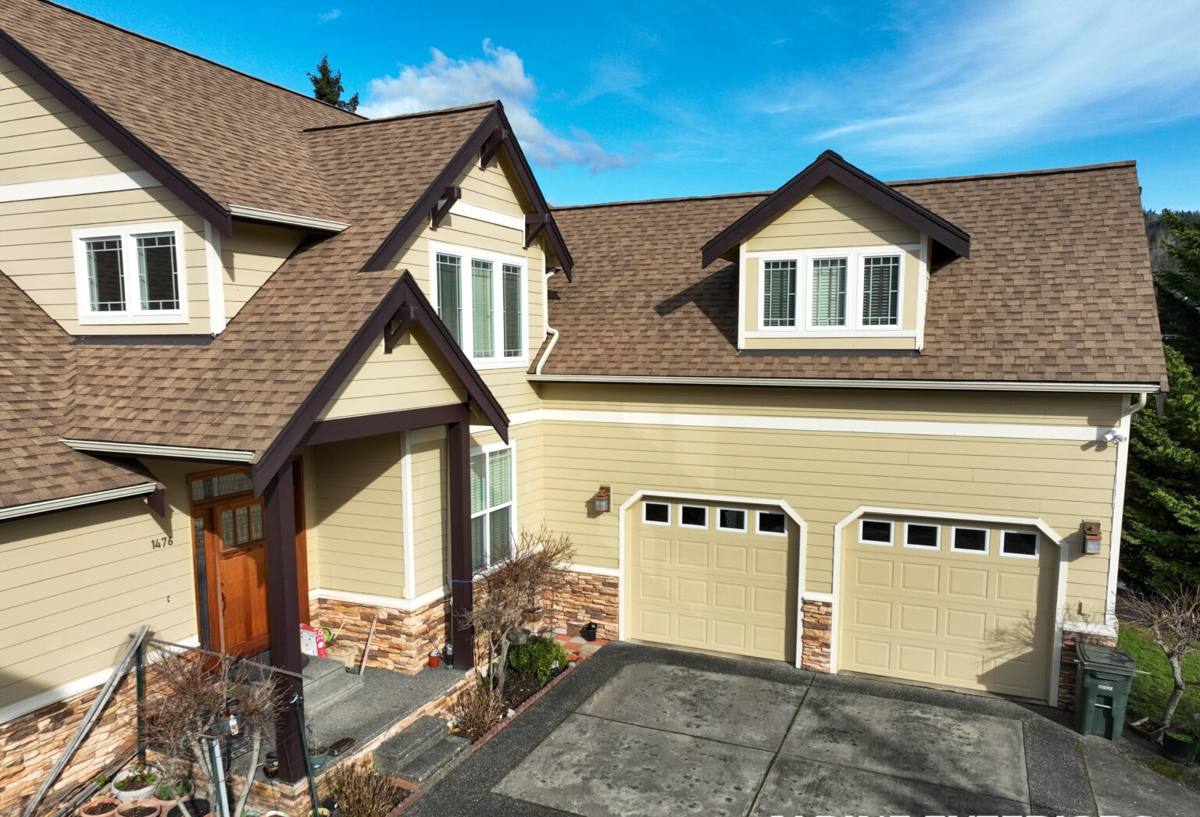
What Skyline Homes Specifically Need
Every neighborhood in Anacortes deals with Pacific Northwest weather, but Skyline's elevation and exposure change the details of what a deck needs to survive well:
- Wind-driven rain resistance — water doesn't just fall straight down here, it drives sideways under railings and into board gaps, so drainage detailing at the substructure matters as much as the surface material.
- Salt air tolerance — fasteners, railing hardware, and any exposed metal need to be rated for coastal exposure, not standard interior-grade hardware that will corrode within a few seasons.
- Moss and algae resistance — a long damp season means anything with texture or organic surface fibers will eventually host moss; smooth, capped composite boards resist this far better than wood or uncapped composite.
- UV and heat stability — even with our overcast stretches, summer sun on a west-facing bluff deck can fade or soften lower-grade composite; board quality determines whether that's a non-issue or a recurring complaint.
What a Correct Composite Deck Installation Actually Involves
Substructure First
The composite boards get the attention, but the framing underneath is what determines whether the deck lasts. On a Skyline lot we're typically looking at pressure-treated or composite substructure framing, proper joist spacing for the specific board product being installed (composite manufacturers specify tighter joist spacing than typical wood decking), and ledger board flashing that actually sheds water away from the house rather than trapping it against the siding.
Drainage and Airflow
Given how much rain this area sees, we build in drainage paths from day one — proper slope away from the house, gaps or venting that let air move underneath the deck, and flashing details at any point the deck meets the house envelope. A deck that traps moisture underneath it will grow mold and mildew regardless of what decking material sits on top.
Fastening and Hardware
We use coastal-rated, corrosion-resistant fasteners and hidden fastening systems where the product allows it. Hidden fasteners aren't just cosmetic — screw heads exposed to salt air and standing water are a common early failure point, and hiding them keeps water from pooling in fastener heads on the board surface.
Railings and Edge Details
Railing posts and any metal hardware get the same coastal-grade treatment. This is often the piece homeowners overlook — you can install a great composite deck surface and still have rust streaking down the boards within a couple years if the railing hardware wasn't rated for the exposure.
Comparing Decking Options for a Bluff-Exposed Lot
| Factor | Wood (cedar/PT) | Uncapped Composite | Capped Composite |
|---|---|---|---|
| Moisture absorption | High — swells, splits over time | Moderate — can absorb at cut edges | Low — sealed surface resists water |
| Moss/algae resistance | Poor without regular treatment | Fair | Good — smooth surface sheds organic growth |
| Salt air performance | Fair with sealing; fades and grays | Good | Very good |
| Maintenance | Annual sealing/staining recommended | Occasional cleaning | Occasional cleaning, no sealing |
| Upfront cost | Lower | Moderate | Higher |
| Typical lifespan in this climate | 10–15 years with upkeep | 20–25 years | 25–30+ years |
We install capped composite on most Skyline decks for exactly this reason — the upfront cost difference tends to pay for itself in avoided maintenance and earlier replacement over the life of the deck. We're happy to talk through wood options too; it's a legitimate choice for some budgets and some homeowners simply prefer it, but we'll be honest about the added upkeep it requires in this specific climate.
Our Process for a Skyline Deck Project
1. On-Site Assessment
We walk the site, look at sun and wind exposure, check the existing structure if this is a replacement, and talk through how the deck will actually be used — entertaining, grilling, quiet morning coffee — since that shapes layout and material recommendations.
2. Material and Layout Selection
We go through board options, colors, and railing systems in person, with samples, rather than just describing them. Board direction and layout also affect drainage and how water moves off the surface, so we plan that early rather than defaulting to a standard pattern.
3. Permitting
Most deck work in Anacortes and unincorporated Skagit County requires a permit, especially for anything involving structural changes, railings over a certain height, or attachment to the house. We handle the permit application and inspections as part of the project so you're not chasing paperwork.
4. Demolition and Substructure Build
If it's a replacement, we remove the old deck and inspect what's underneath — ledger attachment, post footings, and framing condition — before building new substructure to current code and to the spacing the new decking product requires.
5. Decking Installation
Boards go down with coastal-rated fasteners, proper expansion gaps (composite expands and contracts with temperature more than people expect), and attention to drainage at every seam.
6. Railings, Trim, and Final Walkthrough
Railings, fascia, and any trim boards go on last, followed by a walkthrough where we point out how to care for the specific product installed and what warranty coverage applies.
Maintenance: What Skyline Composite Decks Actually Need
One of the real advantages of composite is how little upkeep it needs compared to wood — but "low maintenance" isn't "no maintenance," especially in this climate.
- Rinse the deck periodically to clear salt residue and organic debris before it has a chance to sit and grow moss.
- Keep gutters and downspouts near the deck clear so runoff isn't dumping extra water onto the deck surface or substructure.
- Sweep leaves and needles off promptly in fall — trapped organic matter is what actually feeds moss growth, not the decking material itself.
- Check railing hardware annually for any early corrosion, especially on the ocean-facing side of the house.
- Avoid pressure-washing at close range or high pressure, which can damage the cap layer on composite boards over time.
Why a Crew That Already Works Skyline Matters
Deck problems in this neighborhood tend to be site-specific — a particular wind exposure on one street, drainage patterns tied to how a lot slopes toward the water, or how much sun a west-facing deck actually gets through the year. A crew that's built decks on Skyline before has already seen how these factors play out on real houses, not just in a manufacturer's spec sheet. That translates into fewer surprises: the right joist spacing for the exposure, hardware that's already proven itself against the salt air here, and a substructure detail that accounts for how rain actually moves across a bluff lot rather than a textbook assumption.
It also means we're not guessing at permit requirements or inspection expectations for Anacortes and Skagit County — we've been through that process on decks near yours, so the paperwork moves faster and there are fewer stalls waiting on corrections.
Signs Your Current Deck Needs Attention
If you're not sure whether it's time to replace an aging deck rather than patch it, a few signs are worth watching for:
- Boards that feel soft, spongy, or visibly cupped when walked on
- Persistent moss or dark staining that returns quickly after cleaning
- Rust streaking from railing posts, brackets, or fasteners
- Gaps or movement where the deck meets the house at the ledger board
- Railings that feel loose or wobble under normal use
Any of these are worth a look before they turn into a bigger structural repair, and a lot of them trace back to substructure or drainage issues rather than the surface boards themselves.
Get a Straightforward Estimate
If you're weighing a new composite deck or a replacement for Skyline home in Anacortes, we're glad to come take a look and walk through options honestly — including what will and won't hold up given the salt air, rain, and moss this stretch of Skagit County deals with every year. There's no pressure and no obligation; just fill out the form below and we'll set up a time to talk through your project.