 Anacortes Exterior
 New Roofs Built for Bow's Weather, Not Just the Average Forecast
Bow sits in that stretch of Skagit County where Samish Bay air, open farmland wind, and the deep shade of second-growth fir and cedar all meet. That combination is harder on a roof than most homeowners realize. You're not just dealing with rain totals — you're dealing with salt-laden moisture that corrodes fasteners and flashing faster than inland areas, wind that finds every loose edge, and enough shade and moisture on tree-lined lots to keep moss and moisture active on the roof deck for much of the year. A new roof installation here has to account for all three at once, not just the one that's most visible.
When a roof in Bow fails early, it's rarely one dramatic event. It's usually a slow combination: fasteners that rusted from coastal air, underlayment that couldn't handle sustained damp, or moss that held moisture against shingles longer than the material was rated for. A correctly installed roof addresses all of that from day one, not as an afterthought.
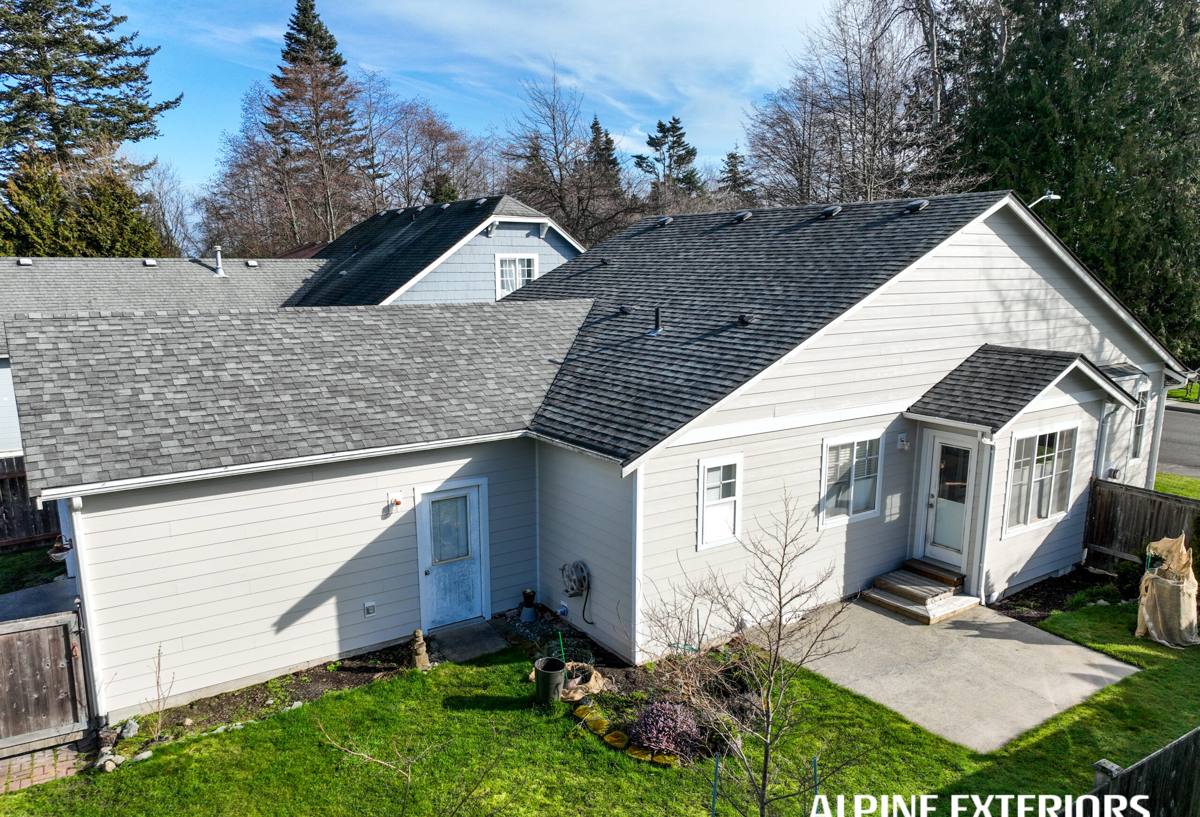
What Bow Homes Actually Need From a New Roof
Corrosion-Resistant Fasteners and Flashing
Properties closer to Samish Bay and the surrounding waterways get periodic salt-laden air, especially during winter storms out of the west and southwest. Standard fasteners and flashing can start showing surface corrosion well before the roofing material itself is due for attention. We use fasteners and flashing rated for coastal exposure on Bow jobs, not just whatever is standard elsewhere in the county.
Underlayment That Handles Sustained Damp, Not Just Heavy Rain
A lot of roofing underlayment is rated for how much water it sheds during a downpour. That's only half the picture out here. Bow's roofs also deal with long stretches of low-intensity dampness — drizzle, fog, and shaded areas that never fully dry between storms. Synthetic underlayment with reliable long-term moisture resistance, installed with correct overlaps and sealed penetrations, matters more here than in drier parts of the state.
Ventilation That Accounts for Shade and Moisture Load
Tree cover keeps a lot of Bow properties cooler in summer, which is nice for the house but tougher on the roof deck. Shaded roofs dry more slowly after rain, which means moisture sits longer and moss gets a head start. Balanced intake and exhaust ventilation helps the deck dry faster between weather events and reduces the conditions moss needs to take hold.
Moss-Resistant Detailing
Moss season in this part of Skagit County isn't a two-week event — shaded, damp roofs can host active moss growth for much of the year. A new roof should be installed with moss in mind from the start: appropriate material choice, zinc or copper strips where they make sense, and a roof plane that sheds water cleanly instead of holding it in valleys and low-slope transitions.
What a Correct New Roof Installation Actually Involves
A roof is only as good as what's underneath it. Here's what we check and install on every new roof, regardless of the material chosen on top:
- Full tear-off and deck inspection — we don't install new roofing over hidden rot or soft spots
- Deck repair or replacement wherever moisture has compromised the plywood or boards
- Ice-and-water shield at eaves, valleys, and other vulnerable transitions
- Synthetic underlayment rated for sustained damp exposure, not just a builder-grade felt
- Corrosion-resistant flashing at all chimneys, skylights, walls, and roof-to-roof transitions
- Balanced intake and exhaust ventilation sized correctly for the attic space
- Fasteners rated for coastal air exposure
- Clean tie-ins at valleys and low-slope sections where water and debris naturally collect
Skipping any one of these doesn't usually cause an immediate problem. It shows up two, five, or ten years later as a leak, premature material failure, or a moss and moisture problem that's expensive to reverse. Doing it right the first time costs less over the life of the roof than doing it twice.
Choosing a Roofing Material for Bow's Conditions
There's no single "best" roofing material — the right choice depends on the home's exposure, the amount of shade on the lot, and how much long-term maintenance the homeowner wants to take on. Here's how the common options compare for this specific climate:
| Material | Salt-Air Performance | Moss Resistance | Typical Lifespan Here |
|---|---|---|---|
| Architectural asphalt shingle | Good with coastal-rated fasteners | Fair — benefits from zinc strips and regular cleaning | 20-30 years |
| Standing seam metal | Very good with correct alloy/coating choice | Very good — sheds moisture, little surface for moss to grip | 40-60+ years |
| Composite/synthetic shake | Good | Good with proper ventilation underneath | 30-50 years |
| Wood shake | Requires diligent maintenance in damp, shaded settings | Poor without frequent treatment and cleaning | Varies widely by upkeep |
We'll talk through these trade-offs honestly during your estimate. A shaded, tree-lined Bow lot and an open, wind-exposed one near the water call for different priorities, even on the same street.
Our Process on a Bow New Roof Installation
1. On-Site Assessment
We look at the existing roof, the deck condition where accessible, attic ventilation, tree cover, and exposure direction before recommending anything. Every Bow property has a slightly different mix of shade, wind, and moisture exposure, and the roof plan should reflect that.
2. Clear, Written Estimate
You'll get a written scope covering material, underlayment, flashing, ventilation work, and tear-off — no vague line items. If deck repair turns out to be needed once we open things up, we'll show you the affected area and get sign-off before proceeding.
3. Tear-Off and Deck Inspection
We remove the old roofing down to the deck and inspect for rot, soft spots, or prior water damage. This is where hidden problems from years of moss and moisture exposure typically surface.
4. Installation
Underlayment, flashing, ventilation components, and the roofing material go on in the correct sequence, with particular attention to valleys, penetrations, and any low-slope transitions where Bow's rain and shade tend to cause the most trouble.
5. Final Walkthrough
We walk the finished roof with you, cover basic maintenance expectations for this climate — including moss monitoring — and make sure you know what a well-installed roof should look like going forward.
Why Local Experience in Bow Specifically Matters
Skagit County is a big area, and roofing conditions vary a lot within it. A crew that mostly works drier, more inland jobs won't automatically know how much extra attention Bow's combination of shaded lots and periodic salt air demands. We work this area regularly, which means we're not guessing at fastener specs or ventilation needs — we already know what tends to go wrong here and build the roof to avoid it from the start.
It also means faster response if something needs a look after severe weather. Anacortes and the surrounding Skagit County communities see real windstorms off the water, and knowing a contractor is close by and familiar with your specific area gives you a shorter path to getting it addressed.
Signs Your Bow Home May Need a New Roof, Not Another Repair
- Granule loss heavy enough that you're finding significant amounts in gutters or downspouts
- Moss that returns quickly after cleaning, even in the same season
- Soft spots or sagging visible from the ground or attic
- Daylight visible through the roof deck from inside the attic
- Flashing that's visibly rusted, lifted, or separating from the roof plane
- Multiple past repairs in different areas of the same roof
- Interior water stains that reappear after being patched
One or two of these might mean a repair is still enough. Several at once usually means the roof system as a whole is past the point where patching makes financial sense.
What a New Roof Typically Involves Cost-Wise
Roofing costs vary based on roof size, pitch, tear-off complexity, deck condition, and material choice, so we don't quote firm numbers without seeing the property. What we can tell you honestly: cutting corners on underlayment, flashing, or ventilation to hit a lower number almost always costs more in repairs within the first decade — especially in a climate like Bow's, where moisture has more opportunities to find weak points. We'll give you a clear, itemized estimate so you can see exactly where the cost goes and why.
If your roof in Bow is showing its age or you're planning ahead rather than reacting to a leak, we're glad to come take a look. The estimate is free, there's no pressure, and you'll get a straight answer about whether it's time for a new roof or whether a repair still makes sense — just fill out the form below to get started.