 Anacortes Exterior
 Composite Decking for Burlington Homes
Burlington sits in the heart of Skagit County, where long wet winters, driving rain off the Sound, and a moss season that can stretch nine months out of the year put real stress on any outdoor structure. A deck here isn't just a place to put a barbecue — it's a structure that spends most of the year damp, shaded by conifers or neighboring rooflines, and exposed to the salt-tinged marine air that moves through the valley. Composite decking, installed correctly for this climate, holds up to that punishment far better than wood without the yearly sanding, staining, and rot inspection wood decks demand.
This page covers what a composite deck build actually requires in Burlington specifically — not composite decking in general — so you know what to expect and what to ask for.
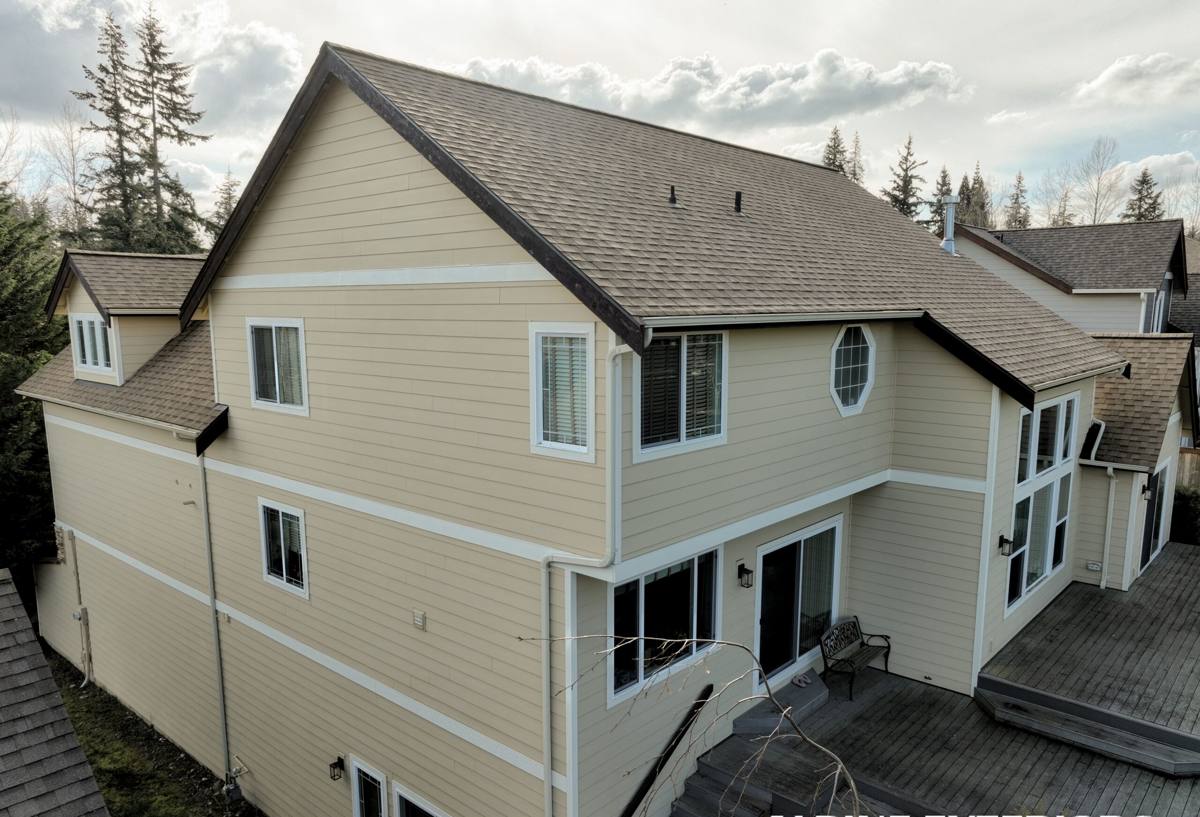
Why Skagit County Weather Is Hard on Decks
Three things define deck wear in this part of Washington, and they compound each other:
- Driving rain: Storms coming off Puget Sound don't just fall straight down — wind-driven rain gets under rail caps, into end grain, and behind poorly flashed ledger boards.
- Moss and algae: Shaded, north-facing, and tree-covered decks in the Skagit Valley stay damp long after a storm passes. That moisture holds moss spores and mildew against any surface that doesn't drain or dry quickly.
- Salt-tinged marine air: Proximity to the Sound means fasteners, brackets, and any exposed metal hardware corrode faster here than they would further inland.
None of this is unique to composite decking — wood suffers from the same conditions, usually worse. But composite boards only outperform wood if the substructure underneath is built to shed water and resist corrosion, which is where a lot of installs (composite or otherwise) go wrong.
What a Correct Composite Deck Installation Involves
The substructure matters more than the boards
Composite boards themselves resist rot, but the joists, beams, and posts underneath them are typically still wood unless you specify composite or steel framing. In a climate like Burlington's, that substructure needs:
- Proper joist spacing tightened from standard wood-deck spacing, since composite boards flex differently than wood under load and over temperature swings.
- Joist tape or a moisture barrier on top of each joist, so standing water doesn't sit against exposed wood grain year-round.
- Stainless or coated fasteners rated for treated lumber and coastal-adjacent conditions, since standard hardware corrodes faster in this air.
- Ledger board flashing that actually sheds water away from the house rim joist — this is the single most common failure point we find on older decks in this area.
Drainage and airflow underneath
A deck that traps moisture underneath it grows moss and mildew faster than one that drains and dries. Grading the ground below the deck away from the house, keeping skirting vented rather than sealed, and maintaining gap spacing between boards for both drainage and seasonal expansion are all part of a correct build here — not optional upgrades.
Fastening method
Hidden fastener clip systems keep the deck surface free of screw heads, which matters both for appearance and because exposed fastener heads are where moss and algae get their first foothold on a board.
Composite vs. Wood vs. PVC Decking for This Climate
| Material | Moisture resistance | Moss/mildew resistance | Maintenance |
|---|---|---|---|
| Pressure-treated wood | Fair — absorbs and releases moisture, prone to cupping | Poor without regular cleaning/sealing | Annual sanding, staining, or sealing |
| Composite (capped) | Good — capped shell resists moisture absorption | Good — smooth cap sheds moss spores more easily than open wood grain | Occasional wash-down, no staining or sealing |
| PVC | Very good — fully synthetic, no wood fiber to absorb water | Very good | Occasional wash-down; higher material cost |
We install capped composite for most Burlington projects because it strikes the right balance of moisture and moss resistance against upfront cost. PVC is a legitimate option for heavily shaded, high-moisture spots where every bit of extra resistance counts, but it costs more and some homeowners find the look less natural than composite. We'll walk through both honestly based on where your deck sits and how much sun and shade it gets.
Our Process, Start to Finish
- On-site assessment: We look at drainage, sun/shade exposure, existing substructure condition (if this is a replacement), and how the deck ties into your home's siding and roofline.
- Design and material selection: We talk through board color, rail systems, and fastening approach based on your budget and how the space gets used.
- Tear-out (if replacing): Old decking and, where needed, deteriorated framing come out. We check the ledger board and rim joist for hidden rot before building anything new on top of it.
- Framing and flashing: New or reinforced substructure goes in with proper joist spacing, moisture barrier tape, and ledger flashing suited to our rain patterns.
- Decking installation: Boards go down with hidden fasteners, correct gapping, and attention to how water will move off the surface.
- Final walkthrough: We check rail attachment, board spacing, and drainage with you before calling the job done.
Moss, Mildew, and Long-Term Care in Burlington
No composite deck is completely maintenance-free in a climate this wet — but the maintenance is dramatically lighter than wood. A seasonal rinse with a garden hose or soft-bristle broom, especially heading into fall before the heaviest rains and shortest daylight set in, keeps moss from getting established. Decks under trees or on the north side of a house will need this more often than open, sun-exposed decks. What you won't need is annual staining, sealing, or sanding — which is the real cost difference between composite and wood over a ten-year span, even though composite costs more upfront.
Simple year-round checklist
- Sweep debris (needles, leaves, seed pods) off the deck regularly — trapped organic matter holds moisture against the boards.
- Rinse with plain water each season; avoid pressure washers on composite unless used on a low setting from a distance, since aggressive pressure can damage the cap surface.
- Check that skirting vents and gaps under the deck stay clear of leaves and debris so airflow underneath continues.
- Inspect rail posts and fastener points once a year for any looseness — freeze-thaw cycles and wind can work hardware loose over time.
- Trim back overhanging branches where practical to reduce shade and debris buildup on chronically damp sections.
What Affects the Cost of a Composite Deck in This Area
| Factor | Why it matters here |
|---|---|
| Deck size and shape | More linear footage of framing, boards, and fastening; multi-level or angled decks add labor |
| Substructure condition | Rot from years of Skagit Valley moisture on an existing deck often means more framing replacement than expected |
| Board tier (capped composite vs. PVC) | Higher-tier materials cost more upfront but need less long-term upkeep in a wet, shaded climate |
| Railing and fastening system | Hidden fastener systems and upgraded rail materials add cost but improve moisture and moss resistance |
| Site access and grading | Sloped lots or limited access common in some Burlington neighborhoods can add labor time |
We don't quote a number until we've seen the site — anyone who does is guessing. What we can tell you honestly is that the substructure work (not the visible boards) is usually where cost surprises come from on replacement projects, especially if the old deck has been quietly absorbing moisture for years.
Why It Matters to Hire a Crew That Already Works Burlington
A contractor who works decks all over Puget Sound in general knows composite decking as a product. A contractor who works Burlington and the surrounding Skagit County communities regularly knows how this specific stretch of weather behaves — how long moss season actually runs here, which orientations on a typical lot stay damp longest, and how driving rain off the Sound tends to find weak flashing details that would go unnoticed in a drier climate. That local pattern recognition is what separates a deck that looks good on install day from one that still looks good in five winters.
We also stand behind the work with a crew you can actually reach afterward — not a national installer who's moved on to the next region by the time moss shows up in year two.
Get a Straight Answer for Your Deck
If you're planning a new composite deck or replacing a wood deck that's finally lost the fight with Skagit County weather, we're happy to take a look and give you an honest assessment — no pressure, no inflated scope. Fill out the form below for a free estimate.